
Safety
General information, not medical advice
Your prescriber and the leaflet in your pack know your situation. This page does not.
- Follow your prescriber and the leaflet
- Don't start, stop, or change a dose on your own
- Doses and warnings differ by country and product
Busulfan Injection: Uses, Dosage, Side Effects, Precautions and Alternates
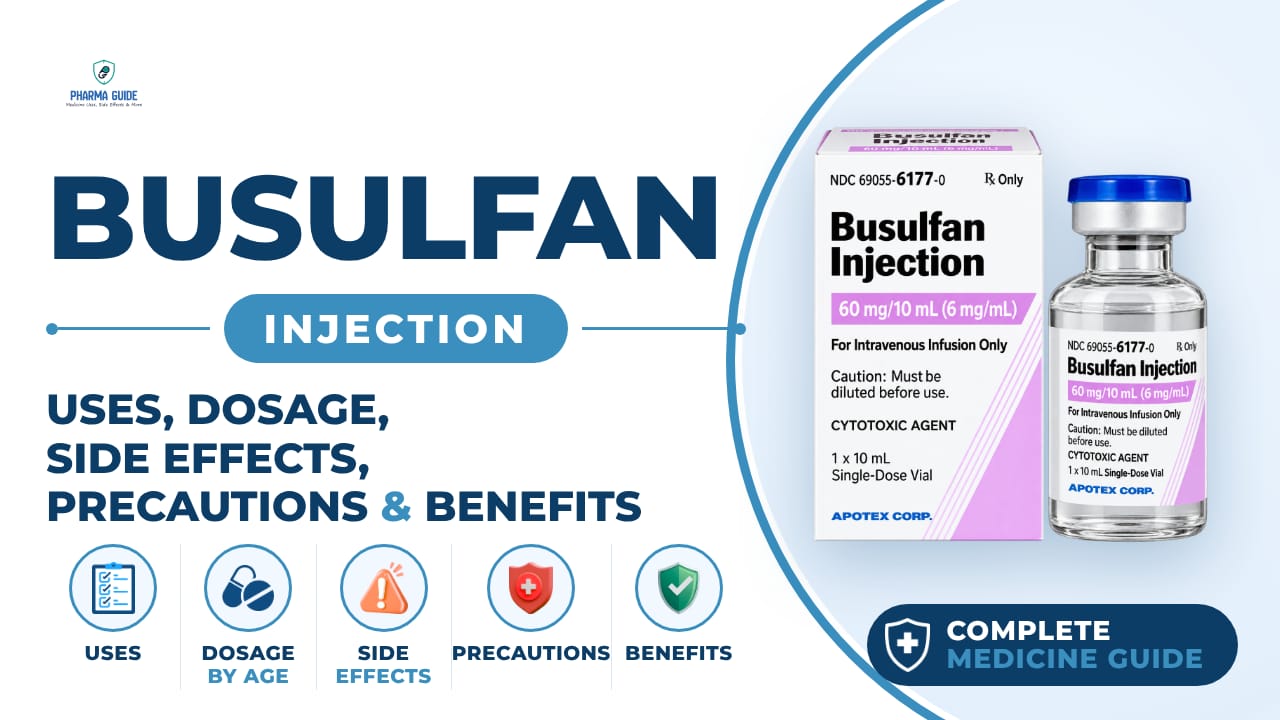
| Generic name | Busulfan |
|---|---|
| Drug class | Alkylating agent (antineoplastic/cytotoxic agent) |
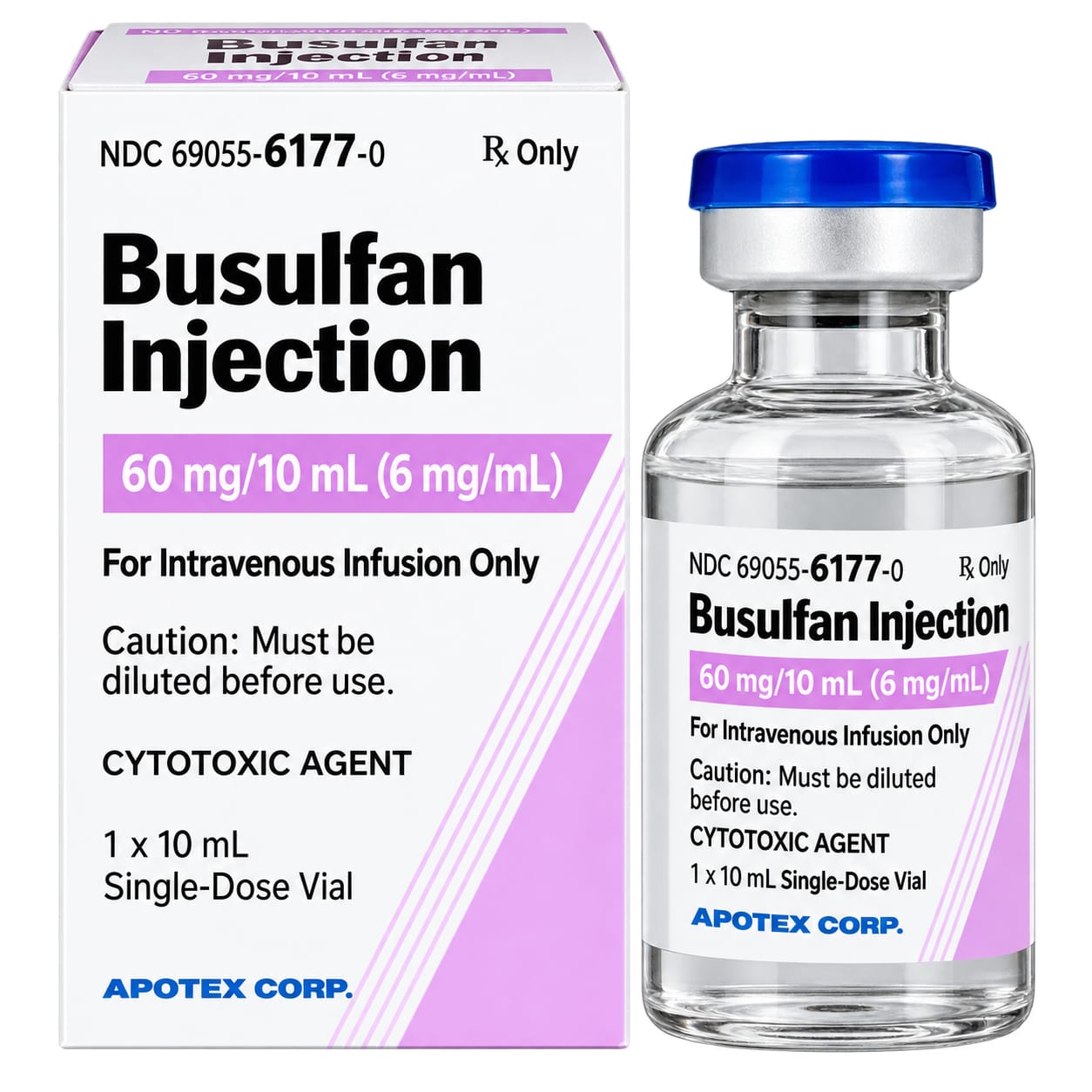
| Forms | Concentrate/solution for infusion (injection), supplied in single-dose glass vials |
Quick overview
Busulfan Injection contains busulfan, a potent cancer chemotherapy drug belonging to the alkylating agent class. It is given before a bone marrow or blood stem cell transplant to destroy the original bone marrow so that new transplanted cells can take over. It is given as an infusion by a qualified healthcare professional and is used in adults, new-born infants, children, and adolescents preparing for transplant.
What is Busulfan Injection
This medicine contains busulfan, a potent cancer chemotherapy drug. It is given before a bone marrow or blood stem cell transplant to destroy the original bone marrow so the new transplanted cells can take over.
Busulfan Injection uses
- Used as part of a conditioning treatment before bone marrow or blood stem cell transplantation
- Used in combination with other chemotherapy drugs such as cyclophosphamide, melphalan, or fludarabine
- Used in adults, new-born infants, children, and adolescents prior to transplant for conditions such as leukemia, lymphoma, multiple myeloma, and myelodysplastic syndrome
Benefits of Busulfan Injection
- Destroys the original bone marrow so new transplanted bone marrow or stem cells can engraft
- Used as part of an established conditioning regimen prior to hematopoietic progenitor cell transplantation
- Used as part of conditioning before stem-cell transplantation
- Helps destroy abnormal or malignant bone-marrow cells
- Suppresses existing bone marrow before transplantation
How Busulfan Injection works
Busulfan is a strong chemotherapy drug that attaches to and damages DNA in cells, which destroys rapidly dividing cells such as those in the bone marrow before a transplant.
Busulfan Injection dosage
This medicine is given by a qualified healthcare professional as an infusion into a central vein, never as a rapid injection. It must be diluted before use and given by infusion pump over the prescribed time. It is given on a fixed schedule over several days leading up to the transplant. Before each dose, you will be given medicine to help prevent seizures and medicine to prevent vomiting. Before and after each infusion, the catheter line is flushed with a saline or dextrose solution. Caution is advised if paracetamol is used in the 72 hours before or during treatment with this medicine.
| Age group | Dose |
|---|---|
| 18–64 years | Common IV conditioning regimen: 0.8 mg/kg every 6 hours for 16 doses before hematopoietic stem-cell transplantation |
Available forms and strengths
- Concentrate/solution for infusion (injection), supplied in single-dose glass vials
Side effects of Busulfan Injection
Common
- Vomiting, stomach pain, diarrhoea, constipation, heart burn
- Rash, itching
- Headache, pain or inflammation at injection site, chest pain
- Sleeplessness, anxiety, dizziness and depression
- Loss of appetite, changes in blood minerals and blood sugar
- Increase or decrease in heart rate or blood pressure, widening of blood vessels, blood clots
- Shortness of breath, runny nose, sore throat, cough, hiccup, nosebleeds, abnormal breath sounds
- Nausea, hair loss
- Back, muscle and joint pain
- Changes in urination and kidney tests
- Weakness, swelling (oedema), inflammation of the mucosa
- Elevated liver enzymes, weight gain
- Enlarged liver, jaundice
- Infections, fever, chills
- Inflammation of the mouth lining
- Decrease in red and white blood cells and platelets
Serious
- Severe confusion, nervousness, hallucination, agitation, abnormal brain function, brain bleeding and seizure
- Liver toxicity including blocking of a liver vein, and graft versus host disease
- Serious lung complications
- Serious infection
- Severe decrease in blood cell counts, blood clots, extra or slowed heartbeats, fluid leakage from blood vessels
- Decrease in blood oxygen
- Bleeding in the stomach or gut
- Low white blood cells with high fever, metabolic disturbances, unusual bleeding or bruising under the skin, severe infections, sepsis, and changes in tooth hardness
Warnings and precautions
- This medicine causes a severe, expected drop in blood cell counts in all patients, so you will be closely monitored and may need blood transfusions or infection-prevention treatment.
- This medicine may cause a serious liver condition called veno-occlusive disease, which blocks blood flow in the liver.
- This medicine may cause or contribute to a second cancer developing later in life.
- This medicine can cause temporary or permanent infertility in both men and women, and may bring on early menopause or prevent puberty in young girls.
- This medicine can cause seizures, especially in people with a history of seizures, so preventive anti-seizure medicine is given beforehand.
- Men being treated with this medicine should not father a child during treatment and for 6 months afterward because of possible genetic harm to a baby.
- Some medicines can change how this drug works or increase its side effects, including certain antifungal and antibiotic drugs, a strong pain medicine, and paracetamol used shortly before or during treatment.
- This medicine must not be used during pregnancy because it can harm an unborn baby. Women should avoid becoming pregnant during and for 6 months after treatment.
- Women must not breastfeed while being treated with this medicine.
- Tell your doctor if you have kidney problems, as caution is needed, though the drug is not significantly removed by the kidneys.
- Caution is needed in people with liver problems, since busulfan is processed mainly by the liver and can cause liver damage, especially in those with severe liver impairment.
- Tell your doctor if you drink alcohol while being treated with this medicine.
- This medicine may cause dizziness, so be careful before driving or using machines until you know how it affects you.
Storage
- BUSULFAN ARX will be stored at 2°C - 8°C in a refrigerator (do not freeze) in the Pharmacy.
- Any unused medicine must be disposed of appropriately by the medical staff.
- Do not use this medicine after the expiry date.
When to see a doctor
- Call your doctor right away or go straight to the Emergency Department if you notice serious side effects such as severe confusion, hallucinations, seizures, signs of liver problems, lung complications, infection, or unusual bleeding.
- If you experience any side effects after being given this medicine, contact your doctor or go to the nearest hospital emergency department right away, even if you feel fine.
- Report any fever immediately to your healthcare professional, as this can be a sign of serious infection from low blood cell counts.
Alternatives
- Melphalan
- Cyclophosphamide
- Treosulfan
Watch the video
FAQs
What is Busulfan Injection used for?
It is used as part of a conditioning treatment before bone marrow or blood stem cell transplantation, often combined with drugs like cyclophosphamide, melphalan, or fludarabine, for conditions such as leukemia, lymphoma, multiple myeloma, and myelodysplastic syndrome.
How does Busulfan Injection work?
Busulfan is a strong chemotherapy drug that attaches to and damages DNA in cells, destroying rapidly dividing cells such as those in the bone marrow before a transplant.
How is Busulfan Injection given?
It is given by a qualified healthcare professional as an infusion into a central vein over a prescribed time using an infusion pump, never as a rapid injection, on a fixed schedule over several days leading up to the transplant.
What are the serious side effects of Busulfan Injection?
Serious side effects include severe confusion, hallucinations, seizures, liver toxicity including veno-occlusive disease, serious lung complications, serious infections, severe drops in blood cell counts, blood clots, and bleeding in the stomach or gut.
Can Busulfan Injection affect fertility or pregnancy?
Yes, it can cause temporary or permanent infertility, early menopause, or prevent puberty in young girls. It must not be used during pregnancy, and women should avoid pregnancy during and for 6 months after treatment; men should not father a child during this period either.
General information, not medical advice
Your prescriber and the leaflet in your pack know your situation. This page does not.
- Follow your prescriber and the leaflet
- Don't start, stop, or change a dose on your own
- Doses and warnings differ by country and product
Sources
Video
Related medicines

Injectafer Injection: Uses, Dosage, Side Effects, Precautions and Alternates
Iron products
Injectafer (ferric carboxymaltose) treats iron deficiency anemia and heart failure-related iron deficiency via IV. Learn uses, dosage, side effects, and

Gliclazide Tablet: Uses, Dosage, Side Effects, Precautions and Alternates
Sulfonylurea (hypoglycemic/antidiabetic agent)
Gliclazide Tablet is a sulfonylurea for type 2 diabetes that boosts insulin release. Learn about dosage, side effects, warnings, and precautions.