
Safety
General information, not medical advice
Your prescriber and the leaflet in your pack know your situation. This page does not.
- Follow your prescriber and the leaflet
- Don't start, stop, or change a dose on your own
- Doses and warnings differ by country and product
Butenafine Cream: Uses, Dosage, Side Effects, Precautions and Alternates
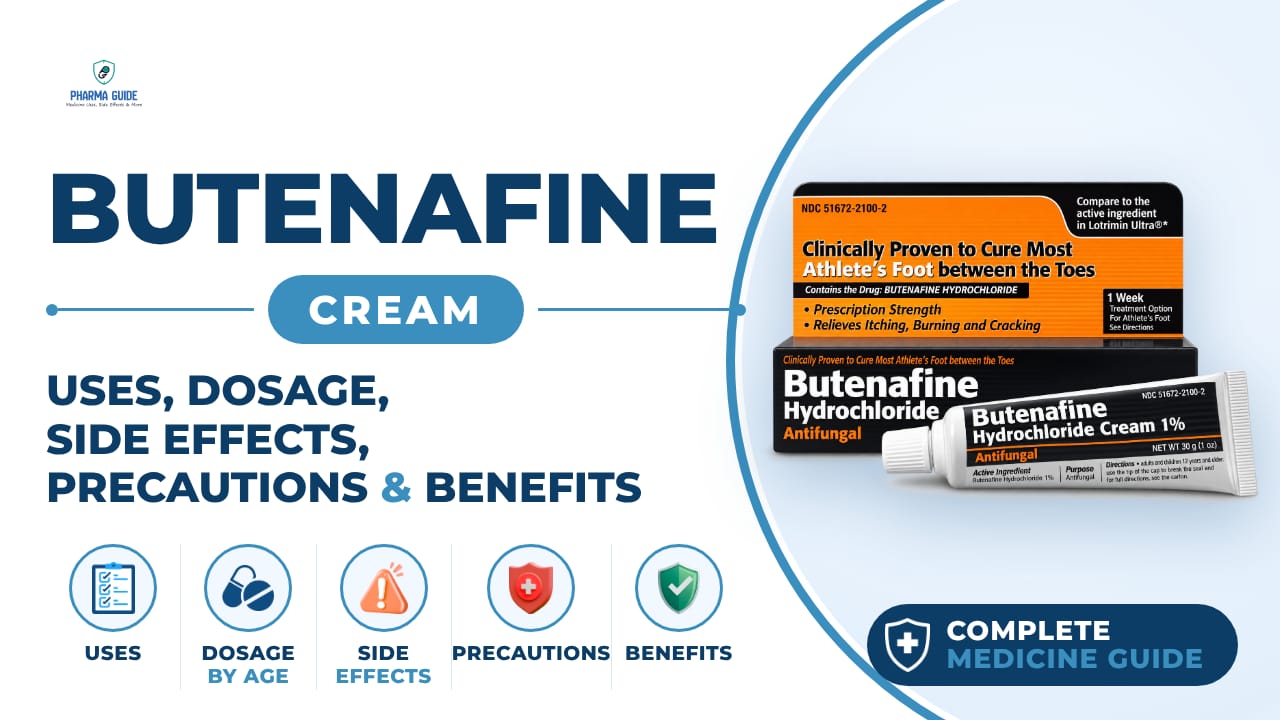
| Generic name | Butenafine |
|---|---|
| Drug class | Topical antifungals |
| Forms | Cream (1%), Gel, Solution |
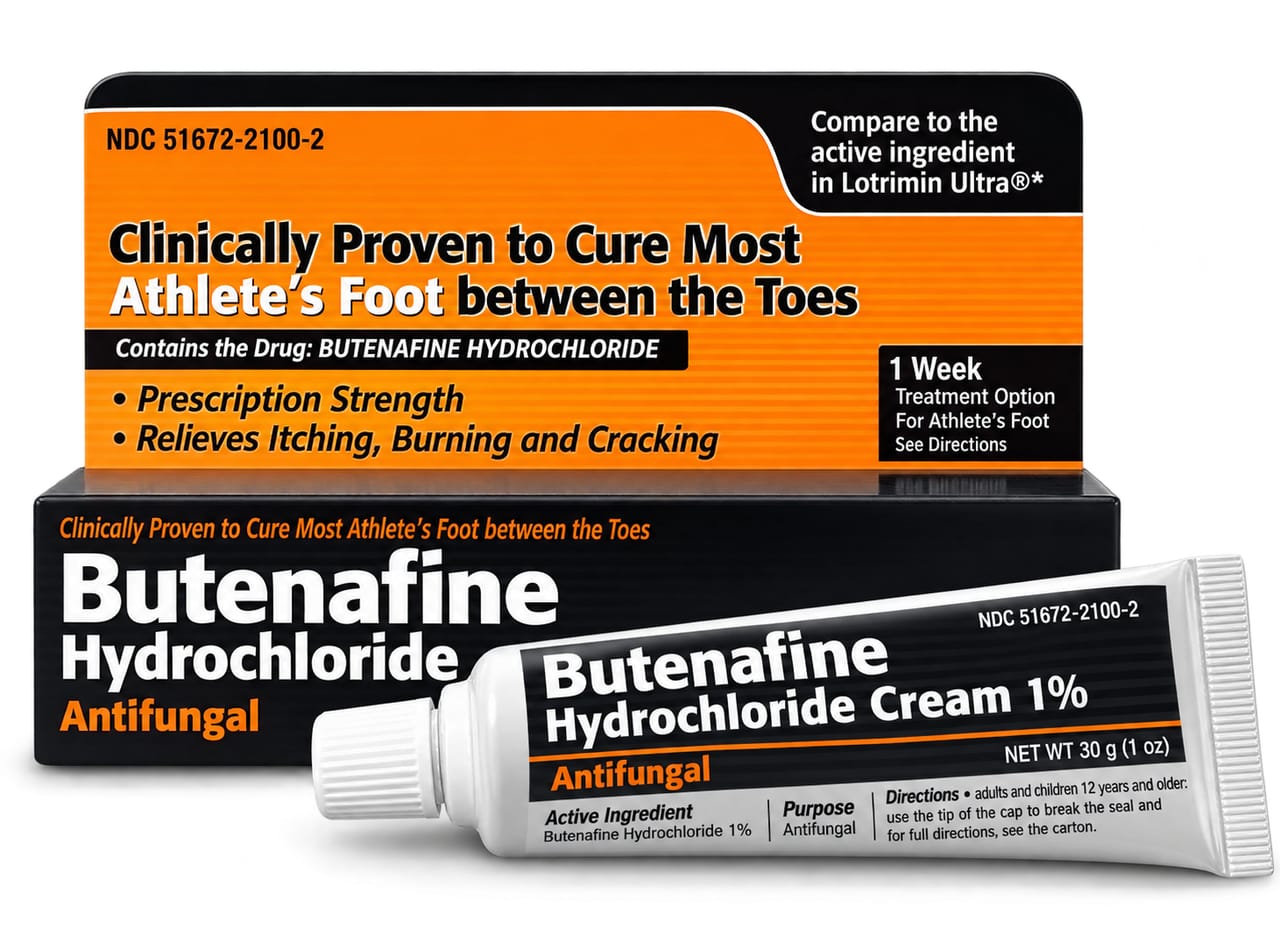
Quick overview
Butenafine Cream (generic name: Butenafine) is a topical antifungal medicine used to kill or stop the growth of fungi that cause common skin infections such as athlete's foot, jock itch, ringworm, and tinea versicolor. It is applied to the skin, usually once daily, and also helps relieve itching, burning, cracking, and scaling caused by these infections. It belongs to the topical antifungal drug class and has relatively little systemic absorption.
What is Butenafine Cream
Butenafine cream is a topical antifungal medicine used to kill or stop the growth of fungi that cause common skin infections. It comes as a cream applied to the skin.
Butenafine Cream uses
- Athlete's foot (tinea pedis), especially between the toes
- Jock itch (tinea cruris)
- Ringworm (tinea corporis)
- Tinea (pityriasis) versicolor, a yeast-related skin discoloration
- Relieves itching, burning, cracking, and scaling caused by these infections
Benefits of Butenafine Cream
- Cures most athlete's foot, jock itch, and ringworm infections
- Relieves itching, burning, cracking, and scaling
- Applied directly to the affected skin
- Usually requires only once-daily application
- Helps relieve fungal itching, scaling, and irritation
- Has relatively little systemic absorption
How Butenafine Cream works
Butenafine cream is an antifungal medicine. It works by blocking the production of ergosterol, an essential component of the fungal cell membrane. Without enough ergosterol, the fungal membrane becomes damaged, which stops fungal growth and helps kill the infection.
Butenafine Cream dosage
Use this medicine only on the skin; do not take it by mouth. Wash your hands before and after applying. Clean the affected skin with soap and water and dry it completely before applying. Put a thin layer on the affected skin and rub it in gently.
Do not apply to the eyes, mouth, nose, nails, scalp, or inside the vagina; if it gets into these areas, rinse well with water. Do not use bandages or dressings over the area unless your doctor tells you to. If treating athlete's foot, apply to all affected areas including between and around the toes.
Keep using the medicine for the full recommended time, even if your symptoms improve quickly. Do not apply more often or for longer than directed. This medicine is for adults and children 12 years of age and older; do not give to a child younger than 12 without medical advice.
If you miss a dose, apply it as soon as you remember, but skip it if it is almost time for your next dose; do not apply two doses at once.
| Age group | Dose |
|---|---|
| Under 12 years | Safety and effectiveness are not well established for routine self-treatment |
| 12–17 years | Apply a thin layer to the affected skin once daily, according to the product label and infection being treated |
| 18–64 years | Apply a thin layer once daily to the affected area and nearby skin |
| 65–74 years | Same adult topical regimen is generally used |
Available forms and strengths
- Cream (1%)
- Gel
- Solution
Side effects of Butenafine Cream
Common
- Burning or stinging sensation
- Itching
- Redness of skin
- Skin irritation
- Dryness or scaling at the application site
- Worsening of the skin condition
Serious
- Severe burning, stinging, or irritation at the application site
- Signs of an allergic reaction such as hives, rash, severe itching, swelling of the face, lips, tongue, or throat, trouble breathing or swallowing, or wheezing
- Severe blistering, oozing, or swelling of the skin
- New or worsening skin symptoms
Warnings and precautions
- This medicine is for use on the skin only. Keep it away from your mouth, nose, and eyes, since it may burn these areas. If it does get into these areas, rinse well with water.
- Do not apply this medicine to the nails or scalp, or use it for vaginal yeast infections.
- If this medicine is swallowed by mouth, get medical help or contact a poison control center right away.
- Stop using the product and ask a healthcare professional if irritation becomes worse or does not improve.
- This medicine is recommended for use in pregnant women only if necessary. Talk with your doctor about the risks and benefits before using it.
- This medicine is thought to be relatively safe during breastfeeding, but you should still discuss the risks and benefits with your doctor first.
- No routine kidney dose adjustment is needed because systemic absorption from topical use is low. No routine liver dose adjustment is generally required.
- It isn't known whether this medicine interacts with alcohol. Check with your doctor before drinking alcohol while using it.
- Does not normally affect driving.
Storage
- Store at room temperature in a dry place
- Do not store in a bathroom
- Store between 20° to 25°C (68° to 77°F)
- Keep all drugs in a safe place out of the reach of children and pets
- Throw away unused or expired drugs; do not flush down a toilet or pour down a drain unless told to do so; check with your pharmacist about drug take-back programs
- Do not use if the seal on the tube is broken or not visible
When to see a doctor
- Get emergency medical help right away if you notice signs of a serious allergic reaction, such as rash, hives, itching, swollen or blistered skin with or without fever, wheezing, chest or throat tightness, trouble breathing, swallowing or talking, unusual hoarseness, or swelling of the mouth, face, lips, tongue, or throat.
- Tell your doctor right away if you notice blisters, burning, itching, oozing, redness, swelling, tenderness, or other irritation where you applied the medicine.
- Call your doctor if your symptoms or skin problem does not improve or gets worse.
- If you think someone has swallowed this medicine by accident, seek emergency medical help or contact a poison control center right away.
Alternatives
- Terbinafine cream
- Clotrimazole cream
- Miconazole cream
Watch the video
FAQs
What is Butenafine Cream used for?
It is used to treat athlete's foot, jock itch, ringworm, and tinea versicolor, and it relieves itching, burning, cracking, and scaling caused by these fungal infections.
How often should Butenafine Cream be applied?
It is usually applied once daily as a thin layer to the affected skin, according to the product label and the infection being treated.
How does Butenafine Cream work?
It works by blocking the production of ergosterol, an essential component of the fungal cell membrane, which damages the membrane and stops fungal growth.
Can Butenafine Cream be used on nails, scalp, or for vaginal infections?
No, it should not be applied to the nails, scalp, or used for vaginal yeast infections; it is for use on the skin only.
What are the common side effects of Butenafine Cream?
Common side effects include burning or stinging, itching, redness, skin irritation, dryness or scaling at the application site, and worsening of the skin condition.
General information, not medical advice
Your prescriber and the leaflet in your pack know your situation. This page does not.
- Follow your prescriber and the leaflet
- Don't start, stop, or change a dose on your own
- Doses and warnings differ by country and product
Sources
Video
Related medicines

Injectafer Injection: Uses, Dosage, Side Effects, Precautions and Alternates
Iron products
Injectafer (ferric carboxymaltose) treats iron deficiency anemia and heart failure-related iron deficiency via IV. Learn uses, dosage, side effects, and

Gliclazide Tablet: Uses, Dosage, Side Effects, Precautions and Alternates
Sulfonylurea (hypoglycemic/antidiabetic agent)
Gliclazide Tablet is a sulfonylurea for type 2 diabetes that boosts insulin release. Learn about dosage, side effects, warnings, and precautions.