
Safety
General information, not medical advice
Your prescriber and the leaflet in your pack know your situation. This page does not.
- Follow your prescriber and the leaflet
- Don't start, stop, or change a dose on your own
- Doses and warnings differ by country and product
Butorphanol Nasal Spray: Uses, Dosage, Side Effects, Precautions and Alternates
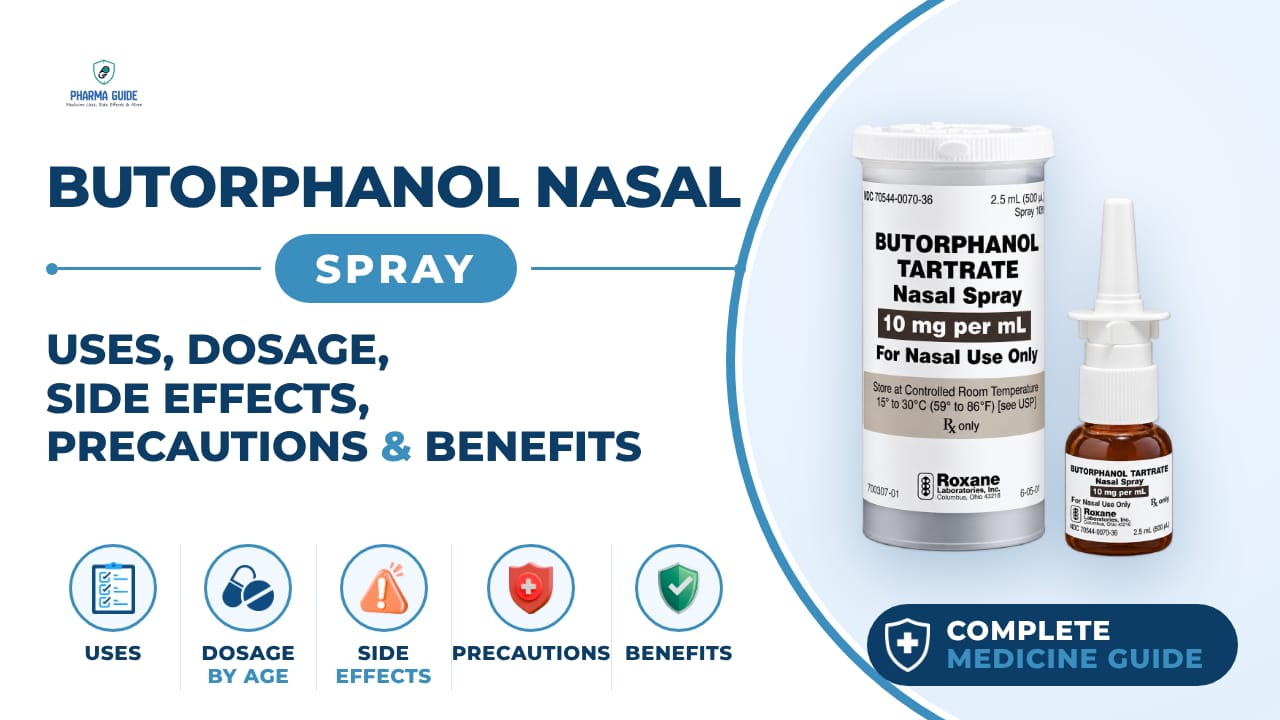
| Generic name | Butorphanol Tartrate |
|---|---|
| Drug class | Opioid analgesic |
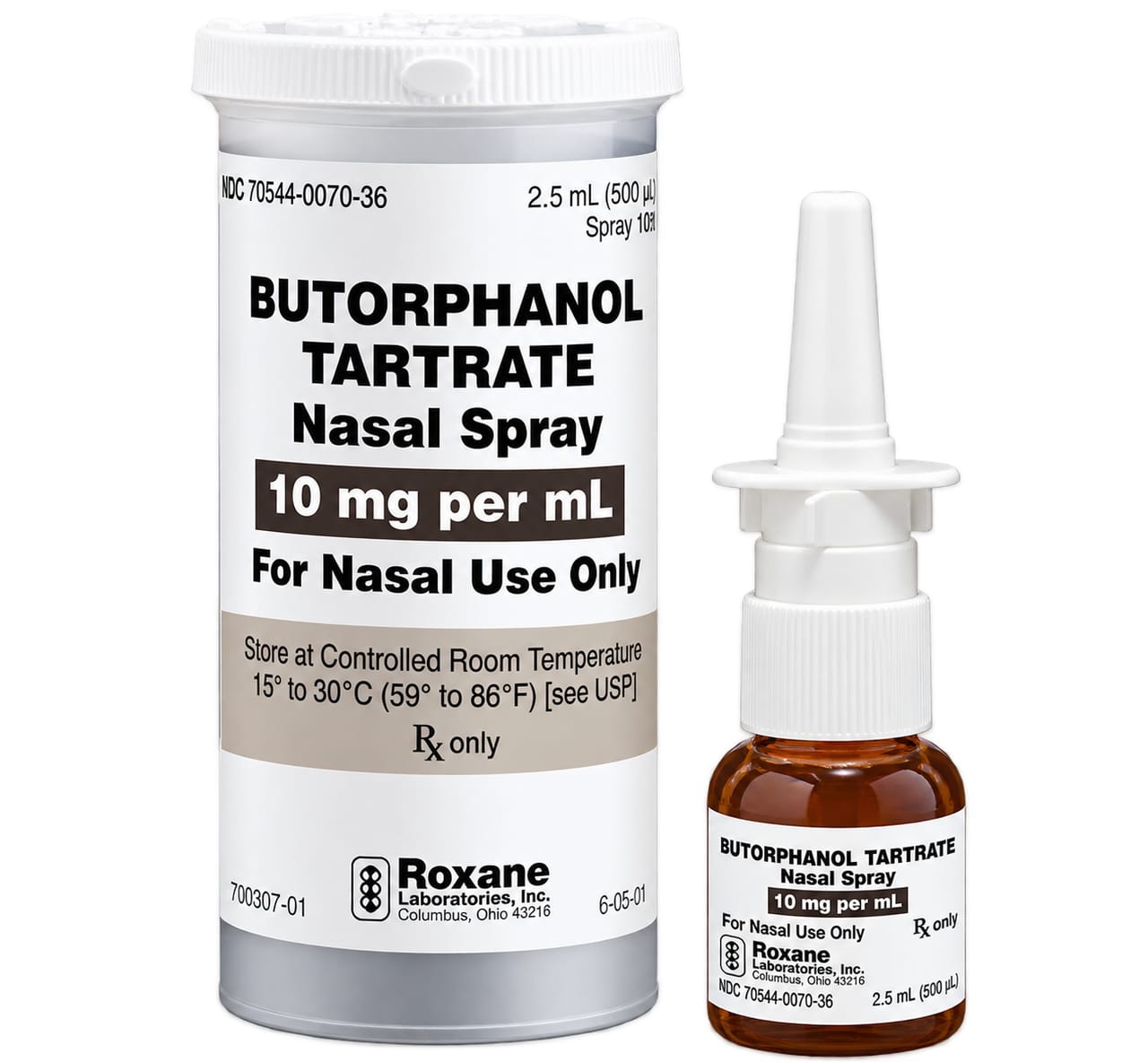
| Forms | Nasal spray solution, 10 mg/mL (1 mg per spray) |
Quick overview
Butorphanol Nasal Spray (generic name: Butorphanol Tartrate) is a prescription opioid analgesic delivered as a spray into the nose. It is used in adults to relieve moderate to severe short-term (acute) pain, typically when non-opioid treatments have not worked well enough or cannot be tolerated. It is not meant for occasional, as-needed use and is usually recommended for only up to 3 days unless a doctor decides otherwise.
What is Butorphanol Nasal Spray
Butorphanol Nasal Spray is a prescription opioid pain medicine given as a spray into the nose. It is used in adults to treat moderate to severe short-term pain.
Butorphanol Nasal Spray uses
- Relief of moderate to severe acute (short-term) pain in adults
- Not meant to be used as an occasional (as-needed) pain reliever
- Treats moderate-to-severe pain requiring an opioid
- Used when non-opioid treatments are inadequate or not tolerated
- Provides opioid analgesic pain relief
Benefits of Butorphanol Nasal Spray
- Starts working quickly to relieve pain
- Can be used when other pain treatments have not worked well enough or cannot be tolerated
- Delivered through the nose, avoiding the need for a needle or swallowing a pill
- Provides relatively rapid pain relief through nasal administration
- May be useful when swallowing an oral medicine is difficult
- Offers an alternative route of opioid administration in selected patients
How Butorphanol Nasal Spray works
Butorphanol works on specific nerve cells in the spinal cord and brain to change how the body feels and responds to pain.
Butorphanol Nasal Spray dosage
Use this medicine exactly as your healthcare professional directs; it is sprayed into the nose and should not be taken any other way. Do not repeat a dose sooner than your healthcare professional tells you to.
Blow your nose before using the spray. Before using the spray for the first time, prime the pump by spraying it into the air until a fine mist appears, and aim it away from yourself, others, or animals while doing this. If the spray has not been used for 48 hours or longer, prime it again with one or two sprays before using.
If you are told to use one spray, use it in only one nostril unless your healthcare professional tells you to use both. Do not give this medicine to anyone else, even if they have similar symptoms.
Older adults are usually started on a lower dose and watched closely because they may be more sensitive to the medicine. This medicine is usually only recommended for up to 3 days unless your healthcare professional decides you need it longer. Do not stop this medicine suddenly after using it for more than a few days; your healthcare professional will guide you on slowly lowering the dose.
If you miss a dose, take it as soon as you remember, but skip it if it is almost time for your next dose - do not take two doses at once.
Use exactly as prescribed by your doctor or pharmacist.
Available forms and strengths
- Nasal spray solution, 10 mg/mL (1 mg per spray)
Side effects of Butorphanol Nasal Spray
Common
- Drowsiness
- Dizziness
- Insomnia (trouble sleeping)
- Nausea and vomiting
- Dry mouth
- Headache
- Problems with vision
- Weakness or uncoordinated muscle movement
- Itching
- Light-headedness
- Sweating
- Constipation
- Low sex drive, impotence, or infertility
- Sore throat
- Taste loss
- Feeling cold
- Fever
- Stuffy or runny nose
Serious
- Life-threatening slow, shallow, or weak breathing (respiratory depression)
- Signs of allergic reaction: hives, difficulty breathing, swelling of face, lips, tongue, or throat
- Severe drowsiness, confusion, or trouble staying awake
- Serotonin syndrome: fever, sweating, shivering, diarrhea, nausea, vomiting, muscle shakes or stiffness, fast heartbeat, confusion, hallucinations
- Adrenal gland problems: nausea, vomiting, loss of appetite, weakness, dizziness, low blood pressure
- Severe constipation or bowel blockage: abdominal pain, severe constipation, nausea
- Fast, slow, or irregular heartbeat (palpitations)
- High or low blood pressure
- Seizures (uncontrollable shaking, with or without loss of consciousness)
- Opioid addiction, abuse, misuse, or physical dependence
- Withdrawal symptoms if the medicine is stopped suddenly
- Life-threatening withdrawal symptoms in newborns of mothers who used this medicine during pregnancy
- Signs of overdose: unusually slow or weak breathing, dizziness, confusion, extreme drowsiness
Warnings and precautions
- Even when taken as prescribed, this medicine carries a risk of opioid addiction, abuse, and misuse, which can lead to overdose and death.
- Life-threatening breathing problems can occur with this medicine, especially when starting treatment or after a dose increase.
- Never give this medicine to anyone else. Even one dose taken by someone it was not prescribed for, especially a child, can be fatal.
- If used during pregnancy, the baby can have life-threatening withdrawal symptoms after birth, which may appear in the days after birth and up to 4 weeks later.
- Taking this medicine with certain other medicines that change its blood levels can cause dangerous breathing problems or withdrawal effects.
- Combining this medicine with other opioids, benzodiazepines, alcohol, or other central nervous system depressants (including street drugs) can cause severe drowsiness, breathing problems, coma, and death.
- This medicine should be stored securely, under lock and out of sight and reach of children, since accidental exposure can be fatal.
- This medicine should not be used during pregnancy, labour, or delivery. It can cause serious breathing problems or life-threatening withdrawal symptoms in the baby. If you are already taking this medicine and are pregnant, do not stop suddenly without medical guidance, as this can harm the pregnancy.
- Do not use this medicine while breastfeeding. The drug can pass into breast milk and cause life-threatening breathing problems in a nursing baby.
- People with reduced kidney function may need a longer interval between doses because the body takes longer to clear the medicine.
- People with liver disease should use this medicine cautiously, usually with a longer time between doses, because the body clears the drug more slowly.
- Do not drink alcohol while using this medicine. Combining them can cause dangerous drowsiness, slowed breathing, or death.
- This medicine can cause drowsiness, dizziness, or light-headedness, especially after the first dose or a dose increase. Do not drive or operate machinery until you know how it affects you.
Storage
- Store BUTORPHANOL Nasal Spray at room temperature 15°C to 30°C
- Store the spray unit in the child resistant container
- Keep unused or expired BUTORPHANOL Nasal Spray in a secure place to prevent theft, misuse or accidental exposure
- Keep BUTORPHANOL Nasal Spray under lock, out of sight and reach of children and pets
- Never take medicine in front of small children as they will want to copy you
- BUTORPHANOL should never be thrown into household trash, where children and pets may find it. It should be returned to a pharmacy for proper disposal
When to see a doctor
- Get emergency help right away if you or someone else shows signs of overdose, such as very slow or weak breathing, extreme drowsiness, confusion, or inability to wake up.
- Seek immediate medical help for your baby if it shows breathing changes, is unusually hard to comfort, has tremors, or has increased stools, sneezing, yawning, vomiting, or fever after birth.
- Seek medical attention right away if you notice symptoms of serotonin syndrome, such as agitation, hallucinations, fever, sweating, fast heartbeat, muscle stiffness, or loss of coordination.
- Seek medical attention if you experience symptoms that could mean adrenal insufficiency, such as nausea, vomiting, loss of appetite, fatigue, weakness, dizziness, and low blood pressure.
- Stop the medicine and get medical help right away if you have a seizure while taking it.
- Get emergency help right away if a child accidentally takes this medicine.
Alternatives
- Ibuprofen
- Diclofenac
- Celecoxib
Watch the video
FAQs
What is Butorphanol Nasal Spray used for?
It is a prescription opioid analgesic sprayed into the nose, used in adults to relieve moderate to severe short-term (acute) pain, typically when non-opioid treatments have not worked well enough or cannot be tolerated.
How long can you use Butorphanol Nasal Spray?
It is not meant for occasional, as-needed use and is usually recommended for only up to 3 days unless a doctor decides otherwise.
How do you use Butorphanol Nasal Spray correctly?
Blow your nose before using the spray. Prime the pump before first use by spraying into the air until a fine mist appears, and reprime with one or two sprays if it hasn't been used for 48 hours or longer. Use it only as directed into the nose, in one nostril unless told otherwise, and do not repeat a dose sooner than directed.
What are the serious side effects of Butorphanol Nasal Spray?
Serious side effects include life-threatening slow or shallow breathing, severe drowsiness or confusion, allergic reactions, serotonin syndrome, adrenal gland problems, severe constipation or bowel blockage, irregular heartbeat, high or low blood pressure, seizures, and opioid addiction, abuse, misuse, or dependence.
Can Butorphanol Nasal Spray be used during pregnancy or breastfeeding?
No, it should not be used during pregnancy, labour, or delivery because it can cause serious breathing problems or life-threatening withdrawal symptoms in the baby. It should also not be used while breastfeeding, as it can pass into breast milk and cause life-threatening breathing problems in a nursing baby.
General information, not medical advice
Your prescriber and the leaflet in your pack know your situation. This page does not.
- Follow your prescriber and the leaflet
- Don't start, stop, or change a dose on your own
- Doses and warnings differ by country and product
Sources
Video
Related medicines
Methadone Tablet: Uses, Dosage, Side Effects, Precautions and Alternates
Opioid analgesic
Methadone Tablet is an opioid used for severe pain and opioid addiction treatment. Learn about its uses, dosage, side effects, and safety warnings.
Abstral Sublingual Tablet: Uses, Dosage, Side Effects, Precautions and Alternates
Opioid Analgesic
Abstral Sublingual Tablet contains fentanyl for breakthrough cancer pain in opioid-tolerant adults. Learn uses, dosage, side effects, and safety warnings.