
Safety
General information, not medical advice
Your prescriber and the leaflet in your pack know your situation. This page does not.
- Follow your prescriber and the leaflet
- Don't start, stop, or change a dose on your own
- Doses and warnings differ by country and product
Methadone Tablet: Uses, Dosage, Side Effects, Precautions and Alternates
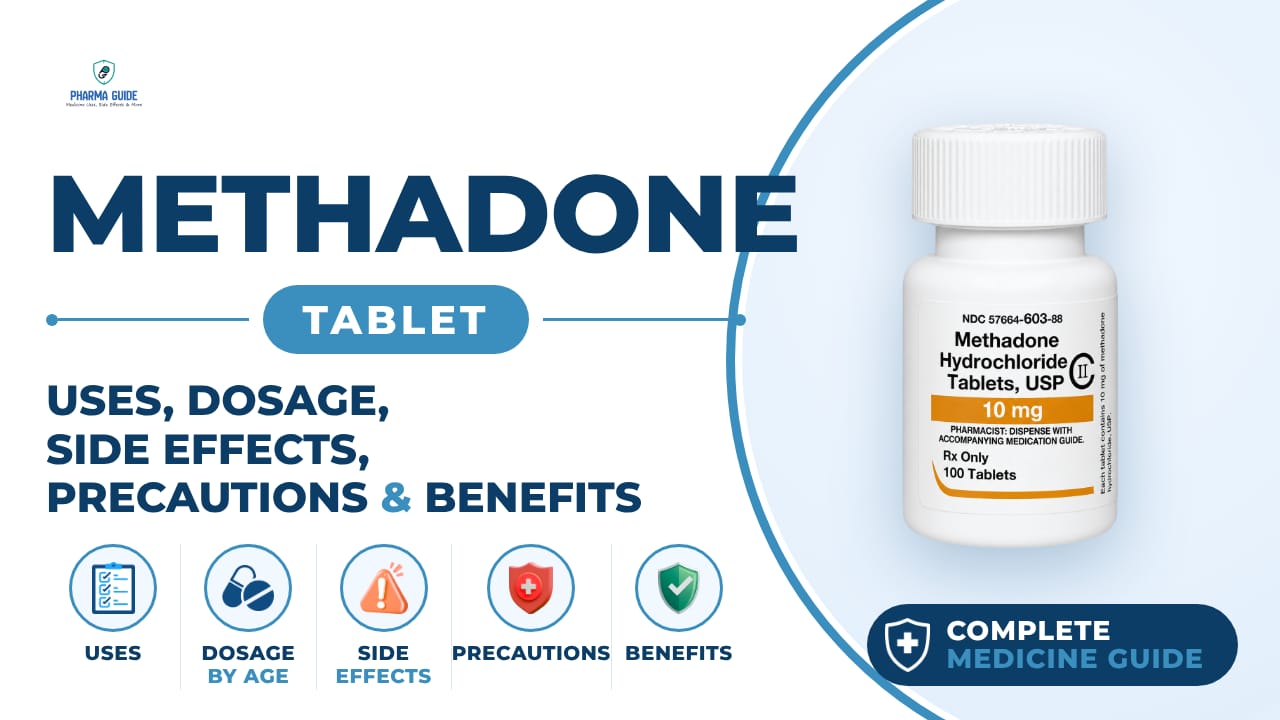
| Generic name | Methadone hydrochloride |
|---|---|
| Drug class | Opioid analgesic |
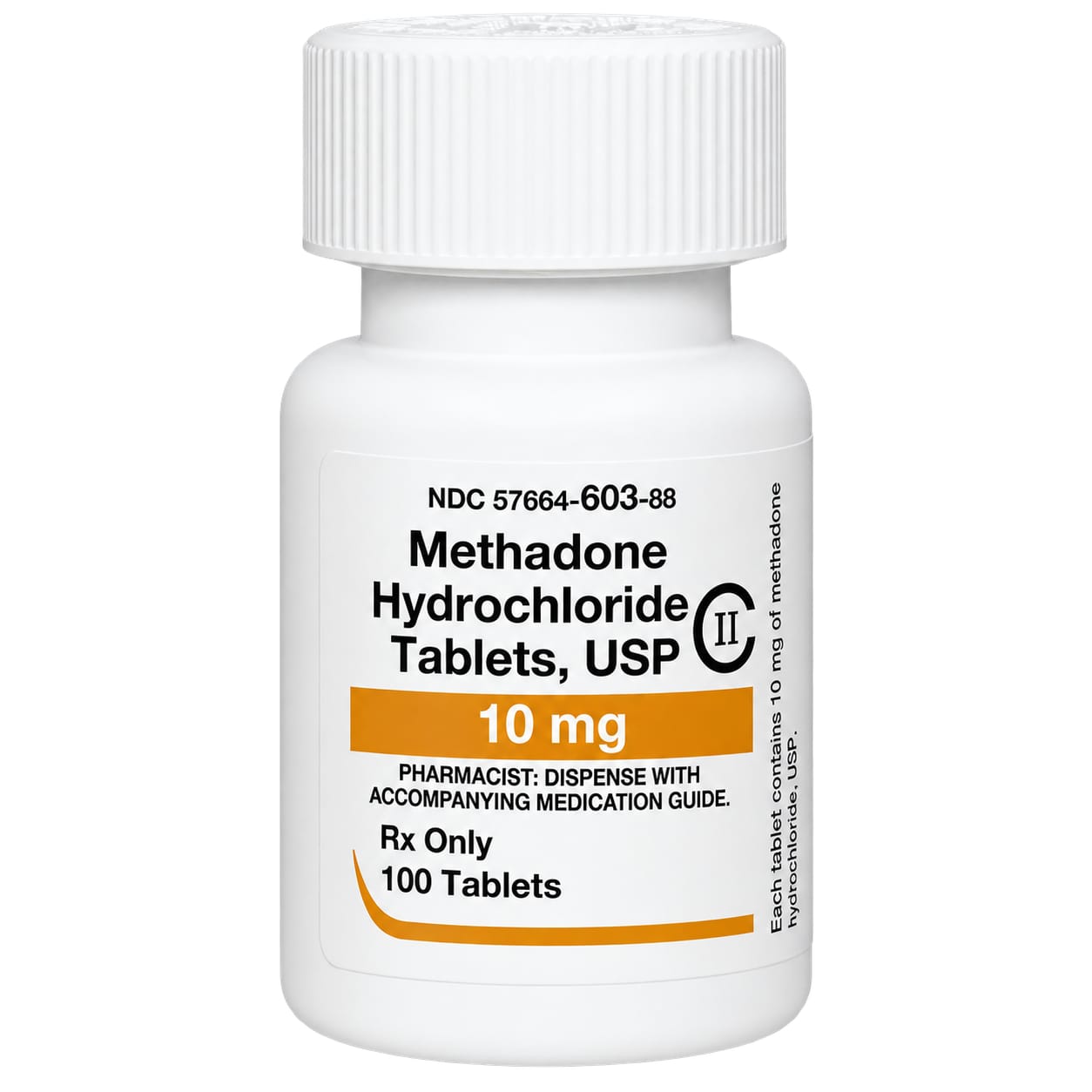
| Forms | Tablets (1 mg, 5 mg, 10 mg, and 25 mg strengths) |
Quick overview
Methadone Tablet contains methadone hydrochloride, an opioid analgesic. It is a long-acting opioid medicine used to manage severe, persistent pain and to treat opioid addiction by reducing withdrawal symptoms and cravings. It carries serious risks including addiction, breathing problems, and heart rhythm issues, and must be used exactly as prescribed.
What is Methadone Tablet
Methadone is a long-acting opioid medicine. It is used to treat severe ongoing pain and also to treat addiction to opioids like heroin by reducing withdrawal symptoms and drug cravings without causing a strong high.
Methadone Tablet uses
- Management of severe and persistent pain that needs daily, around-the-clock opioid treatment when other pain medicines do not work well enough or cannot be tolerated
- Detoxification treatment of opioid addiction (heroin or other morphine-like drugs)
- Maintenance treatment of opioid addiction, used together with counseling and medical/social support services
Benefits of Methadone Tablet
- Helps control severe, persistent pain in selected patients.
- Used in supervised treatment of opioid dependence.
- Can reduce opioid withdrawal symptoms and cravings.
- Has a long duration of action, allowing structured treatment plans.
How Methadone Tablet works
Methadone is an opioid that works by acting on specific nerve cells in the spinal cord and brain to relieve pain.
Methadone Tablet dosage
Take exactly as your healthcare professional tells you to; do not increase, decrease, or stop your dose without talking to your healthcare professional. This medicine must be taken by mouth only; do not use for injection or rectal use. Swallow tablets whole; do not break, chew, dissolve, or crush them.
If you miss a dose when treating pain, take it as soon as possible, then take your next dose at the regular scheduled time; do not take two doses at once. If you miss several doses in a row, talk to your healthcare professional before restarting. Do not stop taking this medicine suddenly after taking it for more than a few days; your healthcare professional will guide you on slowly lowering the dose. In elderly patients, the dosage schedule may be given once daily instead of multiple times a day.
| Age group | Dose |
|---|---|
| 6–7 years | 240–250 mg |
| 8–9 years | 360–375 mg |
| 10–11 years | 480–500 mg |
Available forms and strengths
Tablets (1 mg, 5 mg, 10 mg, and 25 mg strengths).
Side effects of Methadone Tablet
Common
- Drowsiness
- Dizziness
- Lightheadedness
- Fainting
- Nausea, vomiting, poor appetite
- Dry mouth
- Headache
- Problems with vision
- Weakness, uncoordinated muscle movement
- Itching
- Sweating, facial flushing
- Constipation
- Low sex drive, impotence (erectile dysfunction), infertility
- Insomnia
Serious
- Life-threatening slow or shallow breathing (respiratory depression)
- Heart rhythm problems including fast, slow, or irregular heartbeat, chest pain, or chest tightness
- Allergic reaction: rash, hives, swelling of the face, lips, tongue or throat, difficulty swallowing or breathing
- Severe low blood pressure causing dizziness, fainting, or blurred vision
- Bowel blockage: abdominal pain, severe constipation, nausea
- Serotonin toxicity: agitation, restlessness, flushing, muscle twitching, involuntary eye movements, heavy sweating, high body temperature, or rigid muscles
- Signs of overdose: hallucinations, confusion, trouble walking, slow or weak breathing, extreme sleepiness, floppy muscles, cold and clammy skin, seizures
- Disorder of the adrenal gland: nausea, vomiting, decreased appetite, fatigue, weakness, dizziness, or low blood pressure
- Withdrawal symptoms: nausea, vomiting, diarrhea, anxiety, shivering, cold and clammy skin, body aches, loss of appetite, sweating
- Sleep apnea: pauses in breathing during sleep
Warnings and precautions
- Even when taken exactly as prescribed, this medicine carries a risk of addiction, abuse, and misuse, which can lead to overdose and death.
- Life-threatening breathing problems can occur, especially when starting treatment or after a dose increase.
- This medicine can cause serious, sometimes life-threatening, heart rhythm problems.
- Never give this medicine to anyone else, even one dose can be fatal, especially for children.
- Taking this medicine with other opioids, benzodiazepines, alcohol, or other central nervous system depressants can cause severe drowsiness, slowed breathing, coma, and death.
- The tablets must be swallowed whole. Crushing, chewing, or dissolving them can release a potentially fatal dose quickly.
- Do not stop taking this medicine suddenly if you have been taking it for a while, as this can cause serious withdrawal symptoms.
- This medicine should not be used during pregnancy. It can cause life-threatening breathing problems and withdrawal symptoms in the baby after birth.
- This medicine should not be used while breastfeeding, as it can pass into breast milk and cause serious harm to the baby, including breathing problems.
- This medicine has not been well studied in people with kidney problems, who may need a lower dose and careful monitoring.
- People with liver problems may build up methadone in their body after multiple doses, so caution and dose adjustment may be needed.
- Do not drink alcohol while taking this medicine, as it can cause dangerous drowsiness, slowed breathing, or death.
- This medicine can cause drowsiness, dizziness, or lightheadedness, so you should avoid driving or operating machinery until you know how it affects you.
Storage
- Store at 15°C - 30°C
- Keep tightly closed and protect from light
- Keep unused or expired medicine in a secure place to prevent theft, misuse, or accidental exposure, under lock and out of sight and reach of children and pets
- Never take this medicine in front of small children, as they may copy you
- Do not throw this medicine into household trash; return unused or expired medicine to a pharmacy for proper disposal
- If a child accidentally takes this medicine, get emergency help right away
When to see a doctor
- Get immediate medical help if you have symptoms that may suggest a heart rhythm problem, such as fainting, heart palpitations, dizziness, or lightheadedness.
- Seek immediate medical help for your baby if they show signs of withdrawal such as breathing changes, being hard to comfort, tremors, or fever.
- Contact a healthcare professional or emergency services immediately if you think you or someone else may have taken too much of this medicine, even without symptoms.
- Get emergency help right away for signs of an allergic reaction, such as rash, hives, or swelling of the face, lips, tongue, or throat with difficulty breathing or swallowing.
- Stop the medicine and get immediate medical help in all cases of slow, shallow, or weak breathing.
Alternatives
- Ibuprofen
- Calpol
- Generic Paracetamol
Watch the video
FAQs
What is Methadone Tablet used for?
It is used to manage severe, persistent pain requiring daily opioid treatment, and for detoxification and maintenance treatment of opioid addiction, often alongside counseling and support services.
How should Methadone Tablet be taken?
It should be taken exactly as prescribed, by mouth only, with tablets swallowed whole without breaking, chewing, dissolving, or crushing them, since this can release a potentially fatal dose quickly.
What are the serious side effects of Methadone Tablet?
Serious side effects include life-threatening slow or shallow breathing, heart rhythm problems, severe low blood pressure, allergic reactions, bowel blockage, serotonin toxicity, sleep apnea, and signs of overdose like confusion and seizures.
Can Methadone Tablet be used during pregnancy or breastfeeding?
No, it should not be used during pregnancy as it can cause life-threatening breathing problems and withdrawal symptoms in the baby, and it should not be used while breastfeeding due to risks of serious harm to the baby.
Is it safe to stop taking Methadone Tablet suddenly?
No, stopping suddenly after taking it for a while can cause serious withdrawal symptoms; your healthcare professional will guide you on slowly lowering the dose.
General information, not medical advice
Your prescriber and the leaflet in your pack know your situation. This page does not.
- Follow your prescriber and the leaflet
- Don't start, stop, or change a dose on your own
- Doses and warnings differ by country and product
Sources
- APO-METHADONE Product Monograph, Apotex Inc., https://pdf.hres.ca/dpd_pm/00083105.PDF
- Methadone Hydrochloride Tablets Prescribing Information, Epic Pharma, LLC, https://dailymed.nlm.nih.gov/dailymed/fda/fdaDrugXsl.cfm?setid=6da7501b-b881-4bc7-891a-74214a00a3ac&type=display
- Methadone, Drugs.com, https://www.drugs.com/methadone.html
Video
Related medicines
Butorphanol Nasal Spray: Uses, Dosage, Side Effects, Precautions and Alternates
Opioid analgesic
Butorphanol Nasal Spray is a prescription opioid for short-term moderate to severe pain in adults, used for up to 3 days with careful dosing.
Abstral Sublingual Tablet: Uses, Dosage, Side Effects, Precautions and Alternates
Opioid Analgesic
Abstral Sublingual Tablet contains fentanyl for breakthrough cancer pain in opioid-tolerant adults. Learn uses, dosage, side effects, and safety warnings.