
Safety
General information, not medical advice
Your prescriber and the leaflet in your pack know your situation. This page does not.
- Follow your prescriber and the leaflet
- Don't start, stop, or change a dose on your own
- Doses and warnings differ by country and product
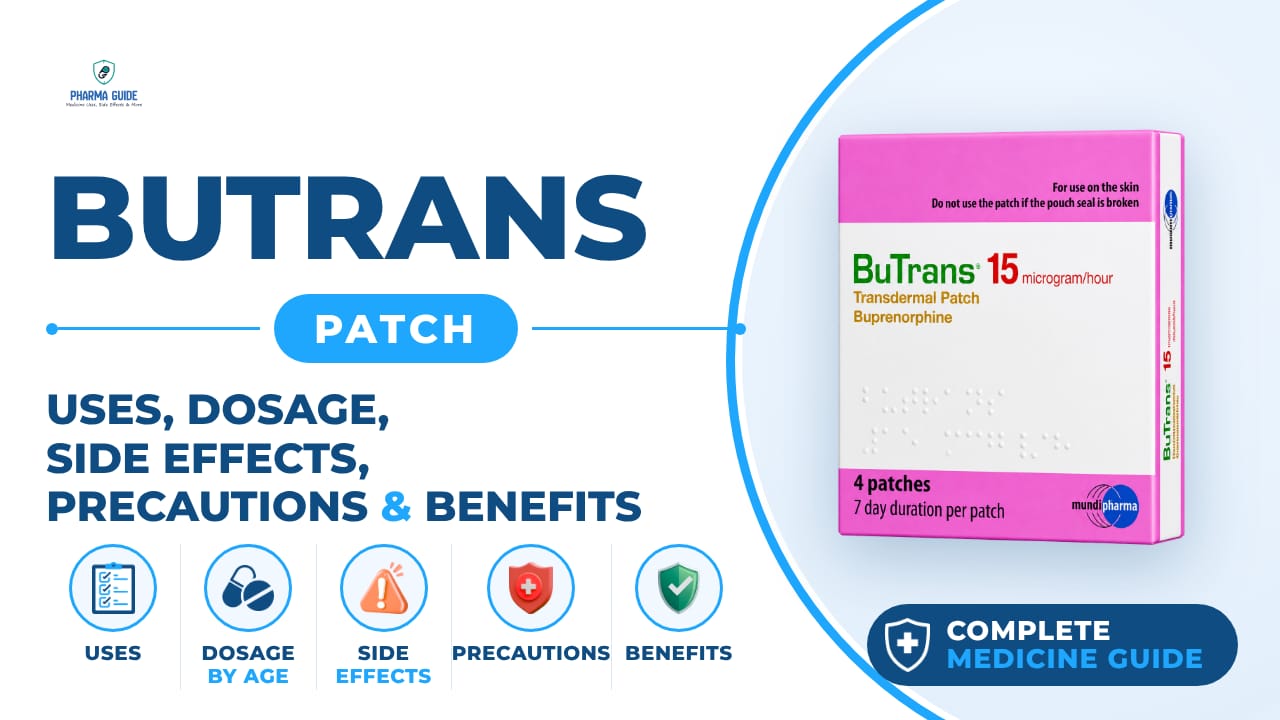
Butrans Patch: Uses, Dosage, Side Effects, Precautions and Alternates
| Generic name | buprenorphine |
|---|---|
| Drug class | Opioids (opioid analgesic / strong painkiller) |
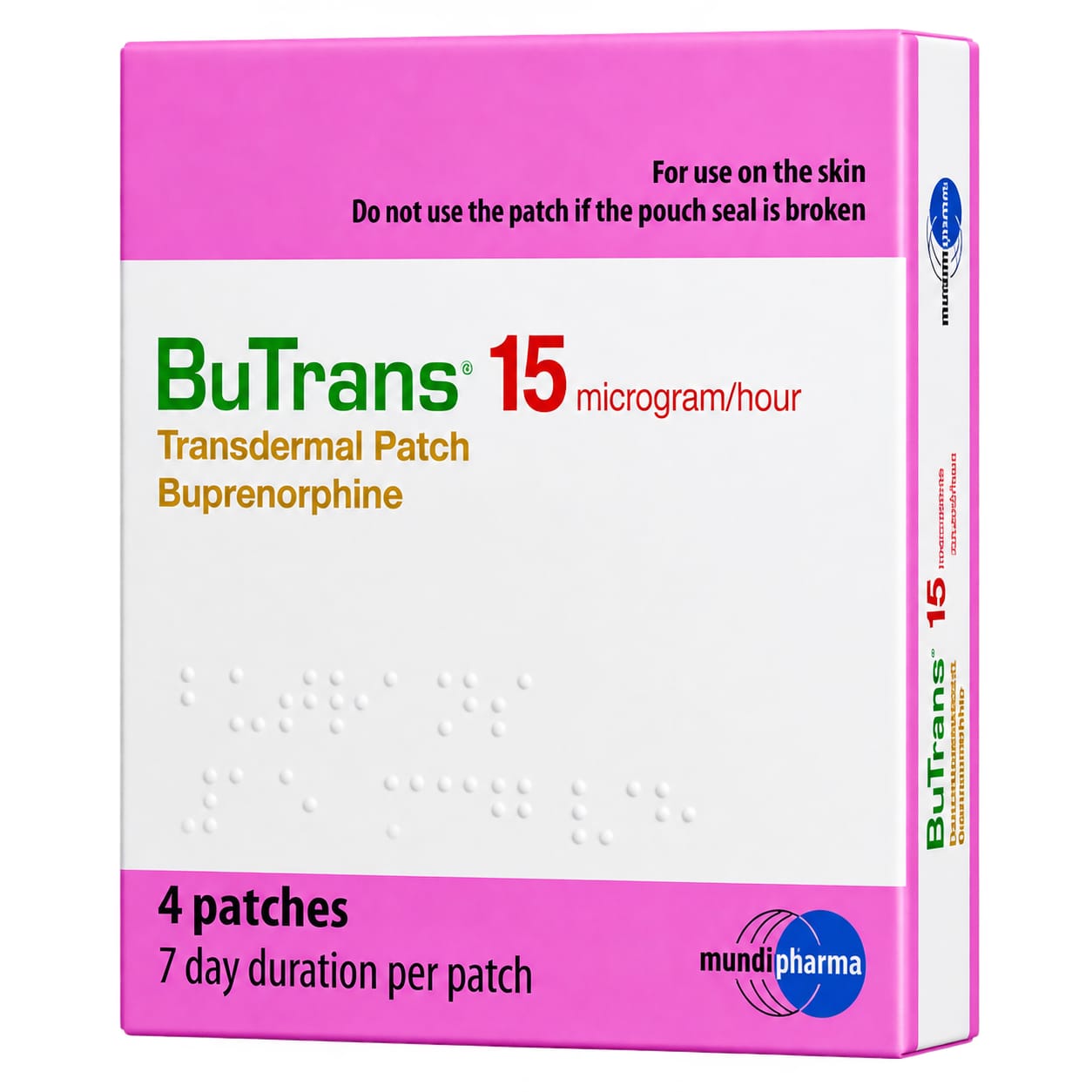
| Forms | Transdermal skin patch (5, 7.5, 10, 15, and 20 micrograms/hour) |
Quick overview
Butrans is a prescription skin patch containing buprenorphine, an opioid painkiller used to treat severe, long-lasting pain when other treatments have not worked well enough. The patch is worn on the skin and changed once every 7 days, providing continuous pain relief. It belongs to the opioid analgesic drug class and carries a boxed warning for risks including addiction, misuse, overdose, and breathing problems.
What is Butrans Patch
Butrans is a prescription skin patch that contains buprenorphine, a strong painkiller (opioid). It is used to treat pain that is severe and long-lasting, when other treatments have not worked well enough. The patch is worn on the skin and changed once every 7 days.
Butrans Patch uses
- Treats severe, long-lasting (chronic) pain that needs an opioid pain reliever
- Used when other pain treatment options are not effective, not tolerated, or not enough to control the pain
- Not meant for pain that is mild, short-term, or comes and goes (not for as-needed use)
Benefits of Butrans Patch
- Provides continuous, around-the-clock pain relief for 7 days per patch, instead of needing to take pills several times a day
- May cause less severe breathing suppression than some other opioids because it is a partial opioid agonist
How Butrans Patch works
Butrans contains buprenorphine, which passes through the skin into the bloodstream and works on the brain and nervous system to change how the body feels and responds to pain. Buprenorphine only partly activates the opioid receptors, which is different from full opioid medicines like morphine.
Butrans Patch dosage
Use the patch exactly as your doctor prescribes; do not use larger amounts or for longer than prescribed. Wear one patch continuously for 7 days, then remove it and apply a new patch to a different skin site. Do not wear more than one patch at a time unless your doctor tells you to.
Apply the patch to clean, dry skin on the upper chest, back, side of the chest, or outer upper arm; do not use damaged, irritated, or hairy skin without clipping the hair first (do not shave). Do not use soap, alcohol, oils, or lotions on the skin before applying; use only clear water. Press the patch firmly in place with the palm of your hand for about 15 to 30 seconds, making sure the edges stick well. Wash your hands with water only after applying the patch.
Do not cut or divide the patch. You may bathe, shower, or swim while wearing the patch, but avoid heat sources such as heating pads, saunas, hot tubs, or electric blankets, which can increase the amount of drug absorbed. It may take 24 hours or longer before you feel pain relief after starting the patch.
Do not stop using this medicine suddenly after long-term use; ask your doctor how to stop safely to avoid withdrawal symptoms. Do not apply a new patch to the same skin site for 3 to 4 weeks. Elderly patients use the same patch schedule as other adults, but may need closer monitoring for breathing problems and low blood pressure. This medicine is not recommended for anyone under 18 years old.
| Age group | Dose |
|---|---|
| Under 18 years | Not recommended / safety not established |
| 18–64 years | 5 mcg/hour patch once every 7 days initially; dose is individualized |
| 65 years & older | 5 mcg/hour initially, with cautious dose adjustment |
| Maximum | 20 mcg/hour |
Available forms and strengths
- Transdermal skin patch (5, 7.5, 10, 15, and 20 micrograms/hour)
Side effects of Butrans Patch
Common
- Constipation, nausea, vomiting
- Headache, dizziness, drowsiness, tiredness
- Redness, itching, or rash where the patch was worn
- Loss of appetite
- Dry mouth, indigestion, diarrhoea, stomach pain or discomfort
- Sweating, skin eruptions
- Muscle weakness, swelling of hands, ankles, or feet
Serious
- Weak or shallow breathing, deep sighs, unusual snoring, or breathing that stops during sleep
- Chest pain, fast or irregular heart rate, seizures (convulsions)
- Feeling light-headed like you might pass out, fainting
- Blisters, swelling, or severe irritation where the patch was worn
- Signs of adrenal gland problems: nausea, vomiting, loss of appetite, dizziness, feeling weak or tired
- Signs of liver problems: upper stomach pain, dark urine, clay-colored stools, yellowing of skin or eyes
- Signs of an allergic reaction: hives, difficulty breathing, swelling of face, lips, tongue, or throat
- Signs of serotonin syndrome: agitation, hallucinations, fever, sweating, shivering, fast heart rate, muscle stiffness, twitching, loss of coordination, nausea, vomiting, or diarrhea
- Sleep-related breathing problems such as pauses in breathing during sleep or low blood oxygen
Warnings and precautions
- This medicine carries a boxed warning, the strongest safety warning, because it can cause addiction, misuse, overdose, or death, even when used at a normal dose.
- This medicine can cause severe or life-threatening breathing problems, especially when you first start it or after your dose is increased. Use it exactly as directed to lower this risk.
- Accidental contact with the patch, especially by children, can be deadly, even from a used patch.
- Using this medicine together with certain other drugs, such as anxiety medicines, other opioids, other sedating drugs, or alcohol, can cause extreme drowsiness, severe breathing problems, coma, or death.
- Using opioids for a long time during pregnancy can cause serious, potentially life-threatening withdrawal symptoms in a newborn baby.
- Do not use this medicine if you have serious breathing problems, severe or sudden asthma attacks, or a known or suspected blockage in your stomach or intestines.
- Avoid heat sources such as heating pads, electric blankets, saunas, hot tubs, or sunbathing while wearing the patch, because heat can increase the amount of drug absorbed and may cause an overdose or death.
- Never share this medicine with anyone else, especially someone with a history of drug abuse, as misuse of narcotic medicine can cause addiction, overdose, or death.
- Using this medicine during pregnancy can cause the baby to become dependent on it, which may lead to life-threatening withdrawal symptoms after birth that may need medical treatment for weeks. You should not use
- Butrans if you are pregnant unless your doctor has carefully weighed the benefits and risks for you and your baby.
- Buprenorphine can pass into breast milk and may cause drowsiness or breathing problems in a nursing baby, so breastfeeding is not recommended while using this medicine unless your doctor advises otherwise.
- If you have kidney disease, including if you are on dialysis, your dose usually does not need to be changed.
- If you have liver disease, the effects and how long the patch works may be different, so your doctor will monitor you more closely.
- Do not drink alcohol while using this medicine, as it can cause dangerous side effects, make you feel unwell, or even lead to death.
- This medicine can affect your reactions, especially when you first start treatment, if your dose is increased, or if you also take medicines for anxiety or sleep.
- Do not drive or operate machinery if you feel dizzy, drowsy, or have blurred vision, including for 24 hours after removing the patch.
Storage
- Store the patches at room temperature, away from light and moisture
- Do not store above 25°C
- Keep each patch in its sealed foil pouch until you are ready to use it
- Do not use a patch if the pouch seal is broken, or if the patch is cut or damaged
- Store patches in a safe, secure place where children, pets, or other people cannot get to them
- After removing a used patch, fold it in half with the sticky side inward and dispose of it safely, out of the reach and sight of children and pets
- Use a patch-disposal unit if one is provided with the medication
- Do not flush patches or throw them in household trash if a take-back program is available; ask your pharmacist about proper disposal options
- Do not throw away medicines via wastewater or household waste unless instructed to do so
When to see a doctor
- Get emergency medical help right away if you have signs of an allergic reaction, such as hives, difficulty breathing, or swelling of your face, lips, tongue, or throat.
- Get emergency help if breathing becomes slow with long pauses, lips turn blue, or the person is hard to wake up — these can be signs of a life-threatening overdose.
- Stop using the patch and call your doctor right away if you have weak or shallow breathing, breathing that stops during sleep, chest pain, fast heart rate, seizures, feeling like you might pass out, or severe skin reactions where the patch was worn.
- Seek medical attention right away if you notice signs of serotonin syndrome, such as agitation, hallucinations, fever, sweating, fast heart rate, muscle stiffness, or loss of coordination.
- If you think you have used too many patches or too much medicine, remove all patches and call your doctor or go to the hospital right away, since overdose can cause severe drowsiness, breathing difficulties, or loss of consciousness.
- If a used or new patch accidentally sticks to a child's or another person's skin, or gets in their mouth, remove it and get medical help right away, as it can be fatal.
Alternatives
- Belbuca
- Sublocade
- Subutex
- Brixadi
- Buprenex
- Norspan
Watch the video
FAQs
How often do you change a Butrans patch?
The patch is worn continuously for 7 days, then removed and replaced with a new patch applied to a different skin site.
Where should you apply the Butrans patch?
Apply it to clean, dry skin on the upper chest, back, side of the chest, or outer upper arm, using only clear water to clean the area beforehand.
How long does it take for Butrans to start working?
It may take 24 hours or longer before you feel pain relief after starting the patch.
Can you shower while wearing a Butrans patch?
Yes, you may bathe, shower, or swim while wearing the patch, but you should avoid heat sources like heating pads, saunas, hot tubs, or electric blankets since heat can increase drug absorption.
Is it safe to drink alcohol while using Butrans?
No, alcohol should be avoided while using this medicine because it can cause dangerous side effects, make you feel unwell, or even lead to death.
General information, not medical advice
Your prescriber and the leaflet in your pack know your situation. This page does not.
- Follow your prescriber and the leaflet
- Don't start, stop, or change a dose on your own
- Doses and warnings differ by country and product
Sources
- Drugs.com – Butrans (buprenorphine) drug information, https://www.drugs.com/butrans.html
- Healio Clinical Guidance – Butrans, https://www.healio.com/clinical-guidance/drugs/butrans
- HPRA/Mundipharma – BuTrans Patient Information Leaflet, https://assets.hpra.ie/products/Human/29072/41765c06-e7d9-4409-a793-0633040f79b5.pdf
Video
Related medicines

Injectafer Injection: Uses, Dosage, Side Effects, Precautions and Alternates
Iron products
Injectafer (ferric carboxymaltose) treats iron deficiency anemia and heart failure-related iron deficiency via IV. Learn uses, dosage, side effects, and

Gliclazide Tablet: Uses, Dosage, Side Effects, Precautions and Alternates
Sulfonylurea (hypoglycemic/antidiabetic agent)
Gliclazide Tablet is a sulfonylurea for type 2 diabetes that boosts insulin release. Learn about dosage, side effects, warnings, and precautions.