
Safety
General information, not medical advice
Your prescriber and the leaflet in your pack know your situation. This page does not.
- Follow your prescriber and the leaflet
- Don't start, stop, or change a dose on your own
- Doses and warnings differ by country and product
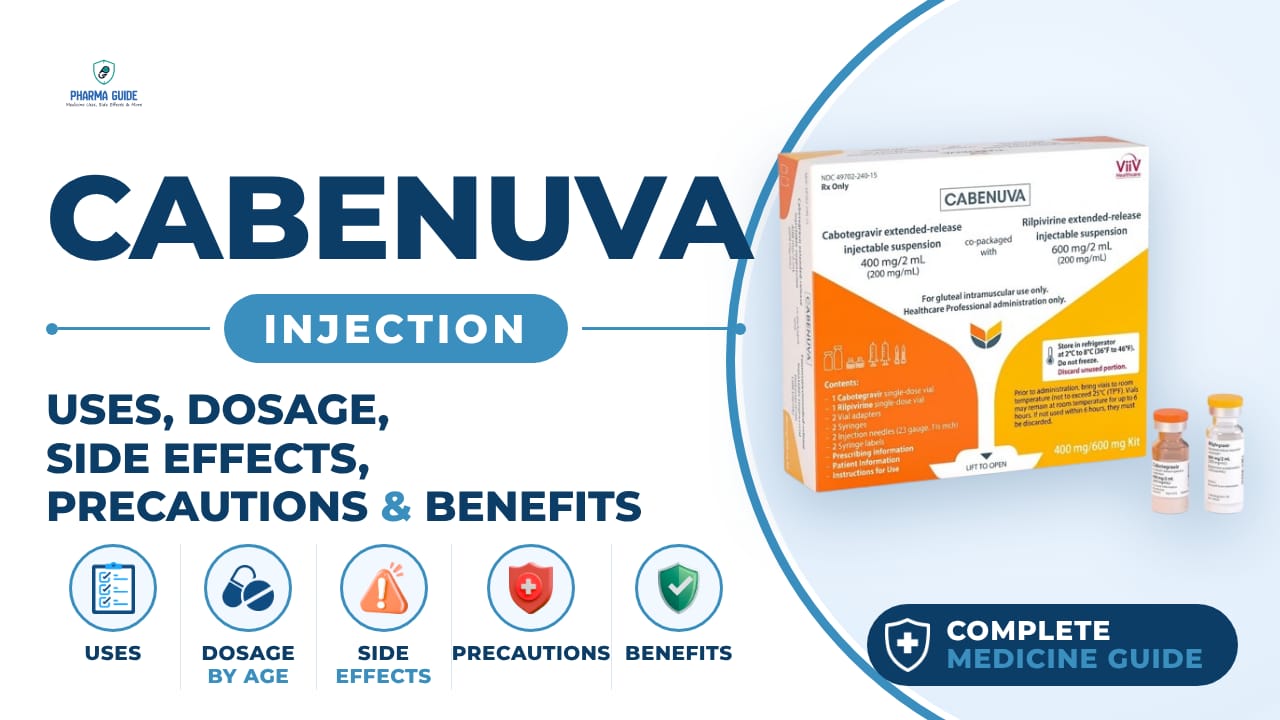
Cabenuva Injection: Uses, Dosage, Side Effects, Precautions and Alternates
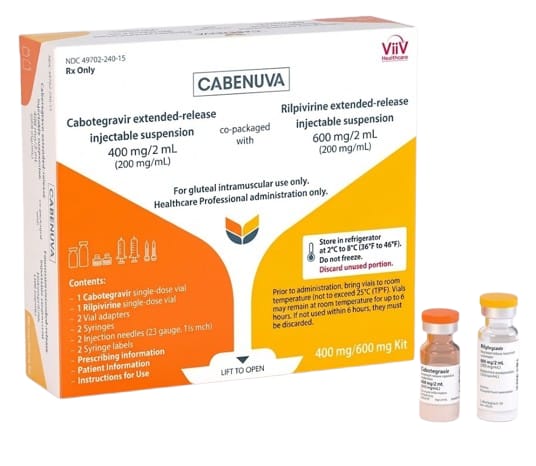
| Generic name | Cabotegravir and Rilpivirine |
|---|---|
| Drug class | Antiviral combination (Integrase Strand Transfer Inhibitor + Non-Nucleoside Reverse Transcriptase Inhibitor) |
| Forms | Injection |
Quick overview
Cabenuva Injection contains cabotegravir and rilpivirine, an antiviral combination used to treat HIV infection. It is a long-acting, complete HIV treatment given as injections once a month or once every two months, replacing daily HIV pills. It is given to adults and, in some cases, adolescents who meet certain requirements set by their doctor.
What is Cabenuva Injection
Cabenuva is an injectable medicine that contains two drugs, cabotegravir and rilpivirine, packaged together. It is a long-acting, complete HIV treatment given as injections once a month or once every two months, used instead of daily HIV pills.
Cabenuva Injection uses
- Treats HIV (Human Immunodeficiency Virus) infection in adults aged 18 years and over, and in people 12 years and older weighing at least 77 lb (35 kg) in some regions, who meet certain requirements set by their doctor.
- Replaces a person's current antiretroviral (HIV) treatment for ongoing control of HIV infection.
Benefits of Cabenuva Injection
- Keeps the amount of HIV virus in the body at a low level, helping maintain CD4+ white blood cells that fight infection.
- Offers less frequent dosing (monthly or every two months) instead of taking daily pills.
- Helps reduce the risk of passing HIV on to others when the virus is kept under control.
How Cabenuva Injection works
Cabenuva contains two medicines that work together to stop HIV from multiplying. Cabotegravir blocks an enzyme the virus needs to insert its genes into human cells, and rilpivirine blocks another enzyme the virus needs to convert its genetic material, so together they keep the virus at very low, undetectable levels.
Cabenuva Injection dosage
Cabenuva is given as two separate injections into the buttock muscles by a nurse or doctor; it is not self-injected. Before starting injections, your doctor may have you take cabotegravir and rilpivirine tablets by mouth once a day for about a month to check how well you tolerate the medicines.
After the lead-in period, injections are given once a month or once every two months, depending on your dosing schedule. You should stay under a doctor's care and attend all planned appointments; do not stop treatment without talking to your doctor first.
If you are late for an injection or stop treatment, your doctor may have you switch to oral cabotegravir and rilpivirine tablets temporarily, and you will need to start a different HIV treatment within one to two months of your last injection to avoid the virus becoming resistant. Remind every doctor, dentist, or pharmacist you see that you are using this medicine. Continue using protection (such as condoms) and avoid sharing needles, since this medicine does not stop you from passing HIV to others.
| Age group | Dose |
|---|---|
| Under 18 years | Not recommended |
| 18–64 years | 600 mg/900 mg, monthly |
| 65+ years | 600 mg/900 mg, monthly |
Available forms and strengths
- Injection
Side effects of Cabenuva Injection
Common
- Headache
- Injection site reactions (pain, tenderness, hardened mass or lump, redness, itching, swelling, warmth, numbness, or bruising)
- Feeling hot (fever)
- Depression
- Anxiety
- Abnormal dreams
- Difficulty sleeping (insomnia)
- Dizziness
- Nausea
- Vomiting
- Stomach pain
- Diarrhoea
- Wind (flatulence)
- Rash
- Muscle pain
- Pain such as back and chest pain
- Lack of energy (fatigue)
- Feeling weak
- Generally feeling unwell
- Weight gain
Serious
- Allergic reactions (rash, itching or hives, fever, swelling of face/lips/tongue, wheezing or difficulty breathing, shortness of breath, muscle or joint aches)
- Liver problems (yellowing of skin or eyes, loss of appetite, itching, tenderness of the stomach, light-coloured stools, dark urine)
- Stevens-Johnson syndrome (SJS) and toxic epidermal necrolysis (TEN) - painful red or purple skin that looks burned and peels off, blisters on skin/mouth/nose/genitals, red painful watery eyes
- Post-injection reactions occurring within minutes of the rilpivirine injection (trouble breathing, narrowing of airways, stomach cramps, sweating, numbness of mouth, pain, feeling anxious, feeling warm, rash, feeling lightheaded or faint, blood pressure changes)
- Depression or mood changes, including suicidal thoughts or suicide attempts
- Symptoms of infection or inflammation as the immune system recovers (muscle weakness/pain, joint pain or swelling, weakness spreading from hands and feet, palpitations or tremor, hyperactivity)
Warnings and precautions
- Do not receive this medicine if you are allergic to cabotegravir or rilpivirine, or if you are taking certain medicines for bacterial infections (like rifampicin or rifapentine), certain anticonvulsant seizure medicines, or products containing St. John's wort, as these can make the treatment less effective.
- If you stop treatment or are late for injections, low levels of the medicine can stay in your body for up to 12 months or more (cabotegravir) and up to 4 years (rilpivirine), which can interact with other medicines and allow the virus to become resistant. You must start a different HIV treatment within one to two months of your last injection.
- As your immune system recovers, old hidden infections may flare up, or your immune system may start attacking healthy tissue, causing symptoms like muscle weakness or pain, joint pain or swelling, weakness spreading from the hands and feet, palpitations, tremor, or restlessness. These symptoms can appear many months after starting treatment.
- This medicine does not cure HIV and does not stop you from passing HIV to others, so you should continue to use condoms and avoid sharing needles.
- Tell your doctor if you are pregnant or plan to become pregnant. Your doctor will discuss the risks and benefits for you and your baby, since the medicine can stay in your body for up to 12 months or longer after your last injection.
- Talk to your doctor if you are breastfeeding or plan to. Where possible, women with HIV should not breastfeed because HIV can pass to the baby through breast milk, and it isn't known if the medicine's ingredients can pass into breast milk and harm the baby, possibly for up to 12 months after the last injection.
- Tell your doctor if you have ever had kidney problems before receiving this medicine.
- Tell your doctor if you have or have had liver problems, including hepatitis B or C. Your liver function will be monitored by your doctor during treatment, since liver problems can occur with or without a prior history.
- This medicine can cause dizziness and other side effects that make you less alert, so be careful before driving or using machines until you know how it affects you.
Storage
- Keep your injections in the pack until it is time to receive them.
- Keep your injections in a refrigerator at 2°C to 8°C. Do not freeze.
- Keep it where young children cannot reach it.
- If you no longer need to use this medicine or it is out of date, take it to any pharmacy for safe disposal.
- Do not use this medicine after the expiry date.
When to see a doctor
- Get medical help right away if you develop a rash along with fever, feeling generally unwell, extreme tiredness, muscle or joint aches, blistering or peeling skin, mouth sores, red or swollen eyes, or swelling of the face, lips, mouth, tongue, or throat, or trouble breathing — these can be signs of a serious allergic reaction or a rare but life-threatening skin reaction.
- Contact your doctor right away if you notice signs of liver problems, such as yellowing of your skin or eyes, dark urine, pale stools, loss of appetite, nausea or vomiting, pain on the right side of your stomach, or itching.
- Contact your doctor right away if you feel sad, hopeless, anxious, or restless, or if you have thoughts of harming yourself, including suicidal thoughts.
- If you miss an injection appointment, or expect to miss one by more than 7 days, contact your doctor right away to discuss your options, since missing doses can increase the risk of the virus becoming resistant to treatment.
- Call your doctor immediately if you become pregnant while receiving this medicine.
Alternatives
- Juluca
- Biktarvy
- Dovato
Watch the video
FAQs
What is Cabenuva Injection used for?
Cabenuva treats HIV infection in adults, and in some regions adolescents aged 12 and older weighing at least 35 kg, who meet certain requirements set by their doctor. It replaces a person's current antiretroviral treatment for ongoing control of HIV infection.
How often is Cabenuva Injection given?
After an initial lead-in period where you may take cabotegravir and rilpivirine tablets by mouth once a day for about a month, Cabenuva injections are given once a month or once every two months, depending on your dosing schedule.
How is Cabenuva Injection administered?
Cabenuva is given as two separate injections into the buttock muscles by a nurse or doctor; it is not self-injected.
What are the common side effects of Cabenuva Injection?
Common side effects include headache, injection site reactions, fever, depression, anxiety, abnormal dreams, insomnia, dizziness, nausea, vomiting, stomach pain, diarrhoea, flatulence, rash, muscle pain, back and chest pain, fatigue, weakness, feeling unwell, and weight gain.
What happens if I miss a Cabenuva injection appointment?
If you miss an injection appointment or expect to miss one by more than 7 days, contact your doctor right away. Your doctor may have you switch to oral tablets temporarily, and you will need to start a different HIV treatment within one to two months of your last injection to avoid the virus becoming resistant.
General information, not medical advice
Your prescriber and the leaflet in your pack know your situation. This page does not.
- Follow your prescriber and the leaflet
- Don't start, stop, or change a dose on your own
- Doses and warnings differ by country and product
Sources
Video
Related medicines

Injectafer Injection: Uses, Dosage, Side Effects, Precautions and Alternates
Iron products
Injectafer (ferric carboxymaltose) treats iron deficiency anemia and heart failure-related iron deficiency via IV. Learn uses, dosage, side effects, and

Gliclazide Tablet: Uses, Dosage, Side Effects, Precautions and Alternates
Sulfonylurea (hypoglycemic/antidiabetic agent)
Gliclazide Tablet is a sulfonylurea for type 2 diabetes that boosts insulin release. Learn about dosage, side effects, warnings, and precautions.