
Safety
General information, not medical advice
Your prescriber and the leaflet in your pack know your situation. This page does not.
- Follow your prescriber and the leaflet
- Don't start, stop, or change a dose on your own
- Doses and warnings differ by country and product
Cabergoline Tablet: Uses, Dosage, Side Effects, Precautions and Alternates
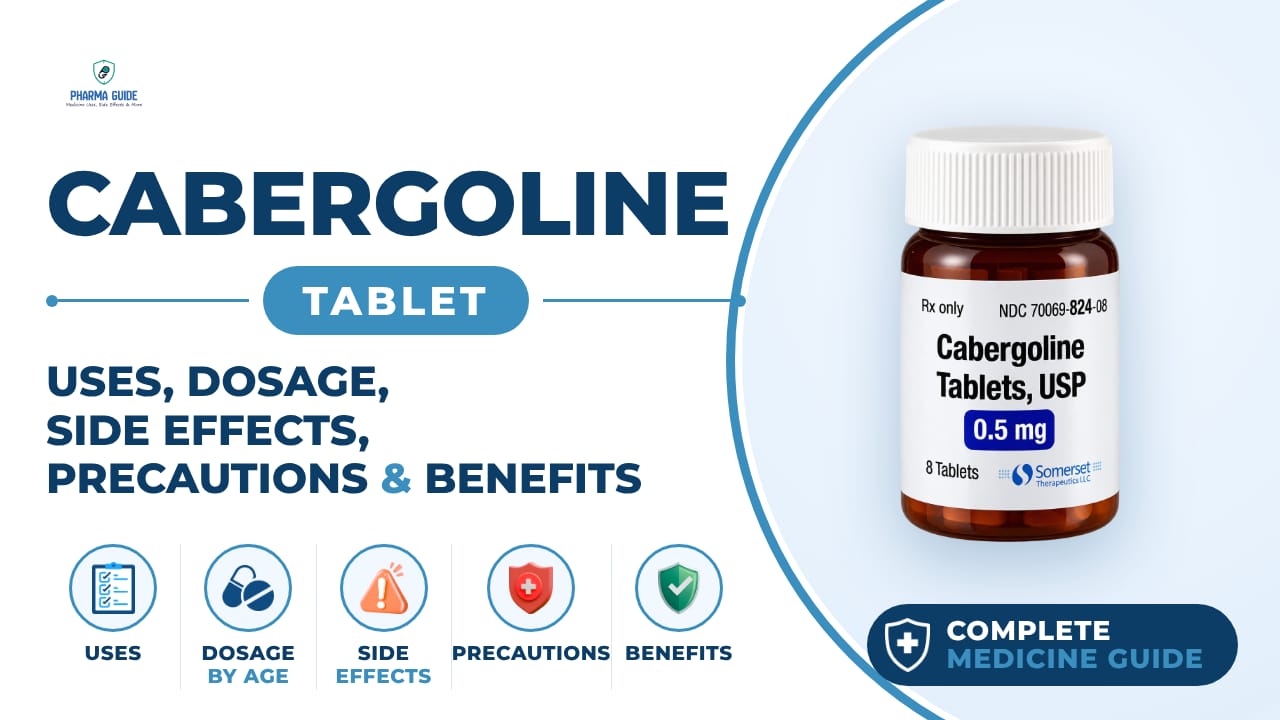
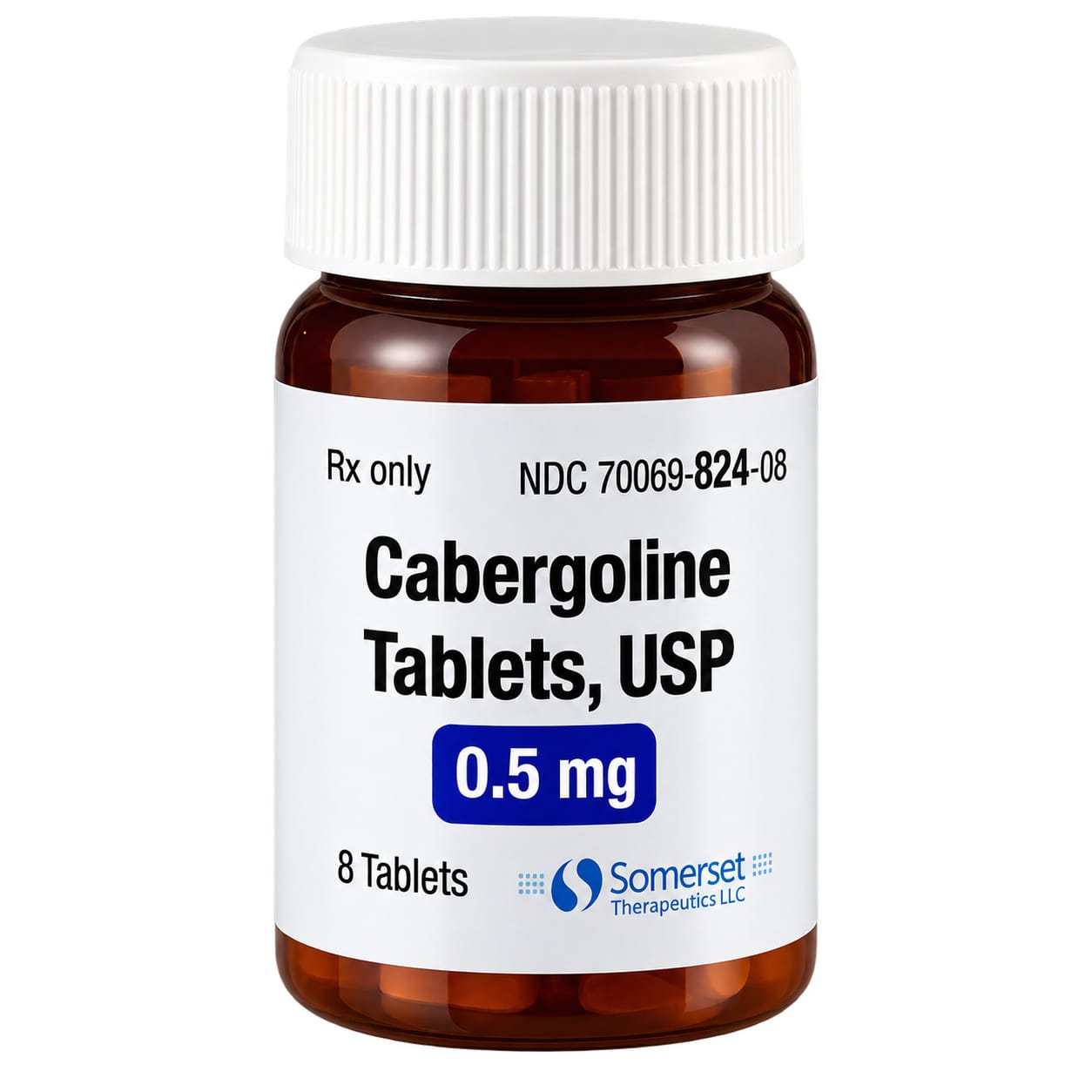
| Generic name | Cabergoline |
|---|---|
| Drug class | Dopamine Receptor Agonist |
| Forms | Tablet |
Quick overview
Cabergoline Tablet is a dopamine receptor agonist that lowers prolactin, a hormone made by the pituitary gland. It is used to treat hyperprolactinemic disorders and to stop or reduce breast milk production after childbirth in certain medical situations. It is taken by mouth, preferably with meals, exactly as directed by a doctor.
What is Cabergoline Tablet
Cabergoline is a tablet medicine that lowers a hormone called prolactin, which is made by the pituitary gland. It is also used to stop or reduce breast milk production after childbirth in certain medical situations.
Cabergoline Tablet uses
- Treatment of hyperprolactinemic disorders, either idiopathic or due to pituitary adenomas
- Inhibition of physiological lactation soon after childbirth for specific medical reasons
- Suppression of already established lactation (in some products)
Benefits of Cabergoline Tablet
- Lowers high prolactin levels in the blood
- Can help restore normal menstrual cycles and fertility in women with high prolactin
- Can shrink pituitary tumors that produce prolactin
- Reduces milk production, breast engorgement, and breast pain when lactation needs to be stopped
How Cabergoline Tablet works
Cabergoline works by directly stimulating dopamine receptors in the pituitary gland, which turns down the release of prolactin.
Cabergoline Tablet dosage
Take by mouth, preferably with meals, since this improves how well the medicine is tolerated. Food does not affect how the body absorbs the medicine. Follow your doctor's instructions carefully about how much to take and when, and continue taking the medicine until your doctor tells you to stop.
If you miss a dose, take it as soon as you remember unless it is almost time for the next dose; do not take two doses at once.
| Age group | Dose |
|---|---|
| Under 18 years | Safety and effectiveness are not established; no standard pediatric dose |
| 18–64 years | Usually starts at 0.25 mg twice weekly |
| 65–74 years | Same adult starting dose may be used, with closer monitoring for dizziness and low blood pressure |
| 75 years and older | Individualized cautiously; no separate standard age-based dose is established |
Available forms and strengths
- Tablet
Side effects of Cabergoline Tablet
Common
- Nausea
- Headache
- Dizziness or vertigo
- Constipation
- Abdominal pain or stomach pain
- Weakness or tiredness
- Breast pain
- Hot flashes
- Depression
- Dyspepsia (indigestion)
- Vomiting
Serious
- Shortness of breath, persistent cough, or chest pain (possible lung or heart tissue scarring)
- Swelling in the arms or legs
- Signs of heart valve problems
- Fainting or severe dizziness from low blood pressure
- Unusual, uncontrollable urges such as compulsive gambling, increased sex drive, or compulsive shopping or eating
- Severe or worsening headache with vision changes
- Signs of stroke or seizures (reported in postpartum women given cabergoline for lactation)
Warnings and precautions
- Cabergoline should not be used by people with uncontrolled high blood pressure or known allergy to ergot-type medicines.
- Long-term use has been linked to scarring (fibrosis) of heart valves and lung or chest tissue; doctors may check your heart with scans before and during treatment.
- This medicine can cause sudden sleep onset without warning in some people.
- Some people have developed intense, unusual urges such as compulsive gambling, increased sexual desire, or compulsive shopping or eating while taking this medicine.
- This medicine should not be combined with certain other medicines, including some antibiotics and medicines for mental illness, migraine, or nausea, without talking to a doctor.
- Pregnancy should be ruled out before starting cabergoline, and women should avoid becoming pregnant for at least a month after stopping it. Tell your doctor right away if you become pregnant or think you might be pregnant while taking this medicine.
- This medicine stops the flow of breast milk, so it should not be used by women who are breastfeeding or planning to breastfeed, unless a doctor advises otherwise for specific medical reasons.
- Cabergoline should be used carefully in people with kidney problems; tell your doctor if you have had kidney disease.
- Because the liver breaks down cabergoline, people with liver problems need careful monitoring and may need a different dose.
- It is not known how alcohol affects how well this medicine is tolerated, so caution is advised.
- This medicine can cause dizziness, sleepiness, or sudden sleep episodes, so you should avoid driving or operating machinery until you know how it affects you.
Storage
- Store at room temperature (15°C to 30°C)
- Do not use after the expiration date printed on the carton and label
- Keep all medications out of the reach of children
When to see a doctor
- Get medical help right away if you have shortness of breath, chest pain, persistent cough, difficulty breathing while lying down, or swelling in your arms or legs.
- Tell your doctor if you feel dizzy or lightheaded when standing up, as this can be a sign of low blood pressure.
- Contact your doctor if you notice new or unusual strong urges, such as gambling, increased sexual desire, or compulsive spending or eating.
- Stop the medicine and tell your doctor immediately if you become pregnant while taking it.
- If you take too many tablets by accident, contact your doctor, pharmacist, or local poison control center right away.
Alternatives
- Bromocriptine
- Parlodel
- Quinagolide where available
Watch the video
FAQs
What is Cabergoline Tablet used for?
It is used to treat hyperprolactinemic disorders (idiopathic or due to pituitary adenomas) and to stop or reduce breast milk production after childbirth in certain medical situations.
How does Cabergoline Tablet work?
It works by directly stimulating dopamine receptors in the pituitary gland, which reduces the release of prolactin.
How should Cabergoline Tablet be taken?
It should be taken by mouth, preferably with meals to improve tolerability, exactly as directed by a doctor. Food does not affect absorption of the medicine.
What are the common side effects of Cabergoline Tablet?
Common side effects include nausea, headache, dizziness or vertigo, constipation, abdominal pain, weakness, breast pain, hot flashes, depression, indigestion, and vomiting.
What precautions should be taken with Cabergoline Tablet?
It should not be used by people with uncontrolled high blood pressure or known allergy to ergot-type medicines. Pregnancy should be ruled out before starting, and it should be avoided during breastfeeding unless specifically advised by a doctor. Caution is also needed in people with kidney or liver problems.
General information, not medical advice
Your prescriber and the leaflet in your pack know your situation. This page does not.
- Follow your prescriber and the leaflet
- Don't start, stop, or change a dose on your own
- Doses and warnings differ by country and product
Sources
Video
Related medicines

Injectafer Injection: Uses, Dosage, Side Effects, Precautions and Alternates
Iron products
Injectafer (ferric carboxymaltose) treats iron deficiency anemia and heart failure-related iron deficiency via IV. Learn uses, dosage, side effects, and

Gliclazide Tablet: Uses, Dosage, Side Effects, Precautions and Alternates
Sulfonylurea (hypoglycemic/antidiabetic agent)
Gliclazide Tablet is a sulfonylurea for type 2 diabetes that boosts insulin release. Learn about dosage, side effects, warnings, and precautions.