
Safety
General information, not medical advice
Your prescriber and the leaflet in your pack know your situation. This page does not.
- Follow your prescriber and the leaflet
- Don't start, stop, or change a dose on your own
- Doses and warnings differ by country and product
Cabometyx Tablet: Uses, Dosage, Side Effects, Precautions and Alternates
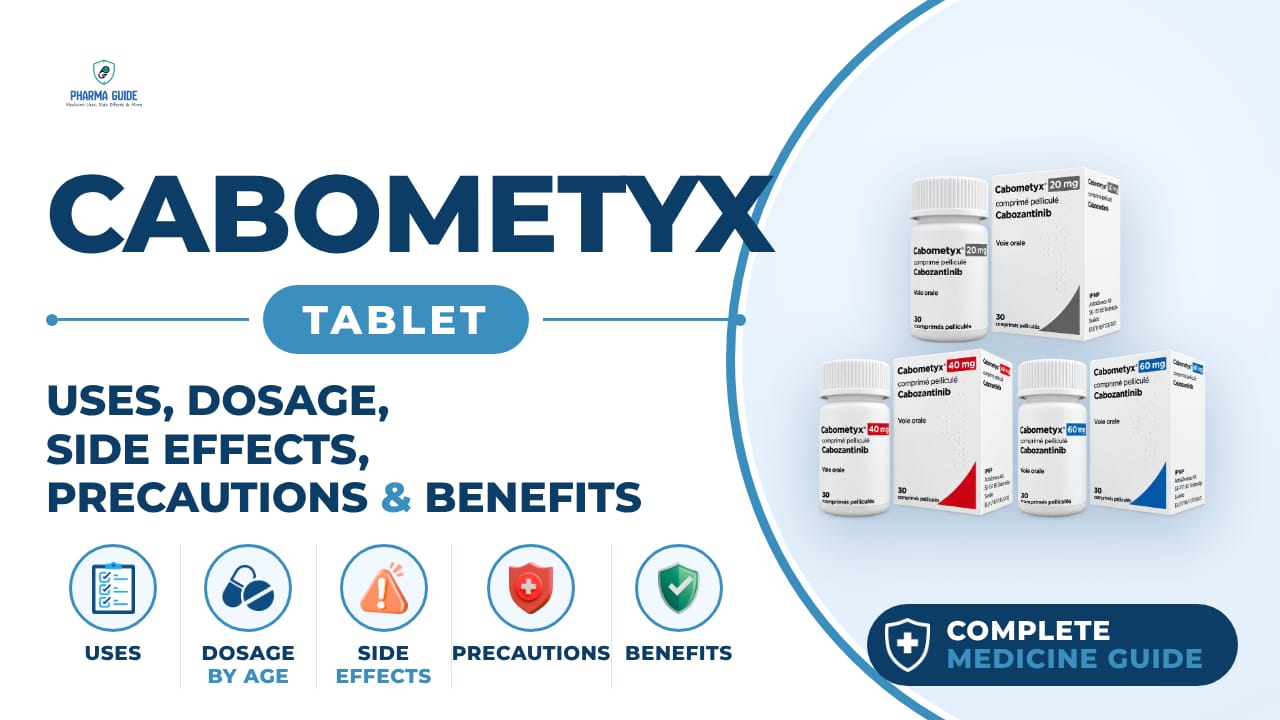
| Generic name | cabozantinib |
|---|---|
| Drug class | kinase inhibitor (multikinase inhibitor) |
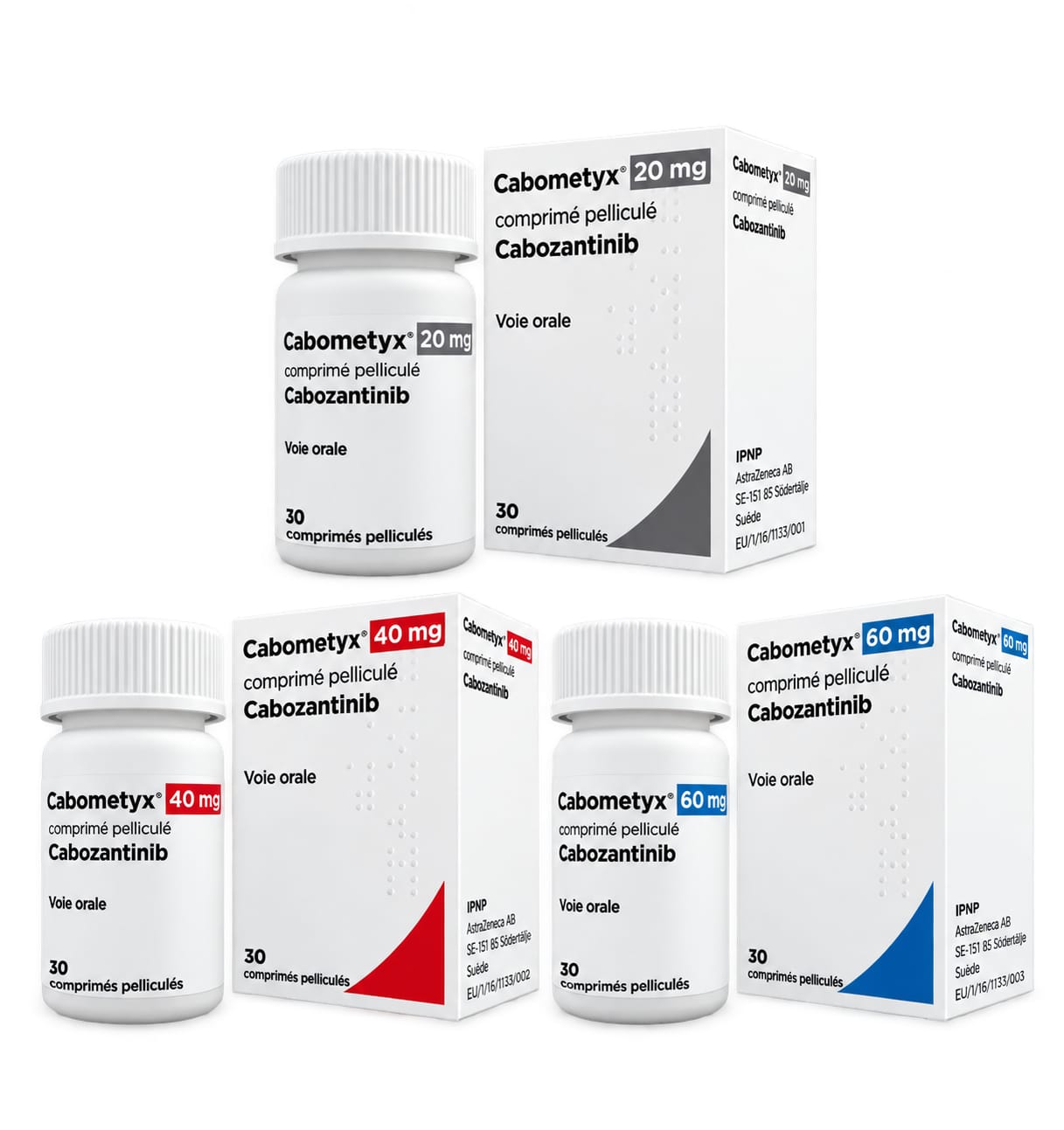
| Forms | Tablets (20 mg, 40 mg, 60 mg) |
Quick overview
Cabometyx Tablet contains the active ingredient cabozantinib, a kinase inhibitor medicine taken by mouth to treat certain advanced cancers, including kidney cancer, liver cancer, thyroid cancer, and neuroendocrine tumors. It works by blocking proteins that help cancer cells grow, spread, and form new blood vessels. It is taken on an empty stomach and requires careful monitoring for bleeding, blood pressure, liver, and kidney effects. Always use this medicine exactly as prescribed by your doctor.
What is Cabometyx Tablet
Cabometyx is a prescription cancer medicine taken as a tablet by mouth. It contains the active ingredient cabozantinib and belongs to a class of medicines called kinase inhibitors (multikinase inhibitors). It works by blocking proteins that help cancer cells grow and spread.
Cabometyx Tablet uses
- People with kidney cancer (renal cell carcinoma, RCC) that has spread, used alone or together with nivolumab as a first treatment
- People with liver cancer (hepatocellular carcinoma, HCC) who have already been treated with sorafenib
- Adults and children 12 years and older with a type of thyroid cancer (differentiated thyroid cancer) that has spread and no longer responds to radioactive iodine treatment or who cannot have that treatment
- Adults and children 12 years and older with pancreatic neuroendocrine tumors (pNET) or extra-pancreatic neuroendocrine tumors (epNET) that have spread and were already treated with other therapy
Benefits of Cabometyx Tablet
- Can slow down how fast certain cancers grow and spread
- Has been shown in studies to help some patients live longer and lowers the chance of the cancer getting worse
- Treats advanced renal cell carcinoma
- Treats certain hepatocellular carcinomas
- Treats certain differentiated thyroid cancers
- Treats certain pancreatic and extra-pancreatic neuroendocrine tumors
- Blocks multiple kinases involved in tumor growth and blood-vessel formation
How Cabometyx Tablet works
Cabometyx blocks several proteins on cancer cells called kinases that help tumors grow, spread, and build new blood vessels. By blocking these proteins, the medicine can help stop cancer cells from growing and spreading.
Cabometyx Tablet dosage
Take this medicine exactly as your healthcare provider tells you to take it. Do not take it with food — take it at least 1 hour before eating or at least 2 hours after eating. Swallow the tablets whole; do not crush, chew, or split them. If you miss a dose and your next dose is less than 12 hours away, skip the missed dose and take your next dose at the usual time — do not double up. Tell your healthcare provider if you have any planned surgery or dental work, since this medicine may need to be stopped for a few weeks beforehand. Avoid grapefruit, grapefruit juice, and St. John's wort while taking this medicine.
| Age group | Dose |
|---|---|
| 12–17 years, under 40 kg | 40 mg once daily for approved differentiated thyroid cancer or neuroendocrine tumor indications |
| 12–17 years, 40 kg or more | 60 mg once daily for approved differentiated thyroid cancer or neuroendocrine tumor indications |
| 18–64 years | Commonly 60 mg once daily as monotherapy; 40 mg once daily when combined with nivolumab for advanced renal cell carcinoma |
Available forms and strengths
- Tablets (20 mg, 40 mg, 60 mg)
Side effects of Cabometyx Tablet
Common
- Diarrhea
- Tiredness (fatigue)
- Hand-foot skin reaction (palmar-plantar erythrodysesthesia)
- Decreased or loss of appetite
- High blood pressure
- Nausea and vomiting
- Weight loss/decreased
- Constipation
- Mouth sores (when combined with nivolumab)
- Rash (when combined with nivolumab)
- Low thyroid hormone levels (when combined with nivolumab)
- Muscle, bone, and joint pain (when combined with nivolumab)
- Changes in taste (when combined with nivolumab)
- Stomach-area pain (when combined with nivolumab)
- Cough (when combined with nivolumab)
- Upper respiratory tract infection (when combined with nivolumab)
Serious
- Severe or life-threatening bleeding (hemorrhage)
- Tears or holes in the stomach or intestine (perforation) or abnormal connections between body parts (fistula)
- Blood clots, stroke, heart attack
- Severe or uncontrolled high blood pressure, including hypertensive crisis
- Severe diarrhea
- Severe hand-foot skin reaction
- Liver problems (hepatotoxicity)
- Adrenal gland problems (adrenal insufficiency), especially when combined with nivolumab
- Protein in the urine and kidney problems (proteinuria)
- Severe jawbone problems (osteonecrosis of the jaw)
- Wound healing problems
- Reversible Posterior Leukoencephalopathy Syndrome (RPLS/PRES), a brain condition
- Changes in thyroid function
- Low calcium levels in the blood (hypocalcemia)
- Heart failure
- Fertility problems in females and males
Warnings and precautions
- This medicine can cause severe bleeding that can be fatal. Do not take it if you have a recent history of severe bleeding.
- This medicine can cause tears or holes in the stomach or intestines, and abnormal connections between body parts (fistulas), which can be fatal.
- This medicine can cause blood clots in the arteries or veins, which can lead to a heart attack or other serious events. Treatment should be stopped if this happens.
- This medicine can cause high blood pressure, including a dangerous spike called a hypertensive crisis.
- Treatment should be stopped at least 3 weeks before planned surgery, including dental surgery, to reduce bleeding risk, and should not restart for at least 2 weeks after major surgery until healing is adequate.
- This medicine can cause a rare brain condition called Reversible Posterior Leukoencephalopathy Syndrome (RPLS), which requires stopping the medicine.
- This medicine can cause jawbone problems (osteonecrosis), especially around dental procedures. Good oral hygiene and dental check-ups before starting treatment are recommended.
- Do not drink grapefruit juice, eat grapefruit, or take St. John's wort while on this medicine, as they can change how the medicine works in your body.
- This medicine can harm an unborn baby. If you can become pregnant, your healthcare provider will check your pregnancy status before you start treatment, and you should use effective birth control during treatment and for 4 months after your last dose.
- It is not known if this medicine passes into breast milk. Do not breastfeed during treatment and for 4 months after your last dose.
- This medicine can cause protein in the urine and kidney problems. Your healthcare provider will check for this during treatment. No dose change is needed for mild or moderate kidney problems, but there isn't experience with this medicine in people with severe kidney impairment.
- Liver problems can happen during treatment, and your healthcare provider will check your liver function with blood tests before and during treatment. The dose may need to be lowered for moderate liver problems, and this medicine should be avoided in people with severe liver impairment.
- It isn't known for certain if alcohol affects this medicine, but heavy drinking can weaken your immune response and make it harder for your body to fight cancer. Both this medicine and alcohol can increase bleeding risk, so it's best to limit how much alcohol you drink.
- This medicine has only a minor effect on your ability to drive or use machines, but it can cause tiredness and weakness, so use caution when driving or operating machinery.
Storage
- Store at room temperature between 68°F to 77°F (20°C to 25°C)
- Brief exposure to temperatures between 59°F and 86°F (15°C to 30°C) is permitted, such as during transport
- Keep in a cool, dry place
- Keep this medicine and all medicines out of the reach of children
When to see a doctor
- Get medical help right away for any signs of serious bleeding, such as coughing up blood, vomiting blood or material that looks like coffee grounds, or black tarry or bloody stools.
- Get help right away for severe or ongoing stomach-area pain, which could be a sign of a tear or hole in the stomach or intestine.
- Get emergency help right away for signs of a blood clot, stroke, or heart attack, such as chest pain, shortness of breath, sudden weakness on one side of the body, trouble speaking, or a sudden severe headache.
- Tell your healthcare provider right away if you develop severe headaches, nosebleeds, tiredness or confusion, vision changes, chest pain, trouble breathing, irregular heartbeat, or blood in your urine, which could mean your blood pressure is dangerously high.
- Contact your healthcare provider right away for frequent, loose, or watery bowel movements, since diarrhea can become severe.
- Contact your healthcare provider right away if you develop progressive or intolerable rashes, redness, pain, swelling, or blisters on your palms or soles.
- Contact your healthcare provider immediately if you notice yellowing of the skin or eyes, severe nausea or vomiting, or easy bruising or bleeding, which could signal liver problems.
- Contact your healthcare provider immediately for extreme tiredness, dizziness or fainting, weakness, nausea, or vomiting, which may be signs of adrenal gland problems (especially if also taking nivolumab).
- Contact your healthcare provider immediately for jaw pain, toothache, or sores on your gums, which may be signs of a jawbone problem.
- Contact your healthcare provider immediately if you have new or worsening headaches, seizures, confusion, or vision changes, which could be signs of a rare brain condition (RPLS).
- Contact your healthcare provider right away for muscle stiffness or spasms, numbness or tingling in the fingers, toes, or around the mouth, sudden weight gain, swelling of the limbs, or seizures, which may be signs of low blood calcium.
Alternatives
- Lenvatinib
- Sunitinib
- Pazopanib
Watch the video
FAQs
What is Cabometyx Tablet used for?
It is used to treat advanced kidney cancer (renal cell carcinoma), liver cancer (hepatocellular carcinoma) previously treated with sorafenib, certain differentiated thyroid cancers that no longer respond to radioactive iodine, and pancreatic or extra-pancreatic neuroendocrine tumors that have spread.
How should Cabometyx Tablet be taken?
Take it exactly as prescribed, on an empty stomach, at least 1 hour before eating or 2 hours after eating. Swallow tablets whole without crushing, chewing, or splitting them.
What should be avoided while taking Cabometyx Tablet?
Avoid grapefruit, grapefruit juice, and St. John's wort, as they can change how the medicine works in your body. It's also best to limit alcohol since both can increase bleeding risk.
What are the serious side effects of Cabometyx Tablet?
Serious side effects include severe bleeding, tears or holes in the stomach or intestine, blood clots, stroke, heart attack, severe high blood pressure, liver problems, jawbone problems, and a rare brain condition called RPLS.
Can Cabometyx Tablet be taken during pregnancy?
No, it can harm an unborn baby. Effective birth control should be used during treatment and for 4 months after the last dose, and breastfeeding should be avoided during this time as well.
General information, not medical advice
Your prescriber and the leaflet in your pack know your situation. This page does not.
- Follow your prescriber and the leaflet
- Don't start, stop, or change a dose on your own
- Doses and warnings differ by country and product
Sources
Video
Related medicines
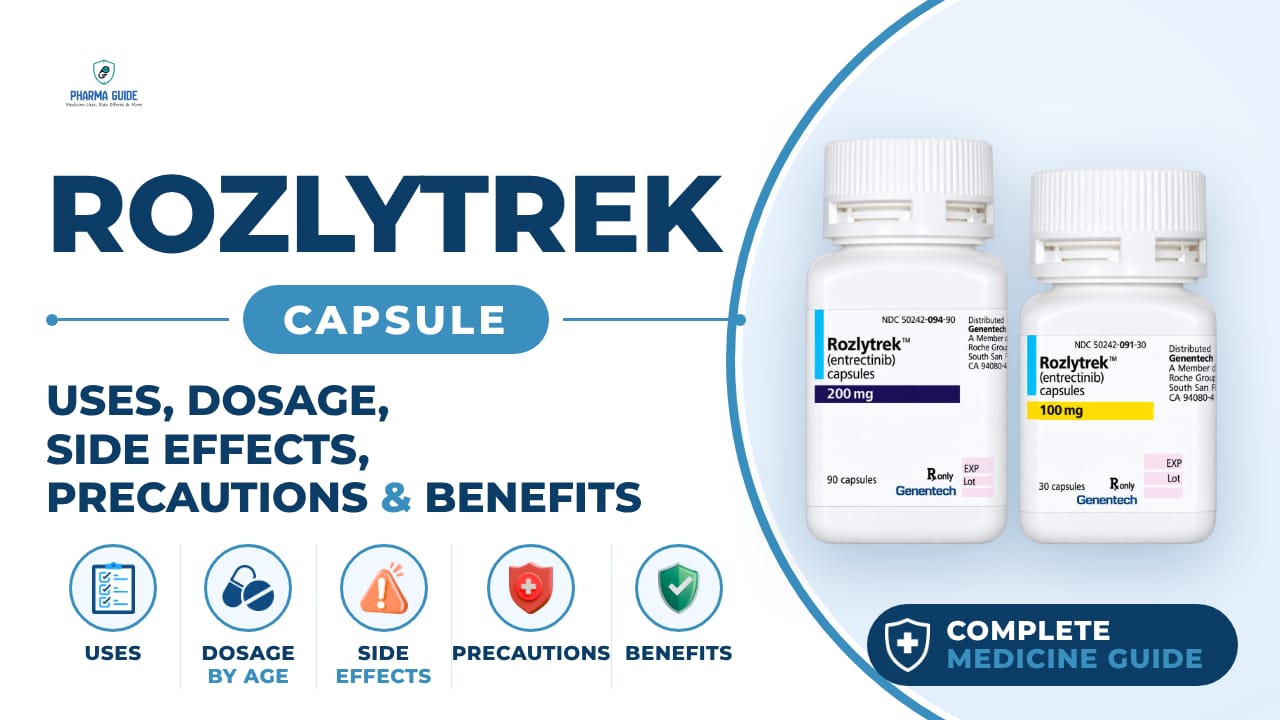
Rozlytrek Capsule: Uses, Dosage, Side Effects, Precautions and Alternates
Kinase inhibitor (multikinase inhibitor)
Rozlytrek Capsule (entrectinib) treats ROS1-positive lung cancer and NTRK fusion-positive solid tumors. Learn about uses, dosage, side effects, and warnings.
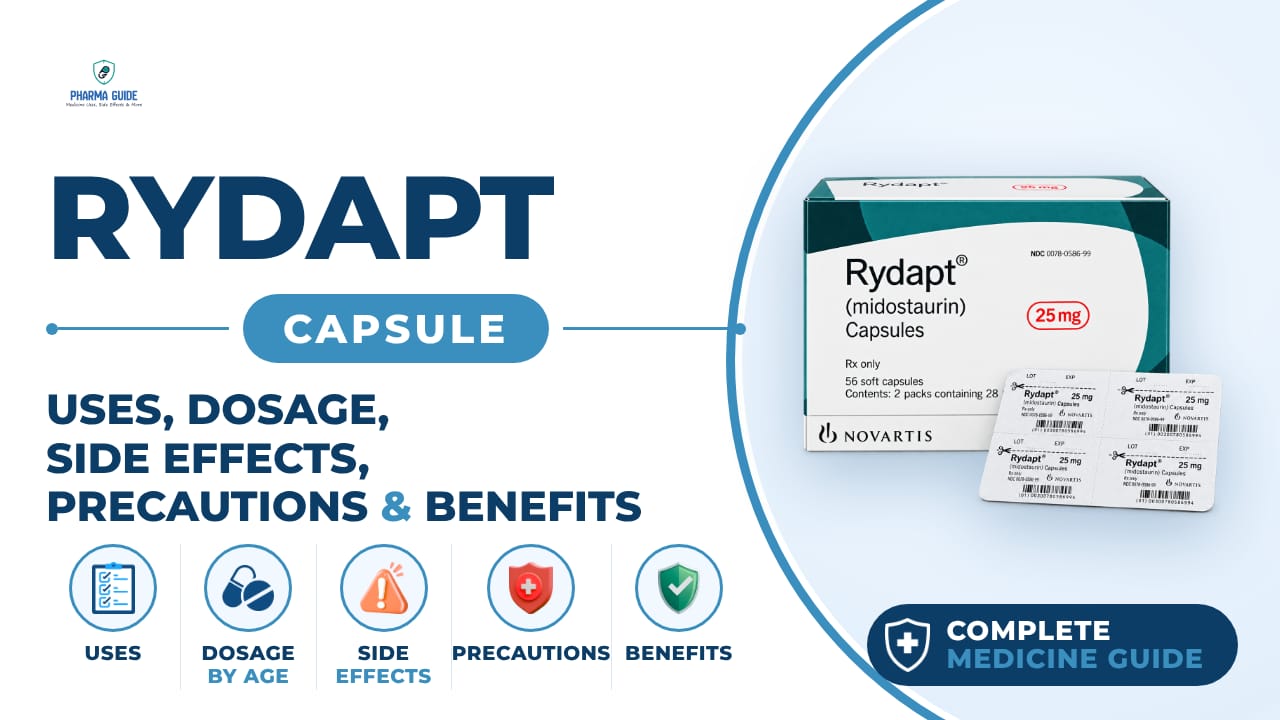
Rydapt Capsule: Uses, Dosage, Side Effects, Precautions and Alternates
Kinase inhibitor (multikinase inhibitor)
Rydapt Capsule (midostaurin) treats FLT3-mutated AML with chemotherapy and advanced systemic mastocytosis. Learn uses, dosage, side effects, and precautions.