
Safety
General information, not medical advice
Your prescriber and the leaflet in your pack know your situation. This page does not.
- Follow your prescriber and the leaflet
- Don't start, stop, or change a dose on your own
- Doses and warnings differ by country and product
Rydapt Capsule: Uses, Dosage, Side Effects, Precautions and Alternates
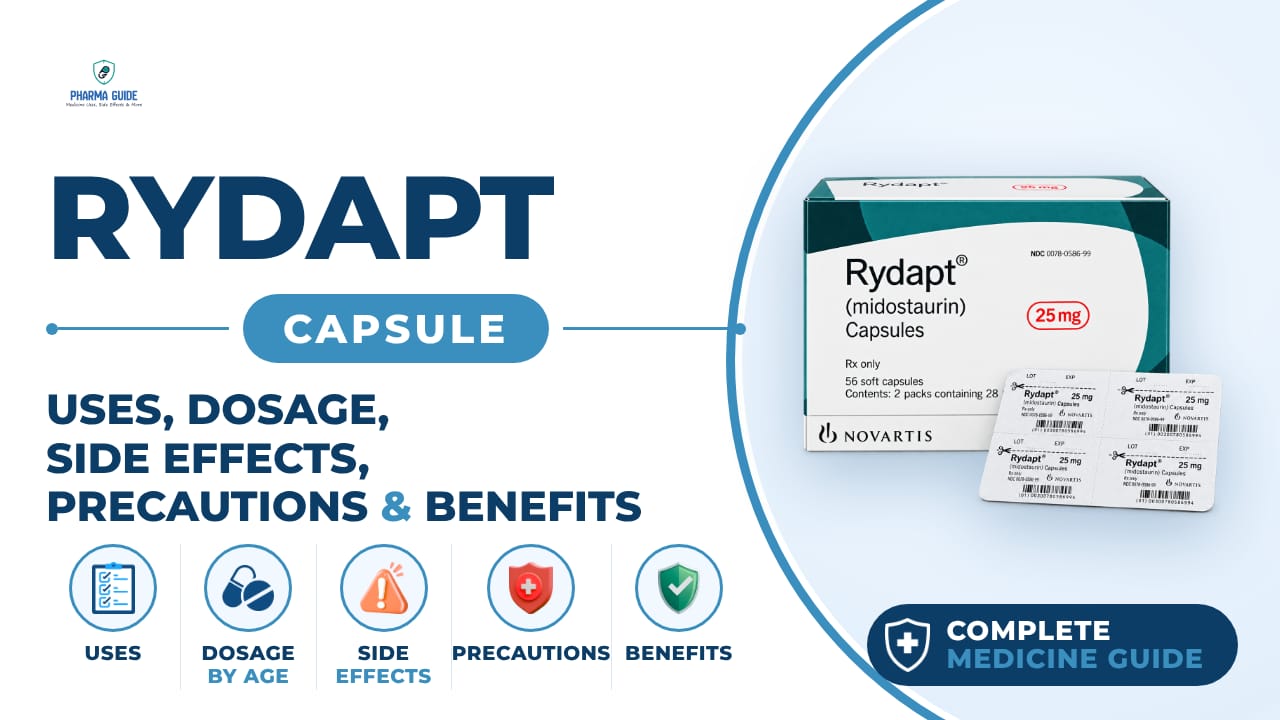
| Generic name | midostaurin |
|---|---|
| Drug class | Kinase inhibitor (multikinase inhibitor) |
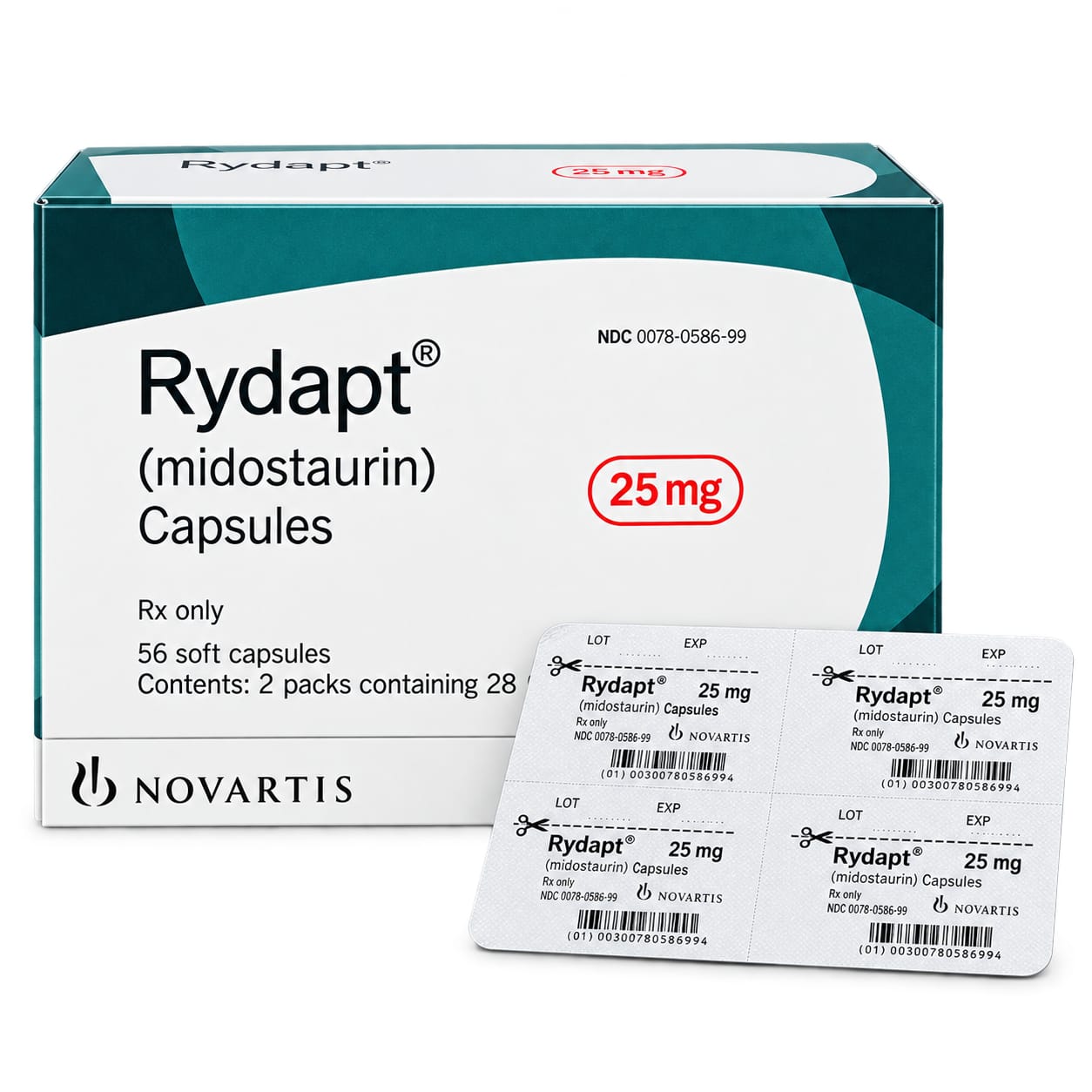
| Forms | Capsule (soft capsule), 25 mg |
Quick overview
Rydapt Capsule contains midostaurin, a kinase inhibitor medicine used in the treatment of certain blood cancers. It is used for newly diagnosed FLT3 mutation-positive acute myeloid leukemia (AML) in combination with chemotherapy, and for adults with advanced systemic mastocytosis. Rydapt works by blocking enzymes that cancer cells need to grow and divide. It is taken twice daily with food, exactly as prescribed by a doctor.
What is Rydapt Capsule
Rydapt is a prescription cancer medicine containing the active ingredient midostaurin. It belongs to a group of medicines called kinase inhibitors, which work by blocking certain enzymes that cancer cells need to grow and divide.
Rydapt Capsule uses
- Treatment of newly diagnosed acute myeloid leukemia (AML) in adults whose cancer has a specific gene change called FLT3 mutation, used together with certain chemotherapy medicines
- Treatment of adults with aggressive systemic mastocytosis (ASM), systemic mastocytosis with associated hematological neoplasm (SM-AHN), or mast cell leukemia (MCL)
Benefits of Rydapt Capsule
- In combination with chemotherapy, improved overall survival in adults with newly diagnosed FLT3 mutation-positive AML compared to chemotherapy alone
- Produced remission or improvement of disease in a meaningful proportion of patients with advanced systemic mastocytosis (ASM, SM-AHN, or MCL)
How Rydapt Capsule works
Midostaurin blocks several enzymes (kinases), including the FLT3 and KIT kinases, that are overactive or mutated in these cancer cells. By blocking these enzymes, it stops the abnormal cells from signaling to grow and divide, leading to cell growth arrest and cell death.
Rydapt Capsule dosage
Take exactly as your doctor tells you; do not change your dose unless instructed. Take twice a day, about 12 hours apart (for example, with breakfast and with your evening meal), and take with food. Swallow the capsules whole with a glass of water; do not open, crush, or chew them. Your doctor will give you medicine to help prevent nausea and vomiting before and during treatment.
If you miss a dose, take your next dose at the scheduled time; do not take an extra dose to make up for a missed one. If you vomit after taking a dose, do not take an extra dose; take your next dose at the scheduled time. For AML, this medicine is taken together with chemotherapy medicines during certain days of each treatment cycle, as directed by your doctor. Avoid grapefruit, grapefruit juice, and products containing grapefruit extract while taking this medicine.
| Age group | Dose |
|---|---|
| Under 18 years | Safety and effectiveness have not been established |
| 18–64 years with FLT3-mutated AML | 50 mg twice daily on Days 8–21 of each induction and consolidation cycle, in combination with chemotherapy |
| 18–64 years with advanced systemic mastocytosis | 100 mg twice daily |
Available forms and strengths
- Capsule (soft capsule), 25 mg
Side effects of Rydapt Capsule
Common
- Febrile neutropenia (fever with low white blood cell count)
- Nausea
- Mucositis (redness, pain, or ulcers in the mouth)
- Vomiting
- Headache
- Petechiae (small bruising/red spots under the skin)
- Muscle or bone pain
- Nosebleeds (epistaxis)
- Device-related infection
- High blood sugar (hyperglycemia)
- Upper respiratory tract infection
- Diarrhea
- Swelling in hands, feet, or ankles (edema)
- Abdominal pain
- Tiredness (fatigue)
- Constipation
- Fever
- Difficulty breathing (dyspnea)
- Insomnia
- Dizziness
- Cough
Serious
- Lung problems such as interstitial lung disease or pneumonitis, which may be fatal — symptoms include new or worsening cough, chest discomfort, or shortness of breath
- Severe allergic reactions including trouble breathing, flushing, chest pain, throat tightness, and swelling of lips, mouth, or throat
- Severe low blood cell counts leading to serious infections, bleeding, or anemia
- Heart problems including congestive heart failure and QT interval prolongation (abnormal heart rhythm)
- Serious infections including sepsis and pneumonia
- Gastrointestinal bleeding
- Harm to an unborn baby if used during pregnancy
Warnings and precautions
- Rydapt may cause fetal harm; it should not be used during pregnancy, and effective contraception is needed for both men and women during and after treatment.
- Serious and sometimes fatal lung problems, including interstitial lung disease and pneumonitis, have occurred with this medicine. Patients should be watched closely for lung symptoms, and the medicine should be stopped if these problems develop.
- Rydapt must not be taken with certain other medicines that strongly affect how the body processes it, including some medicines for tuberculosis, epilepsy, prostate cancer, and the herbal product St. John's Wort.
- Rydapt can cause low white blood cell counts, which increases the risk of serious infection. Blood counts should be checked regularly, especially when starting treatment.
- Heart problems, including heart failure and changes in heart rhythm (QT prolongation), can occur with this medicine. People at risk should be monitored closely.
- Rydapt can harm an unborn baby and should not be used during pregnancy. Women who can become pregnant should have a pregnancy test before starting treatment and use effective birth control during treatment and for at least 4 months after the last dose.
- Breastfeeding is not recommended during treatment with Rydapt and for at least 4 months after the final dose, due to the possibility of serious harm to the nursing infant.
- No dose adjustment is needed for mild or moderate kidney problems. There is limited experience in people with severe kidney impairment, so caution and close monitoring are advised.
- No dose adjustment is required for mild or moderate liver impairment. There is not enough information in people with severe liver impairment to know if a dose change is needed, so this group should be treated with caution.
- This medicine contains a small amount of alcohol. While this amount is not expected to cause noticeable effects, it could be harmful for people with alcohol-related problems, epilepsy, or liver problems.
- This medicine can cause dizziness and vertigo, which could affect your ability to drive or use machines safely. Use caution with these activities until you know how the medicine affects you.
Storage
- Store at room temperature, between 68°F to 77°F (20°C to 25°C)
- Keep in the original package to protect from moisture
- Keep out of the reach and sight of children
- Do not use after the expiry date on the carton or blister
When to see a doctor
- Get medical help right away for signs of a serious allergic reaction, such as trouble breathing or swallowing, swelling of the face, lips, tongue, or throat, or a severe itchy rash.
- Seek medical attention right away if you develop new or worsening cough, chest discomfort, or shortness of breath, as these may be signs of serious lung problems.
- Contact your healthcare provider if you have fever, chills, sore throat, or mouth ulcers, as these can be signs of a dangerously low white blood cell count.
- Tell your healthcare provider right away if you experience chest pain or discomfort, light-headedness, fainting, dizziness, blue discoloration of lips, hands, or feet, shortness of breath, or swelling of your legs, as these may be signs of heart problems.
- Contact your healthcare provider if nausea, vomiting, or diarrhea occurs, gets worse, or does not go away.
Alternatives
- Gilteritinib
- Quizartinib
- Azacitidine
Watch the video
FAQs
What is Rydapt Capsule used for?
Rydapt is used to treat newly diagnosed FLT3 mutation-positive acute myeloid leukemia (AML) in combination with chemotherapy, and for adults with advanced systemic mastocytosis including ASM, SM-AHN, or mast cell leukemia.
How should I take Rydapt Capsule?
Take it twice daily, about 12 hours apart, with food. Swallow the capsules whole with water; do not open, crush, or chew them. Follow your doctor's exact instructions.
What should I avoid while taking Rydapt?
Avoid grapefruit, grapefruit juice, and products containing grapefruit extract. Also avoid certain medicines that strongly affect how the body processes Rydapt, including some tuberculosis, epilepsy, and prostate cancer medicines, and St. John's Wort.
What are the serious side effects of Rydapt Capsule?
Serious side effects include lung problems like interstitial lung disease or pneumonitis, severe allergic reactions, severe low blood cell counts, heart problems including heart failure and QT prolongation, serious infections, and gastrointestinal bleeding.
Can Rydapt be used during pregnancy or breastfeeding?
No, Rydapt can harm an unborn baby and should not be used during pregnancy. Breastfeeding is not recommended during treatment and for at least 4 months after the final dose.
General information, not medical advice
Your prescriber and the leaflet in your pack know your situation. This page does not.
- Follow your prescriber and the leaflet
- Don't start, stop, or change a dose on your own
- Doses and warnings differ by country and product
Sources
Video
Related medicines
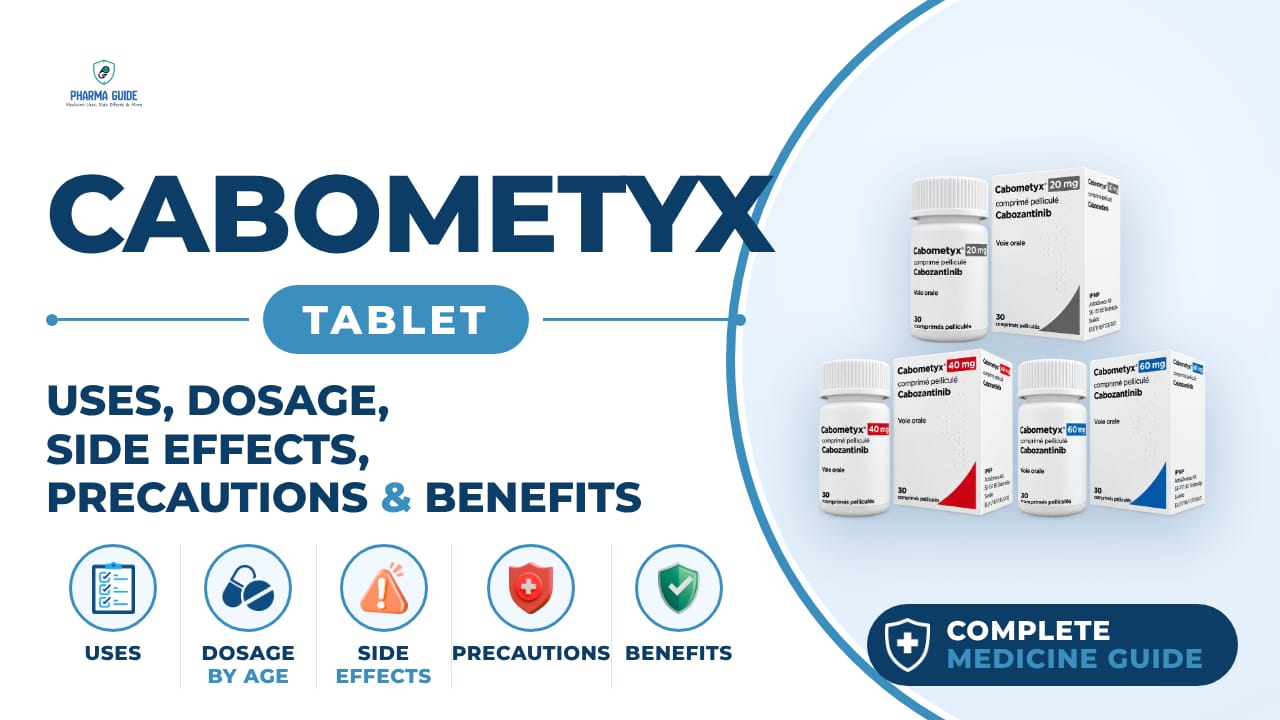
Cabometyx Tablet: Uses, Dosage, Side Effects, Precautions and Alternates
kinase inhibitor (multikinase inhibitor)
Cabometyx Tablet (cabozantinib) treats advanced kidney, liver, thyroid cancers and neuroendocrine tumors by blocking proteins that help tumors grow and spread.
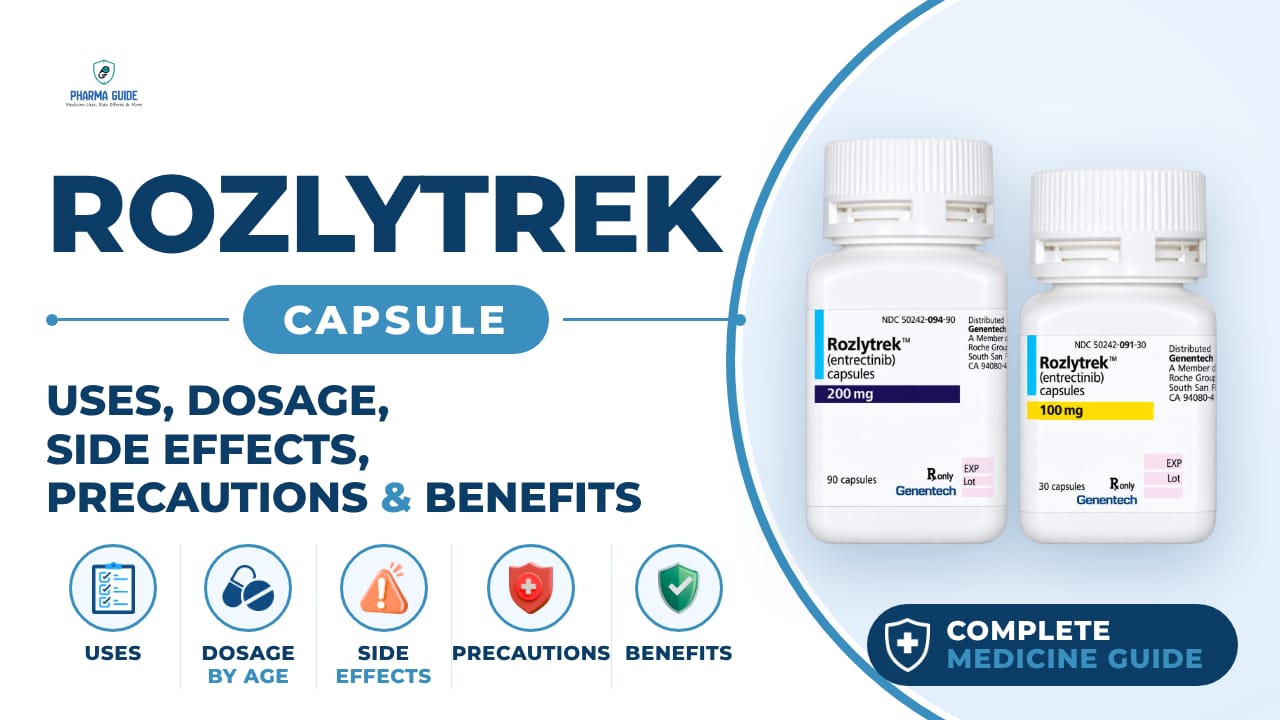
Rozlytrek Capsule: Uses, Dosage, Side Effects, Precautions and Alternates
Kinase inhibitor (multikinase inhibitor)
Rozlytrek Capsule (entrectinib) treats ROS1-positive lung cancer and NTRK fusion-positive solid tumors. Learn about uses, dosage, side effects, and warnings.