
Safety
General information, not medical advice
Your prescriber and the leaflet in your pack know your situation. This page does not.
- Follow your prescriber and the leaflet
- Don't start, stop, or change a dose on your own
- Doses and warnings differ by country and product
Rozlytrek Capsule: Uses, Dosage, Side Effects, Precautions and Alternates
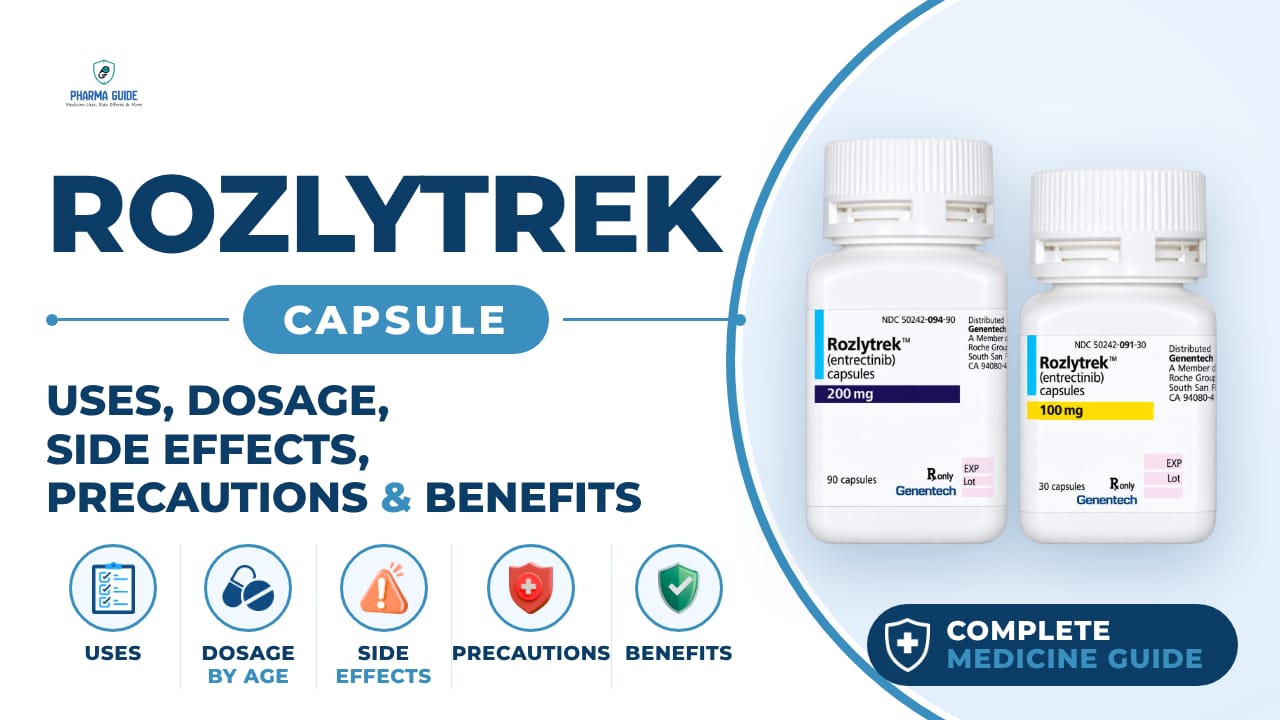
| Generic name | entrectinib |
|---|---|
| Drug class | Kinase inhibitor (multikinase inhibitor) |
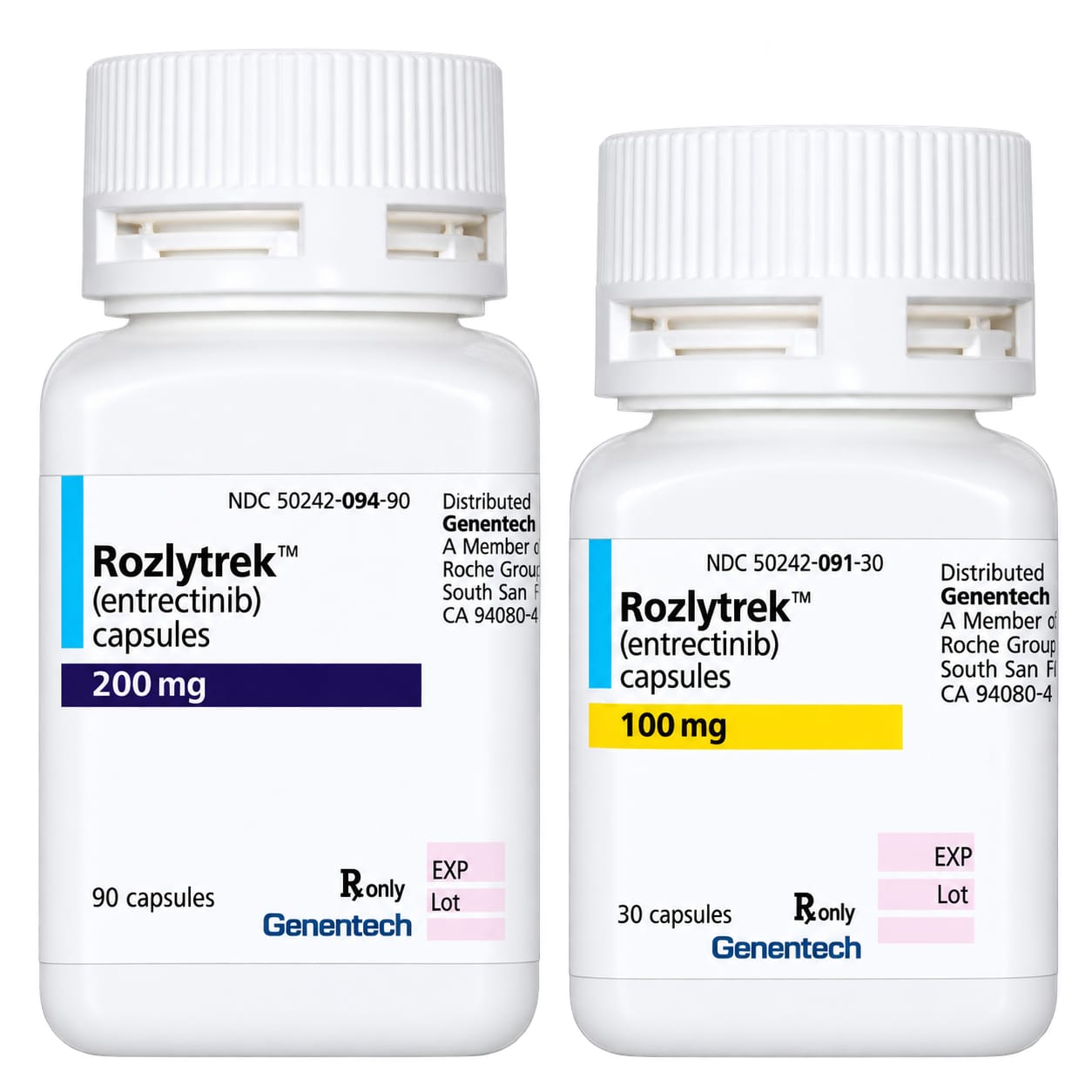
| Forms | Capsules (100 mg and 200 mg), Oral pellets (50 mg per packet), Capsules prepared as an oral suspension |
Quick overview
Rozlytrek Capsule (entrectinib) is a prescription kinase inhibitor taken by mouth as a capsule or oral pellet. It is used to treat adults with ROS1-positive metastatic non-small cell lung cancer and certain adults and children with NTRK gene fusion-positive solid tumors. It works by blocking abnormal proteins that cause these cancers to grow.
What is Rozlytrek Capsule
Rozlytrek is a prescription cancer medicine belonging to the kinase inhibitor (multikinase inhibitor) drug class. Its generic name is entrectinib. It is taken by mouth as a capsule or oral pellet and works by blocking certain abnormal proteins that cause some cancers to grow.
Rozlytrek Capsule uses
- Adult patients with ROS1-positive metastatic non-small cell lung cancer (NSCLC), as detected by an FDA-approved test
- Adults and children older than 1 month of age with solid tumors that have a neurotrophic tyrosine receptor kinase (NTRK) gene fusion without a known acquired resistance mutation, that are metastatic or where surgery is likely to cause severe complications, and that have progressed on treatment or have no satisfactory alternative therapy
Benefits of Rozlytrek Capsule
- Treats certain NTRK gene fusion-positive solid tumors
- Treats ROS1-positive metastatic non-small-cell lung cancer in adults
- Targets abnormal TRK and ROS1 signaling
- Can help shrink tumors
- Provides an oral targeted-therapy option
- Approved for eligible pediatric patients older than 1 month with NTRK fusion-positive tumors
How Rozlytrek Capsule works
Rozlytrek blocks enzymes that are made from altered genes (like ROS1 or NTRK) inside cancer cells. These altered enzymes normally send signals that tell cancer cells to grow. By blocking them, Rozlytrek can slow or stop the cancer from growing and may help shrink it.
Rozlytrek Capsule dosage
Take once a day, with or without food. Capsules should be swallowed whole with water; do not crush or chew them. If you cannot swallow capsules, they can be prepared as a suspension in water or milk, or given through a feeding tube, as directed by your healthcare provider.
Oral pellets should be sprinkled on one or more spoonfuls of soft food such as applesauce, yogurt, or pudding, and taken within 20 minutes; do not crush or chew the pellets. Drink water after taking the suspension or pellets to make sure all the medicine has been swallowed. Do not use pellets to prepare a suspension and do not give pellets through a feeding tube, as they may clog it.
If you miss a dose, take it as soon as you remember unless your next dose is due within 12 hours, in which case skip the missed dose. If you vomit right after taking a dose, you may take that dose again.
| Age group | Dose |
|---|---|
| 18–64 years | 600 mg once daily |
| 65 years and older | 600 mg once daily, with individualized oncology monitoring |
Available forms and strengths
- Capsules (100 mg and 200 mg)
- Oral pellets (50 mg per packet)
- Capsules prepared as an oral suspension
Side effects of Rozlytrek Capsule
Common
- Fatigue
- Constipation
- Change in taste (dysgeusia)
- Swelling (edema)
- Dizziness
- Diarrhea
- Nausea
- Abnormal touch sensation (dysesthesia)
- Shortness of breath
- Muscle pain
- Cognitive impairment (confusion, memory problems)
- Weight gain
- Cough
- Vomiting
- Fever
- Joint pain
- Vision changes
Serious
- Congestive heart failure
- Central nervous system effects, including confusion, hallucinations, mood changes, and memory problems
- Bone fractures
- Liver problems (hepatotoxicity)
- High uric acid levels (hyperuricemia), which can lead to tumor lysis syndrome
- QT interval prolongation (abnormal heart rhythm)
- Severe vision changes
- Serious infections such as pneumonia or sepsis
- Low blood pressure and fainting (syncope)
Warnings and precautions
- This medicine may cause or worsen congestive heart failure. Your doctor will check your heart function before and during treatment.
- This medicine can cause a wide range of nervous system effects, including confusion, mood changes, dizziness, memory problems, hallucinations, and sleep problems.
- This medicine increases the risk of broken bones, which can happen even without a fall or injury.
- This medicine can cause liver damage. Your doctor will do regular blood tests to check your liver function, especially during the first month of treatment.
- This medicine can raise uric acid levels in the blood, which can cause gout-like symptoms or a serious condition called tumor lysis syndrome.
- This medicine can affect the electrical activity of the heart (QT prolongation), which can cause dangerous irregular heartbeats.
- This medicine can cause vision problems, including blurred or double vision, light sensitivity, and new floaters.
- Avoid grapefruit and grapefruit juice during treatment, as they can raise the amount of this medicine in your blood to harmful levels.
- This medicine can cause serious harm to an unborn baby. Women who can become pregnant should have a pregnancy test before starting treatment and use effective birth control during treatment and for at least 5 weeks after the last dose.
- Men with partners who can become pregnant should use effective birth control during treatment and for 3 months after the last dose.
- Do not breastfeed during treatment and for a period of time after the last dose, since it is not known if this medicine passes into breast milk and could harm a nursing baby.
- No dose change is needed for mild or moderate kidney problems. This medicine has not been studied in people with severe kidney impairment.
- The effect of moderate or severe liver problems on the safety of this medicine at the usual dose is not known. Your doctor should weigh the risks and benefits before prescribing it if you have moderate to severe liver impairment, and you may need more frequent monitoring.
- This medicine can cause dizziness, tiredness, blurred vision, confusion, or hallucinations. Do not drive or operate machinery until you know how it affects you, and stop these activities if you develop these symptoms.
Storage
- Store at room temperature between 68°F to 77°F (20°C to 25°C); brief excursions between 59°F to 86°F (15°C to 30°C) are permitted
- Store capsules and pellets in their original container to protect from moisture, and keep the capsule bottle tightly closed
- If capsules are prepared as a suspension, use within 2 hours; discard any unused suspension after that time, and store below 86°F (30°C) if not used immediately
- Keep out of reach of children
- Dispose of unused or expired medicine safely, such as by taking it to a pharmacy for disposal
When to see a doctor
- Get help right away for signs of heart failure, such as persistent cough or wheezing, trouble breathing while lying down, sudden weight gain, worsening shortness of breath, tiredness, or swelling in the ankles, feet, or legs.
- Tell your doctor right away about new or worsening confusion, mood changes, memory problems, hallucinations, or sleep problems.
- Report pain, changes in movement, or deformity, which may be signs of a bone fracture.
- Seek help right away for signs of liver problems, including loss of appetite, nausea or vomiting, pain in the upper right stomach area, yellowing of the skin or eyes, or dark urine.
- Tell your doctor about symptoms of high uric acid, such as red, hot, tender, or swollen joints (especially the big toe), stomach pain, nausea or vomiting, or pink or brown urine.
- Seek medical help right away if you feel faint, lightheaded, dizzy, or notice your heart beating irregularly or fast, which can be signs of a heart rhythm problem.
- Tell your doctor right away about any new vision changes, including double vision, blurry vision, new or increased floaters, seeing flashes of light, or light sensitivity.
- Get emergency help for signs of tumor lysis syndrome, such as nausea or vomiting, muscle cramps or twitches, decreased urination, irritability, or seizures.
Alternatives
- Retevmo (selpercatinib)
- Gavreto (pralsetinib)
- Larotrectinib
Watch the video
FAQs
What is Rozlytrek Capsule used for?
Rozlytrek is used to treat adults with ROS1-positive metastatic non-small cell lung cancer and adults and children older than 1 month with NTRK gene fusion-positive solid tumors that are metastatic, cannot be safely removed by surgery, and have progressed on treatment or have no satisfactory alternative therapy.
How should Rozlytrek Capsule be taken?
Rozlytrek is taken once a day, with or without food. Capsules should be swallowed whole with water and not crushed or chewed. If capsules cannot be swallowed, they can be prepared as a suspension or given through a feeding tube as directed. Oral pellets should be sprinkled on soft food like applesauce, yogurt, or pudding and taken within 20 minutes; they should not be crushed, chewed, or given through a feeding tube.
What are the common side effects of Rozlytrek Capsule?
Common side effects include fatigue, constipation, change in taste, swelling, dizziness, diarrhea, nausea, abnormal touch sensation, shortness of breath, muscle pain, cognitive impairment, weight gain, cough, vomiting, fever, joint pain, and vision changes.
What serious risks are associated with Rozlytrek Capsule?
Serious risks include congestive heart failure, central nervous system effects such as confusion or hallucinations, bone fractures, liver problems, high uric acid levels that can lead to tumor lysis syndrome, QT interval prolongation, severe vision changes, serious infections, and low blood pressure or fainting.
Should grapefruit be avoided while taking Rozlytrek Capsule?
Yes, grapefruit and grapefruit juice should be avoided during treatment because they can raise the amount of Rozlytrek in your blood to harmful levels.
General information, not medical advice
Your prescriber and the leaflet in your pack know your situation. This page does not.
- Follow your prescriber and the leaflet
- Don't start, stop, or change a dose on your own
- Doses and warnings differ by country and product
Sources
Video
Related medicines
Cabometyx Tablet: Uses, Dosage, Side Effects, Precautions and Alternates
kinase inhibitor (multikinase inhibitor)
Cabometyx Tablet (cabozantinib) treats advanced kidney, liver, thyroid cancers and neuroendocrine tumors by blocking proteins that help tumors grow and spread.
Rydapt Capsule: Uses, Dosage, Side Effects, Precautions and Alternates
Kinase inhibitor (multikinase inhibitor)
Rydapt Capsule (midostaurin) treats FLT3-mutated AML with chemotherapy and advanced systemic mastocytosis. Learn uses, dosage, side effects, and precautions.