
Safety
General information, not medical advice
Your prescriber and the leaflet in your pack know your situation. This page does not.
- Follow your prescriber and the leaflet
- Don't start, stop, or change a dose on your own
- Doses and warnings differ by country and product
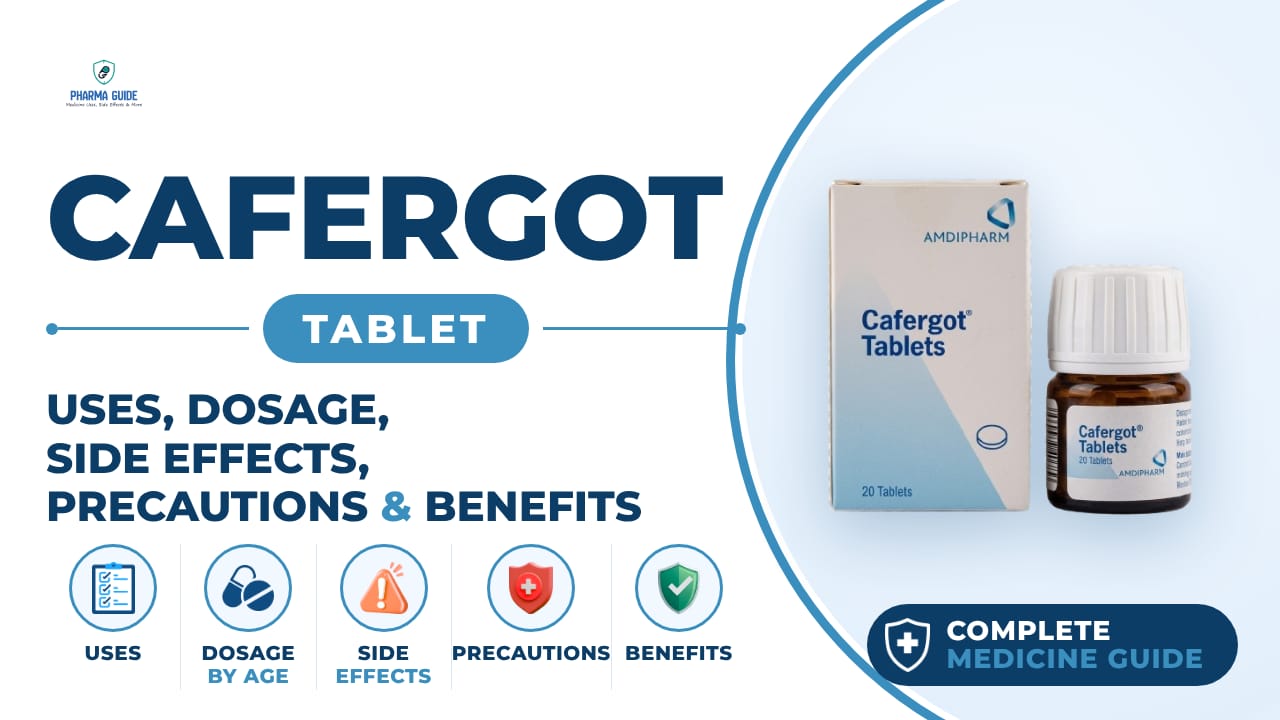
Cafergot Tablet: Uses, Dosage, Side Effects, Precautions and Alternates
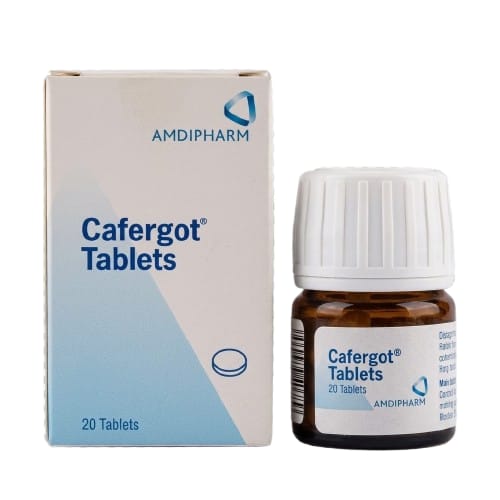
| Generic name | Ergotamine tartrate and Caffeine |
|---|---|
| Drug class | Antimigraine agents (Ergot derivative / PDE inhibitor combination) |
| Forms | Tablet |
Quick overview
Cafergot Tablet combines ergotamine tartrate and caffeine, an antimigraine medicine from the ergot derivative/PDE inhibitor combination class. It is used to treat an actual migraine attack and is not meant to prevent future attacks or treat general headaches. It works by narrowing blood vessels in the head, and caffeine helps the body absorb the ergotamine. It carries important warnings around drug interactions, pregnancy, and overuse, so it should be used exactly as prescribed.
What is Cafergot Tablet
Cafergot is a tablet that combines two medicines, ergotamine and caffeine, used to treat migraine headache attacks. It is not a painkiller for general headaches and should only be used to stop an actual migraine attack, not to prevent future attacks.
Cafergot Tablet uses
- Acute migraine attacks
- Migraine-related headache
- Certain vascular headaches
- Migraine variants
- Selected severe headache conditions, when prescribed
Benefits of Cafergot Tablet
- Helps relieve migraine pain
- May reduce headache severity
- Helps relieve migraine-related discomfort
- Can shorten a migraine attack
- May help control vascular headache symptoms
How Cafergot Tablet works
Migraine headache is believed to happen because blood vessels in the head widen. Cafergot narrows these blood vessels, which relieves the pain and other symptoms of a migraine attack. Caffeine helps the body absorb ergotamine and may add to the pain-relieving effect.
Cafergot Tablet dosage
Take Cafergot at the very first sign of a migraine attack, not to prevent attacks. It can be taken with or without food, and the tablet should be swallowed with water. Do not take another dose within 30 minutes of the last dose. Do not use other ergotamine-containing medicines or triptans at the same time as this medicine. Do not use it more often or for longer than your doctor tells you, since overuse can cause serious side effects and worsen headaches. This medicine is not recommended for children under 18 years or for adults over 65 years. Avoid grapefruit or grapefruit juice while taking this medicine, as it may affect how much reaches your blood, and try to limit other sources of caffeine, such as coffee, tea, or energy drinks, while using this medicine.
| Age group | Dose |
|---|---|
| Under 18 years | Not recommended |
| 18–64 years | 2 tablets once day |
| 65+ years | Not recommended |
Available forms and strengths
- Tablet
Side effects of Cafergot Tablet
Common
- Nausea
- Vomiting
- Dizziness
- Abdominal pain
Serious
- Allergic reaction (rash, itching, hives, swelling of face/lips/tongue, trouble breathing)
- Ergotism: numbness, tingling, pain, pale or cold hands/feet, bluish discoloration suggesting loss of circulation
- Signs of fibrotic changes: shortness of breath, dry cough, lower back pain, difficulty or pain passing urine
- Signs of ischemia: chest pain or tightness, irregular heartbeat, persistent cough, impaired vision or speech, weakness in arms or legs, confusion
- Stroke symptoms: weakness on one side of the body, slurred speech, drooping face
Warnings and precautions
- This medicine must not be used during pregnancy. It can harm the unborn baby and may cause fetal distress or miscarriage. Women who could become pregnant should use effective birth control while taking it.
- Do not breastfeed while taking this medicine. The active ingredient can pass into breast milk and may cause vomiting, diarrhea, weak pulse, and unstable blood pressure in the baby.
- This medicine must not be used by people with severe kidney disease.
- This medicine must not be used by people with severe liver disease. People with mild to moderate liver problems should be monitored closely by their doctor.
- Do not drive or operate machinery if you experience dizziness, visual disturbances, vertigo, or feelings of anxiety such as trembling or sweating, since these effects could put you or others at risk.
- Taking certain antibiotics, antifungals, or HIV medicines together with this medicine can raise its level in your blood to dangerous amounts, increasing the risk of severe narrowing of blood vessels that can lead to stroke or loss of blood flow to the hands and feet. These combinations must be avoided.
- Using this medicine for a long time or more often than prescribed can cause scarring (fibrosis) of tissue around the lungs, heart valves, or abdomen.
- This medicine can rarely cause reduced blood flow to the heart, which may cause chest pain or, in rare cases, a heart attack, even in people with no history of heart disease.
- Taking this medicine together with triptans or other ergot-based migraine medicines within 24 hours can cause dangerous, prolonged narrowing of blood vessels.
- Using this medicine too often can actually make headaches worse (medication overuse headache). If this happens, stopping the treatment may be necessary.
- Sudden and temporary loss of vision has been reported. Stop the medicine right away and get medical help if this happens.
Storage
- Store below 25°C, protect from light
- Keep out of the reach and sight of children
- Discard any expired medicine or medicine no longer needed
- Do not flush down the toilet or pour into a drain unless instructed to do so; ask your pharmacist how to safely dispose of it
When to see a doctor
- Get emergency help right away if you notice signs of overdose, such as blurred vision, confusion or loss of consciousness, dizziness or fainting, numbness or tingling with bluish color in fingers, lips, or skin, pounding in the ears, seizures, or vomiting.
- Call your doctor right away if you have chest pain, discomfort, or tightness, or irregular heartbeat.
- Check with your doctor immediately if your fingers or toes become cold, pale, or bluish, or if you have numbness, tingling, or pain in them, as this may signal dangerously reduced blood flow.
- Seek medical attention right away for continuing or severe stomach pain, lower back pain, or increased urination frequency, which may be signs of a rare scarring condition.
- Check with your doctor right away if you have chest pain or tightness, or trouble breathing, which may signal a lung problem.
- Stop using this medicine immediately and seek medical help if you experience any visual disturbances.
- Get medical help right away if you notice signs of a severe allergic reaction, such as rash, itching, hives, swelling of the face, lips, or tongue, or trouble breathing.
Alternatives
- Eletriptan
- Rizatriptan
- Sumatriptan
Watch the video
FAQs
What is Cafergot Tablet used for?
Cafergot Tablet is used to treat an actual migraine attack, including migraine-related headache, certain vascular headaches, and migraine variants. It is not meant to prevent future attacks or treat general headaches.
How does Cafergot Tablet work?
Migraine headache is believed to happen because blood vessels in the head widen. Cafergot narrows these blood vessels, relieving pain and other migraine symptoms, while caffeine helps the body absorb ergotamine and may add to the pain-relieving effect.
What is the dosage of Cafergot Tablet?
Cafergot should be taken at the very first sign of a migraine attack, with or without food. Do not take another dose within 30 minutes of the last one. For adults 18-64 years, the dose is 2 tablets once a day. It is not recommended for those under 18 or over 65 years.
Can Cafergot Tablet be used during pregnancy?
No, Cafergot must not be used during pregnancy as it can harm the unborn baby and may cause fetal distress or miscarriage. Women who could become pregnant should use effective birth control while taking it.
What are the serious side effects of Cafergot Tablet?
Serious side effects include allergic reactions, ergotism (numbness, tingling, pale or cold hands/feet), signs of fibrotic changes, signs of ischemia like chest pain or irregular heartbeat, and stroke symptoms such as weakness on one side of the body or slurred speech.
General information, not medical advice
Your prescriber and the leaflet in your pack know your situation. This page does not.
- Follow your prescriber and the leaflet
- Don't start, stop, or change a dose on your own
- Doses and warnings differ by country and product
Sources
Video
Related medicines

Injectafer Injection: Uses, Dosage, Side Effects, Precautions and Alternates
Iron products
Injectafer (ferric carboxymaltose) treats iron deficiency anemia and heart failure-related iron deficiency via IV. Learn uses, dosage, side effects, and

Gliclazide Tablet: Uses, Dosage, Side Effects, Precautions and Alternates
Sulfonylurea (hypoglycemic/antidiabetic agent)
Gliclazide Tablet is a sulfonylurea for type 2 diabetes that boosts insulin release. Learn about dosage, side effects, warnings, and precautions.