
Safety
General information, not medical advice
Your prescriber and the leaflet in your pack know your situation. This page does not.
- Follow your prescriber and the leaflet
- Don't start, stop, or change a dose on your own
- Doses and warnings differ by country and product
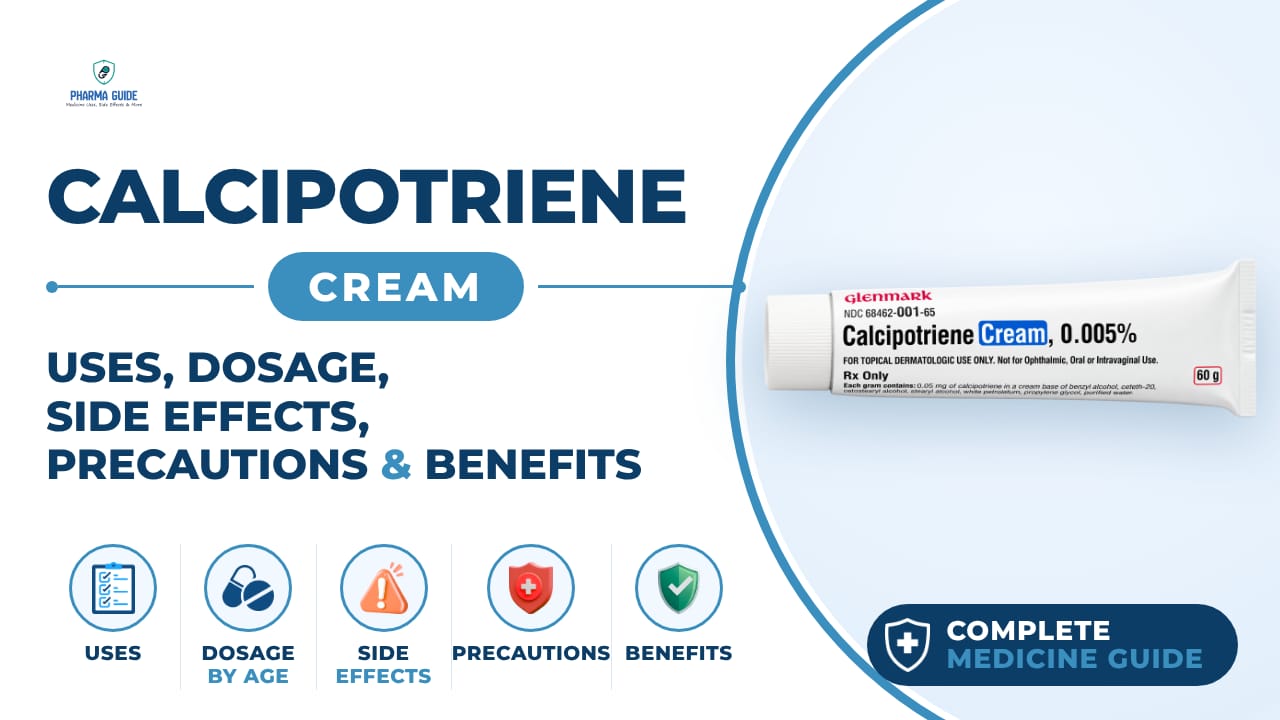
Calcipotriene Cream: Uses, Dosage, Side Effects, Precautions and Alternates
| Generic name | calcipotriene |
|---|---|
| Drug class | Topical Skin Products, Vitamin D Analogs |
| Forms | Cream, Solution, Ointment, Foam |
Quick overview
Calcipotriene Cream is a man-made form of vitamin D used to treat plaque psoriasis on the skin and scalp. It works by changing how skin cells grow, which helps reduce the redness, irritation, and scaling associated with psoriasis plaques. It is available in cream, solution, ointment, and foam forms, and is used according to a doctor's instructions for the full course of treatment.
What is Calcipotriene Cream
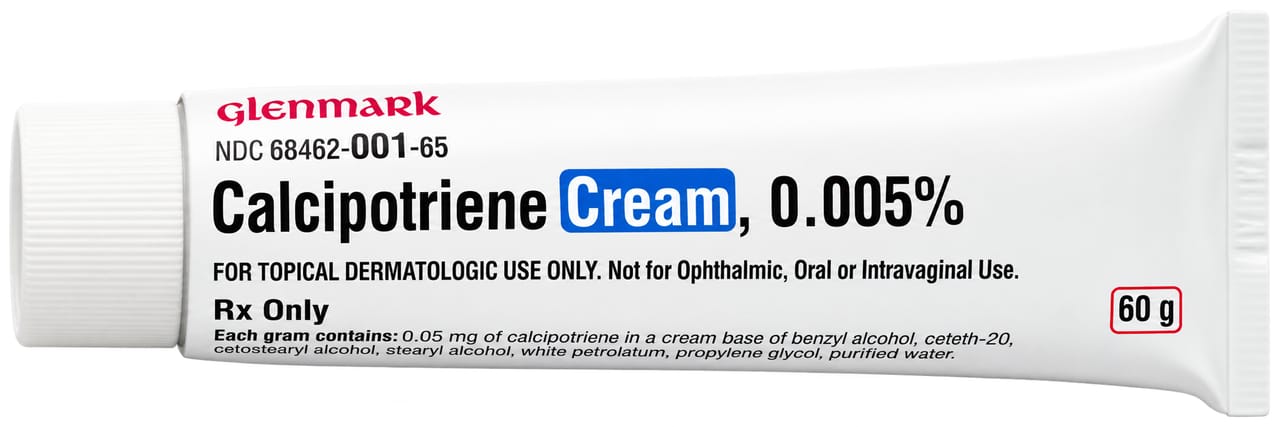
Calcipotriene cream is a man-made form of vitamin D that is prescribed to treat plaque psoriasis on the skin and scalp. The generic name is calcipotriene, and it belongs to the drug classes Topical Skin Products and Vitamin D Analogs.
Calcipotriene Cream uses
- Treats plaque psoriasis (psoriasis vulgaris).
- Helps reduce excessive skin-cell production.
- Reduces thickened and scaly psoriasis plaques.
- Helps improve skin texture in affected areas.
Benefits of Calcipotriene Cream
- Helps slow excessive skin-cell growth.
- May reduce plaque thickness and scaling.
- Supports normal skin-cell development.
- Can improve the appearance of affected skin.
- Provides a nonsteroidal treatment option for psoriasis.
How Calcipotriene Cream works
Calcipotriene is a form of vitamin D that changes how skin cells grow in areas affected by psoriasis, which reduces redness, irritation, and scaling.
Calcipotriene Cream dosage
Use this medicine only as directed by your doctor, and do not use more, more often, or longer than ordered. This medicine is for use on the skin only; do not get it in your eyes, nose, mouth, or vagina. Do not use on skin areas with cuts, scrapes, or burns; if it gets on these areas, rinse with water right away.
Wash your hands with soap and water before and after use; if treating your hands, only wash the unaffected skin. For cream or ointment, apply a thin layer to the affected skin and rub in gently until it disappears; avoid the face and eyes. For scalp solution, comb dry hair first to remove flakes, part hair to see the lesions, and apply only to the scalp lesions, avoiding the forehead and eyes. For foam, shake the can before each use, turn it upside down to dispense into your hand, and apply a thin layer; if using on the scalp, apply when hair is dry.
Do not use the scalp solution or foam near heat, an open flame, or while smoking. Keep using the medicine for the full course of treatment and do not skip doses to help clear the skin problem completely. Do not cover the treated area with a bandage or dressing unless your care team tells you to. Do not use on healthy skin or large areas of skin. Use it at the same time each day as directed on the label. Talk to your care team about use in children, as special care may be needed.
| Age group | Dose |
|---|---|
| Under 6 years | Safety and effectiveness not established; no approved dosage |
| 13–17 years | No FDA-approved cream dosage; pediatric specialist assessment required |
| 18–74 years | Apply a thin layer twice daily to affected skin |
| 75 years and older | Apply a thin layer twice daily to affected skin, with careful monitoring of tolerability |
Available forms and strengths
- Cream
- Solution
- Ointment
- Foam
Side effects of Calcipotriene Cream
Common
- Local skin irritation, burning, stinging, or tingling at the application site
- Skin redness, dryness, or peeling
- Itching or skin rash
- Temporary worsening of psoriasis
- Increased sensitivity of treated skin to sunlight
- Pain at the application site
- Darker color in the treated areas of the skin
- Pus in the hair follicles
Serious
- High blood calcium levels (hypercalcemia) with symptoms such as nausea, weakness, confusion, fatigue, increased thirst, and frequent urination
- Severe allergic reactions or worsening skin irritation, such as spreading rash or inflammation
- Hives, difficulty breathing, or swelling of the face, lips, tongue, or throat
- Severe burning, stinging, skin rash, or other irritation after applying the medicine
- Worsening of the skin condition
- Severe headache, confusion, slurred speech, arm or leg weakness, trouble walking, loss of coordination, feeling unsteady, very stiff muscles, high fever, profuse sweating, or tremors
- Serious eye symptoms such as sudden vision loss, blurred vision, tunnel vision, eye pain or swelling, or seeing halos around lights
- Serious heart symptoms such as fast, irregular, or pounding heartbeats, fluttering in the chest, shortness of breath, sudden dizziness, lightheadedness, or passing out
Warnings and precautions
- Do not use this medicine if you have high calcium or vitamin D levels in your body.
- Do not apply to the face, eyes, lips, mouth, genital area, or broken or damaged skin.
- The scalp solution and foam can catch fire. Keep them away from open flame or heat, and do not smoke while applying them. Do not puncture or burn the foam canister, even when empty, and don't leave it in a hot car.
- This medicine can make your skin more sensitive to sunlight, so protect your skin from sun exposure and avoid tanning beds.
- Do not use other skin products, cosmetics, or vitamin/mineral supplements on or near the treated area unless your doctor approves.
- This medicine should not be used by people with certain severe forms of psoriasis without medical guidance, as its use hasn't been studied in those conditions.
- Tell your doctor if you are pregnant. There isn't enough information to know if this medicine causes harm during pregnancy, so it should be used only if the benefit outweighs the possible risk to the baby.
- Tell your doctor if you are breastfeeding. There isn't enough research on whether this medicine passes into breast milk, so you should weigh the possible benefits and risks with your doctor.
- No established renal-specific dosage adjustment is available. Patients with significant kidney impairment require clinical assessment, particularly if extensive topical treatment is planned.
- No standard hepatic dose adjustment is established. Patients with severe liver disease should receive individualized medical evaluation.
- Discuss the use of this medicine with alcohol with your healthcare professional, since interactions may occur.
- Pruritus is a recognized adverse reaction and may affect treated or surrounding skin.
Storage
- Keep out of the reach of children.
- Do not keep outdated medicine or medicine no longer needed.
- Ask your healthcare professional how you should dispose of any medicine you do not use.
- Store the medicine in a closed container at room temperature, away from heat, moisture, and direct light. Keep from freezing.
- The scalp solution and foam are flammable. Keep them away from open flame or heat. Do not smoke when you are applying the medicine. Do not poke holes in the foam canister or throw it into a fire, even if the canister is empty. Do not keep the foam inside a car where it could be exposed to extreme heat.
- Store at room temperature between 15 and 25 degrees C (59 and 77 degrees F). Do not freeze. Get rid of any unused medication after the expiration date.
- Take the medication to a medication take-back program, or if not possible, mix it with something like cat litter or coffee grounds, seal in a bag, and put it in the trash.
When to see a doctor
- Get medical help right away if you notice signs of high blood calcium, such as stomach pain, confusion, depression, dry mouth, headache, confused speech, increased urination, loss of appetite, metallic taste, muscle weakness, unusual tiredness, nausea, vomiting, or weight loss.
- Check with your doctor right away if you develop a skin rash, burning, stinging, redness, swelling, or irritation on the skin.
- Seek emergency care right away if you have severe headache, confusion, slurred speech, limb weakness, trouble walking, loss of coordination, unsteadiness, very stiff muscles, high fever, heavy sweating, or tremors.
- Get emergency help right away if you have serious eye symptoms like sudden vision loss, blurred or tunnel vision, eye pain or swelling, or seeing halos around lights.
- Get emergency help right away for serious heart symptoms such as a fast, irregular, or pounding heartbeat, fluttering in the chest, shortness of breath, sudden dizziness, lightheadedness, or passing out.
- If you think you have used too much of this medicine, contact a poison control center or emergency room right away.
- If your psoriasis does not improve within a few weeks or gets worse, check with your doctor.
Alternatives
- Tazarotene
- Tacalcitol
- Calcipotriol Ointment
- Dovonex
Watch the video
FAQs
What is Calcipotriene Cream used for?
It is used to treat plaque psoriasis on the skin and scalp by reducing excessive skin-cell production, thickened and scaly plaques, and improving skin texture.
How does Calcipotriene Cream work?
It is a man-made form of vitamin D that changes how skin cells grow in areas affected by psoriasis, which helps reduce redness, irritation, and scaling.
How is Calcipotriene Cream applied?
For cream or ointment, apply a thin layer to the affected skin and rub in gently until it disappears, avoiding the face and eyes. Adults should apply a thin layer twice daily to affected skin as directed by a doctor.
What are the common side effects of Calcipotriene Cream?
Common side effects include local skin irritation, burning, stinging, or tingling at the application site, redness, dryness, peeling, itching, rash, temporary worsening of psoriasis, and increased sun sensitivity.
Is Calcipotriene Cream flammable?
The scalp solution and foam forms can catch fire, so they should be kept away from open flame or heat, and you should not smoke while applying them or puncture or burn the foam canister.
General information, not medical advice
Your prescriber and the leaflet in your pack know your situation. This page does not.
- Follow your prescriber and the leaflet
- Don't start, stop, or change a dose on your own
- Doses and warnings differ by country and product
Sources
Video
Related medicines

Injectafer Injection: Uses, Dosage, Side Effects, Precautions and Alternates
Iron products
Injectafer (ferric carboxymaltose) treats iron deficiency anemia and heart failure-related iron deficiency via IV. Learn uses, dosage, side effects, and

Gliclazide Tablet: Uses, Dosage, Side Effects, Precautions and Alternates
Sulfonylurea (hypoglycemic/antidiabetic agent)
Gliclazide Tablet is a sulfonylurea for type 2 diabetes that boosts insulin release. Learn about dosage, side effects, warnings, and precautions.