
Safety
General information, not medical advice
Your prescriber and the leaflet in your pack know your situation. This page does not.
- Follow your prescriber and the leaflet
- Don't start, stop, or change a dose on your own
- Doses and warnings differ by country and product
Calcirol Sachet: Uses, Dosage, Side Effects, Precautions and Alternates
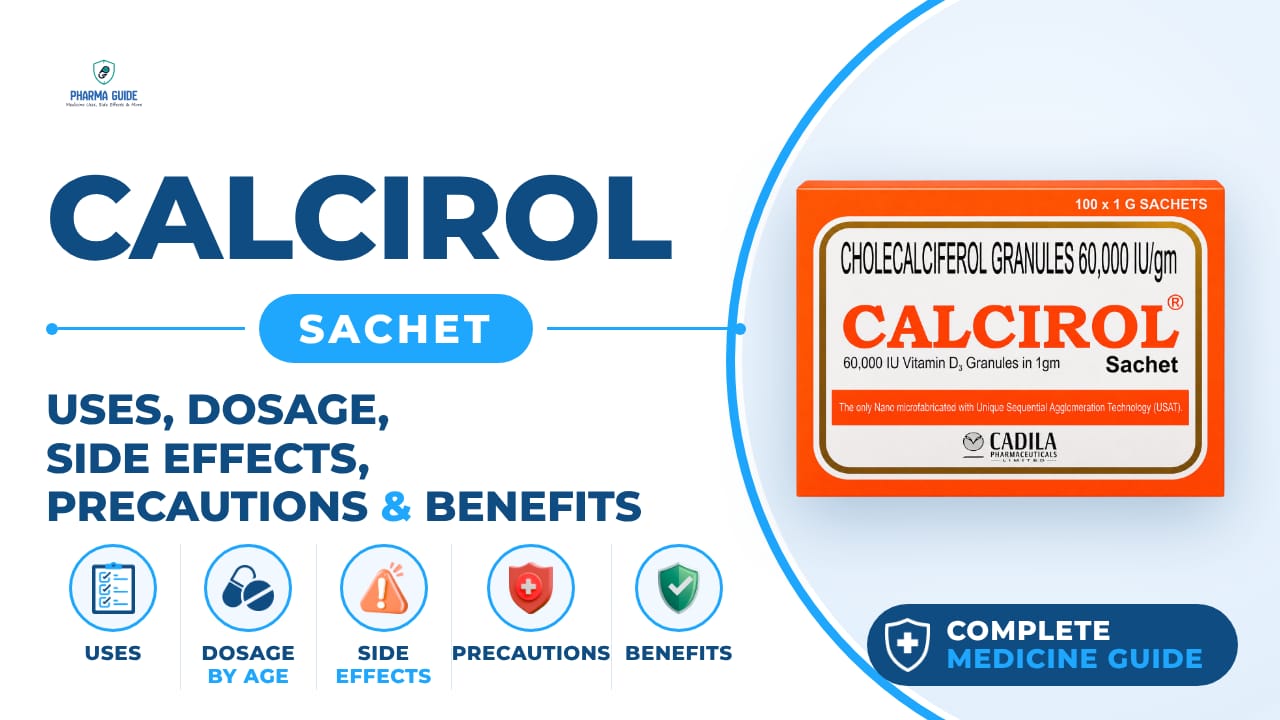
| Generic name | Cholecalciferol (Vitamin D3) |
|---|---|
| Drug class | Vitamins |
| Forms | Granules, Sachet, Tablet, Capsule, Injection |
Quick overview
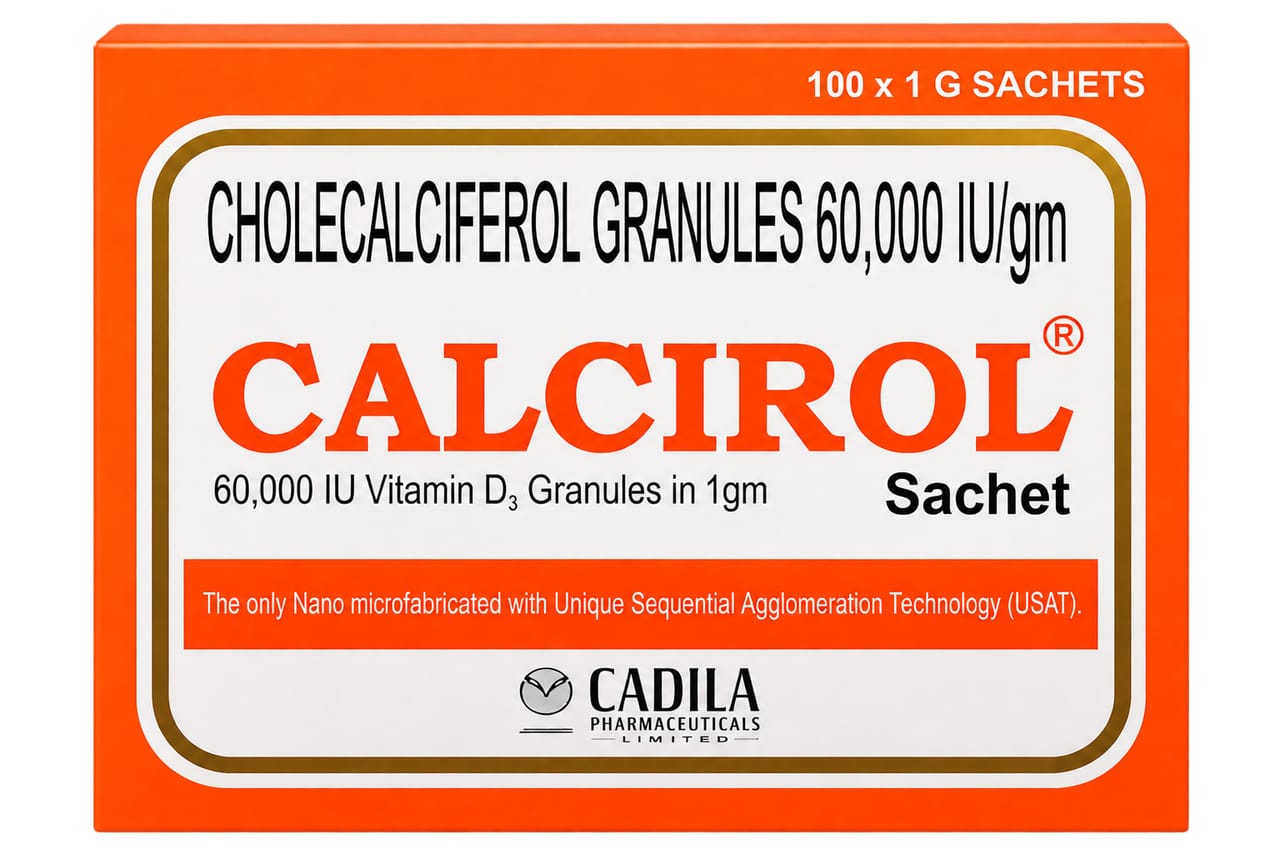
Calcirol Sachet contains Cholecalciferol (Vitamin D3), a vitamin supplement that helps the body absorb calcium and phosphates to keep bones and teeth healthy. It is used for nutritional supplementation and for conditions such as osteoporosis, osteomalacia, rickets, hypoparathyroidism, hyperparathyroidism, and calcium deficiency. It is especially given to elderly individuals or those with a Vitamin D deficiency. The sachet is mixed with water and taken as directed by a doctor.
What is Calcirol Sachet
Calcirol Sachet contains Vitamin D3, which is essential for the proper growth and development of your body. It helps in the absorption of calcium and phosphates from your bowel, which keeps your bones and teeth healthy. It is given especially to the elderly and to those having a deficiency of this vitamin due to familial or environmental reasons.
Calcirol Sachet uses
- Nutritional Supplementation
- Osteoporosis
- Hypoparathyroidism
- Osteomalacia and Rickets (bone disease due to Vitamin D deficiency)
- Calcium Deficiency
- Hyperparathyroidism
Benefits of Calcirol Sachet
- Helps restore and maintain Vitamin D levels
- Improves bone density
- Reduces muscle cramps, fatigue, and bone pain caused by deficiency
- Supports better calcium absorption for strong bones and teeth
- Boosts overall immunity and energy levels
How Calcirol Sachet works
Calcirol Sachet works by helping your body absorb calcium, phosphates, and Vitamin A from different organs, which helps maintain overall health.
Calcirol Sachet dosage
Calcirol Sachet can be taken with or without food, as instructed by your doctor. Try taking it at the same time every day to help you remember. Do not stop taking this medicine without consulting your doctor, even if you feel better after a few doses.
Empty the contents of the packet into a glass of water, stir, and leave the mixture for a few minutes until it thickens, then stir again and drink it within 30 minutes of mixing. It is preferable to take it together with a large meal to help your body absorb the vitamin D.
| Age group | Dose |
|---|---|
| Children (1–12 Years) | 600 IU (15 mcg) daily or as prescribed |
| Adolescents (13–18 Years) | 600–1000 IU daily depending on vitamin D level |
| Adults (18–64 Years) | 600–2000 IU daily depending on deficiency status |
| Older Adults (65+ Years) | 800–2000 IU daily as advised by a healthcare professional |
Available forms and strengths
- Granules
- Sachet
- Tablet
- Capsule
- Injection
Side effects of Calcirol Sachet
Common
- Constipation
- Mental confusion
- Nausea and vomiting
- Metallic taste
- Skin rash, hives, or itching
- Headache
- Dry mouth
- Increased thirst
- Stomach discomfort
Serious
- Increased blood calcium levels
- Increased calcium levels in urine
- High calcium levels
- Kidney problems
- Frequent urination
Warnings and precautions
- Do not take this medicine if you have malabsorption syndrome (trouble absorbing nutrients from your stomach), or high levels of calcium or Vitamin D3 in your body.
- Do not use this medicine if you have kidney stones (hard deposits of salts and minerals inside your kidneys).
- Do not use this medicine if you have nephrocalcinosis, a condition where calcium builds up in the kidney tubules.
- Use this medicine carefully if you have irregular heartbeats, since there is an increased risk of serious side effects. Your doctor may monitor your heart function and adjust your dose.
- Tell your doctor about all the medicines, herbs, and supplements you are currently taking, since many can interact with this medicine and reduce how well it is absorbed.
- This medicine is not recommended if you have a disorder that prevents you from properly absorbing nutrients from your bowel. Ask your doctor for another suitable option.
- This medicine is not recommended if you are pregnant, as there isn't enough data to know if it is safe and effective. Talk to your doctor before taking it.
- This medicine is not recommended for breastfeeding women because it passes into breast milk. Talk to your doctor first to understand the risks and benefits.
- Use this medicine carefully if you have kidney problems, since it can affect your kidneys. Your doctor will monitor your kidney function and adjust your dose if needed.
- It isn't clear how this medicine interacts with alcohol. It's best to check with your doctor before drinking alcohol while taking it.
- This medicine does not cause sleepiness, so it is considered safe to drive or use machinery after taking it.
Storage
- Store at room temperature
- Store in a cool, dry place below 30°C
- Keep away from direct sunlight and moisture
- Keep out of reach of children
When to see a doctor
- Get medical help right away if you notice signs of an allergic reaction, such as skin rash, swelling, or itching (especially of the face, lips, or throat), or difficulty breathing. If you take too much of this medicine, get emergency medical treatment or contact your doctor right away.
Alternatives
- D-Cure Sachet
- Caltrate Vitamin D3
- Cholecalciferol Tablets
Watch the video
FAQs
What is Calcirol Sachet used for?
It is used for nutritional supplementation and conditions like osteoporosis, osteomalacia, rickets, hypoparathyroidism, hyperparathyroidism, and calcium deficiency, especially in the elderly or those with Vitamin D deficiency.
How should I take Calcirol Sachet?
Empty the packet into a glass of water, stir, let it thicken for a few minutes, stir again, and drink within 30 minutes of mixing. It is preferable to take it with a large meal to help absorption.
What are the common side effects of Calcirol Sachet?
Common side effects include constipation, mental confusion, nausea and vomiting, metallic taste, skin rash or itching, headache, dry mouth, increased thirst, and stomach discomfort.
Who should avoid taking Calcirol Sachet?
It should be avoided by people with malabsorption syndrome, high calcium or Vitamin D3 levels, kidney stones, or nephrocalcinosis, and is not recommended during pregnancy or breastfeeding.
Does Calcirol Sachet cause drowsiness?
No, this medicine does not cause sleepiness, so it is considered safe to drive or use machinery after taking it.
General information, not medical advice
Your prescriber and the leaflet in your pack know your situation. This page does not.
- Follow your prescriber and the leaflet
- Don't start, stop, or change a dose on your own
- Doses and warnings differ by country and product
Sources
- Pubchem.ncbi.nlm.nih.gov. 2021. Cholecalciferol.
- Mri.cts-mrp.eu. 2021.
- April Hazard Vallerand, Cynthia A. Sanoski. Sixteenth Edition. Philadelphia, China: F. A. Davis Company; 2019: Page No 1276-1278
- KD Tripathi. Seventh Edition. New Delhi, India: Jaypee Brothers Medical Publishers; 2013: Page No 340-342
- US Food and Drug Administration (FDA); Package leaflet information for the user; Rocaltrol® (calcitriol)
- US Food and Drug Administration (FDA); Package leaflet information for the user; Calcijex® (calcitriol)
Video
Related medicines
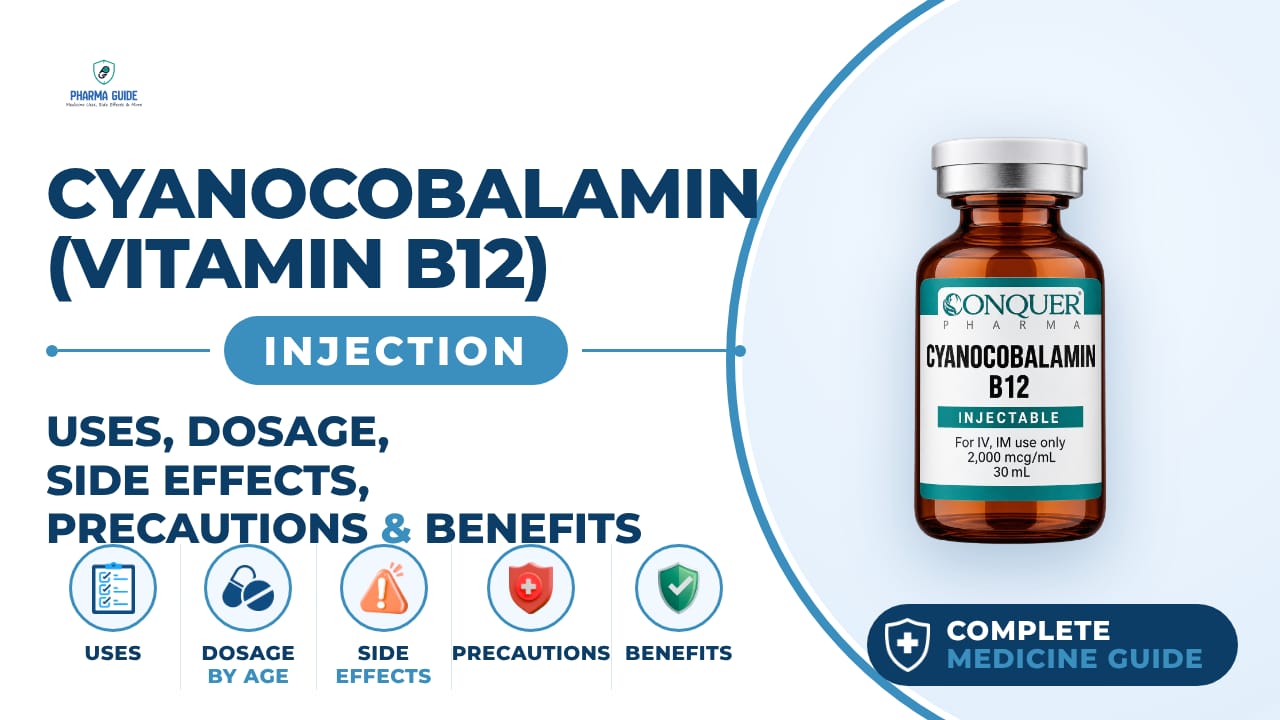
Cyanocobalamin (Vitamin B12) Injection: Uses, Dosage, Side Effects, Precautions and Alternates
Vitamins
Cyanocobalamin (Vitamin B12) Injection treats and prevents B12 deficiency and pernicious anemia, supporting nerve, blood cell, and DNA health.
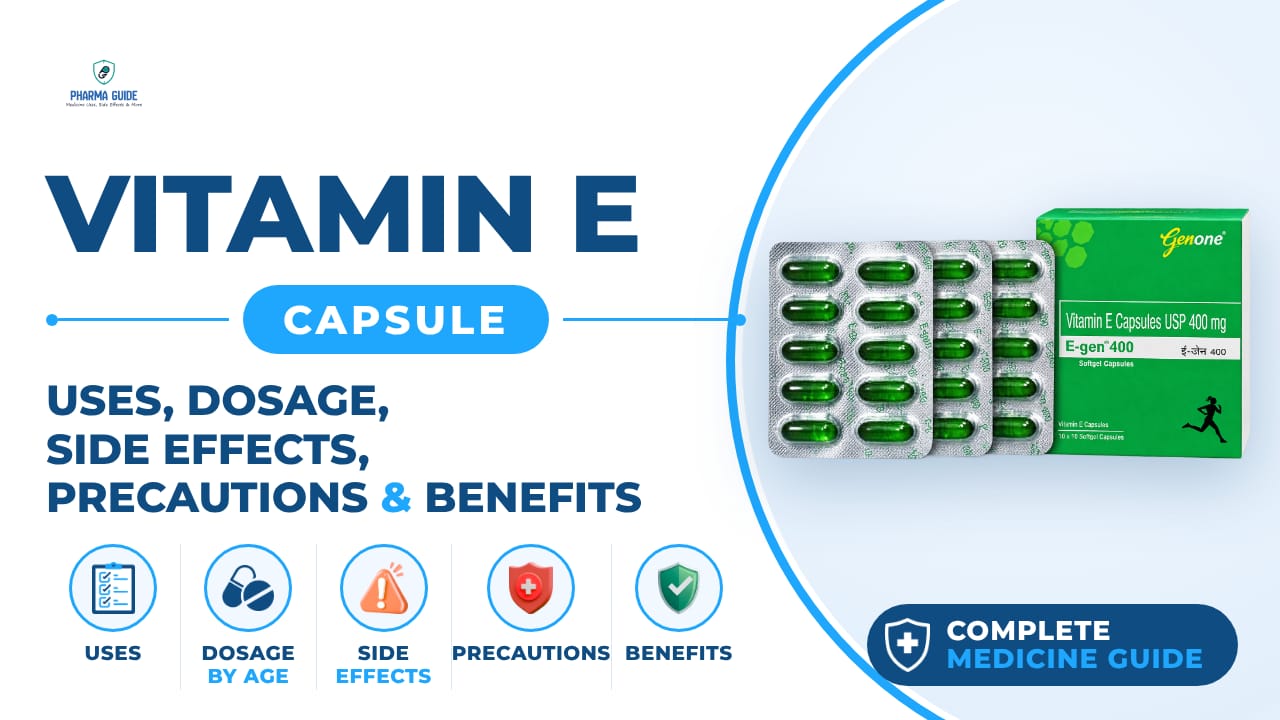
Vitamin E Capsule: Uses, Dosage, Side Effects, Precautions and Alternates
Vitamins
Vitamin E Capsule is an antioxidant supplement used to treat or prevent vitamin E deficiency. Learn its uses, dosage, side effects, and precautions.