
Safety
General information, not medical advice
Your prescriber and the leaflet in your pack know your situation. This page does not.
- Follow your prescriber and the leaflet
- Don't start, stop, or change a dose on your own
- Doses and warnings differ by country and product
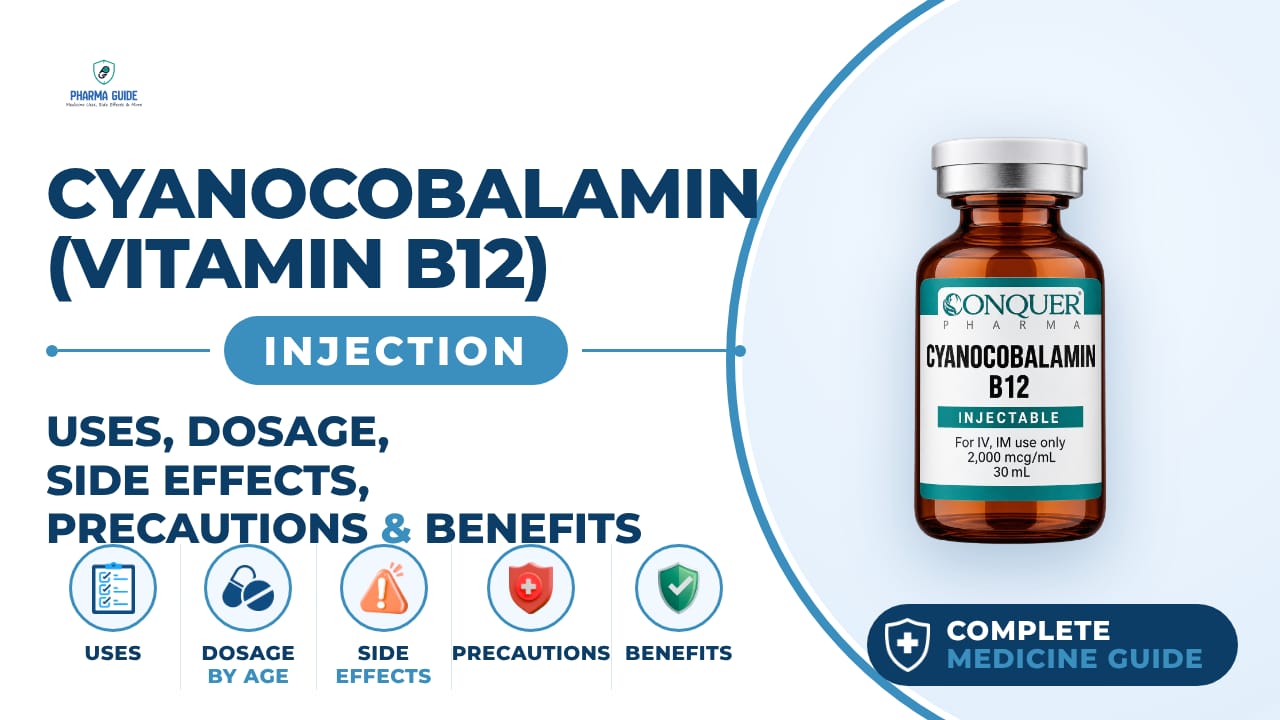
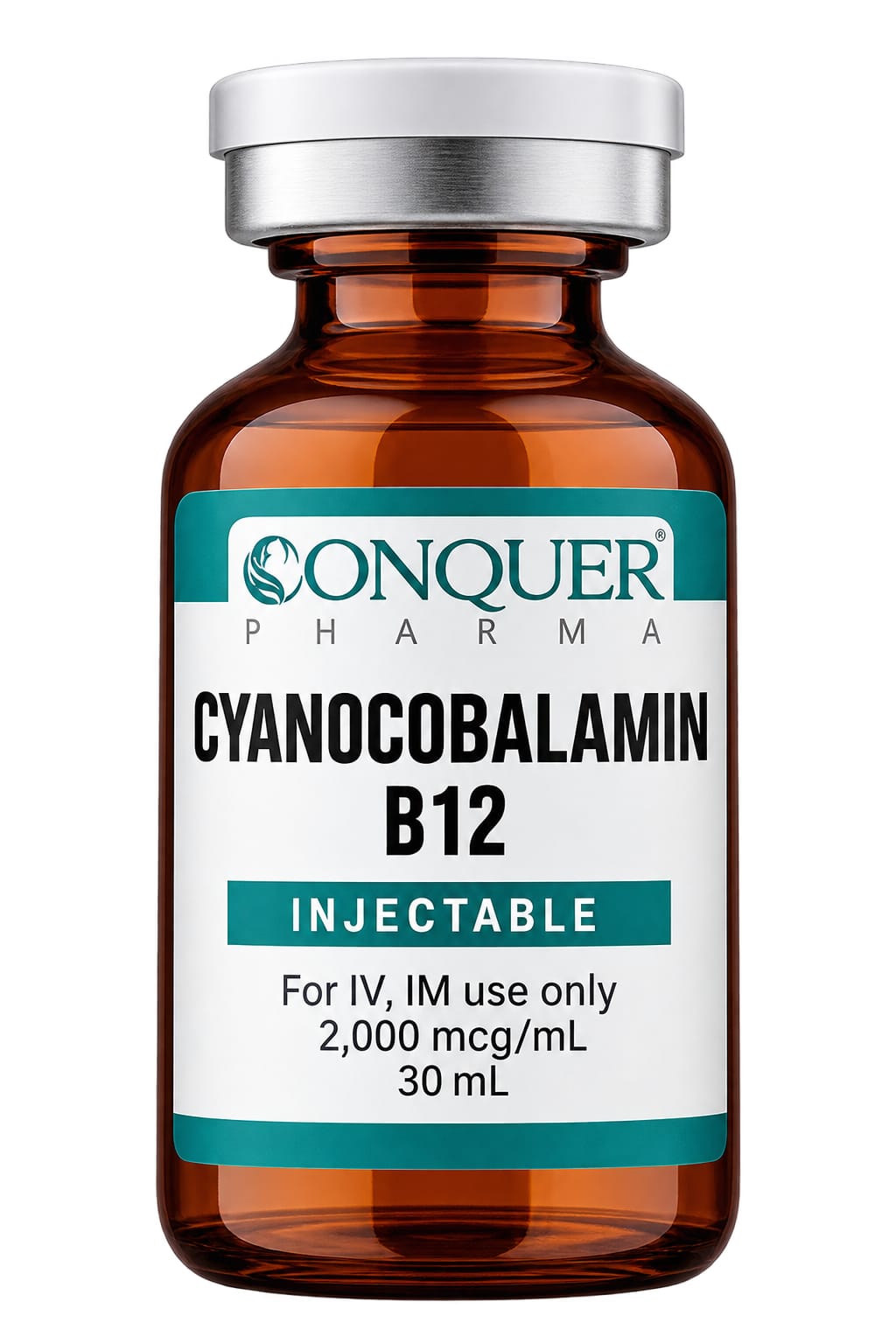
Cyanocobalamin (Vitamin B12) Injection: Uses, Dosage, Side Effects, Precautions and Alternates
| Generic name | cyanocobalamin |
|---|---|
| Drug class | Vitamins |
| Forms | Nasal spray, Injection |
Quick overview
Cyanocobalamin (Vitamin B12) Injection is a man-made form of vitamin B12 given by injection into a muscle or under the skin to treat and prevent vitamin B12 deficiency, especially in people with pernicious anemia or absorption problems. It works by supplying the body with B12 directly, bypassing digestion, which helps keep nerve and blood cells healthy and supports DNA production. Dosing depends on age, and treatment is often lifelong for people with pernicious anemia. It is available as an injection and also as a nasal spray.
What is Cyanocobalamin (Vitamin B12) Injection
Cyanocobalamin is a man-made form of vitamin B12, an essential nutrient your body needs but cannot make on its own. It helps keep nerve and blood cells healthy, helps your body make DNA, and helps prevent pernicious anemia. This injection form delivers vitamin B12 directly into a muscle or under the skin so it is absorbed quickly, bypassing the digestive system.
Cyanocobalamin (Vitamin B12) Injection uses
- Treats and prevents vitamin B12 deficiency caused by pernicious anemia, certain diseases or infections, some medications, or a strict vegan diet
- Used for people with pernicious anemia who cannot absorb enough B12 through food or pills
- Given as part of a Schilling test to check how well the body absorbs vitamin B12
- Sometimes used for inherited conditions that reduce B12 absorption and for methylmalonic aciduria, including in unborn babies to help prevent it after birth
Benefits of Cyanocobalamin (Vitamin B12) Injection
- Quickly raises low vitamin B12 levels by delivering it straight into the body, bypassing digestion
- Helps correct anemia caused by B12 deficiency
- Helps prevent permanent nerve and spinal cord damage caused by untreated B12 deficiency
- Most people notice improvement in energy and anemia symptoms within the first one to three days to a week after starting treatment
How Cyanocobalamin (Vitamin B12) Injection works
Vitamin B12 is a nutrient your body needs but cannot make itself. It keeps nerve and blood cells healthy, helps make DNA, and helps prevent pernicious anemia. Because the injection goes directly into the muscle or under the skin, it supplies B12 to people whose intestines cannot absorb it properly from food.
Cyanocobalamin (Vitamin B12) Injection dosage
Use this medicine exactly as your doctor prescribed and follow all directions on your prescription label. It is injected into a muscle or just under the skin, usually by a healthcare provider in an office or clinic, though some people are trained to give it to themselves at home. Treatment often starts with more frequent injections, which are then spaced out to less frequent maintenance doses as your blood counts improve.
If you have pernicious anemia you may need to continue injections for life; do not stop unless your doctor tells you to. Your dose needs may change if you become pregnant, breastfeed, or change to a vegetarian diet, so tell your doctor about any such changes. Follow your doctor's directions carefully when this medicine is given to a child, since the dose depends on age, weight, and diet.
Keep all appointments for injections and lab tests, even if you feel well, since you need regular blood tests to check how you are responding. Unless your doctor tells you otherwise, continue your normal diet while using this medicine.
| Age group | Dose |
|---|---|
| Under 18 years | 50–100 mcg, once/day |
| 18–60 years | 1,000 mcg, once/day |
| 60+ years | 1,000 mcg, once/day |
Available forms and strengths
- Nasal spray
- Injection
Side effects of Cyanocobalamin (Vitamin B12) Injection
Common
- Soreness or redness at the injection site
- Mild diarrhea
- Nausea
- Headache
- Itching
- Feeling unusually weak or tired
- Dizziness
- Joint pain
- Tongue swelling
- Runny nose
- Tingling feeling in hands and feet
- Feeling as if your entire body is swollen
- Infection in the nose or throat, sore throat, or common cold-like symptoms
Serious
- Signs of a severe allergic reaction: hives, difficulty breathing or swallowing, swelling of the face, lips, tongue, or throat
- Low potassium levels: leg cramps, constipation, irregular heartbeats, fluttering in the chest, increased thirst or urination, numbness or tingling, muscle weakness or a limp feeling
- Heart problems: swelling, rapid weight gain, feeling short of breath
- Fluid build-up in or around the lungs: pain when breathing, feeling short of breath while lying down, wheezing, gasping for breath, cough with foamy mucus, cold and clammy skin, anxiety, rapid heartbeats
- Extreme thirst or frequent urination
- Confusion
- Fast heartbeat
- Swelling of the arms, hands, feet, ankles, or lower legs
- Pain, warmth, redness, swelling, or tenderness in one leg
- Red skin color, especially on the face
Warnings and precautions
- Tell your doctor if you are pregnant or plan to become pregnant. Your dose of vitamin B12 may need to be different during pregnancy, and you should call your doctor if you become pregnant while using this medicine.
- Tell your doctor if you are breastfeeding, since your vitamin B12 dose needs may be different while nursing.
- Tell your doctor if you have kidney disease, since the product may contain aluminum that can build up in people with poor kidney function and cause toxicity affecting the brain and bones, especially with long-term use.
- Tell your doctor if you have liver disease before using this medicine.
- Avoid drinking large amounts of alcohol while being treated with this medicine, since it is unknown how alcohol affects the injection and large amounts of alcohol can reduce absorption of oral forms.
- People with early Leber's disease, an inherited form of vision loss, should not receive cyanocobalamin injections because it can cause rapid and severe vision loss.
- In rare cases, vitamin B12 shots can cause a life-threatening allergic reaction called anaphylactic shock. A small test dose may be given first if an allergy is suspected.
- In people with severe megaloblastic anemia, aggressive treatment can cause low potassium levels and sudden, serious complications.
- Some forms of this injection contain benzyl alcohol, which has been linked to a serious and sometimes fatal condition called "Gasping Syndrome" in premature infants, so it is generally avoided in this group.
- Leaving vitamin B12 deficiency untreated for more than three months may cause permanent spinal cord and nerve damage, so early diagnosis and treatment are important.
- High doses of folic acid can hide the blood-related signs of vitamin B12 deficiency without protecting against nerve damage, so true deficiency may be missed if folic acid is taken alone.
- Do not use this medicine if you are allergic to cyanocobalamin or cobalt, or if you have Leber's disease, since it can cause optic nerve damage and possibly blindness in people with this condition.
Storage
- Store this medication at room temperature away from moisture, heat, and light
- Use a needle and syringe only once and then place them in a puncture-proof "sharps" container
- Follow state or local laws about how to dispose of the sharps container
- Keep the sharps container out of the reach of children and pets
- Your doctor will typically store this medication in his or her office
When to see a doctor
- Get emergency medical help right away if you have signs of a severe allergic reaction, such as hives, difficulty breathing, or swelling of your face, lips, tongue, or throat.
- Call your doctor right away if you have signs of heart problems, such as swelling, rapid weight gain, or feeling short of breath.
- Call your doctor right away if you have signs of fluid build-up around the lungs, such as pain when breathing, shortness of breath while lying down, wheezing, gasping for breath, cough with foamy mucus, cold and clammy skin, anxiety, or rapid heartbeats.
- Call your doctor right away if you have signs of low potassium, such as leg cramps, constipation, irregular heartbeats, fluttering in your chest, increased thirst or urination, numbness or tingling, or muscle weakness.
- If someone has overdosed and has collapsed, had a seizure, has trouble breathing, or cannot be woken up, call emergency services right away.
Alternatives
- Vitamin B12 Tablet
- Methylcobalamin Injection
- Methylcobalamin Tablet
Watch the video
FAQs
What is Cyanocobalamin (Vitamin B12) Injection used for?
It treats and prevents vitamin B12 deficiency caused by pernicious anemia, certain diseases or infections, some medications, or a strict vegan diet. It's also used in people with pernicious anemia who can't absorb enough B12 through food or pills, as part of a Schilling test, and for certain inherited absorption conditions and methylmalonic aciduria.
How is Cyanocobalamin Injection given?
It is injected into a muscle or just under the skin, usually by a healthcare provider, though some people are trained to self-inject at home. Treatment often starts with more frequent injections that are later spaced out to maintenance doses as blood counts improve.
How long does it take for Cyanocobalamin Injection to work?
Most people notice improvement in energy and anemia symptoms within the first one to three days to a week after starting treatment.
Do I need to take Cyanocobalamin Injection for life?
If you have pernicious anemia, you may need to continue injections for life, and you should not stop unless your doctor tells you to.
What are the serious side effects of Cyanocobalamin Injection?
Serious side effects include severe allergic reactions, low potassium levels, heart problems, fluid build-up in or around the lungs, extreme thirst or frequent urination, confusion, fast heartbeat, swelling of the limbs, and leg pain or redness.
General information, not medical advice
Your prescriber and the leaflet in your pack know your situation. This page does not.
- Follow your prescriber and the leaflet
- Don't start, stop, or change a dose on your own
- Doses and warnings differ by country and product
Sources
- Drugs.com - Vitamin B12 Injection (https://www.drugs.com/vitamin-b12.html)
- MedlinePlus - Cyanocobalamin Injection (https://medlineplus.gov/druginfo/meds/a605007.html)
- WebMD - Cyanocobalamin (Vitamin B12) (https://www.webmd.com/drugs/cyanocobalamin-vitamin-b12)
Video
Related medicines
Vitamin E Capsule: Uses, Dosage, Side Effects, Precautions and Alternates
Vitamins
Vitamin E Capsule is an antioxidant supplement used to treat or prevent vitamin E deficiency. Learn its uses, dosage, side effects, and precautions.
Calcirol Sachet: Uses, Dosage, Side Effects, Precautions and Alternates
Vitamins
Calcirol Sachet contains Vitamin D3 to boost calcium absorption for healthy bones. Learn its uses, dosage, benefits, side effects, and precautions.