
Safety
General information, not medical advice
Your prescriber and the leaflet in your pack know your situation. This page does not.
- Follow your prescriber and the leaflet
- Don't start, stop, or change a dose on your own
- Doses and warnings differ by country and product
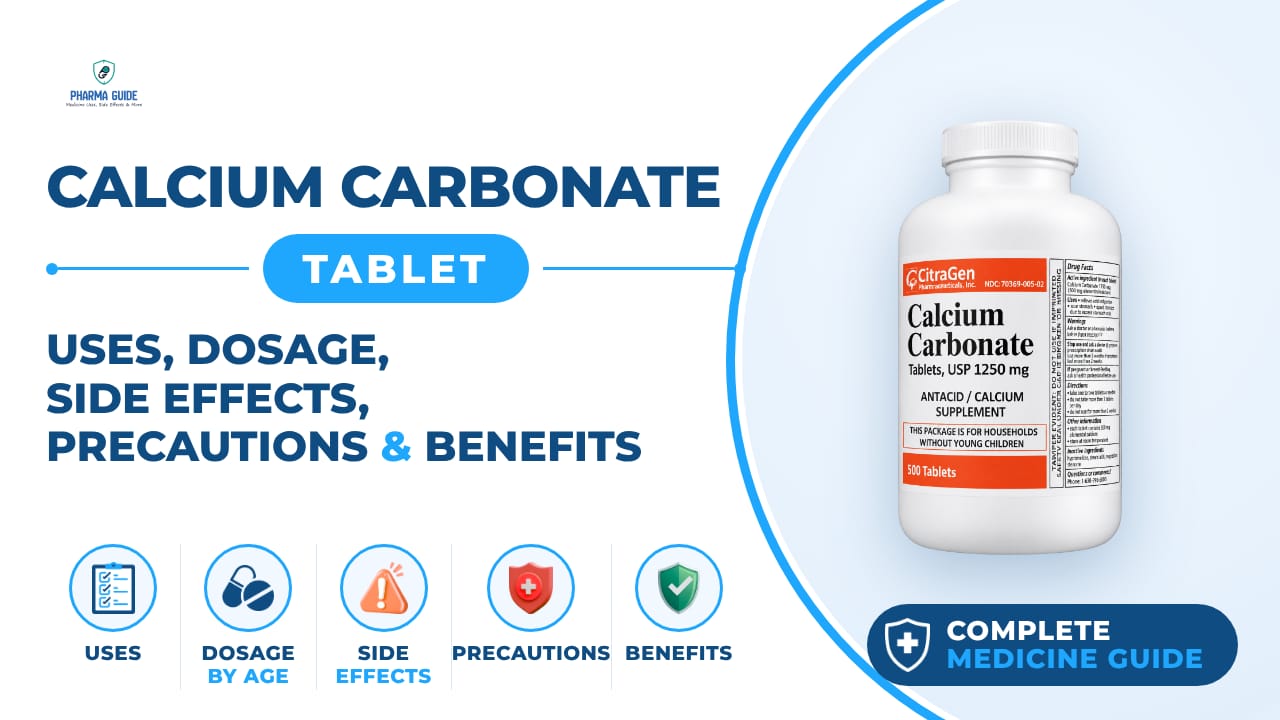
Calcium Carbonate Tablet: Uses, Dosage, Side Effects, Precautions and Alternates
| Generic name | Calcium Carbonate |
|---|---|
| Drug class | Antacid / calcium supplement / phosphate binder |
| Forms | Tablet, Chewable tablet, Capsule, Liquid (oral suspension), Powder |
Quick overview
Calcium Carbonate Tablet is an over-the-counter medicine that works as an antacid, calcium supplement, and phosphate binder. It is used to relieve heartburn and indigestion, correct low calcium levels, support strong bones and body function, and help control high phosphate levels in chronic kidney disease. It comes in tablet, chewable tablet, capsule, liquid, and powder forms.
What is Calcium Carbonate Tablet
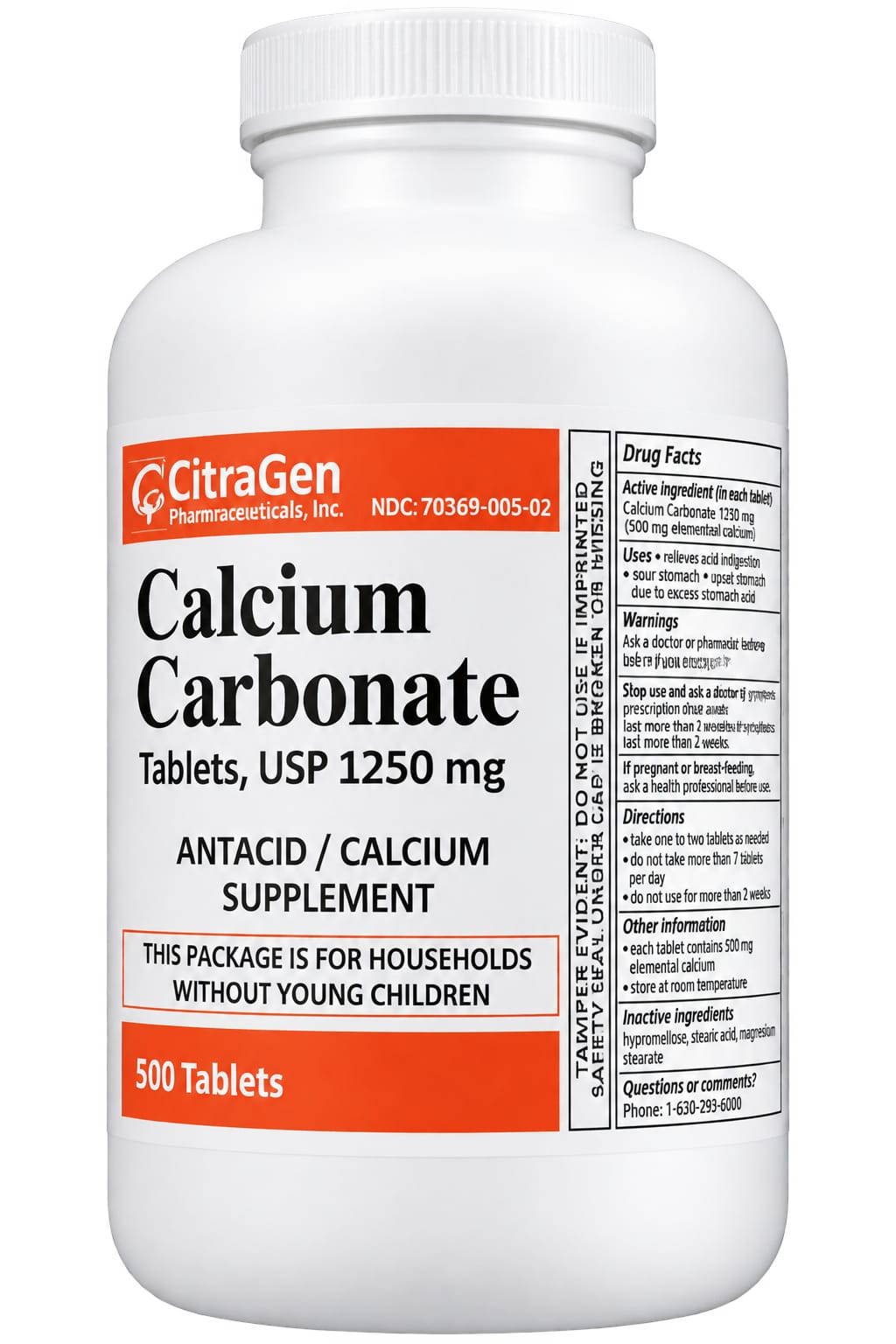
Calcium carbonate is an over-the-counter medicine that works as an antacid and as a calcium supplement. It comes as tablets, chewable tablets, capsules, and liquid.
Calcium Carbonate Tablet uses
- Heartburn, acid indigestion, and upset stomach caused by too much stomach acid
- Low calcium levels in the diet or body (calcium supplement)
- Helping build and maintain strong bones, muscles, nerves, and heart function
- Used in chronic kidney disease to help control high phosphate levels (as directed by a doctor)
Benefits of Calcium Carbonate Tablet
- Relieves heartburn, indigestion, and upset stomach by lowering stomach acid
- Helps keep bones strong and supports heart and muscle health when used as a calcium supplement
- Bone Health Support: Helps maintain strong bones and teeth
- Calcium Deficiency Support: Helps prevent or correct low calcium levels
How Calcium Carbonate Tablet works
As an antacid, calcium carbonate reacts with stomach acid to lower its acidity, which reduces heartburn and helps the stomach lining heal. It also helps move food through the gut. As a supplement, calcium is absorbed in the intestine and used by the body for bones and other tissues.
Calcium Carbonate Tablet dosage
Take by mouth with a glass of water. Antacids are usually taken after meals and at bedtime, or as your care team directs. When used as a calcium supplement, take it with food or right after meals. Chew chewable tablets well before swallowing; do not swallow them whole. Drink a full glass of water after taking tablets or capsules. Shake liquid forms well before measuring a dose.
Take at regular, evenly spaced times and do not take more often than directed. Do not use as an antacid for more than two weeks unless your doctor tells you to. Leave a gap of at least a couple of hours between this medicine and other medicines you take by mouth, since it can affect how well they work. Check the product label to see if your specific product should be taken with or without food.
| Age group | Dose |
|---|---|
| Children (1–8 Years) | 500 mg tablet once daily (as advised) |
| Children (9–18 Years) | 500–1000 mg daily (depending on calcium needs) |
| Adults (18–50 Years) | 500–1000 mg daily (usually divided doses if needed) |
| Adults (51+ Years) | 1000–1200 mg daily (as advised) |
| Older Adults (65+ Years) | 1000–1200 mg daily (based on dietary intake and medical advice) |
Available forms and strengths
- Tablet
- Chewable tablet
- Capsule
- Liquid (oral suspension)
- Powder
Side effects of Calcium Carbonate Tablet
Common
- Upset stomach
- Vomiting
- Stomach pain
- Belching/burping
- Constipation
- Gas
- Dry mouth
- Increased urination
- Loss of appetite
- Metallic taste
Serious
- Allergic reaction: skin rash, itching, hives, swelling of the face, lips, tongue, or throat, or trouble breathing
- High calcium levels: increased thirst or urination, nausea, vomiting, confusion, unusual weakness or tiredness, bone pain
- Little or no urinating
- Swelling or rapid weight gain
- Black, tarry stools or rectal bleeding
Warnings and precautions
- Calcium carbonate is generally considered safe during pregnancy for treating heartburn, but you should check with your doctor first, especially since high doses can cause a rare condition called milk-alkali syndrome.
- Calcium carbonate is generally considered acceptable to use while breastfeeding, but tell your doctor if you are nursing.
- Tell your doctor if you have kidney disease, kidney stones, or high calcium levels before taking this medicine, since it may not be safe for you.
- Do not exceed the recommended dose unless advised by a healthcare professional.
- Maintain proper spacing between calcium supplements and other medicines.
- Do not use this medicine for stomach problems for more than two weeks unless your doctor tells you to.
- Do not switch to a different antacid without talking to your doctor.
- Leave at least two hours between taking this medicine and other medicines, since calcium can reduce how well other medicines work.
- Taking too much calcium carbonate over a long time can cause serious problems such as high blood calcium, kidney stones, low phosphate levels, and kidney damage, especially in people with kidney disease.
- This medicine should never be given together with the antibiotic ceftriaxone because of a serious risk of organ damage.
Storage
- Store at room temperature away from moisture and heat
- Do not store in the bathroom
- Do not freeze
- Keep the medicine in its original container, tightly closed, and out of the sight and reach of children and pets
- Throw away unused or expired medicine; do not flush it down the toilet or pour it down the drain unless told to do so
- Use a medicine take-back program to dispose of unused medicine when possible
When to see a doctor
- Get emergency help right away if you have signs of a severe allergic reaction, such as hives, trouble breathing, or swelling of the face, lips, tongue, or throat.
- Call your doctor right away if you have little or no urination, swelling, rapid weight gain, or signs of high blood calcium like nausea, vomiting, constipation, increased thirst or urination, muscle weakness, bone pain, confusion, or feeling unusually tired.
- See a doctor if you notice black, tarry stools, rectal bleeding, or unusual tiredness.
- If you think you or someone else has taken too much of this medicine, contact your local poison control center or go to an emergency room right away.
Alternatives
- Calcium Citrate Tablet
- Calcium + Vitamin D3 Tablet
- Caltrate Tablet
Watch the video
FAQs
What is Calcium Carbonate Tablet used for?
It is used to relieve heartburn, acid indigestion, and upset stomach, to correct low calcium levels, to support strong bones, muscles, nerves, and heart function, and to help control high phosphate levels in chronic kidney disease as directed by a doctor.
How should I take Calcium Carbonate Tablet?
Take it by mouth with a glass of water. As an antacid, it is usually taken after meals and at bedtime, while as a calcium supplement it should be taken with food or right after meals. Chewable tablets must be chewed well before swallowing, and liquid forms should be shaken well before measuring a dose.
Can I use Calcium Carbonate Tablet for more than two weeks as an antacid?
No, it should not be used as an antacid for more than two weeks unless your doctor tells you to.
What are the common side effects of Calcium Carbonate Tablet?
Common side effects include upset stomach, vomiting, stomach pain, belching, constipation, gas, dry mouth, increased urination, loss of appetite, and metallic taste.
Is Calcium Carbonate Tablet safe during pregnancy and breastfeeding?
It is generally considered safe during pregnancy for heartburn and acceptable while breastfeeding, but you should check with your doctor first, since high doses can cause a rare condition called milk-alkali syndrome.
General information, not medical advice
Your prescriber and the leaflet in your pack know your situation. This page does not.
- Follow your prescriber and the leaflet
- Don't start, stop, or change a dose on your own
- Doses and warnings differ by country and product
Sources
Video
Related medicines

Injectafer Injection: Uses, Dosage, Side Effects, Precautions and Alternates
Iron products
Injectafer (ferric carboxymaltose) treats iron deficiency anemia and heart failure-related iron deficiency via IV. Learn uses, dosage, side effects, and

Gliclazide Tablet: Uses, Dosage, Side Effects, Precautions and Alternates
Sulfonylurea (hypoglycemic/antidiabetic agent)
Gliclazide Tablet is a sulfonylurea for type 2 diabetes that boosts insulin release. Learn about dosage, side effects, warnings, and precautions.