
Safety
General information, not medical advice
Your prescriber and the leaflet in your pack know your situation. This page does not.
- Follow your prescriber and the leaflet
- Don't start, stop, or change a dose on your own
- Doses and warnings differ by country and product
Calcium Gluconate Injection: Uses, Dosage, Side Effects, Precautions and Alternates
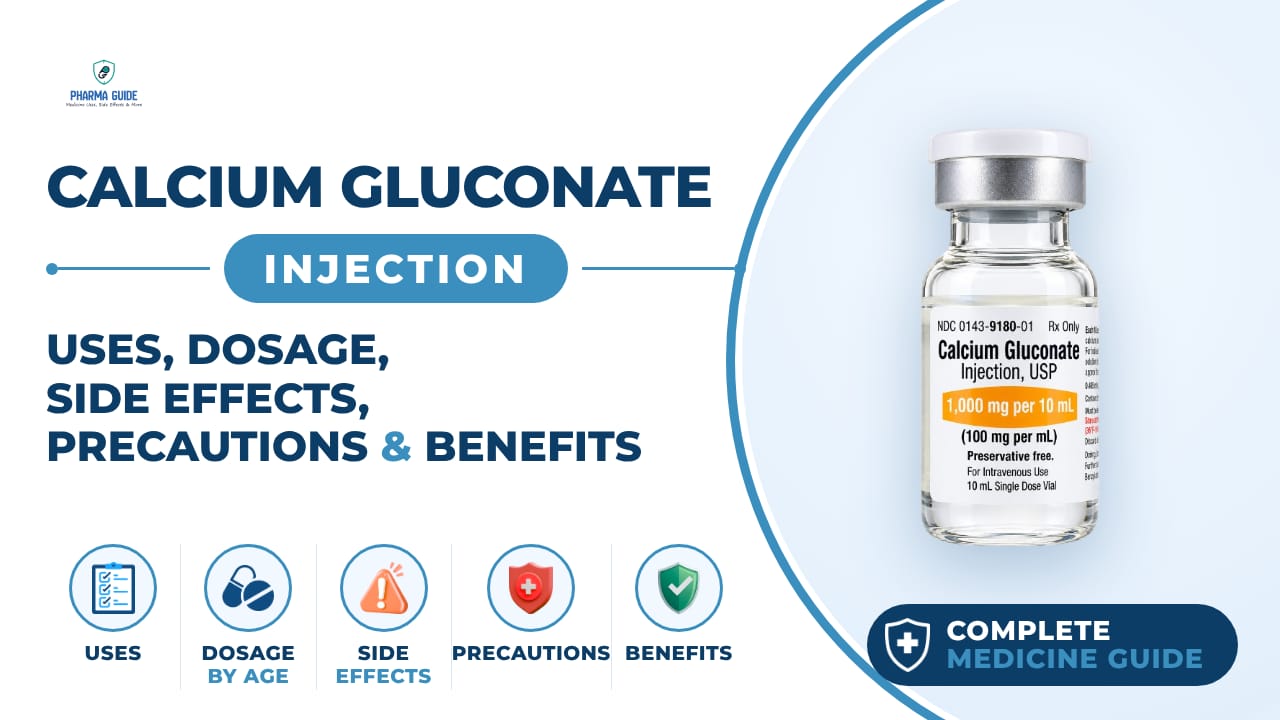
| Generic name | Calcium gluconate |
|---|---|
| Drug class | Minerals and electrolytes (calcium salts) |
| Forms | Injection (solution for intravenous use) |
Quick overview
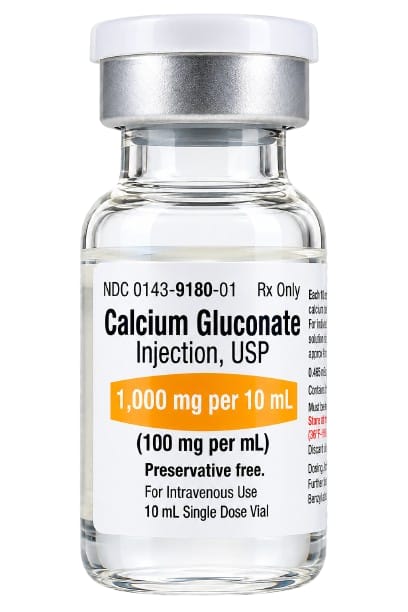
Calcium Gluconate Injection is a form of calcium given into a vein to treat or prevent low calcium levels in the blood. It also helps protect the heart from high potassium levels, treats magnesium overdose, supports blood transfusions involving citrated blood, and helps strengthen heart muscle contractions during resuscitation. It is given only by a doctor or nurse and is not for home use.
What is Calcium Gluconate Injection
Calcium gluconate is a form of calcium given by injection into a vein to treat low calcium levels in the blood. Calcium is a mineral your body needs for strong bones, muscle function, nerve signals, and blood clotting. It belongs to the minerals and electrolytes drug class.
Calcium Gluconate Injection uses
- Treating or preventing low calcium levels in the blood (hypocalcemia), including hypocalcemic tetany
- Hypocalcemia related to hypoparathyroidism or due to rapid growth or pregnancy
- Treating high potassium levels in the blood (hyperkalemia), to protect the heart from its effects
- Treating magnesium overdose (such as from an Epsom salt overdose)
- Use during blood transfusions involving citrated blood
- Use during heart resuscitation to help strengthen heart muscle contractions
Benefits of Calcium Gluconate Injection
- Quickly raises blood calcium levels when given by injection
- Can help protect the heart from the dangerous effects of high potassium
- Can help reverse the effects of too much magnesium in the body
How Calcium Gluconate Injection works
This medicine works by raising the amount of calcium in your blood. It can also help counter the effects of too much potassium or magnesium in your blood by binding to them.
Calcium Gluconate Injection dosage
This medicine is given as a slow injection or infusion into a vein by a doctor or nurse — it is not for home use. It must be warmed to body temperature before it is given. It should only be given through a secure IV line, not into a muscle or under the skin, because this can cause tissue damage. Tell your caregivers right away if you feel burning, pain, swelling, or skin changes around the IV site during the injection. Your doctor will monitor your blood calcium levels and heart rhythm during and after treatment. Doses in older adults are usually started at the lower end of the typical range.
| Age group | Dose |
|---|---|
| Under 18 years | 500–2000 mg/day |
| 18–60 years | 1000–2000 mg/day |
| 60+ years | 1000–2000 mg/day |
Available forms and strengths
Injection (solution for intravenous use)
Side effects of Calcium Gluconate Injection
Common
- A warmth, tingling, or heavy feeling over the body
- A chalky or metallic taste in the mouth
- Upset stomach or gas
- Constipation
- Nausea or vomiting
- Dizziness or feeling faint
- Sweating or hot flushes
- Pain or burning at the injection site
Serious
- Signs of an allergic reaction: hives, difficulty breathing, swelling of the face, lips, tongue, or throat
- Little or no urinating
- Swelling or rapid weight gain
- A light-headed feeling like you might pass out
- Slow or irregular heartbeat, or chest pain
- Signs of too much calcium in the blood: nausea, vomiting, constipation, increased thirst or urination, muscle weakness, bone pain, confusion, lack of energy, or feeling very tired
Warnings and precautions
- Do not use this injection in a newborn baby (28 days old or younger) who is also receiving the antibiotic ceftriaxone, as this combination can cause dangerous particles to form in the blood.
- This medicine must only be given into a vein. Giving it into a muscle or under the skin can cause severe tissue damage and death of tissue.
- If you are taking heart medicines called cardiac glycosides (such as digoxin), tell your doctor, because combining them with this injection can cause dangerous irregular heartbeats.
- Giving this medicine too quickly can cause low blood pressure, a slow heartbeat, irregular heart rhythms, fainting, or cardiac arrest. It must be diluted and given slowly with monitoring.
- This medicine contains a small amount of aluminum, which can build up to toxic levels with long-term use if your kidneys are not working well. This is a particular risk for premature babies.
- Leakage of this medicine from the vein into surrounding tissue can cause calcium deposits in the skin, tissue death, ulcers, and infection.
- Do not use this medicine if you have high calcium levels in your blood or urine.
- Tell your doctor if you are pregnant. This medicine should only be used in pregnancy if clearly needed, and your dose may need to be adjusted.
- Tell your doctor if you are breastfeeding, since it is not known whether this medicine passes into breast milk.
- Tell your doctor if you have kidney disease or kidney stones. People with severe kidney failure should not receive this medicine, and those with reduced kidney function need lower doses and closer monitoring.
- Liver problems are not expected to change how this medicine works, so a dose change is usually not needed for liver issues.
- This medicine may cause dizziness, light-headedness, or weakness. Be careful driving or using machinery until you know how it affects you, and get up slowly if you feel faint.
Storage
- Store at room temperature away from moisture and heat.
- Calcium Gluconate Injection will be stored below 30°C in the surgery, pharmacy or ward of a hospital.
- Store at 15°C to 30°C. Do NOT freeze.
- Discard unused portion.
When to see a doctor
- Get emergency medical help right away if you have signs of a serious allergic reaction, such as hives, trouble breathing, or swelling of your face, lips, tongue, or throat.
- Tell your caregivers immediately if you feel burning, pain, swelling, or skin changes around the IV site during the injection, as this could mean serious tissue damage.
- Call your doctor right away if you have little or no urination, sudden swelling or rapid weight gain, a light-headed feeling like you might faint, or a slow or irregular heartbeat.
- Call your doctor right away if you notice signs of too much calcium in your blood, such as nausea, vomiting, constipation, increased thirst or urination, muscle weakness, bone pain, confusion, or feeling very tired.
- If you think you have been given too much of this medicine, seek urgent medical attention even if you feel fine, as overdose can be serious.
- Call your doctor straight away if you become pregnant while being treated with this medicine.
Alternatives
- Calcium Chloride Injection
- Calcium Lactate Injection
- Calcium Carbonate Injection
Watch the video
FAQs
What is Calcium Gluconate Injection used for?
It treats or prevents low calcium levels in the blood, protects the heart from high potassium levels, treats magnesium overdose, supports blood transfusions involving citrated blood, and strengthens heart muscle contractions during resuscitation.
Can Calcium Gluconate Injection be given at home?
No, it is given only by a doctor or nurse as a slow injection or infusion into a vein and is not for home use.
What are the common side effects of Calcium Gluconate Injection?
Common side effects include a warmth, tingling, or heavy feeling over the body, a chalky or metallic taste, upset stomach, constipation, nausea or vomiting, dizziness, sweating, and pain or burning at the injection site.
Who should not receive Calcium Gluconate Injection?
It should not be used in newborns 28 days old or younger who are also receiving ceftriaxone, in people with high calcium levels in their blood or urine, or in those with severe kidney failure.
Why must Calcium Gluconate Injection be given slowly into a vein?
Giving it too quickly can cause low blood pressure, a slow heartbeat, irregular heart rhythms, fainting, or cardiac arrest, so it must be diluted and given slowly with monitoring. It must only go into a vein, as injection into a muscle or under the skin can cause severe tissue damage.
General information, not medical advice
Your prescriber and the leaflet in your pack know your situation. This page does not.
- Follow your prescriber and the leaflet
- Don't start, stop, or change a dose on your own
- Doses and warnings differ by country and product
Sources
Video
Related medicines

Injectafer Injection: Uses, Dosage, Side Effects, Precautions and Alternates
Iron products
Injectafer (ferric carboxymaltose) treats iron deficiency anemia and heart failure-related iron deficiency via IV. Learn uses, dosage, side effects, and

Gliclazide Tablet: Uses, Dosage, Side Effects, Precautions and Alternates
Sulfonylurea (hypoglycemic/antidiabetic agent)
Gliclazide Tablet is a sulfonylurea for type 2 diabetes that boosts insulin release. Learn about dosage, side effects, warnings, and precautions.