
Safety
General information, not medical advice
Your prescriber and the leaflet in your pack know your situation. This page does not.
- Follow your prescriber and the leaflet
- Don't start, stop, or change a dose on your own
- Doses and warnings differ by country and product
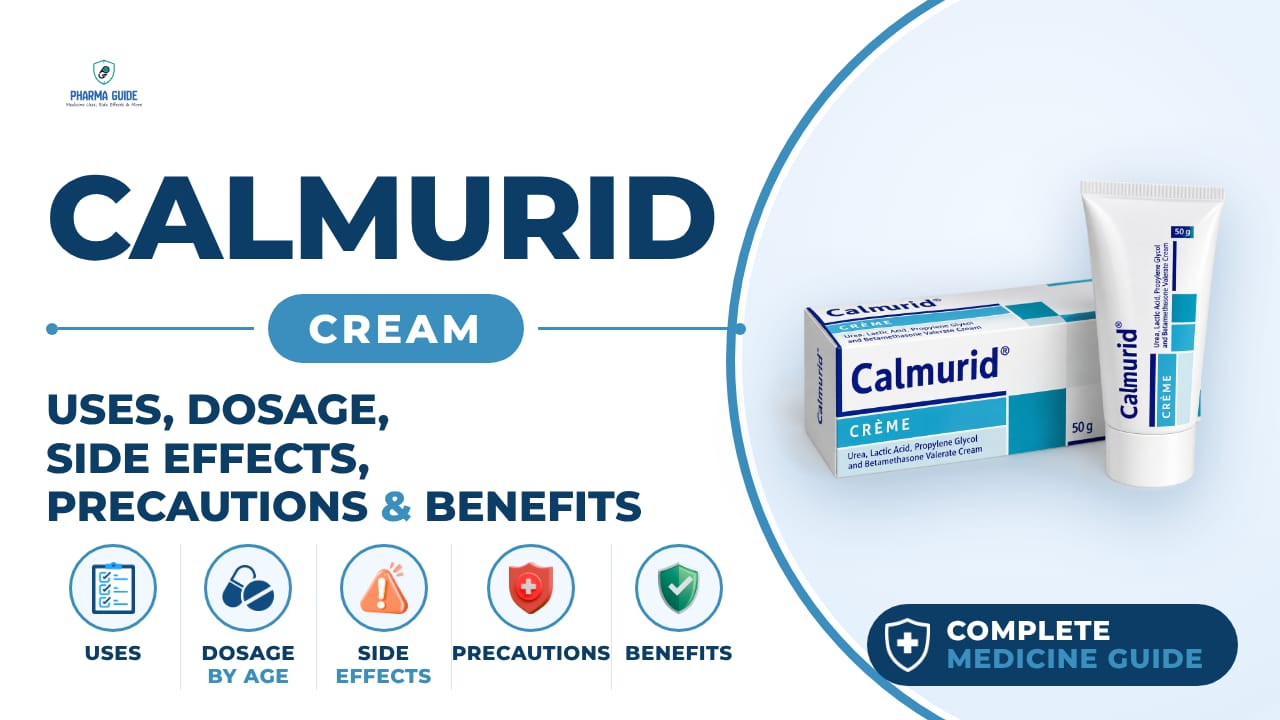
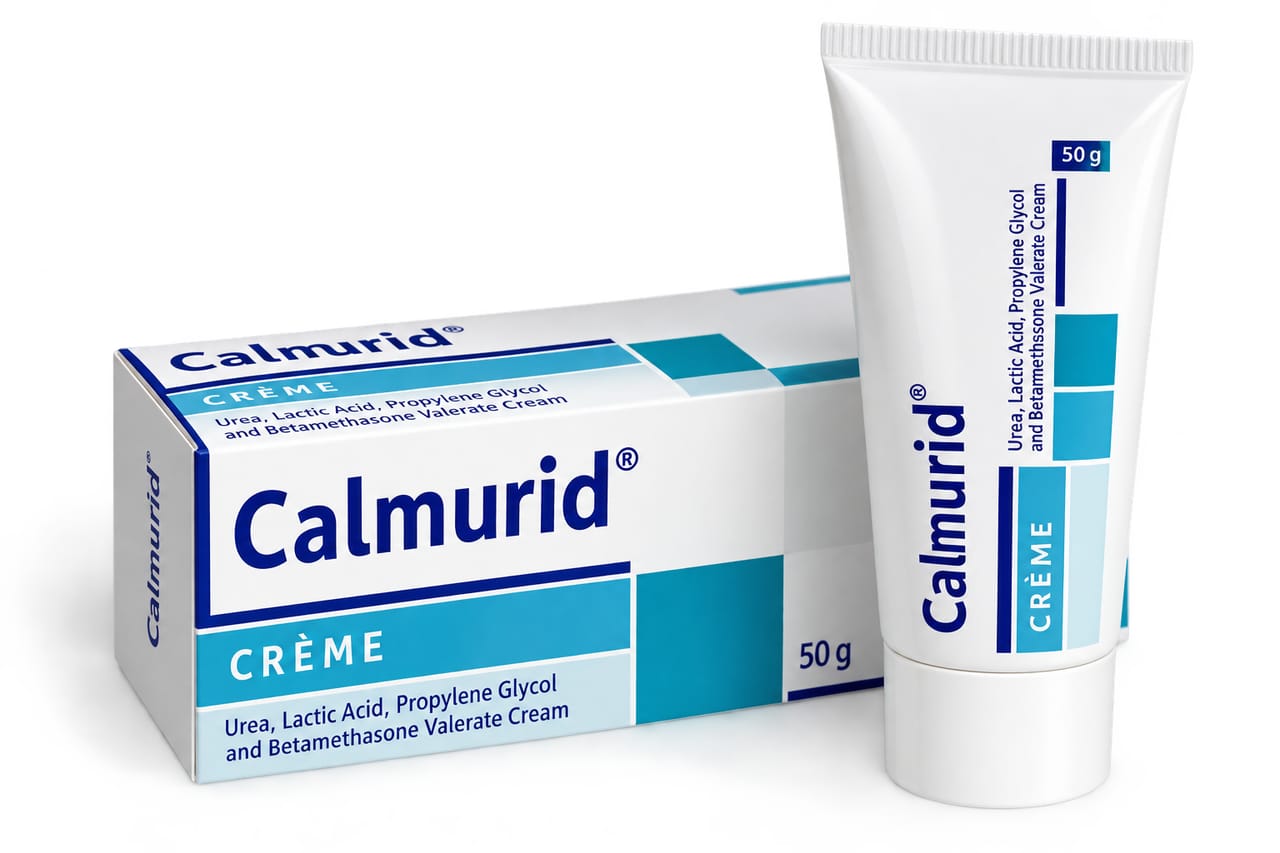
Calmurid Cream: Uses, Dosage, Side Effects, Precautions and Alternates
| Generic name | Urea and Lactic Acid |
|---|---|
| Forms | Cream |
Quick overview
Calmurid Cream is a moisturising cream containing urea and lactic acid, used to treat dry, rough, scaly skin conditions such as eczema and ichthyosis. It works by hydrating and softening the skin, helping to shed hardened or thickened skin cells. The cream is applied externally, usually twice daily, and may cause mild stinging on damaged or sensitive skin.
What is Calmurid Cream
Calmurid Cream is a moisturising cream containing urea and lactic acid. It is used to treat dry, rough, scaly skin conditions such as eczema.
Calmurid Cream uses
- Moisturising cream for the treatment of dry, rough, scaly skin such as eczema and similar conditions
- Scaling skin disorders such as ichthyosis
- Treats dry, thickened skin
- Softens rough and scaly skin
- Treats skin conditions associated with hyperkeratosis
- Helps moisturize excessively dry skin
Benefits of Calmurid Cream
- Hydrates and softens severely dry, coarse, or chapped skin
- Helps make skin soft and supple
- Lactic acid helps break down and shed hardened or thickened skin cells
- Softens hardened skin
- Improves skin hydration
- Helps remove excessive surface scaling
How Calmurid Cream works
The active ingredients, urea and lactic acid, work as moisturisers that help soften and hydrate the skin.
Calmurid Cream dosage
For external use only. First gently wash and dry the affected areas of your skin. Apply a thick layer over the affected areas and do not rub it in right away. Leave it on your skin for a few minutes, then rub it in gently. Wipe off any extra cream with a tissue instead of washing it off.
Use the cream twice a day, or as your doctor advises, ideally after washing. If using on your feet, soak them in water for about 15 minutes and dry them with a rough towel before applying.
How long you need to use this medicine depends on how quickly your skin condition improves; always follow your doctor's or pharmacist's advice. If you forget to use the cream at the right time, just use it again when you remember, without worry.
| Age group | Dose |
|---|---|
| Children | Apply a thin layer to the affected skin twice daily |
| 12–64 years | Apply to affected areas twice daily, preferably after washing |
| 65–74 years | Same usual application: twice daily |
Available forms and strengths
- Cream
Side effects of Calmurid Cream
Common
- Stinging or burning, especially if applied to raw, cracked, or damaged skin, or sensitive areas like the mouth and nostrils
- A slight, short-lived odor
Serious
- Signs of a severe allergic reaction such as a rash, with or without itching, swelling of the face, eyelids or lips, and difficulty breathing
Warnings and precautions
- Do not use Calmurid if you are allergic to urea, lactic acid, or any of the other ingredients.
- Avoid contact with the eyes, eyelids, lips, and other mucous surfaces. If this happens by accident, rinse the area with clean water.
- Calmurid may cause stinging if applied to damaged skin (raw cracked areas or cracked skin) or sensitive areas of the body such as the mouth or nostrils.
- Calmurid may interact with other medicines applied to the skin, such as topical corticosteroids, 5-fluorouracil, and dithranol. Tell your doctor or pharmacist about any other medicines you are using.
- Emollient and urea creams can make bathtubs or floors slippery.
- If you are pregnant, think you may be pregnant, or are planning to have a baby, ask your doctor or pharmacist for advice before using this medicine.
- Do not apply Calmurid Cream to your chest if you are breast-feeding. Ask your doctor or pharmacist for advice before using this medicine.
- If you have ever had kidney disease, ask your doctor or pharmacist for advice before using this medicine.
- No specific liver-related dose adjustment is generally required.
- No significant direct interaction with alcohol is expected.
- Does not normally affect driving.
Storage
- Keep this medicine out of the sight and reach of children
- Do not use this medicine after the expiry date which is stated on the tube and carton. The expiry date refers to the last day of that month
- Do not store above 25°C. Do not refrigerate or freeze
- Do not throw away any medicines via wastewater or household waste. Ask your pharmacist how to throw away medicines you no longer use
When to see a doctor
- Seek immediate medical attention if you experience symptoms of an allergic reaction, including a rash, swelling of the face, eyelids or lips, or difficulty breathing.
- If you accidentally swallow any of this medicine, seek medical advice.
- You must talk to a doctor if you do not feel better or if you feel worse.
Alternatives
- Urea cream
- Urea + lactic acid cream
- Lactic acid moisturizer
Watch the video
FAQs
What is Calmurid Cream used for?
It is a moisturising cream used to treat dry, rough, scaly skin conditions such as eczema and ichthyosis, including skin conditions associated with hyperkeratosis.
How do I apply Calmurid Cream?
Wash and dry the affected area, apply a thick layer without rubbing in immediately, leave it for a few minutes, then rub in gently and wipe off excess with a tissue. Use twice a day, preferably after washing.
What are the side effects of Calmurid Cream?
Common side effects include stinging or burning, especially on raw, cracked, or sensitive skin like the mouth and nostrils, and a slight, short-lived odor. Serious allergic reactions like rash, swelling, or difficulty breathing require immediate medical attention.
Can I use Calmurid Cream if I am pregnant or breastfeeding?
If pregnant or planning pregnancy, ask your doctor or pharmacist for advice before use. Do not apply Calmurid Cream to the chest if breastfeeding, and seek advice from your doctor or pharmacist.
Does Calmurid Cream interact with other medicines?
Yes, it may interact with other topical medicines such as corticosteroids, 5-fluorouracil, and dithranol. Tell your doctor or pharmacist about any other medicines you are using.
General information, not medical advice
Your prescriber and the leaflet in your pack know your situation. This page does not.
- Follow your prescriber and the leaflet
- Don't start, stop, or change a dose on your own
- Doses and warnings differ by country and product
Sources
Video
Related medicines

Injectafer Injection: Uses, Dosage, Side Effects, Precautions and Alternates
Iron products
Injectafer (ferric carboxymaltose) treats iron deficiency anemia and heart failure-related iron deficiency via IV. Learn uses, dosage, side effects, and

Gliclazide Tablet: Uses, Dosage, Side Effects, Precautions and Alternates
Sulfonylurea (hypoglycemic/antidiabetic agent)
Gliclazide Tablet is a sulfonylurea for type 2 diabetes that boosts insulin release. Learn about dosage, side effects, warnings, and precautions.