
Safety
General information, not medical advice
Your prescriber and the leaflet in your pack know your situation. This page does not.
- Follow your prescriber and the leaflet
- Don't start, stop, or change a dose on your own
- Doses and warnings differ by country and product
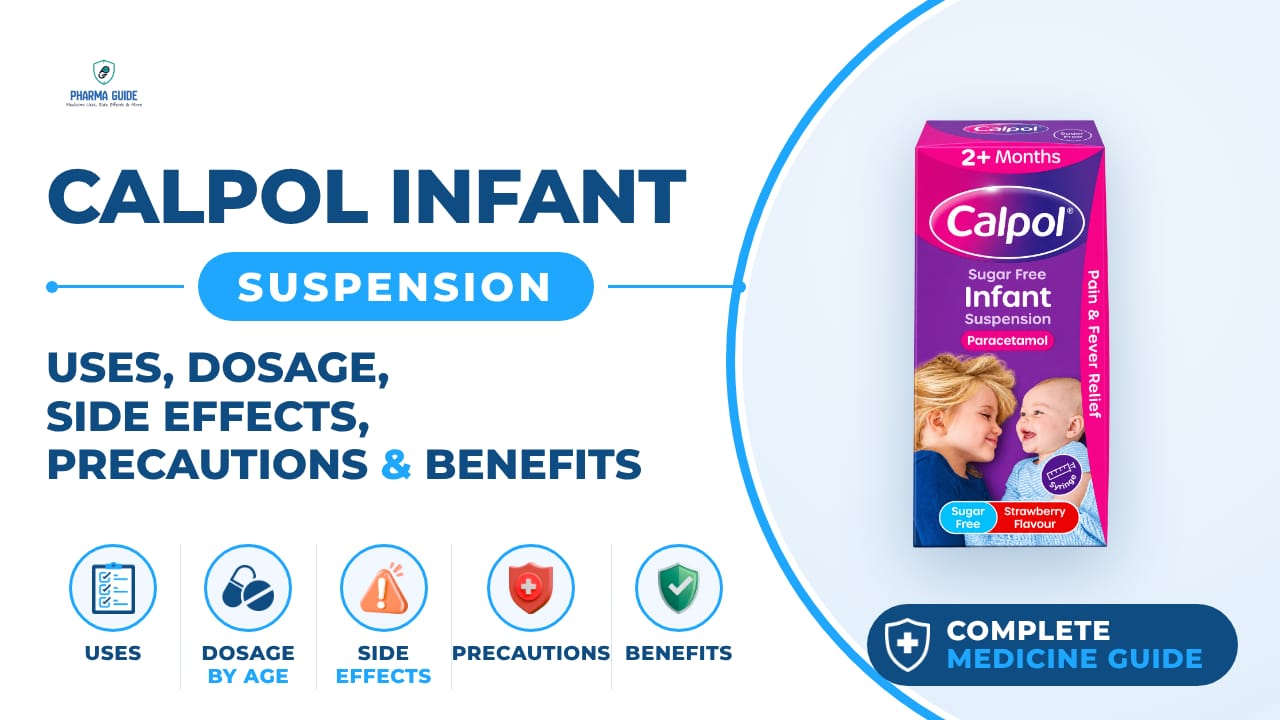
Calpol Infant Suspension: Uses, Dosage, Side Effects, Precautions and Alternates
| Generic name | Paracetamol (acetaminophen) |
|---|---|
| Drug class | Miscellaneous analgesics (Analgesics/Antipyretic) |
| Forms | Drops, Suspension, Tablet, Sachet, Fastmelts |
Quick overview
Calpol Infant Suspension contains paracetamol (acetaminophen), an analgesic and antipyretic. It is used as first-line therapy for fever and pain in children, including mild to moderate pain, post-vaccination fever, sore throat, and toothache. It works by reducing pain signals to the brain and blocking chemicals that increase pain and body temperature.
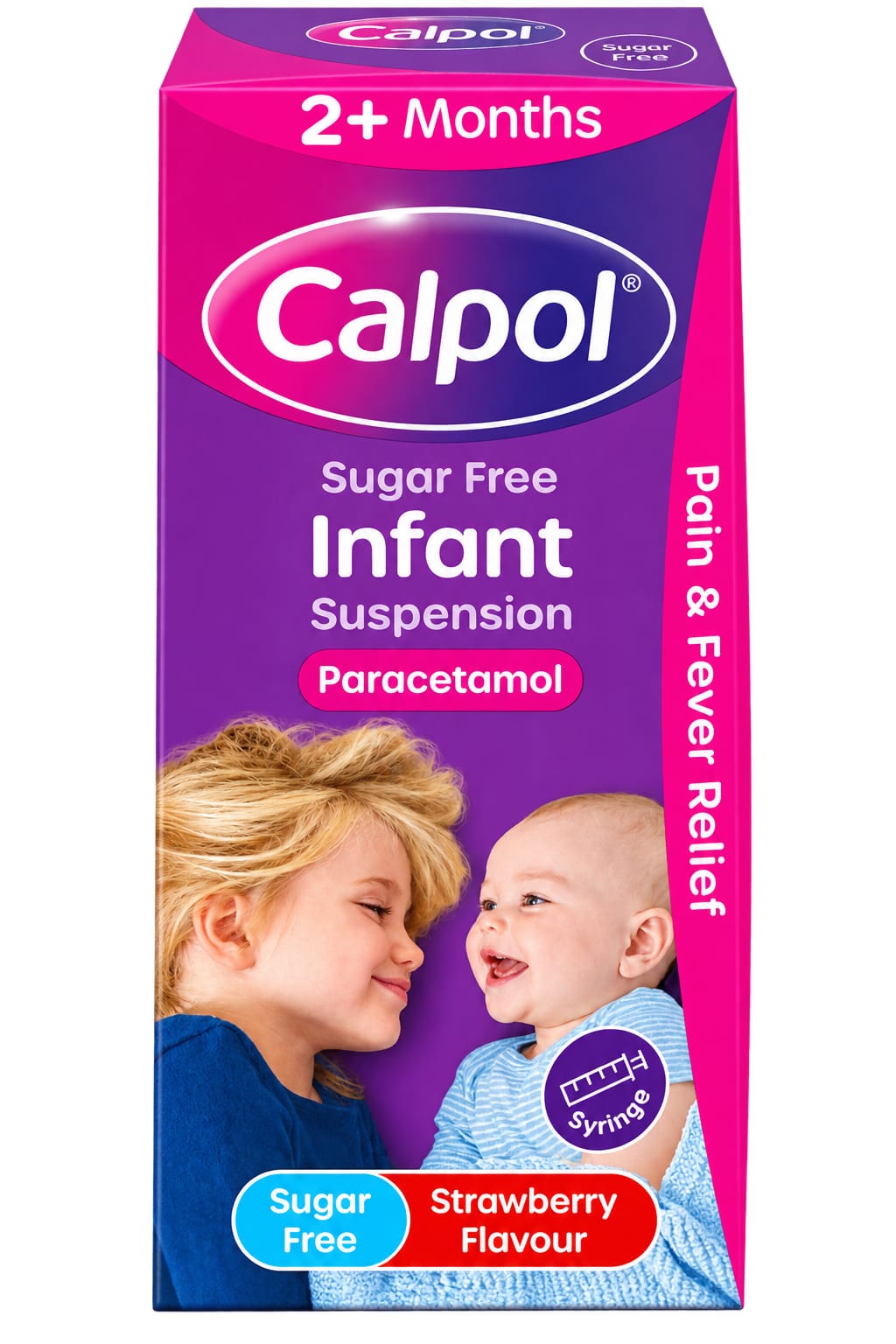
What is Calpol Infant Suspension
Calpol Infant Suspension is a fever and pain medicine that contains Paracetamol. It is used as first-line therapy for the treatment of fever and pain in children.
Calpol Infant Suspension uses
- Fever
- Mild to moderate pain
- Post vaccination fever
- Sore throat
- Toothache
Benefits of Calpol Infant Suspension
- Helps reduce fever in babies and young children.
- Relieves mild to moderate pain.
- Helps ease teething pain and toothache.
- Can relieve headache, sore throat, and general aches.
- Helps reduce fever and discomfort after vaccinations when appropriate for the child's age.
- Provides relief from cold and flu-related aches and fever.
How Calpol Infant Suspension works
This medicine reduces how strongly pain signals reach the brain and blocks the release of certain chemicals in the brain that increase pain and body temperature.
Calpol Infant Suspension dosage
Give with food or milk to help avoid stomach irritation. Leave several hours between doses and do not give more than the maximum number of doses in 24 hours. Do not give antacids close in time to this medicine. Do not use more than one product containing paracetamol at the same time. Shake the bottle well before use. If a dose is missed, skip it — do not double the next dose to make up for it. Do not give this medicine for more than a few days without speaking to your doctor or pharmacist.
| Age group | Dose |
|---|---|
| 2–3 months | 2.5 mL; if necessary, a second 2.5 mL dose after 4–6 hours |
| 3–6 months | 2.5 mL, up to 4 times in 24 hours |
| 6–24 months | 5 mL, up to 4 times in 24 hours |
| 2–4 years | 7.5 mL, up to 4 times in 24 hours |
| 4–6 years | 10 mL, up to 4 times in 24 hours |
Available forms and strengths
- Drops
- Suspension
- Tablet
- Sachet
- Fastmelts
Side effects of Calpol Infant Suspension
Common
- Stomach discomfort/pain
- Nausea and vomiting
- Tiredness
- Skin rash
- Loose stools
- Headache
- Dizziness
Serious
- Bloody or cloudy urine
- Dark or clay coloured (black, tarry) stools
- Pain or tenderness in the upper stomach
- Pale stools
- Loss of appetite
- Unusual tiredness or weakness
- Yellow eyes or skin
- Sore throat not present before treatment
- Sores, ulcers, or white spots on the lips or in the mouth
- Sudden decrease in the amount of urine
- Unusual bleeding or bruising
- Pinpoint red spots on the skin
- Fever with or without chills not present before treatment
- Pain in the lower back and/or side (severe and/or sharp)
- Signs of serious allergic reaction such as rash, itching or swelling of the face/tongue/throat, severe dizziness, or breathing difficulty
Warnings and precautions
- This product is recommended for use in children, not during pregnancy. This product is recommended for use in children, not while breastfeeding.
- This medicine is not recommended for children with kidney or liver issues as it may severely worsen these conditions. Children with liver disease need special care with this medicine because it may worsen liver damage, and it is generally not recommended in children with severe liver disease.
- How this medicine interacts with alcohol isn't well known, so check with a doctor before drinking alcohol while using it. Also, if taking more than an occasional dose of paracetamol, avoid alcohol because it may increase the risk of liver damage.
- No known effect on the ability to drive or operate machinery.
- Many combination medicines also contain paracetamol/acetaminophen. Taking more than one product with this ingredient at the same time can lead to getting too much, so check with a doctor first.
- Taking too much of this medicine, even accidentally, can cause serious liver damage.
- Malnutrition and fasting can increase the risk of harm from this medicine, so dosing should be based on body weight.
- A doctor should check on the child's progress while using this medicine to make sure it is working and whether it should be continued.
- This medicine can affect the results of certain medical or lab tests, including some blood sugar tests.
Storage
- Store below 25°C (77°F) or as directed on the product label.
- Keep in a cool, dry place away from excessive heat.
- Protect from direct sunlight and extreme temperatures.
- Keep the bottle tightly closed in its original packaging.
- Do not freeze and avoid storing in very hot or humid areas.
- Keep out of reach and sight of children.
When to see a doctor
- Get emergency help right away if you think too much of this medicine has been taken, even if there are no symptoms yet.
- Seek emergency medical help right away if signs of a serious allergic reaction occur, such as rash, itching or swelling of the face, tongue, or throat, severe dizziness, or trouble breathing.
- Check with a doctor right away if there is pain or tenderness in the upper stomach, pale stools, dark urine, loss of appetite, nausea, unusual tiredness or weakness, or yellow eyes or skin, as these could mean a serious liver problem.
- Get emergency help immediately if signs of overdose occur, such as diarrhea, increased sweating, loss of appetite, nausea or vomiting, stomach cramps or pain, or swelling, pain, or tenderness in the upper abdomen.
- If fever or symptoms do not improve within a few days or get worse, check with a doctor.
Alternatives
- Nurofen for Children
- Ibuprofen Suspension
- Paracetamol Suppository
- Panadol Children Suspension
- Generic Paracetamol Suspension
Watch the video
FAQs
What is Calpol Infant Suspension used for?
It is used to treat fever, mild to moderate pain, post-vaccination fever, sore throat, and toothache in children.
How does Calpol Infant Suspension work?
It reduces how strongly pain signals reach the brain and blocks the release of certain chemicals in the brain that increase pain and body temperature.
What is the dosage of Calpol Infant Suspension for infants?
For 2–3 months, give 2.5 mL, with a second 2.5 mL dose after 4–6 hours if necessary. For 3–6 months, give 2.5 mL up to 4 times in 24 hours. For 6–24 months, give 5 mL up to 4 times in 24 hours.
What are the side effects of Calpol Infant Suspension?
Common side effects include stomach discomfort, nausea and vomiting, tiredness, skin rash, loose stools, headache, and dizziness.
Can Calpol Infant Suspension be used during pregnancy or breastfeeding?
No, this product is recommended for use in children, not during pregnancy or while breastfeeding.
General information, not medical advice
Your prescriber and the leaflet in your pack know your situation. This page does not.
- Follow your prescriber and the leaflet
- Don't start, stop, or change a dose on your own
- Doses and warnings differ by country and product
Sources
Video
Related medicines

Injectafer Injection: Uses, Dosage, Side Effects, Precautions and Alternates
Iron products
Injectafer (ferric carboxymaltose) treats iron deficiency anemia and heart failure-related iron deficiency via IV. Learn uses, dosage, side effects, and

Gliclazide Tablet: Uses, Dosage, Side Effects, Precautions and Alternates
Sulfonylurea (hypoglycemic/antidiabetic agent)
Gliclazide Tablet is a sulfonylurea for type 2 diabetes that boosts insulin release. Learn about dosage, side effects, warnings, and precautions.