
Safety
General information, not medical advice
Your prescriber and the leaflet in your pack know your situation. This page does not.
- Follow your prescriber and the leaflet
- Don't start, stop, or change a dose on your own
- Doses and warnings differ by country and product
Calpol Suppository: Uses, Dosage, Side Effects, Precautions and Alternates
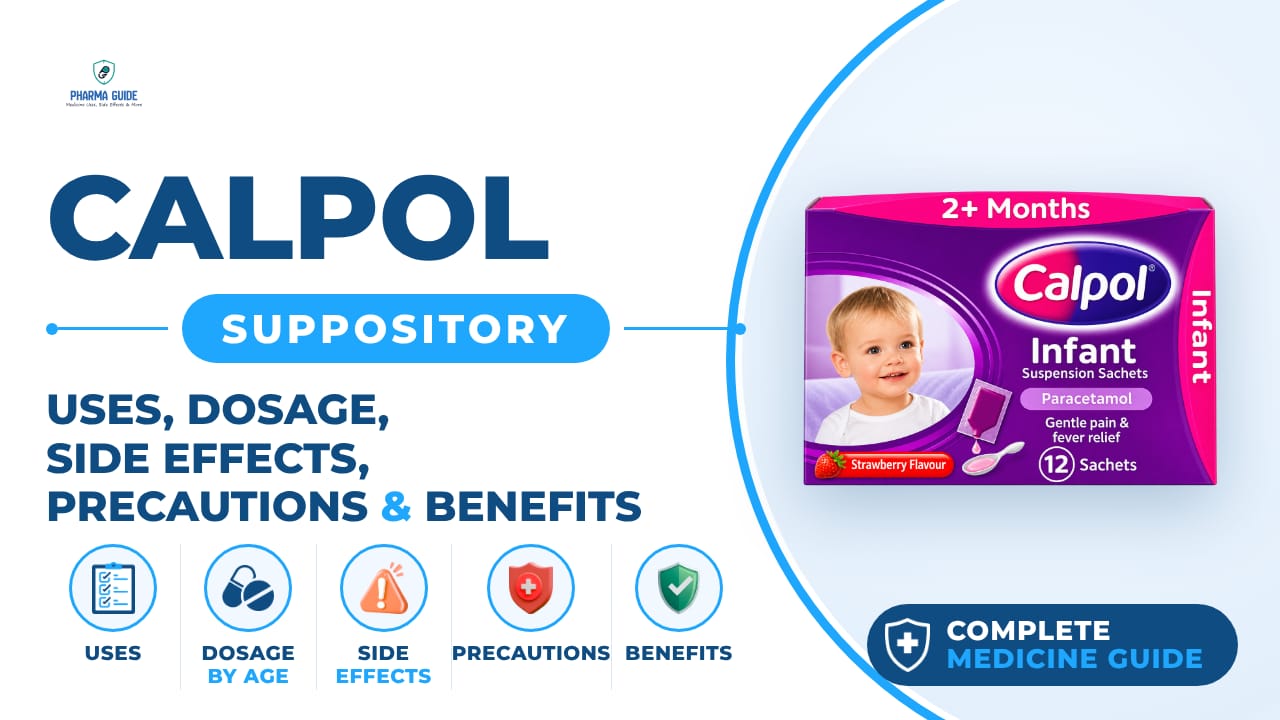
| Generic name | Paracetamol (acetaminophen) |
|---|---|
| Drug class | Miscellaneous analgesics (pain reliever and fever reducer) |
| Forms | Oral suspension |
Quick overview
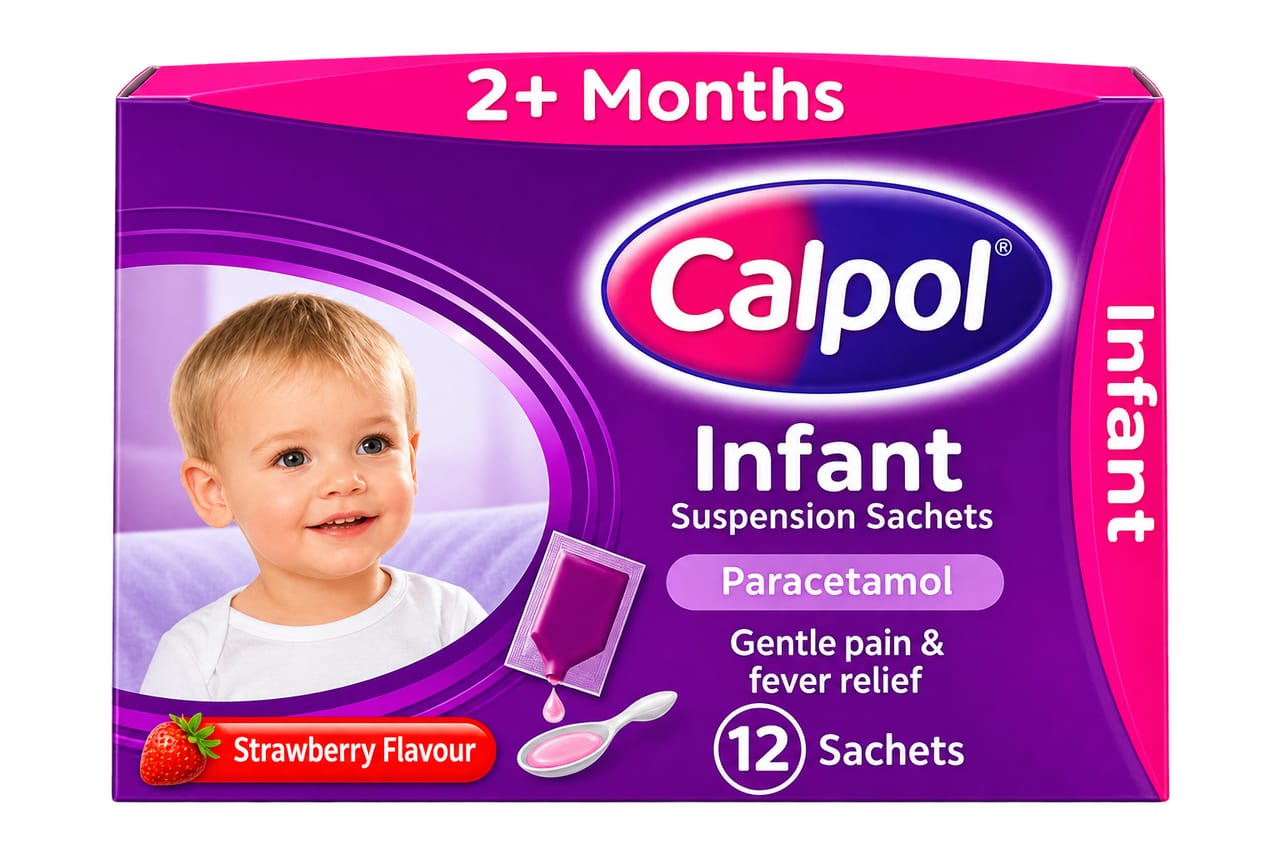
Calpol Suppository contains paracetamol (acetaminophen), a pain reliever and fever reducer. It is used to treat mild to moderate pain and to lower a high temperature, including fever following vaccination. Note: the source information describes the Calpol Infant Suspension, an oral suspension product; it does not describe a suppository form.
What is Calpol Suppository
Calpol Infant contains paracetamol, a medicine used to relieve pain and lower a high temperature (fever). The available facts describe the Calpol Infant Suspension, an oral suspension; they do not describe a suppository form.
Calpol Suppository uses
- Treatment of mild to moderate pain
- To lower a high temperature (fever), including fever following vaccination
Benefits of Calpol Suppository
- Relieves mild to moderate pain
- Reduces fever
How Calpol Suppository works
Paracetamol relieves pain and lowers fever. It has only weak anti-inflammatory effects and is thought to act more on enzymes in the brain and nervous system than in the rest of the body.
Calpol Suppository dosage
Use the lowest dose needed for the shortest time, and do not exceed the stated dose. Leave at least 4 hours between doses. Shake the bottle for at least 10 seconds before use. Do not give this medicine to your child for more than 3 days without speaking to your doctor or pharmacist. Do not use with any other paracetamol-containing products. This medicine should not be diluted. If symptoms persist, consult your doctor.
| Age group | Dose |
|---|---|
| 1–3 years | 125 mg: 1 suppository |
| 4–6 years | 125 mg: 2 suppositories |
| 6–9 years | 250 mg: 1 suppository |
| 10–12 years | 250 mg: 1–2 suppositories |
| 12+ years | 500 mg: 1–2 suppositories |
Available forms and strengths
Oral suspension.
Side effects of Calpol Suppository
Common
- Nausea
- Vomiting
- Constipation
- Abdominal pain
- Diarrhea
- Rash
- Itching
- Headache
- Dizziness
Serious
- Signs of a serious liver problem: pain or tenderness in the upper stomach, pale stools, dark urine, loss of appetite, nausea, unusual tiredness or weakness, or yellow eyes or skin
- Serious skin reactions (Stevens-Johnson syndrome, toxic epidermal necrolysis, acute generalized exanthematous pustulosis, erythema multiforme, fixed drug eruption)
- Allergic reactions including anaphylaxis, hypersensitivity reactions and angioedema
- Bronchospasm in people sensitive to aspirin and other NSAIDs
- Thrombocytopenia (low platelets), and rarely bleeding or bruising
- Bloody or black, tarry stools; bloody or cloudy urine; sudden decrease in the amount of urine
- Fever, sore throat, or mouth sores/ulcers that were not present before treatment
Warnings and precautions
- If you are pregnant, seek medical advice before taking paracetamol, and use the lowest effective dose for the shortest time.
- Paracetamol passes into breast milk but not in a clinically significant amount at recommended doses, and available data do not contraindicate breastfeeding.
- Use with caution if you have severe kidney problems or severe liver problems, as paracetamol overdose can cause liver failure that may need a liver transplant or lead to death.
- If you will be taking more than an occasional 1 or 2 doses, do not drink alcohol, as this may increase the chance of liver damage; alcohol can also increase the harmful effect of paracetamol on the liver in overdose.
- No effects on the ability to drive or use machines are known.
- Do not use with any other paracetamol-containing products, as this may lead to an overdose.
- Paracetamol overdose may cause liver failure which may require a liver transplant or lead to death.
- Do not exceed the recommended dose.
- Serious skin reactions have been reported with paracetamol. Because these can be life-threatening, stop the medicine right away and get treatment if a severe skin reaction occurs.
- People with hereditary fructose intolerance should not take this medicine because it contains sorbitol.
- This medicine contains carmoisine and methyl parahydroxybenzoate, which may cause allergic reactions (possibly delayed).
Storage
- Store below 25°C, protect from light.
- Keep out of the reach and sight of children.
When to see a doctor
- Get immediate medical advice in the event of an overdose, even if the child seems well, because of the risk of delayed, serious liver damage. Contact your local poison information center and go to the nearest emergency medical center.
- Check with your doctor right away if you have pain or tenderness in the upper stomach, pale stools, dark urine, loss of appetite, nausea, unusual tiredness or weakness, or yellow eyes or skin, as these may be signs of a serious liver problem.
- If your symptoms or fever do not improve within a few days or become worse, check with your doctor.
- If fever persists for more than 24 hours in an infant, seek medical advice to rule out a serious infection.
Alternatives
- Alka-Seltzer Plus
- Comtrex
- Drixoral
- Excedrin Migraine
- Midol
- Sinutab
- Sudafed
- Theraflu
- Vanquish
- Paracetamol
- Tylenol
- Tylenol Arthritis Pain
- Diclofenac suppository
- Ibuprofen suspension
- Ofirmev
Watch the video
FAQs
What is Calpol Suppository used for?
It is used to treat mild to moderate pain and to lower a high temperature (fever), including fever following vaccination.
How does Calpol Suppository work?
It contains paracetamol, which relieves pain and lowers fever. It has only weak anti-inflammatory effects and is thought to act more on enzymes in the brain and nervous system than in the rest of the body.
What is the dosage of Calpol Suppository?
Doses vary by age: 1–3 years, one 125 mg suppository; 4–6 years, two 125 mg suppositories; 6–9 years, one 250 mg suppository; 10–12 years, one to two 250 mg suppositories; 12+ years, one to two 500 mg suppositories. Leave at least 4 hours between doses and do not use for more than 3 days without consulting a doctor.
What are the common side effects of Calpol Suppository?
Common side effects include nausea, vomiting, constipation, abdominal pain, diarrhea, rash, itching, headache, and dizziness.
Can Calpol Suppository be used during pregnancy or breastfeeding?
If pregnant, seek medical advice before taking paracetamol and use the lowest effective dose for the shortest time. Paracetamol passes into breast milk but not in a clinically significant amount at recommended doses, and available data do not contraindicate breastfeeding.
General information, not medical advice
Your prescriber and the leaflet in your pack know your situation. This page does not.
- Follow your prescriber and the leaflet
- Don't start, stop, or change a dose on your own
- Doses and warnings differ by country and product
Sources
- Drugs.com - Calpol Infant Side Effects (acetaminophen), reviewed Apr 14, 2026
- Summary of Product Characteristics - Calpol Infant Suspension, Malta Medicines Authority, revised 04/2026
Video
Related medicines

Injectafer Injection: Uses, Dosage, Side Effects, Precautions and Alternates
Iron products
Injectafer (ferric carboxymaltose) treats iron deficiency anemia and heart failure-related iron deficiency via IV. Learn uses, dosage, side effects, and

Gliclazide Tablet: Uses, Dosage, Side Effects, Precautions and Alternates
Sulfonylurea (hypoglycemic/antidiabetic agent)
Gliclazide Tablet is a sulfonylurea for type 2 diabetes that boosts insulin release. Learn about dosage, side effects, warnings, and precautions.