
Safety
General information, not medical advice
Your prescriber and the leaflet in your pack know your situation. This page does not.
- Follow your prescriber and the leaflet
- Don't start, stop, or change a dose on your own
- Doses and warnings differ by country and product
Calpol Syrup: Uses, Dosage, Side Effects, Precautions and Alternates
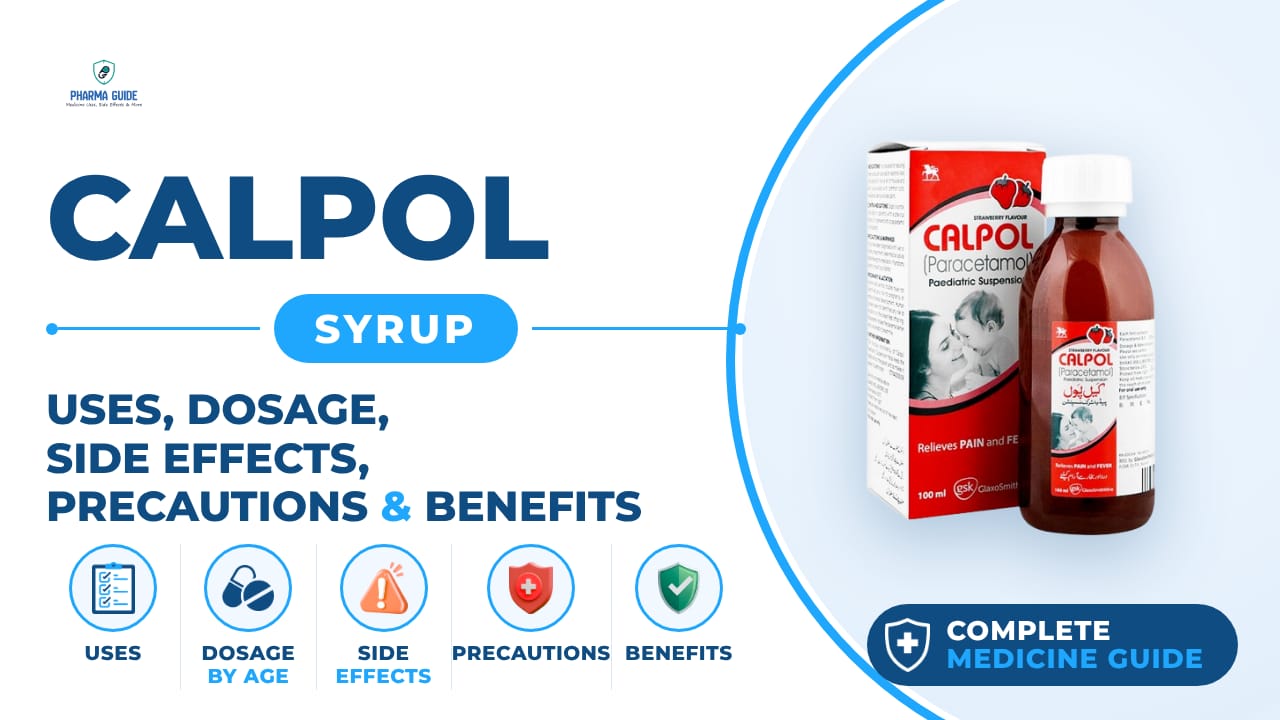
| Generic name | Paracetamol |
|---|---|
| Drug class | analgesics (pain relievers) and antipyretics (fever reducers) |
| Forms | Oral suspension, Drops |
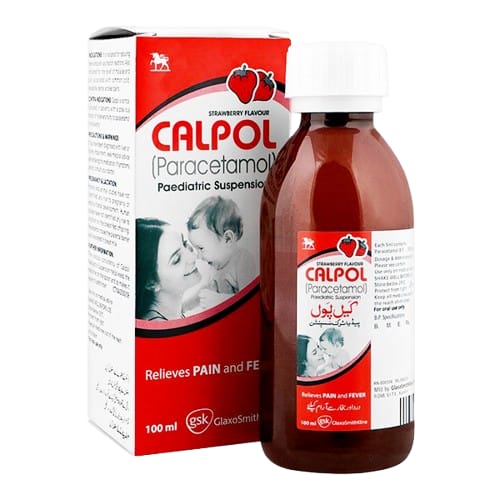
Quick overview
Calpol Syrup is an over-the-counter medicine containing paracetamol, used to reduce fever and relieve mild to moderate pain. It is suitable for most babies over 2 months and children up to 6 years. It works by lowering pain signals to the brain and reducing substances that cause fever, and it is generally well tolerated.
What is Calpol Syrup
Calpol is an over-the-counter medicine that contains paracetamol. It is used to bring down high temperatures (fever) and to relieve pain in many conditions.
Calpol Syrup uses
- Reducing fever, including fever after vaccinations
- Mild to moderate pain such as headache, toothache, earache, sore throat, backache and other aches and pains
- Pain and fever from teething, cold and flu
Benefits of Calpol Syrup
- Provides fast and effective relief from pain and fever
- Suitable for most babies over 2 months and children up to 6 years
- Generally well tolerated
How Calpol Syrup works
It works by lowering the strength of pain signals sent to the brain and by preventing the release of substances that raise pain and body temperature.
Calpol Syrup dosage
Take this medicine as advised by your doctor. It is for oral use only. Shake the bottle well for at least 10 seconds before use. Always use the syringe or measuring spoon or dropper supplied with the pack to measure the dose. Take it with food to avoid stomach irritation.
Leave at least 4 hours between doses and do not give more doses than the label tells you to in 24 hours. Do not give anything else containing paracetamol while giving this medicine. Do not give this medicine to your child for more than 3 days without speaking to your doctor or pharmacist. For children over 6 years, ask a pharmacist to recommend a suitable product. Do not give to babies under 2 months old; consult your doctor.
After use, wipe the plug and neck clean and rinse the cap before replacing. Wash and dry the syringe by hand.
| Age group | Dose |
|---|---|
| 1–3 months | 2.5 mL |
| 6 months – 2 years | 5 mL |
| 2–5 years | 7.5 mL |
| 5–8 years | 10 mL |
| 12–16 years | 10–15 mL |
| 16 years and older | 10–20 mL |
Available forms and strengths
- Oral suspension
- Drops
Side effects of Calpol Syrup
Common
- Stomach upset
- Skin rash
- Nausea and vomiting
- Tiredness
- Loose stools
Serious
- Bloody or cloudy urine
- Dark or clay coloured stools
- Allergic reactions including swelling of the face, tongue or throat, difficulty swallowing, wheezing, shortness of breath, rash or hives
- Unusual tiredness, unexpected bruising or bleeding, and getting more infections than usual
- Serious skin reactions such as skin reddening, blisters or rash
- Metabolic acidosis (a serious condition that can make blood more acidic) in patients with severe illness
- Liver damage from overdose or long-term use
Warnings and precautions
- Paracetamol is considered the safest first-line treatment for pain or fever in pregnancy and is not known to harm the baby. If needed, use the lowest dose for the shortest time. Talk to your doctor before using it.
- Paracetamol is considered a good choice of painkiller during breastfeeding as only very small amounts appear in breast milk and are not known to harm the baby. Consult your doctor before taking it.
- Long-term use at higher doses may harm kidney function. It is not recommended if you have kidney disease caused by excessive painkiller use. Talk to your doctor if you have kidney problems.
- Use with extreme caution if you have liver disease. The medicine is converted to its active form in the liver, and large amounts can lead to liver damage. It is generally not recommended in severe liver disease. Use only in the prescribed doses.
- This medicine can cause alcohol-paracetamol syndrome, which severely damages the liver. Do not drink alcohol while taking this medicine. If you drink large amounts of alcohol you may be more open to side effects, so talk to a doctor before use.
- Do not exceed the recommended daily maximum. Overdose, even if the person seems well, can cause delayed, serious liver damage.
- Do not give anything else containing paracetamol at the same time.
- Malnutrition and fasting can increase the risk of paracetamol toxicity, so dose should be adjusted based on body weight.
- Do not use if you are allergic to any of the ingredients, and do not use if taking other medicines with paracetamol in them.
- Tell your doctor straight away if you have severe illness such as severe kidney impairment, sepsis, malnutrition, chronic alcoholism, or if you take flucloxacillin, because a serious condition called metabolic acidosis has been reported.
Storage
- Keep this medicine out of the sight and reach of children.
- Do not store above 25°C.
- Keep bottle in the outer carton.
- Do not use after the end of the month shown as an expiry date on the packaging.
- Do not throw away any medicines via wastewater or household waste. Ask your pharmacist how to throw away medicines you no longer use.
When to see a doctor
- Seek immediate medical attention if you notice signs of a serious allergic reaction such as skin rash, itching or swelling (especially of the face, tongue or throat), severe dizziness or breathing difficulty.
- Talk to a doctor at once if too much of this medicine is taken, even if the person seems well.
- If skin reactions such as reddening, blisters or rash occur, or existing skin symptoms worsen, stop use and seek medical help right away.
- If your child's illness is accompanied by a rash, breathing difficulties, diarrhoea, or excessive tiredness or lethargy, speak to your doctor straight away and do not give Calpol until you get medical advice.
Alternatives
- Dolopar Suspension
- Malidens Suspension
- Pacimol Suspension
- Paracip Suspension
- Pyricool Suspension
Watch the video
FAQs
What is Calpol Syrup used for?
Calpol Syrup is used to reduce fever, including fever after vaccinations, and to relieve mild to moderate pain such as headache, toothache, earache, sore throat, backache, teething pain, and pain from cold and flu.
What is the dosage of Calpol Syrup for children?
Dosage depends on age: 2.5 mL for 1–3 months, 5 mL for 6 months–2 years, 7.5 mL for 2–5 years, 10 mL for 5–8 years, 10–15 mL for 12–16 years, and 10–20 mL for 16 years and older. Leave at least 4 hours between doses and do not exceed the label's 24-hour limit.
Can Calpol Syrup be given to babies under 2 months old?
No, Calpol Syrup should not be given to babies under 2 months old; consult your doctor in such cases.
What are the common side effects of Calpol Syrup?
Common side effects include stomach upset, skin rash, nausea and vomiting, tiredness, and loose stools.
Is Calpol Syrup safe during pregnancy and breastfeeding?
Paracetamol is considered the safest first-line treatment for pain or fever in pregnancy and a good choice during breastfeeding, as only very small amounts appear in breast milk. Consult your doctor before use.
General information, not medical advice
Your prescriber and the leaflet in your pack know your situation. This page does not.
- Follow your prescriber and the leaflet
- Don't start, stop, or change a dose on your own
- Doses and warnings differ by country and product
Sources
- Practo Medicine Info - Calpol 250 MG Suspension
- electronic Medicines Compendium (emc) - CALPOL Infant Original 120 mg/5 ml Oral Suspension patient leaflet, revised January 2025
Video
Related medicines

Injectafer Injection: Uses, Dosage, Side Effects, Precautions and Alternates
Iron products
Injectafer (ferric carboxymaltose) treats iron deficiency anemia and heart failure-related iron deficiency via IV. Learn uses, dosage, side effects, and

Gliclazide Tablet: Uses, Dosage, Side Effects, Precautions and Alternates
Sulfonylurea (hypoglycemic/antidiabetic agent)
Gliclazide Tablet is a sulfonylurea for type 2 diabetes that boosts insulin release. Learn about dosage, side effects, warnings, and precautions.