
Safety
General information, not medical advice
Your prescriber and the leaflet in your pack know your situation. This page does not.
- Follow your prescriber and the leaflet
- Don't start, stop, or change a dose on your own
- Doses and warnings differ by country and product
Camrese Tablet: Uses, Dosage, Side Effects, Precautions and Alternates
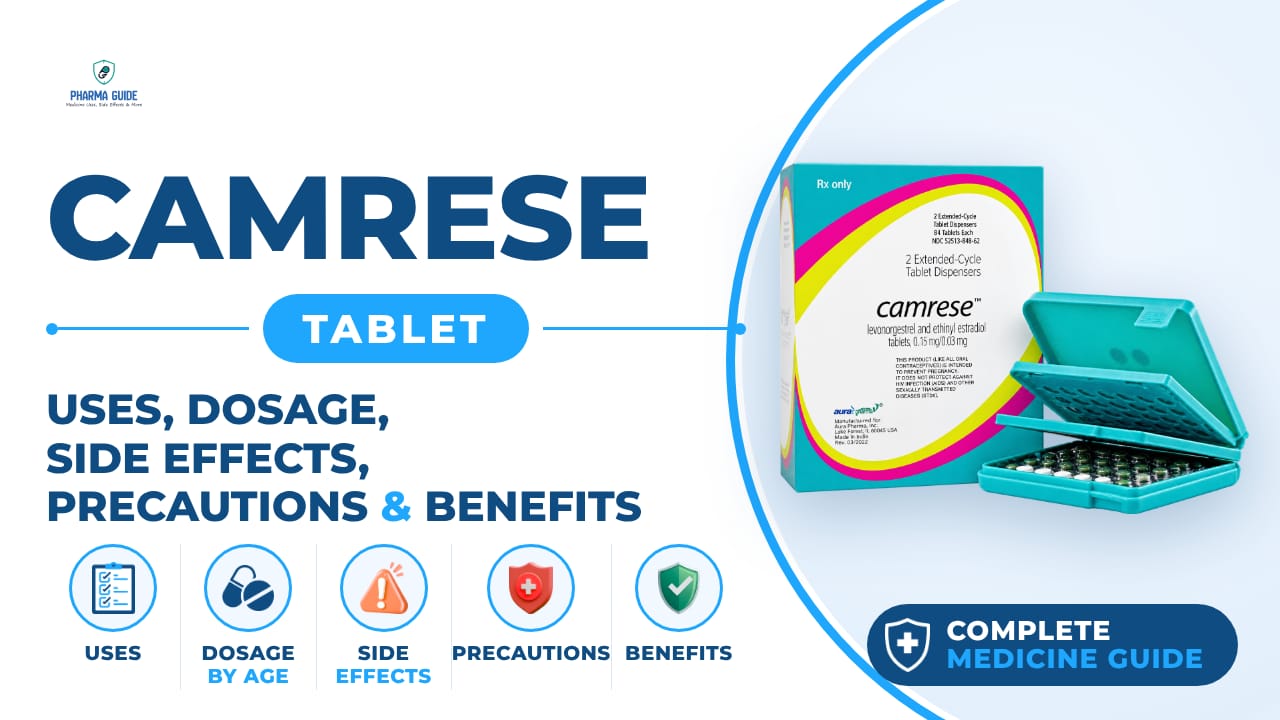
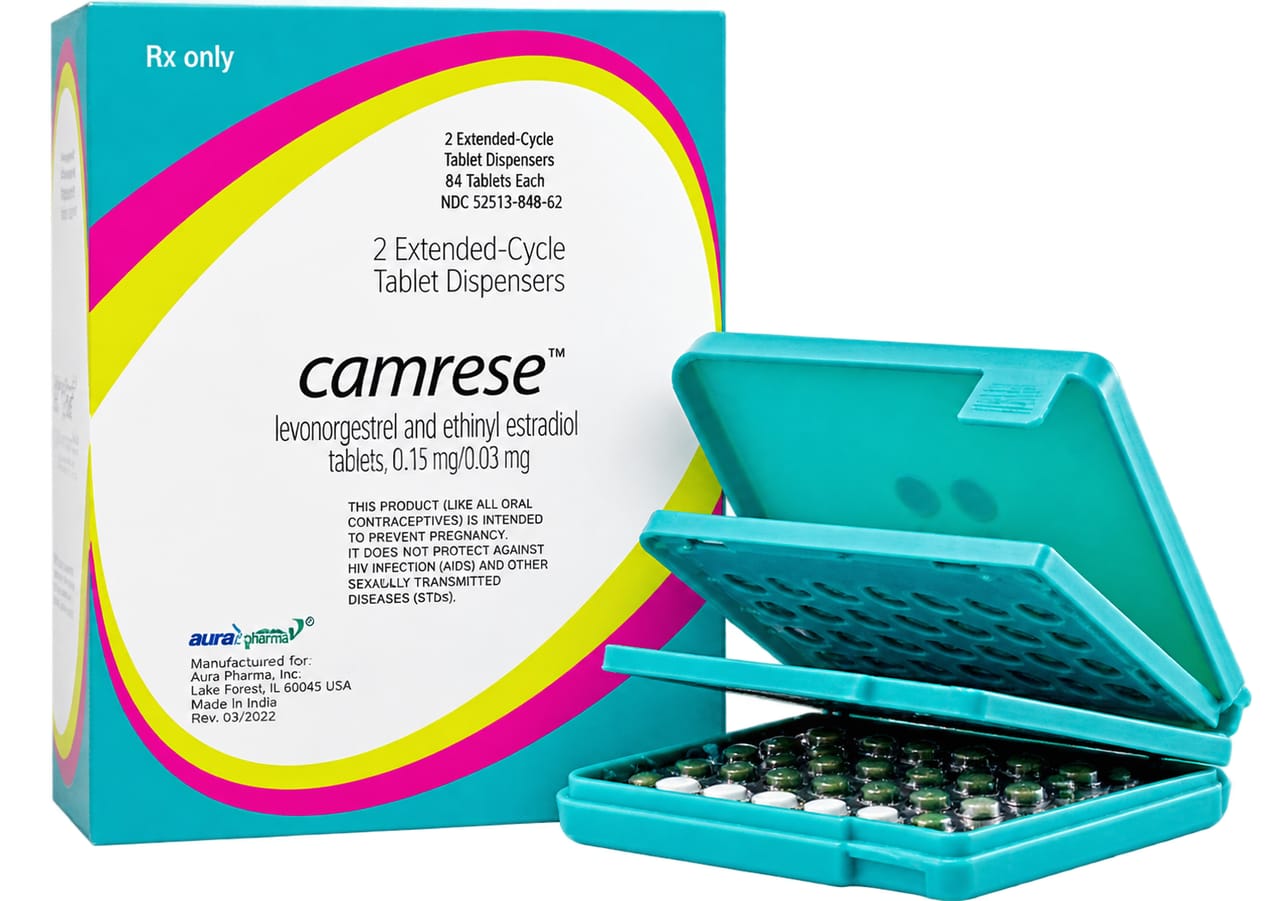
| Generic name | levonorgestrel/ethinyl estradiol and ethinyl estradiol kit |
|---|---|
| Drug class | Contraceptives, Oral, Estrogens/Progestins |
| Forms | Tablet |
Quick overview
Camrese Tablet contains levonorgestrel and ethinyl estradiol and belongs to the Contraceptives, Oral, Estrogens/Progestins drug class. It is an extended-cycle combined oral contraceptive used by women to prevent pregnancy, with most women having a period only about four times a year instead of once a month. Camrese may also help treat acne, reduce the risk of ovarian cysts, and manage painful or heavy periods.
What is Camrese Tablet
Camrese is a combined oral contraceptive (birth control pill) used by women to prevent pregnancy. It is an extended-cycle pill, so most women only have a period about four times a year instead of once a month.
Camrese Tablet uses
- Prevent pregnancy
- Treat acne
- Reduce the risk of ovarian cysts (as in polycystic ovarian syndrome)
- Treat painful or heavy periods
Benefits of Camrese Tablet
- Periods become lighter and shorter
- Can be used to skip periods by going straight into the next pack
- May reduce the risk of ovarian cysts (as in PCOS)
- May reduce mood swings
- May improve acne
How Camrese Tablet works
Camrese contains two hormones that work together to stop the ovaries from releasing an egg, thicken the mucus at the cervix so sperm have trouble getting through, and thin the lining of the uterus so a fertilized egg cannot survive there.
Camrese Tablet dosage
Take one pill by mouth at the same time every day. Start the first active pill on the first Sunday after your period begins; if your period starts on a Sunday, start that same day. Use a non-hormonal back-up method of birth control, such as condoms or spermicide, during the first 7 days of starting the pack. Take the active pills for 84 days in a row, then switch to the inactive pills for 7 days in a row. Start a new pack the day after finishing the inactive pills, whether or not you have your period.
Taking the pill after your evening meal or at bedtime may help reduce nausea or stomach upset. Do not skip pills even if you have spotting, bleeding, nausea, or do not have sex often. If you have vomiting or diarrhea, your pill may not work as well; use a back-up method until you check with your doctor.
If you miss one pill, take it as soon as you remember and take the next pill at your regular time. If you miss two pills in a row, take pills to catch up and use a back-up method for 7 days. If you miss three or more pills in a row, do not take the missed pills; keep taking one pill a day and use a back-up method for 7 days. If you miss any of the last week's pills, throw them away and keep taking the scheduled pills; no back-up method is needed.
For women who have just given birth and are not breastfeeding, do not start Camrese earlier than four to six weeks after delivery.
| Age group | Dose |
|---|---|
| Under 18 years | 1 tablet once daily in postpubertal adolescents; not indicated before menarche |
| 18–64 years | 1 tablet once daily at the same time every day |
| 65+ years | Not indicated; not studied in postmenopausal women |
Available forms and strengths
- Tablet
Side effects of Camrese Tablet
Common
- Irregular or heavy uterine bleeding
- Nausea
- Breast tenderness
- Headache
- Weight gain
- Mood changes
- Acne
- Bloating or fluid retention
- Feeling tired
- Muscle spasms
- Swelling in the hands and feet
- Brownish patch on the face
- Problems tolerating contact lenses
Serious
- Blood clots in the legs, lungs, brain, or eyes (causing pain, swelling, sudden shortness of breath, chest pain, sudden vision changes, or stroke symptoms)
- Heart attack (chest pain, sweating, nausea, dizziness)
- Stroke (sudden numbness or weakness in the face, arm, or leg, trouble speaking, confusion, severe headache)
- Liver problems (yellowing of skin or eyes, dark urine, pale stools, loss of appetite, nausea, vomiting, stomach pain)
- Gallbladder problems (severe stomach pain, nausea, vomiting, fever)
- High blood pressure
- Severe allergic reaction (rash, itching, swelling of face/lips/tongue/throat, trouble breathing)
- New or worsening migraines or headaches
- Worsening mood or feelings of depression
- Unusual vaginal bleeding, discharge, itching, or odor
Warnings and precautions
- Camrese should not be used during pregnancy. If you become pregnant or think you might be pregnant while taking it, contact your doctor right away and stop the medicine.
- Camrese is not recommended for women who are breastfeeding or planning to breastfeed, since it may reduce breast milk production and small amounts pass into breast milk.
- Camrese has not been specifically studied in people with kidney disease, and it should not be used by women with uncontrolled high blood pressure or kidney problems without discussing this with a doctor.
- Camrese should not be used by women with liver disease or liver tumors, and it should be stopped if signs of liver problems, such as yellowing skin or eyes, develop.
- Smoking cigarettes while taking Camrese greatly increases the risk of serious heart and blood vessel problems, including heart attack, blood clots, and stroke. This risk is higher for women over 35, so women over 35 who smoke should not use Camrese.
- Camrese should not be taken by women who currently have or have had breast cancer, since some breast cancers are sensitive to hormones.
- Camrese should not be combined with certain Hepatitis C medicines (containing ombitasvir/paritaprevir/ritonavir, with or without dasabuvir), as this combination can cause serious liver enzyme elevations.
- Camrese does not protect against HIV or other sexually transmitted infections, so condoms should still be used to reduce that risk.
- Camrese should not be used by women with uncontrolled high blood pressure, certain heart or blood clotting conditions, or a history of stroke or heart attack.
Storage
- Store at room temperature away from light and moisture.
- Do not store in the bathroom.
- Keep all medications away from children and pets.
- Do not flush medications down the toilet or pour them into a drain unless instructed to do so.
- Properly discard this product when it is expired or no longer needed. Consult your pharmacist or local waste disposal company.
When to see a doctor
- Get medical help right away if you notice signs of a blood clot, such as leg pain or swelling, sudden shortness of breath, chest pain, sudden vision loss, severe headache, weakness or numbness on one side of the body, or trouble speaking.
- Contact your doctor right away if you develop yellowing of the skin or eyes, since this could be a sign of a serious liver problem.
- Call your healthcare provider immediately if you have any thoughts of harming yourself while taking this medicine.
- If you miss your expected period while taking the inactive pills, contact your healthcare provider because you may be pregnant.
Alternatives
- Seasonale
- Amethia
- Seasonique
Watch the video
FAQs
What is Camrese Tablet used for?
Camrese is used to prevent pregnancy. It may also help treat acne, reduce the risk of ovarian cysts, and manage painful or heavy periods.
How often will I get my period while taking Camrese?
Camrese is an extended-cycle pill, so most women have a period only about four times a year instead of once a month.
How do I take Camrese Tablet?
Take one pill by mouth at the same time every day, starting the first active pill on the first Sunday after your period begins. Take active pills for 84 days in a row, then inactive pills for 7 days, and start a new pack right after.
What should I do if I miss a dose of Camrese?
If you miss one pill, take it as soon as you remember and take the next pill at your regular time. If you miss two pills in a row, take pills to catch up and use a back-up method for 7 days; if you miss three or more, skip the missed pills, continue one pill daily, and use a back-up method for 7 days.
Who should not take Camrese Tablet?
Camrese should not be used by women who are pregnant, have liver disease or liver tumors, have had breast cancer, have uncontrolled high blood pressure, certain heart or clotting conditions, a history of stroke or heart attack, or who smoke and are over 35.
General information, not medical advice
Your prescriber and the leaflet in your pack know your situation. This page does not.
- Follow your prescriber and the leaflet
- Don't start, stop, or change a dose on your own
- Doses and warnings differ by country and product
Sources
Video
Related medicines

Injectafer Injection: Uses, Dosage, Side Effects, Precautions and Alternates
Iron products
Injectafer (ferric carboxymaltose) treats iron deficiency anemia and heart failure-related iron deficiency via IV. Learn uses, dosage, side effects, and

Gliclazide Tablet: Uses, Dosage, Side Effects, Precautions and Alternates
Sulfonylurea (hypoglycemic/antidiabetic agent)
Gliclazide Tablet is a sulfonylurea for type 2 diabetes that boosts insulin release. Learn about dosage, side effects, warnings, and precautions.