
Safety
General information, not medical advice
Your prescriber and the leaflet in your pack know your situation. This page does not.
- Follow your prescriber and the leaflet
- Don't start, stop, or change a dose on your own
- Doses and warnings differ by country and product
Candid-B Cream: Uses, Dosage, Side Effects, Precautions and Alternates
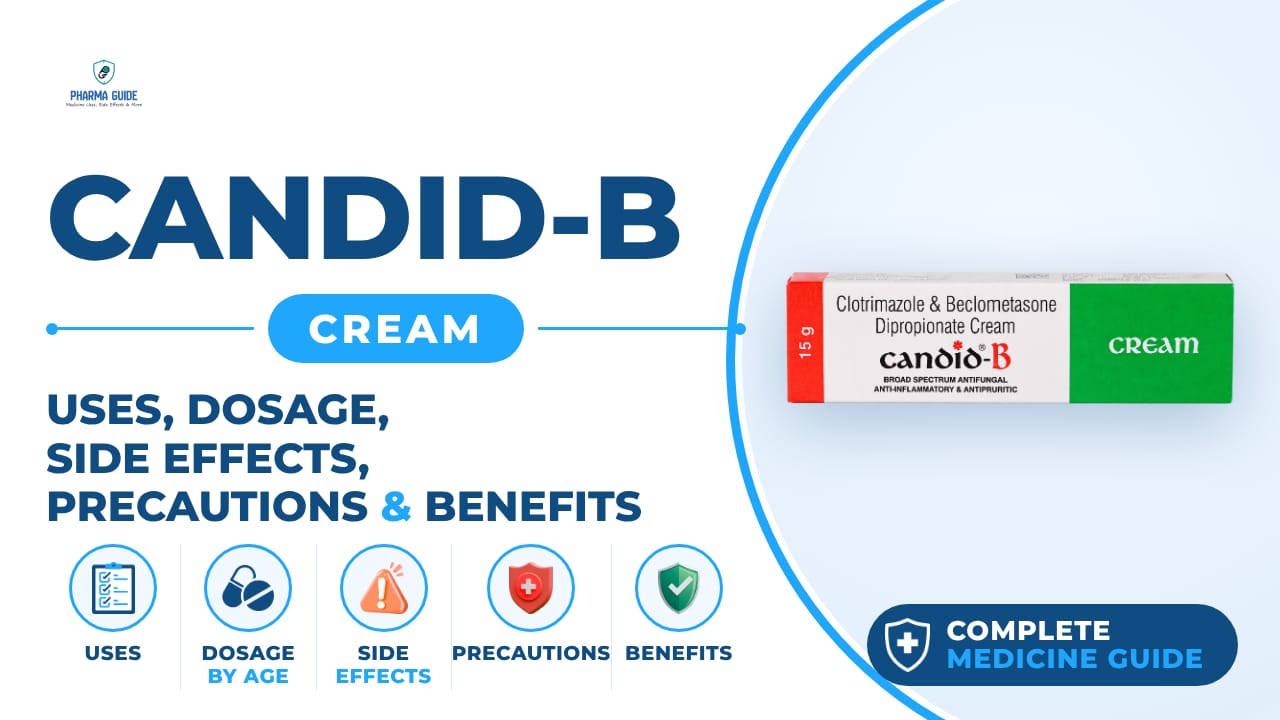
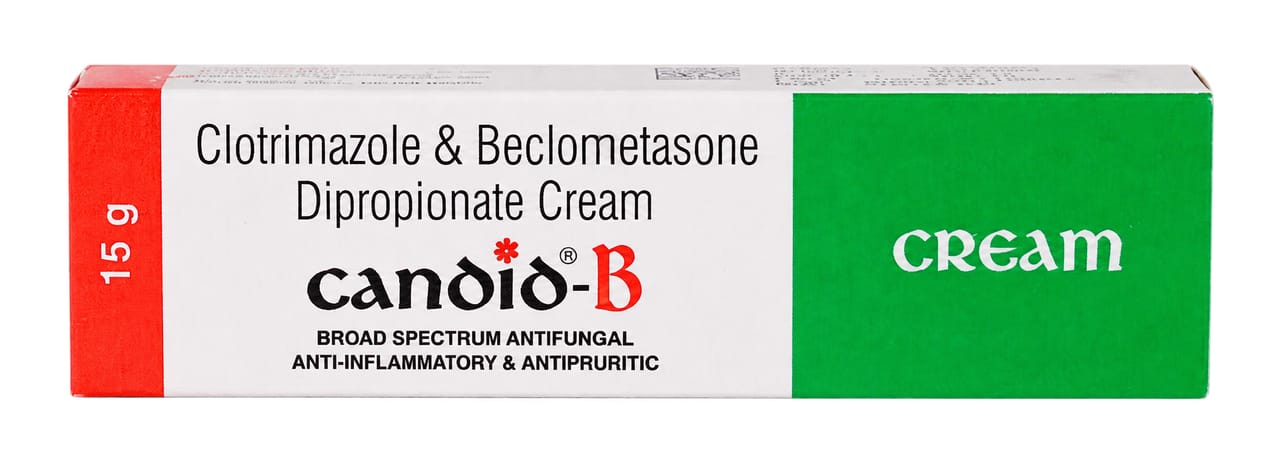
| Generic name | Beclomethasone Dipropionate + Clotrimazole |
|---|---|
| Drug class | Anti-fungal, Corticosteroid |
| Forms | Cream |
Quick overview
Candid-B Cream is a combination topical medicine containing clotrimazole, an antifungal, and beclomethasone dipropionate, a corticosteroid. It is used to treat fungal skin infections that also involve inflammation, redness, and itching, such as athlete's foot, jock itch, and ringworm. The cream works by stopping fungal growth while calming the skin's inflammatory response. It should be applied as directed by a doctor, and the full course should be completed even if symptoms improve early.
What is Candid-B Cream
Candid-B Cream is a combination topical medicine that contains an antifungal (clotrimazole) and a corticosteroid (beclomethasone dipropionate). It is used to treat fungal skin infections that also involve inflammation, redness, and itching.
Candid-B Cream uses
- Fungal skin infections such as athlete's foot, jock itch, and ringworm
- Fungal infections of the toes, inner thighs, private parts, arms, and legs
- Reducing inflammation, redness, and swelling caused by fungal infections
- Sweat rash (intertrigo)
- Skin yeast infections (candidiasis)
Benefits of Candid-B Cream
- Clears the fungal infection
- Eases redness, swelling, and discomfort
- Soothes irritated, infected skin
How Candid-B Cream works
The cream combines two medicines that work together: clotrimazole stops fungus from growing by damaging its cell membrane, while beclomethasone (a steroid) calms inflammation, redness, and itching by reducing your skin's immune response.
Candid-B Cream dosage
Make sure the affected skin area is clean and dry before applying the cream. Gently massage the cream onto the affected area until it is fully absorbed, as prescribed by your doctor. Wash your hands thoroughly before and after using the cream, unless you are applying it to your hands. Avoid applying the cream to open wounds, mucous membranes, or near your eyes. Shake it well before use.
Apply on healthy skin free from cuts and wounds; it should not be used with occlusive dressings unless directed. If your eyes come into contact with the cream, rinse them with clean water immediately. Continue using the cream for the full course even if symptoms improve early, to prevent the infection from coming back. This medicine is intended for adults only; do not use on a child's skin unless a doctor prescribes it. Older adults should use this cream under medical supervision because they may be more prone to side effects.
| Age group | Dose |
|---|---|
| Under 12 Years | Use only if prescribed by a healthcare professional |
| 12 Years and Above | Apply a thin layer to affected area 1–2 times daily as directed |
| Adults (18–64 Years) | Apply a thin layer 1–2 times daily depending on condition |
| Older Adults (65+ Years) | Apply a thin layer as directed; use cautiously on sensitive skin |
Available forms and strengths
- Cream
Side effects of Candid-B Cream
Common
- Burning or stinging feeling at the application site
- Redness
- Itching
- Dryness
- Skin irritation
- Peeling
Serious
- Thinning of the skin with prolonged use
- Change in skin colour or stretch marks due to skin thinning
- Allergic reactions such as swelling and rash
- Increased hair growth
- Acne
- Dryness or infection on the scalp
- Increased skin sensitivity
Warnings and precautions
- Do not use if you are allergic to beclomethasone dipropionate, clotrimazole, or any other ingredient in this cream; your doctor can suggest other options.
- This cream is not recommended for children unless a doctor prescribes it.
- Do not use on untreated bacterial, viral, or tubercular skin infections, as it may make the condition worse.
- Avoid applying this cream to open wounds, mucous membranes, or near the eyes.
- Do not use this cream for longer than prescribed or on larger areas of skin, since prolonged use can thin the skin.
- People with known allergies to the ingredients, untreated bacterial or viral skin infections, certain skin conditions like rosacea, open wounds, and pregnant or breastfeeding women (unless prescribed) should avoid this cream.
- Topical medicines are generally considered safe in pregnancy, but caution is advised. Use this cream during pregnancy only if your doctor prescribes it, and avoid using it on large areas of skin for a long time.
- Caution is recommended for breastfeeding women. Talk to your doctor to understand the potential risks and benefits before use.
- Kidney health should not affect the use of this cream because it is applied to the skin.
- Liver disease should not affect the use of this cream because it is applied to the skin.
- Alcohol is unlikely to interact with this cream since it is applied to the skin, not taken by mouth.
- This cream is applied to the skin and should not affect your ability to drive or operate machinery.
Storage
- Store below 30°C in a cool, dry place
- Do not freeze the medicine
- Keep it away from direct sunlight, excessive heat, and moisture
- Ensure you store it out of the reach of children
- Check the expiration date on the package, and do not use the medicine past this date
- Keep it out of reach and sight of children and pets
When to see a doctor
- If side effects do not improve or become serious, speak to your doctor right away.
- If you develop any skin reaction or allergic reaction after applying the cream, tell your doctor immediately.
- If you use this medicine for more than two weeks, watch for symptoms like fever, shaking, chills, headache, diarrhoea, depression, or low blood pressure, and tell your doctor.
- If there is no improvement in the treated area after two weeks of treatment, contact your doctor.
- Report worsening irritation or spreading infection to your doctor.
- If accidental ingestion occurs, contact your doctor immediately or visit the nearest hospital.
Alternatives
- Ketoconazole Cream
- Miconazole Cream
- Clotrimazole Cream
- Candid Cream
Watch the video
FAQs
What is Candid-B Cream used for?
It is used to treat fungal skin infections that also involve inflammation, redness, and itching, such as athlete's foot, jock itch, ringworm, sweat rash, and skin yeast infections.
How does Candid-B Cream work?
It combines clotrimazole, which stops fungus from growing by damaging its cell membrane, with beclomethasone, a steroid that calms inflammation, redness, and itching by reducing the skin's immune response.
How should Candid-B Cream be applied?
Apply a thin layer to clean, dry, affected skin 1–2 times daily as directed by your doctor, avoiding open wounds, mucous membranes, and the eyes, and continue the full course even if symptoms improve early.
What are the side effects of Candid-B Cream?
Common side effects include burning or stinging, redness, itching, dryness, irritation, and peeling. Serious effects can include skin thinning, changes in skin colour, allergic reactions, increased hair growth, acne, and increased skin sensitivity.
Can Candid-B Cream be used during pregnancy?
Topical medicines are generally considered safe in pregnancy, but this cream should only be used if prescribed by a doctor, and not on large areas of skin for a long time.
General information, not medical advice
Your prescriber and the leaflet in your pack know your situation. This page does not.
- Follow your prescriber and the leaflet
- Don't start, stop, or change a dose on your own
- Doses and warnings differ by country and product
Sources
- U.S. Food & Drug Administration. (2014, Apr). Lotrisone (clotrimazole and betamethasone dipropionate) cream label.
- National Center for Biotechnology Information (2024). PubChem Compound Summary for CID 2812, Clotrimazole.
- National Center for Biotechnology Information (2024). PubChem Compound Summary for CID 21700, Beclomethasone Dipropionate.
- DrugBank Online. (2024, Aug). Beclomethasone Dipropionate.
- El-Gohary, M., van Zuuren, E. J., Fedorowicz, Z., Burgess, H., Doney, L., Stuart, B., Moore, M., & Little, P. (2014). Topical antifungal treatments for tinea cruris and tinea corporis. The Cochrane database of systematic reviews.
- Crowley, P. D., & Gallagher, H. C. (2014). Clotrimazole as a pharmaceutical: past, present and future. Journal of applied microbiology.
- Greenberg, H. L., Shwayder, T. A., Bieszk, N., & Fivenson, D. P. (2002). Clotrimazole/betamethasone diproprionate: a review of costs and complications in the treatment of common cutaneous fungal infections. Pediatric dermatology.
- Clenil Modulite 250 micrograms inhaler (with Dose Indicator) - Summary of Product Characteristics (SmPC) - (emc).
- Clotrimazole Cream 1% - Summary of Product Characteristics (SmPC) - (emc).
- Beclomethasone Dipropionate Inhalation: Uses, Side Effects, Interactions, Pictures, Warnings & Dosing - WebMD.
- Clotrimazole: Uses, Side Effects, Interactions, Pictures, Warnings & Dosing - WebMD.
- Canison/Canison-B/Canison Plus Full Prescribing Information, Dosage & Side Effects | MIMS Philippines.
Video
Related medicines

Injectafer Injection: Uses, Dosage, Side Effects, Precautions and Alternates
Iron products
Injectafer (ferric carboxymaltose) treats iron deficiency anemia and heart failure-related iron deficiency via IV. Learn uses, dosage, side effects, and

Gliclazide Tablet: Uses, Dosage, Side Effects, Precautions and Alternates
Sulfonylurea (hypoglycemic/antidiabetic agent)
Gliclazide Tablet is a sulfonylurea for type 2 diabetes that boosts insulin release. Learn about dosage, side effects, warnings, and precautions.