
Safety
General information, not medical advice
Your prescriber and the leaflet in your pack know your situation. This page does not.
- Follow your prescriber and the leaflet
- Don't start, stop, or change a dose on your own
- Doses and warnings differ by country and product
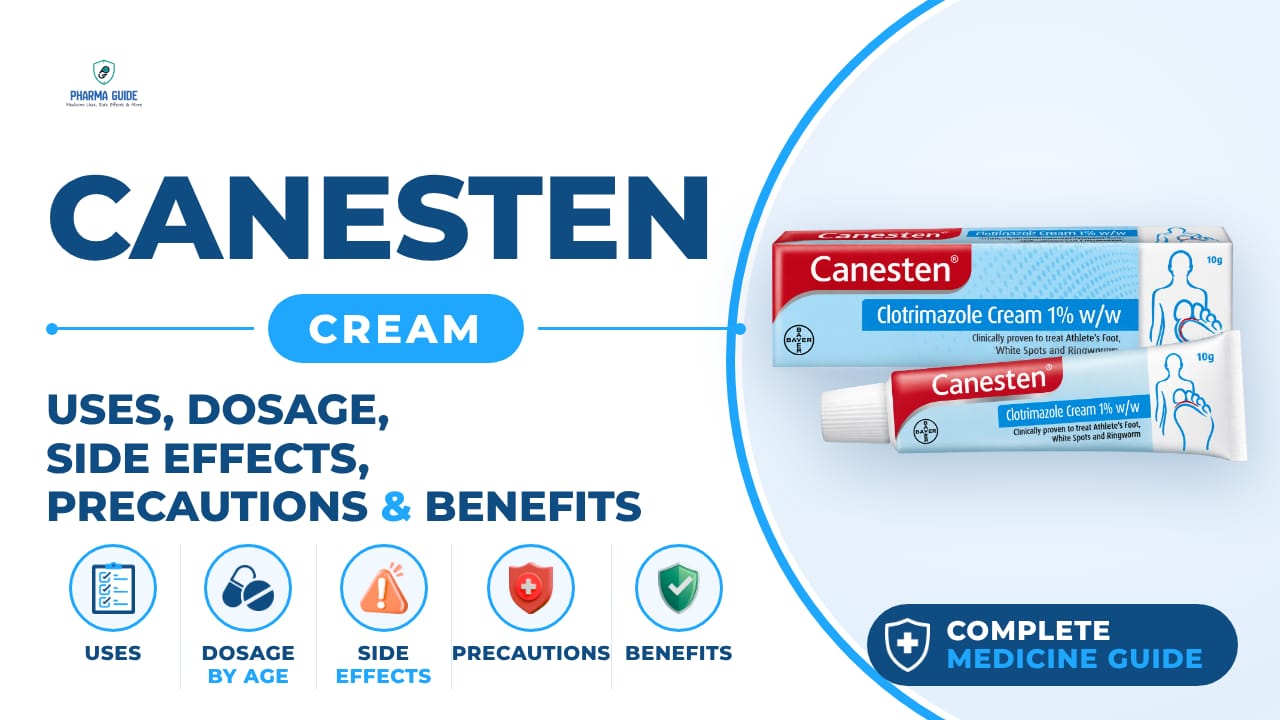
Canesten Cream: Uses, Dosage, Side Effects, Precautions and Alternates
| Generic name | Clotrimazole |
|---|---|
| Drug class | Antifungal (imidazole) |
| Forms | Cream |
Quick overview
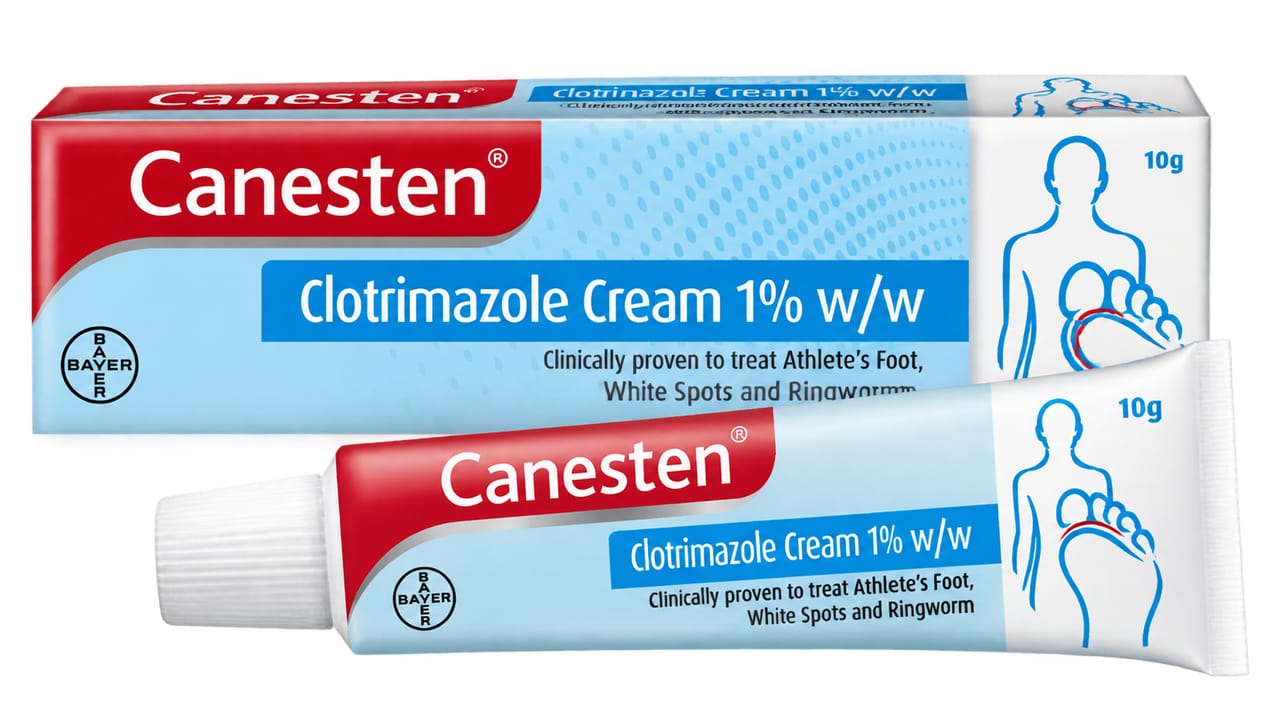
Canesten Cream is an antifungal cream containing clotrimazole, which belongs to a group of medicines called imidazoles. It is used to treat fungal skin infections such as athlete's foot, ringworm, jock itch, and fungal nappy rash. The cream works by stopping fungal growth and can help relieve itching, burning, and redness when used for the full treatment period.
What is Canesten Cream
Canesten Cream is an antifungal cream that treats skin infections caused by fungi. It contains clotrimazole, which belongs to a group of medicines called imidazoles.
Canesten Cream uses
- Fungal skin infections
- Fungal nappy (diaper) rash
- Irritation of the vulva (external thrush) or the end of the penis associated with thrush
- Athlete's foot
- Ringworm
- Jock itch
- Yeast infections of the skin (candidiasis)
- Fungal sweat rash
- Tinea versicolor
- Skin irritation and itching due to fungal infection
Benefits of Canesten Cream
- Stops the growth of fungus causing the infection
- Helps relieve itching, burning, and redness
- Can cure most fungal or yeast skin infections when used for the full treatment period
How Canesten Cream works
The cream damages the outer covering (membrane) of fungal cells by blocking a substance called ergosterol that fungi need to build their cell membrane. Without it, the fungus cannot survive and dies.
Canesten Cream dosage
Clean and dry the affected area before applying the cream, especially between the toes if treating athlete's foot. Apply a thin layer and gently massage it into the skin and surrounding area, then wash your hands afterward.
Use regularly and for the entire recommended treatment period, even if symptoms improve early, to help prevent the infection coming back. Avoid covering the treated area with a bandage or dressing unless your doctor tells you to.
For diaper rash, apply at each diaper change, in the morning and evening. Do not use on children under 2 years old unless a doctor advises it.
Before first use, pierce the tube seal by inverting the cap over the end of the tube and pressing. If you have athlete's foot, an antifungal dusting powder may also help; ask your doctor or pharmacist.
Avoid contact with the eyes, mouth, and mucous membranes; if the cream gets into the eyes or mouth, rinse with water right away and contact your doctor.
If you forget to apply a dose, apply it as soon as you remember and continue as usual; do not apply extra to make up for it. Do not scratch the itchy area, as this can spread the infection. Keep the affected skin clean and dry, but avoid rubbing too hard when drying.
Do not share towels or bath mats with others to avoid spreading the infection. If treating athlete's foot, wash socks, stockings, and tights in hot water and change footwear daily if possible.
| Age group | Dose |
|---|---|
| Under 2 years | Use only with medical advice |
| 2–11 years | Apply a thin layer 2–3 times daily, when medically appropriate |
| 12–17 years | Apply a thin layer 2–3 times daily |
| 18–64 years | Apply a thin layer 2–3 times daily |
| 65+ years | Usually the same adult application |
Available forms and strengths
- Cream
Side effects of Canesten Cream
Common
- Mild itching or burning
- Redness or irritation at the application site
- Dry skin
- Rash
- Blisters
- Discomfort or pain
- Swelling (edema)
- Peeling skin
- Stinging
Serious
- Severe allergic reaction (with symptoms such as fainting, low blood pressure, or hives)
- Skin rash that worsens
- Swallowing or breathing problems
- Swelling of the lips, face, throat or tongue
- Weakness, feeling dizzy or faint
- Nausea
Warnings and precautions
- Do not use this cream if you are allergic to clotrimazole or any other ingredient in the cream.
- Do not use this cream to treat nail or scalp infections.
- Do not use in children under 2 years old unless a doctor recommends it.
- This cream is for use on the skin only. Do not put it in your mouth or swallow it.
- Avoid getting the cream in your eyes; if this happens, rinse thoroughly with water.
- Do not cover the treated area with a bandage or dressing unless your doctor tells you to.
- This cream may make some rubber contraceptives, such as condoms or diaphragms, less effective. Use extra protection for at least five days after using the cream if applying it to the vulva or penis.
- If you are pregnant, trying to become pregnant, or breastfeeding, talk to your doctor before using this cream. It should not be used in the first three months of pregnancy unless your doctor believes it is necessary.
- Breastfeeding should be stopped during treatment with this cream unless your doctor advises otherwise.
Storage
- Store at room temperature, between 15°C and 30°C
- Keep away from direct sunlight
- Keep out of the reach and sight of children
- Store the product in its original carton
- Do not use after the expiry date shown on the carton and tube
- Do not dispose of medicines via wastewater or household waste; ask your pharmacist how to dispose of medicines no longer needed
When to see a doctor
- See a doctor if your symptoms get worse or do not improve, or if the infection has not cleared up after 2 to 4 weeks of treatment depending on the condition.
- Stop using the cream and get medical help right away if you or your baby have signs of an allergic reaction, such as rash, trouble swallowing or breathing, swelling of the lips, face, throat or tongue, weakness, dizziness, fainting, or nausea.
- If the cream is swallowed by accident, contact your doctor or emergency services right away, even if there are no symptoms.
- If you accidentally get the cream in your eyes or mouth, rinse with water immediately and contact your doctor.
Alternatives
- Luliconazole Cream
- Terbinafine Cream
- Econazole Cream
- Ketoconazole Cream
- Miconazole Cream
Watch the video
FAQs
What is Canesten Cream used for?
It treats fungal skin infections such as athlete's foot, ringworm, jock itch, fungal nappy rash, yeast infections of the skin, fungal sweat rash, and tinea versicolor.
How does Canesten Cream work?
It damages the outer membrane of fungal cells by blocking ergosterol, a substance fungi need to build their cell membrane, so the fungus cannot survive and dies.
How often should I apply Canesten Cream?
Apply a thin layer 2–3 times daily for most age groups, using it regularly for the entire recommended treatment period even if symptoms improve early.
Can Canesten Cream be used on children under 2 years old?
No, it should not be used in children under 2 years old unless a doctor recommends it.
Does Canesten Cream affect condoms or diaphragms?
Yes, it may make some rubber contraceptives like condoms or diaphragms less effective, so extra protection should be used for at least five days after applying it to the vulva or penis.
General information, not medical advice
Your prescriber and the leaflet in your pack know your situation. This page does not.
- Follow your prescriber and the leaflet
- Don't start, stop, or change a dose on your own
- Doses and warnings differ by country and product
Sources
Video
Related medicines
Daktarin Oral Gel: Uses, Dosage, Side Effects, Precautions and Alternates
Antifungal (imidazole)
Daktarin Oral Gel contains miconazole to treat oral thrush and fungal infections of the mouth and throat. Learn uses, dosage, side effects, and warnings.
Clotrimazole Cream: Uses, Dosage, Side Effects, Precautions and Alternates
Antifungal (imidazole)
Clotrimazole Cream treats fungal and yeast skin infections like ringworm, athlete's foot, and thrush. Learn uses, dosage, side effects, and precautions.