
Safety
General information, not medical advice
Your prescriber and the leaflet in your pack know your situation. This page does not.
- Follow your prescriber and the leaflet
- Don't start, stop, or change a dose on your own
- Doses and warnings differ by country and product
Daktarin Oral Gel: Uses, Dosage, Side Effects, Precautions and Alternates
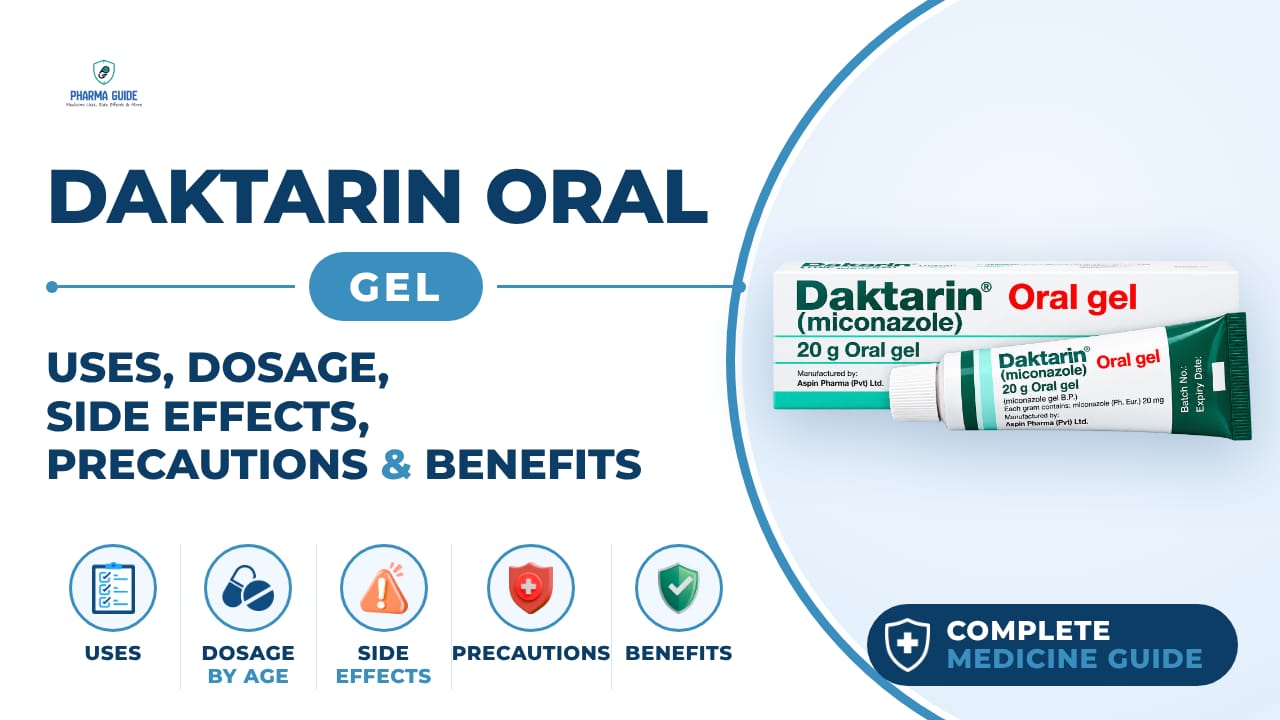
| Generic name | Miconazole |
|---|---|
| Drug class | Antifungal (imidazole) |
| Forms | Oral gel |
Quick overview
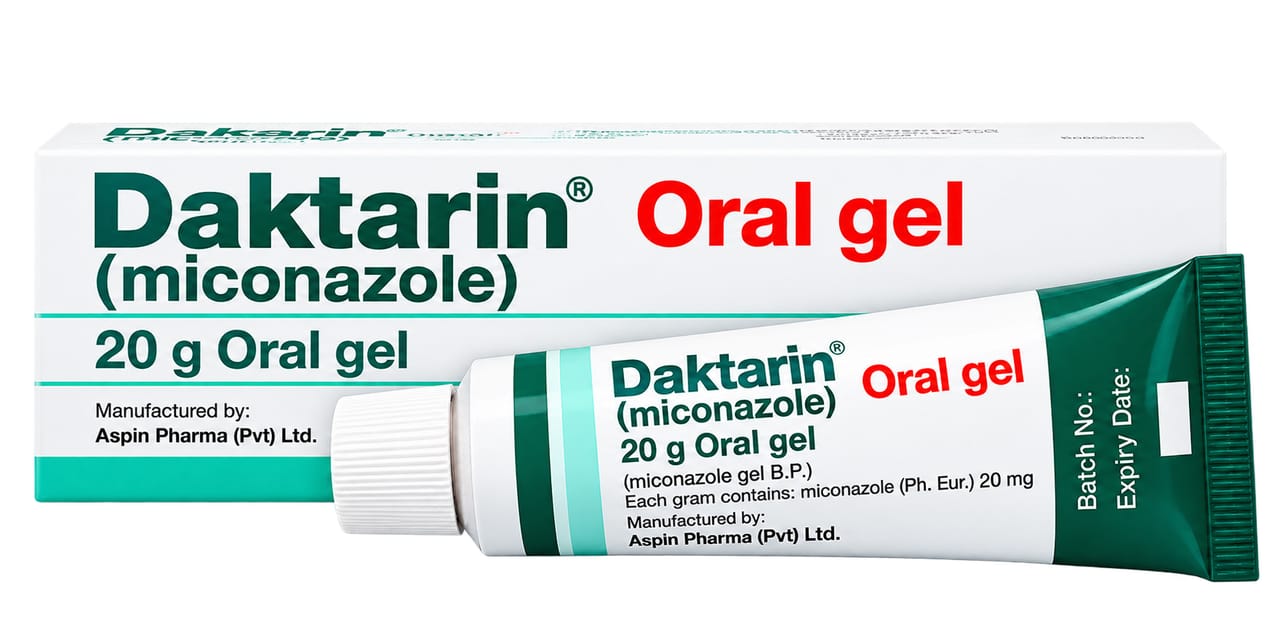
Daktarin Oral Gel is a sugar-free, orange-flavoured white gel containing the antifungal medicine miconazole. It is used in the mouth and throat to treat fungal infections such as oral thrush, and can also help prevent and treat fungal infections of the gastrointestinal tract in people who have trouble swallowing tablets. It is suitable for adults, children, and infants aged 4 months and older. It works by destroying the fungus causing the infection.
What is Daktarin Oral Gel
Daktarin Oral Gel is a sugar-free, orange-flavoured white gel that contains the antifungal medicine miconazole, which belongs to the imidazole class of antifungals. It is used in the mouth and throat to treat fungal infections.
Daktarin Oral Gel uses
- Treats fungal infections of the mouth and throat (oral thrush)
- Prevents and treats fungal infections of the gastrointestinal tract in people who have trouble swallowing tablets
- Used in adults, children, and infants aged 4 months and older
- Treats oral candidiasis (oral thrush)
- Treats Candida infection of the mouth and throat
Benefits of Daktarin Oral Gel
- Clears fungal overgrowth causing oral thrush
- Eases soreness and discomfort from fungal infection in the mouth
- Can be applied directly to dentures to help prevent them from becoming infected
- Provides direct antifungal treatment in the mouth
- Suitable from 4 months of age when appropriately prescribed
How Daktarin Oral Gel works
Miconazole works by destroying the fungus causing the infection. It blocks the fungus from making a substance called ergosterol, which changes the fungal cell membrane and causes the fungal cells to break down.
Daktarin Oral Gel dosage
Use after meals, for oral use only. Apply the gel directly to the affected area with a clean finger and try to keep it in contact with the area for as long as possible. Place the gel at the front of the mouth — never at the back of the throat, especially for children or infants, to avoid choking. When giving the gel to a child or infant, split each dose into smaller portions rather than putting it all in the mouth at once.
For oral thrush with dentures, remove the dentures at bedtime and brush them with the gel. Continue treatment for at least a week after all symptoms have cleared. If you forget a dose, take the next dose when needed — do not take a double dose. Do not use more than the recommended amount.
| Age group | Dose |
|---|---|
| Under 4 months | Do not use; contraindicated because of choking risk |
| 4–23 months | 1.25 mL four times daily after meals |
| 2–64 years | 2.5 mL four times daily after meals |
Available forms and strengths
- Oral gel
Side effects of Daktarin Oral Gel
Common
- Nausea, vomiting or regurgitation
- Dry mouth and oral discomfort
- Taste disturbance
- Taste distortion (dysgeusia)
Serious
- Swelling of the face, tongue or throat, difficulty swallowing, hives and breathing difficulties (angioedema, anaphylactic reactions)
- Severe skin reactions with blistering (Toxic Epidermal Necrolysis, Stevens-Johnson Syndrome, or Drug Reaction with Eosinophilia and Systemic Symptoms)
- Unexpected bleeding or bruising, nosebleeds, coughing up blood, blood in the urine, black tarry stools, or coffee ground vomit in people taking warfarin
- Choking, especially in infants and children if the gel blocks the throat
- Inflammation of the liver (hepatitis)
- Rash with pus-filled pimples or blisters
- Light-headedness, generalised itch, wheezing or difficulty breathing
- Tongue discolouration
- Stomatitis (inflammation of the lining of the mouth)
- Diarrhoea
Warnings and precautions
- Ask your doctor or pharmacist for advice before using this medicine if you are pregnant, think you are pregnant, or are planning to become pregnant. Ask your doctor or pharmacist for advice before using this medicine if you are breast-feeding. Never apply the gel to your nipple to treat your baby.
- No specific dose adjustment is usually required for kidney impairment because miconazole used as an oral gel has limited systemic absorption. However, patients with severe kidney disease or multiple medicines should still check with a clinician or pharmacist because important drug interactions can occur. Do not use this medicine if you have liver dysfunction.
- This medicine contains a small amount of alcohol, but the amount is very small and will not have any noticeable effects. This medicine does not affect your alertness or ability to drive.
- Stop using the gel right away and get medical advice if you notice unexpected bleeding or bruising, nosebleeds, coughing up blood, blood in urine, black tarry stools, or coffee-ground vomit.
- Do not use in infants under 4 months old because of the risk of choking. The age limit is higher for babies born early or who are developing slowly.
- The gel is sticky so it stays in the mouth longer. Always place it at the front of the mouth, never at the back of the throat, so a child or infant does not choke.
- Do not use this medicine together with certain other medicines, including warfarin (unless your doctor has prescribed it), some hayfever/antihistamine drugs, a digestive drug called cisapride, certain cholesterol drugs, certain sleep or anxiety medicines, certain mood medicines, some heart rhythm drugs, and certain migraine drugs.
- If you take warfarin, your doctor will need to check your blood clotting levels closely while you use this gel.
Storage
- Do not store above 30°C.
- Keep this medicine out of the sight and reach of children.
- Do not use this medicine after the expiry date which is stated on the label and carton after 'Expiry'. The expiry date refers to the last day of that month.
- Do not throw away any medicines via wastewater or household waste. Ask your pharmacist how to throw away medicines you no longer use.
When to see a doctor
- Stop using the gel and get medical help immediately if you have swelling of the face, tongue or throat, trouble swallowing, hives, or difficulty breathing.
- Get medical help immediately if you notice signs of serious skin reactions, such as blistering of the skin, mouth, eyes, or genitals, or a rash with fever.
- Seek immediate medical attention if you have any signs of an allergic reaction, such as hives or rash.
- If someone swallows a large amount of this gel by accident, contact a doctor or go to your nearest emergency department, taking the leaflet with you.
Alternatives
- Nystatin oral suspension
- Clotrimazole oral preparations where available
- Fluconazole when prescribed
- Other clinician-selected antifungal medicines
Watch the video
FAQs
What is Daktarin Oral Gel used for?
It treats fungal infections of the mouth and throat such as oral thrush, and can prevent or treat fungal infections of the gastrointestinal tract in people who have trouble swallowing tablets.
How does Daktarin Oral Gel work?
Miconazole destroys the fungus causing the infection by blocking it from making ergosterol, which changes the fungal cell membrane and causes the fungal cells to break down.
What is the dosage for Daktarin Oral Gel?
It is applied after meals: infants 4-23 months use 1.25 mL four times daily, and people aged 2-64 years use 2.5 mL four times daily. It should never be placed at the back of the throat, and doses for children should be split into smaller portions.
Can Daktarin Oral Gel be used in infants?
It can be used in infants aged 4 months and older, but it must not be used under 4 months old because of the risk of choking, and the gel should always be placed at the front of the mouth, not the back of the throat.
What are the side effects of Daktarin Oral Gel?
Common side effects include nausea, vomiting or regurgitation, dry mouth and oral discomfort, and taste disturbance. Serious side effects include swelling of the face, tongue or throat, severe skin reactions, choking, and liver inflammation.
General information, not medical advice
Your prescriber and the leaflet in your pack know your situation. This page does not.
- Follow your prescriber and the leaflet
- Don't start, stop, or change a dose on your own
- Doses and warnings differ by country and product
Sources
Video
Related medicines
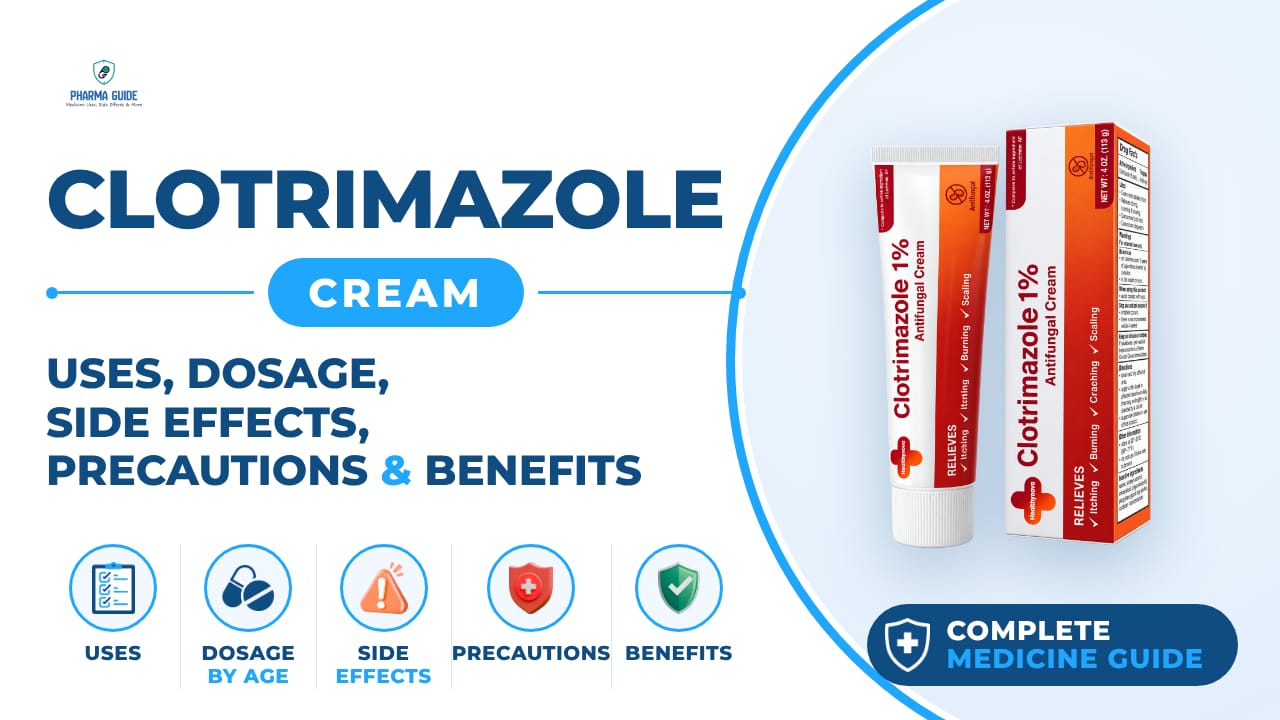
Clotrimazole Cream: Uses, Dosage, Side Effects, Precautions and Alternates
Antifungal (imidazole)
Clotrimazole Cream treats fungal and yeast skin infections like ringworm, athlete's foot, and thrush. Learn uses, dosage, side effects, and precautions.
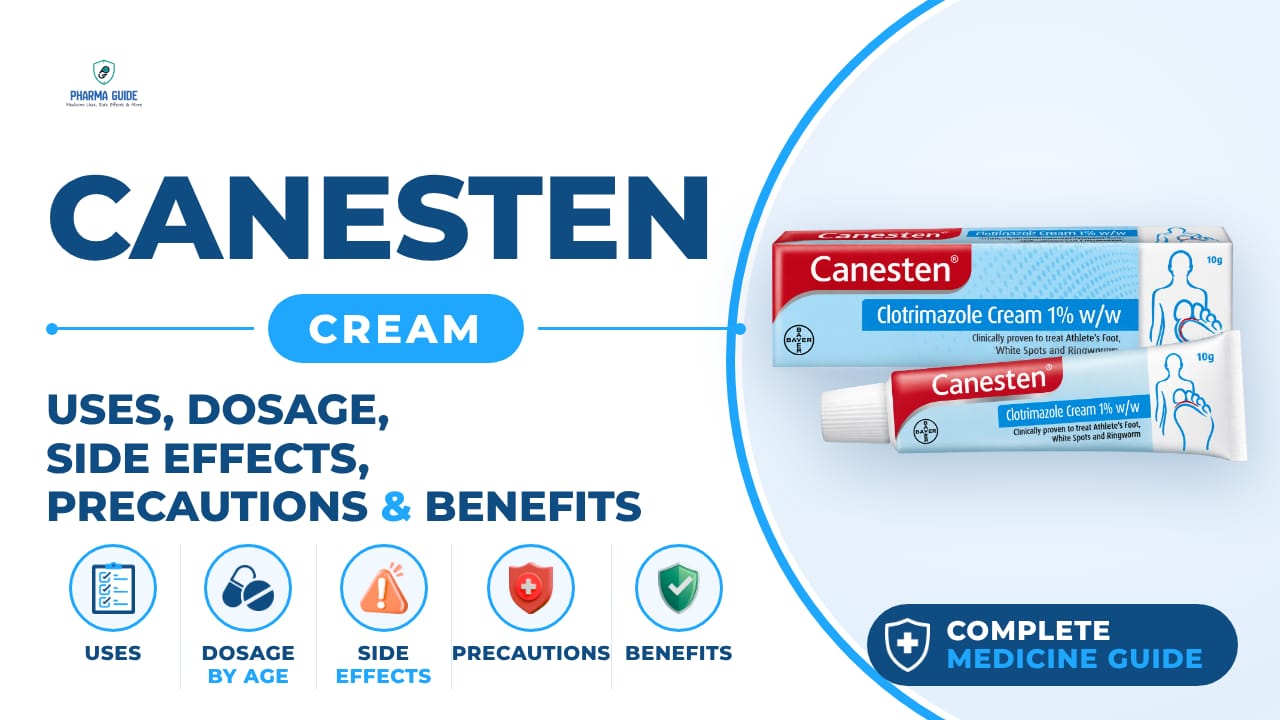
Canesten Cream: Uses, Dosage, Side Effects, Precautions and Alternates
Antifungal (imidazole)
Canesten Cream (clotrimazole) treats fungal skin infections like athlete's foot, ringworm, and jock itch by stopping fungal growth and relieving itching.