
Safety
General information, not medical advice
Your prescriber and the leaflet in your pack know your situation. This page does not.
- Follow your prescriber and the leaflet
- Don't start, stop, or change a dose on your own
- Doses and warnings differ by country and product
Clotrimazole Cream: Uses, Dosage, Side Effects, Precautions and Alternates

| Generic name | Clotrimazole |
|---|---|
| Drug class | Antifungal (imidazole) |
| Forms | Cream (skin/external), Cream for inside the vagina (internal cream), Pessaries, Liquid (spray or solution) |

Quick overview
Clotrimazole Cream is an antifungal medicine from the imidazole class, used on the skin to treat certain fungal and yeast infections. It does not treat infections caused by bacteria or viruses. The cream works by destroying the fungus or yeast causing the infection and helps relieve related itching and soreness. It is applied externally as a thin layer, usually two to three times daily, as directed by a doctor or pharmacist.
What is Clotrimazole Cream
Clotrimazole Cream is a medicated antifungal cream used on the skin. It treats certain fungal and yeast infections and does not treat infections caused by bacteria or viruses.
Clotrimazole Cream uses
- Ringworm
- Athlete's foot
- Fungal nappy rash
- Fungal sweat rash
- Thrush in the vagina, on the penis, or on the skin
- Irritation of the vulva or the end of the penis linked to thrush
- Rash in the folds of the skin (intertrigo)
- Ear infections
Benefits of Clotrimazole Cream
- Clears fungal and yeast skin infections
- Relieves itching and soreness caused by fungal infections
How Clotrimazole Cream works
The cream works by destroying the fungus or yeast that is causing the infection when applied to the affected skin.
Clotrimazole Cream dosage
Use the cream for external use only; do not take it by mouth or put it in your eyes or mouth. Wash your hands before and after use, unless you are treating your hands, in which case wash them only before use. Use the cream at the same time each day as directed on the label, and do not use it more often than directed. Apply a thin, even film to the affected area and rub in gently. Do not cover the treated area with an airtight bandage, such as a plastic-covered dressing.
If your feet are infected, wash and dry them thoroughly, especially between the toes, before applying the cream. Pierce the tube seal before first use by inverting the cap over the end of the tube and pressing. Continue using the cream for the full length of treatment even if you feel better, and do not stop early unless your care team says to. If you miss a dose, apply it as soon as you remember, then continue your usual schedule; do not use double or extra doses.
After bathing, dry your skin thoroughly, since fungal infections thrive in moist conditions. For jock itch, wear loose-fitting cotton underwear instead of tight or synthetic fabrics, and dry the area completely after bathing. For athlete's foot, dry carefully between the toes, wear clean cotton socks changed daily, avoid wool or synthetic socks, and wear well-ventilated shoes or sandals. An absorbent powder such as talcum powder may be used between applications to help keep skin dry. Talk to your care team about use in children, as special care may be needed.
| Age group | Dose |
|---|---|
| Under 2 years | Use only with medical advice |
| 2–11 years | Apply a thin layer 2–3 times daily, when prescribed/appropriate |
| 12–17 years | Apply a thin layer 2–3 times daily |
| 18–64 years | Apply a thin layer 2–3 times daily |
| 65+ years | Usually the same adult application |
Available forms and strengths
- Cream (skin/external)
- Cream for inside the vagina (internal cream)
- Pessaries
- Liquid (spray or solution)
Side effects of Clotrimazole Cream
Common
- Mild skin irritation, redness, or dryness
- Itching, rash, blisters, burning, discomfort, swelling, irritation, pins and needles, redness or peeling of skin
- Pain, burning, or a stinging sensation on the skin
- Red, itchy, or irritated skin
Serious
- Allergic reaction with skin rash, itching, hives, or swelling of the face, lips, tongue, or throat
- Burning, itching, crusting, or peeling of treated skin that needs medical attention
- Swallowing or breathing problems
- Weakness, feeling dizzy or faint
- Nausea as part of an allergic reaction
Warnings and precautions
- Do not smoke or go near naked flames while using this cream, as fabric that has touched the product can catch fire more easily, creating a serious fire risk.
- This cream may make rubber contraceptives such as condoms or diaphragms less effective. Use extra contraceptive precautions for at least five days after using the cream on the vulva or penis.
- This cream contains cetostearyl alcohol and benzyl alcohol, which may cause local skin reactions such as rash, itching, redness, or mild irritation.
- Do not suddenly stop using the cream, as this may cause the infection's symptoms to come back.
- Talk to your doctor or pharmacist before using this medicine if you have previously had an allergic or unpleasant skin reaction to a clotrimazole cream or similar medicine.
- Clotrimazole cream can usually be used during pregnancy, but you should check with a pharmacist or doctor first.
- Clotrimazole can usually be used while breastfeeding, but check with a pharmacist or doctor first. If using the cream on the breasts or nipples, wash it off with warm water before feeding your baby.
- You can eat and drink normally while using clotrimazole.
- Clotrimazole will not affect your ability to drive or operate machinery.
Storage
- Keep out of the reach and sight of children and pets
- Store in a cool dry place
- Store between 2 and 30 degrees C (36 and 86 degrees F)
- Do not freeze
- Do not use after the expiry date
- Do not throw away medicines via wastewater or household waste; ask your pharmacist how to dispose of medicines you no longer use
- If disposing in household trash, mix the medication with something like cat litter, dirt, or coffee grounds, seal it in a bag or container, and put it in the trash
When to see a doctor
- Contact a doctor if your symptoms get worse or do not improve.
- If you or your baby show signs of an allergic reaction — such as rash, swallowing or breathing problems, swelling of the lips, face, throat or tongue, weakness, dizziness, feeling faint, or nausea — stop using the cream and tell your doctor right away or go to the nearest hospital emergency department.
- If the cream is swallowed by accident, tell your doctor right away or contact the emergency department of your nearest hospital.
- If you get cream in your eyes or mouth by accident, wash immediately with water and contact your doctor.
- If you think you are having a severe allergic reaction (anaphylaxis) while using this medicine, get emergency help right away.
- If you think you have taken too much of this medicine, contact a poison control center or emergency room right away.
Alternatives
- Miconazole Cream
- Ketoconazole Cream
- Econazole Cream
- Terbinafine Cream
- Butenafine Cream
Watch the video
FAQs
What is Clotrimazole Cream used for?
It treats fungal and yeast infections including ringworm, athlete's foot, fungal nappy rash, fungal sweat rash, thrush on the vagina, penis, or skin, intertrigo, and ear infections. It does not treat bacterial or viral infections.
How often should I apply Clotrimazole Cream?
Apply a thin, even layer to the affected area usually two to three times daily, as directed by your doctor or pharmacist, rubbing it in gently without covering with an airtight bandage.
What are the common side effects of Clotrimazole Cream?
Common side effects include mild skin irritation, redness, dryness, itching, rash, blisters, burning, discomfort, swelling, pins and needles, and peeling of skin.
Can Clotrimazole Cream affect contraception?
Yes, it may make rubber contraceptives like condoms or diaphragms less effective, so extra contraceptive precautions should be used for at least five days after applying the cream on the vulva or penis.
Is Clotrimazole Cream safe during pregnancy and breastfeeding?
It can usually be used during pregnancy and breastfeeding, but you should check with a pharmacist or doctor first. If used on the breasts or nipples, wash it off with warm water before feeding your baby.
General information, not medical advice
Your prescriber and the leaflet in your pack know your situation. This page does not.
- Follow your prescriber and the leaflet
- Don't start, stop, or change a dose on your own
- Doses and warnings differ by country and product
Sources
Video
Related medicines

Daktarin Oral Gel: Uses, Dosage, Side Effects, Precautions and Alternates
Antifungal (imidazole)
Daktarin Oral Gel contains miconazole to treat oral thrush and fungal infections of the mouth and throat. Learn uses, dosage, side effects, and warnings.
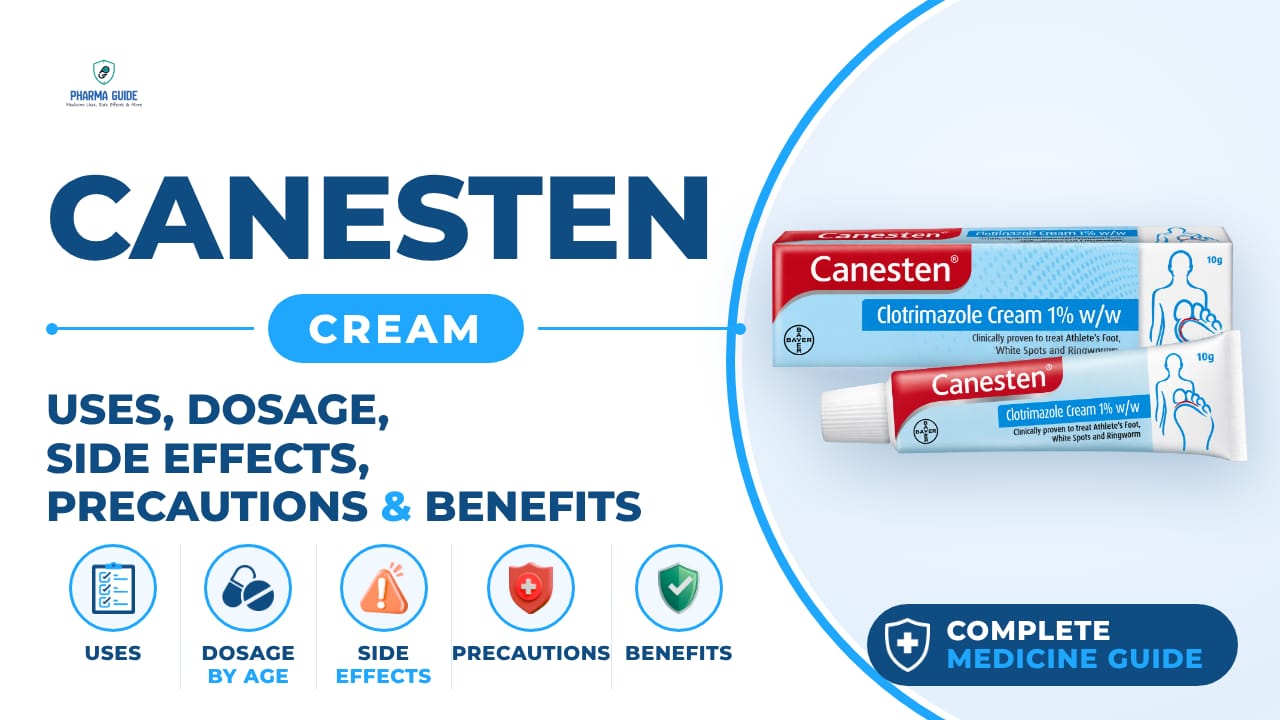
Canesten Cream: Uses, Dosage, Side Effects, Precautions and Alternates
Antifungal (imidazole)
Canesten Cream (clotrimazole) treats fungal skin infections like athlete's foot, ringworm, and jock itch by stopping fungal growth and relieving itching.