
Safety
General information, not medical advice
Your prescriber and the leaflet in your pack know your situation. This page does not.
- Follow your prescriber and the leaflet
- Don't start, stop, or change a dose on your own
- Doses and warnings differ by country and product
Cannabidiol Liquid: Uses, Dosage, Side Effects, Precautions and Alternates
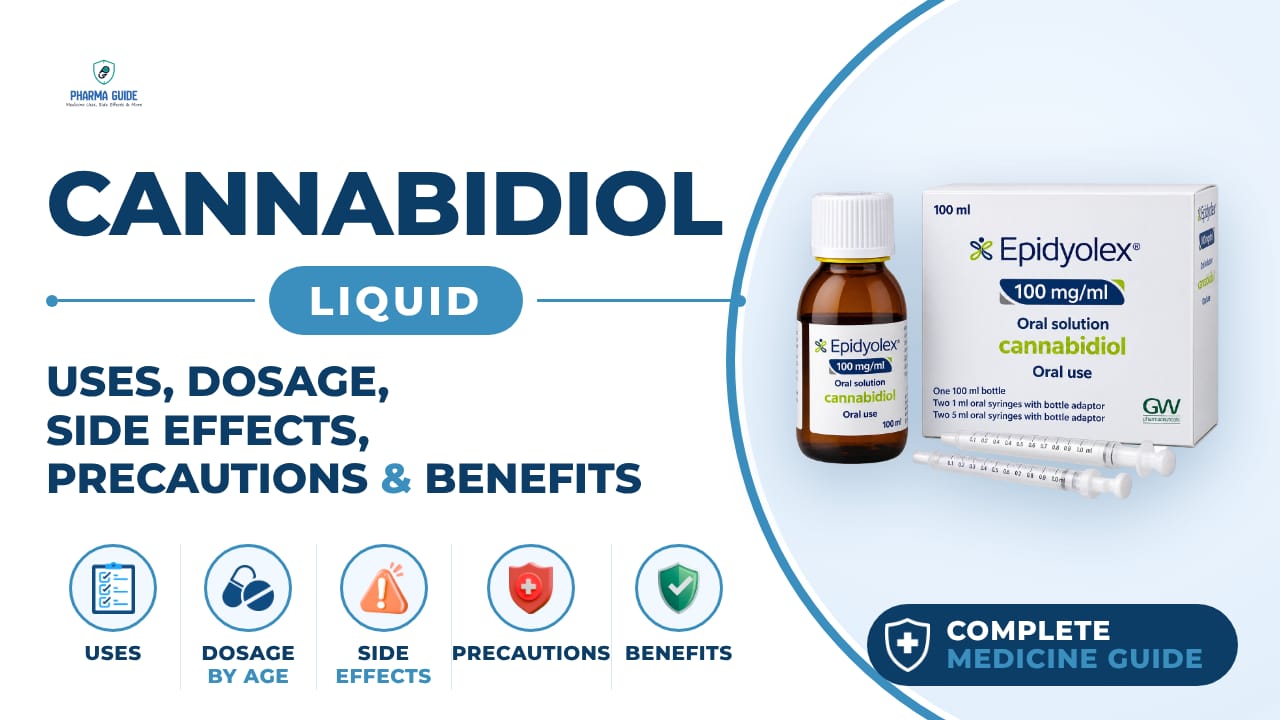
| Generic name | Cannabidiol (CBD) |
|---|---|
| Drug class | Vitamins and Supplements (cannabinoid); prescription form Epidiolex is an anticonvulsant |
| Forms | Oral liquid/solution, Oil, Spray (under the tongue), Capsules/pills, Topical (on skin), Vaping |
Quick overview
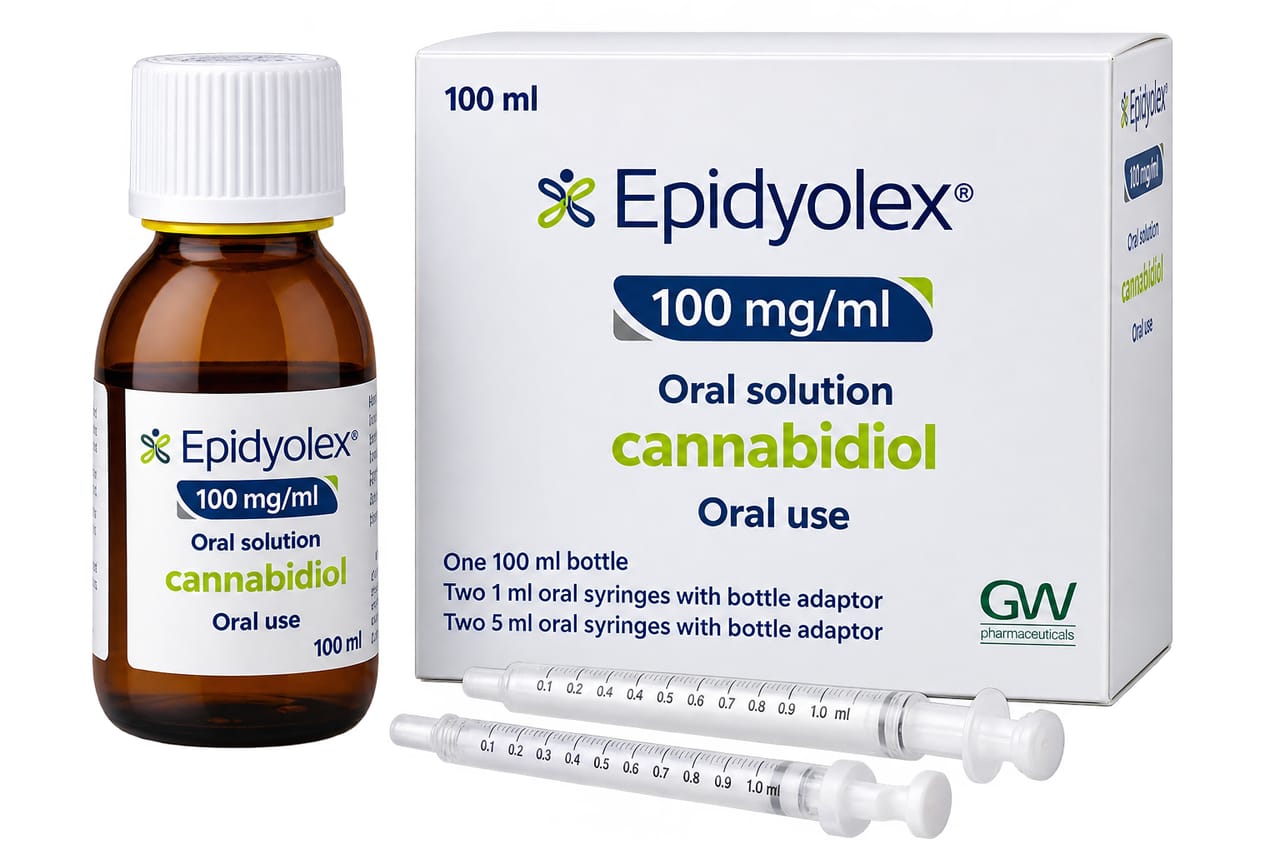
Cannabidiol Liquid, generically known as CBD, is a cannabinoid supplement available over-the-counter in unregulated form and as the FDA-approved prescription medicine Epidiolex, which is classified as an anticonvulsant. It is used for a range of purposes including anxiety, pain, skin conditions, sleep trouble, and, as Epidiolex, for certain seizure conditions such as Lennox-Gastaut syndrome, Dravet syndrome, and tuberous sclerosis complex. CBD works by affecting brain chemicals involved in pain, mood, and mental function, without causing the "high" associated with THC. It can cause side effects and requires certain precautions, so it should be used under medical guidance.
What is Cannabidiol Liquid
Cannabidiol (CBD) is a natural chemical found in the Cannabis sativa plant. It is not psychoactive in the way that THC is, meaning it does not make you feel "high." CBD is sold over-the-counter as an unregulated supplement, and it is also available as an FDA-approved prescription liquid medicine called Epidiolex, used for certain seizure conditions.
Cannabidiol Liquid uses
- Anxiety
- Pain
- Skin conditions
- Trouble sleeping (insomnia)
- To help manage stress
- Certain types of seizures (Lennox-Gastaut syndrome, Dravet syndrome, or tuberous sclerosis complex) when prescribed as Epidiolex
Benefits of Cannabidiol Liquid
- May reduce seizure frequency in certain epilepsy syndromes.
- May improve seizure control when added to other medicines.
- May reduce disruptions to daily routines caused by seizures.
- May support daily functioning when seizures are better controlled.
- May help manage difficult-to-treat epilepsy under specialist care.
How Cannabidiol Liquid works
CBD affects brain chemicals that influence pain, mood, and mental function. It may increase levels of a certain brain chemical, which can help calm psychotic symptoms and reduce pain and anxiety. Unlike THC, CBD does not cause a "high."
Cannabidiol Liquid dosage
Take the liquid by mouth, measuring your dose with the measuring syringe or device provided, not a household spoon. Take it the same way each time, either with or without food, since food changes how much CBD your body absorbs. Use a dry syringe each time you measure a dose, since water can make the oil-based liquid look cloudy. Take the medicine about the same time each day. Do not change your dose without talking to your health care provider first.
Do not stop taking a seizure medicine suddenly, as this can cause seizures that do not stop. If a dose is increased, your provider may do this gradually over time. When stopping, the dose should be lowered slowly under your provider's guidance. Follow the directions on the product label or as recommended by your health care provider.
| Age group | Dose |
|---|---|
| Under 18 years | Not recommended |
| 18–64 years | 2.5 mg/kg, twice/day |
| 65+ years | 2.5 mg/kg, twice/day |
Available forms and strengths
- Oral liquid/solution
- Oil
- Spray (under the tongue)
- Capsules/pills
- Topical (on skin)
- Vaping
Side effects of Cannabidiol Liquid
Common
- Dry mouth
- Low blood pressure
- Light-headedness
- Drowsiness/sleepiness or trouble sleeping
- Diarrhea
- Vomiting
- Loss of appetite
Serious
- Severe allergic reactions (breathing problems, wheezing, racing heart, fever, swollen lymph nodes, swelling of face/lips/mouth/tongue/throat, trouble swallowing, hives, dizziness, fainting)
- Cannabinoid hyperemesis syndrome (severe nausea, vomiting, stomach pain that can lead to dehydration)
- Liver damage (nausea, stomach pain, fever, weakness, itching, loss of appetite, light-colored stool, dark urine, yellowing of skin or eyes)
- Suicidal thoughts or actions
Warnings and precautions
- It is not known if or how CBD could affect pregnancy or harm a baby. Some products may contain THC, which can also cause harm. Tell your provider if you are pregnant or planning to become pregnant, and it is best to avoid use.
- CBD passes into breast milk. Some products may be contaminated with THC, which also passes into breast milk and can harm the baby. It is best to avoid use while breastfeeding.
- Tell your health care provider if you have liver problems, since CBD can affect the liver and liver damage is a possible serious side effect.
- It is not known for certain how alcohol affects CBD, but drinking alcohol while taking CBD may raise the risk of drowsiness and liver damage. It is best to limit alcohol.
- CBD can affect your alertness or coordination. Do not drive or do activities that require alertness until you know how CBD affects you.
- Over-the-counter CBD products are not regulated and have not been tested to confirm they contain the ingredients or amounts listed on the label. They should not be used in place of prescription CBD (Epidiolex).
- CBD products may be contaminated with THC, which can cause a positive drug test and may cause unwanted effects, including harm to a baby if you are pregnant or breastfeeding.
- The cannabis plant can pull toxins and heavy metals from the soil it grows in, so CBD products made from it may be at higher risk of being contaminated with heavy metals and other harmful chemicals.
- CBD may interact with several medicines broken down by the liver, increasing their effects and side effects, including certain seizure medicines, sedatives, pain medicines, and sleep or anxiety medicines.
- Do not stop a seizure medicine suddenly, since this can cause seizures that do not stop.
Storage
- Store CBD according to the product label
- Most herbal products should be kept in a cool, dry location that is out of the reach of children and pets and not in direct sunlight
- Store Epidiolex in its original bottle in an upright position at 68°F to 77°F
- Do not refrigerate or freeze the medicine
- Keep the child proof cap closed tightly
- Use the medicine within 12 weeks of first opening the bottle and throw away any unused medicine after that time
- Keep out of reach of children
When to see a doctor
- Stop using CBD and get help right away if you have symptoms of a serious allergic reaction, such as breathing problems, a racing heart, fever, swelling of the face, lips, mouth, tongue, or throat, trouble swallowing, hives, or severe dizziness.
- Get medical help right away if you have severe nausea or vomiting that does not go away, as this could be a sign of a serious condition called cannabinoid hyperemesis syndrome.
- Call your health care provider right away if you notice signs of liver damage, such as nausea, stomach pain, fever, unusual tiredness, itching, loss of appetite, light-colored stool, dark urine, or yellowing of the skin or eyes.
- Get immediate help if you have thoughts of harming yourself. Contact your local crisis line or emergency services, or call your health care provider right away if you notice new or worsening thoughts of suicide, depression, or unusual mood changes.
- If you or someone takes too much CBD, get medical help right away or contact a poison control center for instructions.
Alternatives
- Topiramate
- Rufinamide
- Clobazam
Watch the video
FAQs
What is Cannabidiol Liquid used for?
It is used for anxiety, pain, skin conditions, trouble sleeping, and, as the prescription medicine Epidiolex, for certain seizure conditions like Lennox-Gastaut syndrome, Dravet syndrome, and tuberous sclerosis complex.
How should Cannabidiol Liquid be taken?
Take it by mouth using the provided measuring syringe or device, not a household spoon, the same way each time (with or without food), using a dry syringe, and at about the same time each day without changing your dose without medical advice.
What are the common side effects of Cannabidiol Liquid?
Common side effects include dry mouth, low blood pressure, light-headedness, drowsiness or trouble sleeping, diarrhea, vomiting, and loss of appetite.
Is Cannabidiol Liquid safe during pregnancy or breastfeeding?
It is not known how CBD affects pregnancy or breastfeeding, and some products may contain THC, so it is best to avoid use during pregnancy or while breastfeeding.
Can I stop taking Cannabidiol Liquid suddenly?
No, you should not stop taking it suddenly, as this can cause seizures that do not stop; any dose changes should be made gradually under your provider's guidance.
General information, not medical advice
Your prescriber and the leaflet in your pack know your situation. This page does not.
- Follow your prescriber and the leaflet
- Don't start, stop, or change a dose on your own
- Doses and warnings differ by country and product
Sources
Video
Related medicines

Injectafer Injection: Uses, Dosage, Side Effects, Precautions and Alternates
Iron products
Injectafer (ferric carboxymaltose) treats iron deficiency anemia and heart failure-related iron deficiency via IV. Learn uses, dosage, side effects, and

Gliclazide Tablet: Uses, Dosage, Side Effects, Precautions and Alternates
Sulfonylurea (hypoglycemic/antidiabetic agent)
Gliclazide Tablet is a sulfonylurea for type 2 diabetes that boosts insulin release. Learn about dosage, side effects, warnings, and precautions.