
Safety
General information, not medical advice
Your prescriber and the leaflet in your pack know your situation. This page does not.
- Follow your prescriber and the leaflet
- Don't start, stop, or change a dose on your own
- Doses and warnings differ by country and product
Capasal Shampoo: Uses, Dosage, Side Effects, Precautions and Alternates
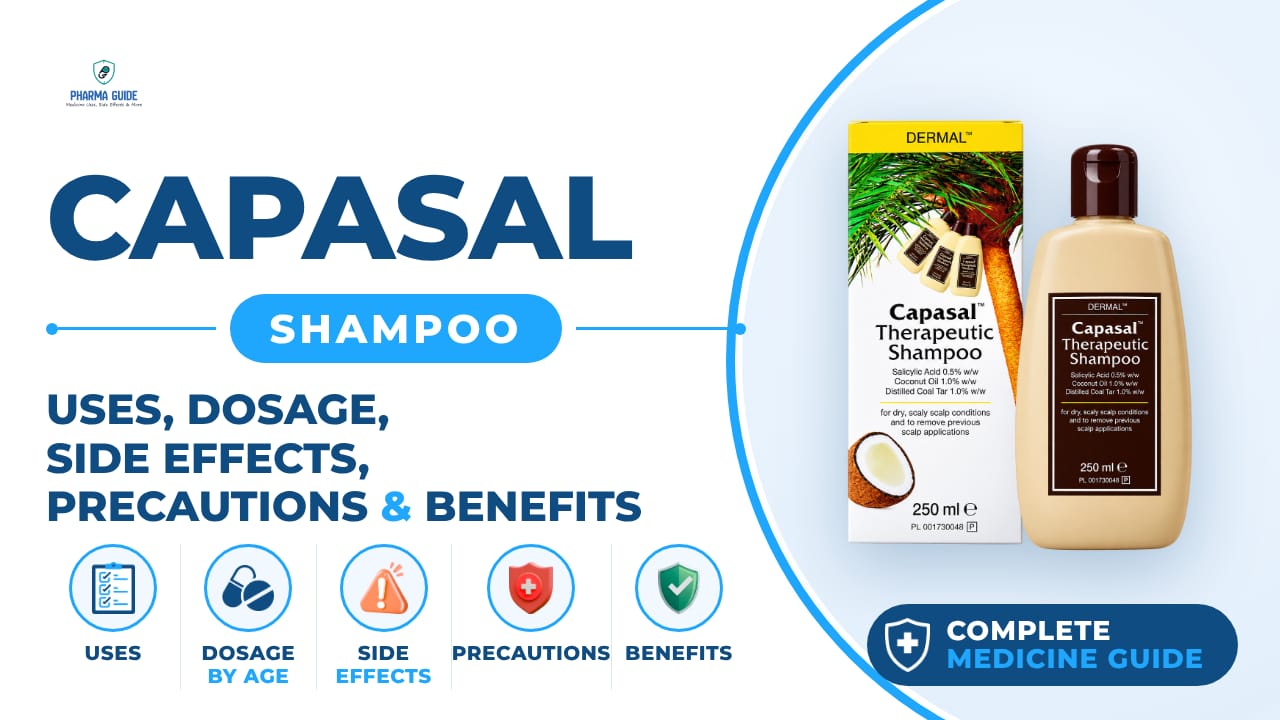
| Generic name | coal tar-salicylic acid topical |
|---|---|
| Drug class | Topical antipsoriatic |
| Forms | Shampoo |
Quick overview
Capasal Shampoo is a triple action topical antipsoriatic containing coal tar, coconut oil, and salicylic acid. It is formulated for dry and scaly scalp conditions such as psoriasis, dermatitis, eczema, dandruff, and seborrhoeic dermatitis. The shampoo works by loosening scales, soothing itching and inflammation, and moisturising the scalp.
What is Capasal Shampoo
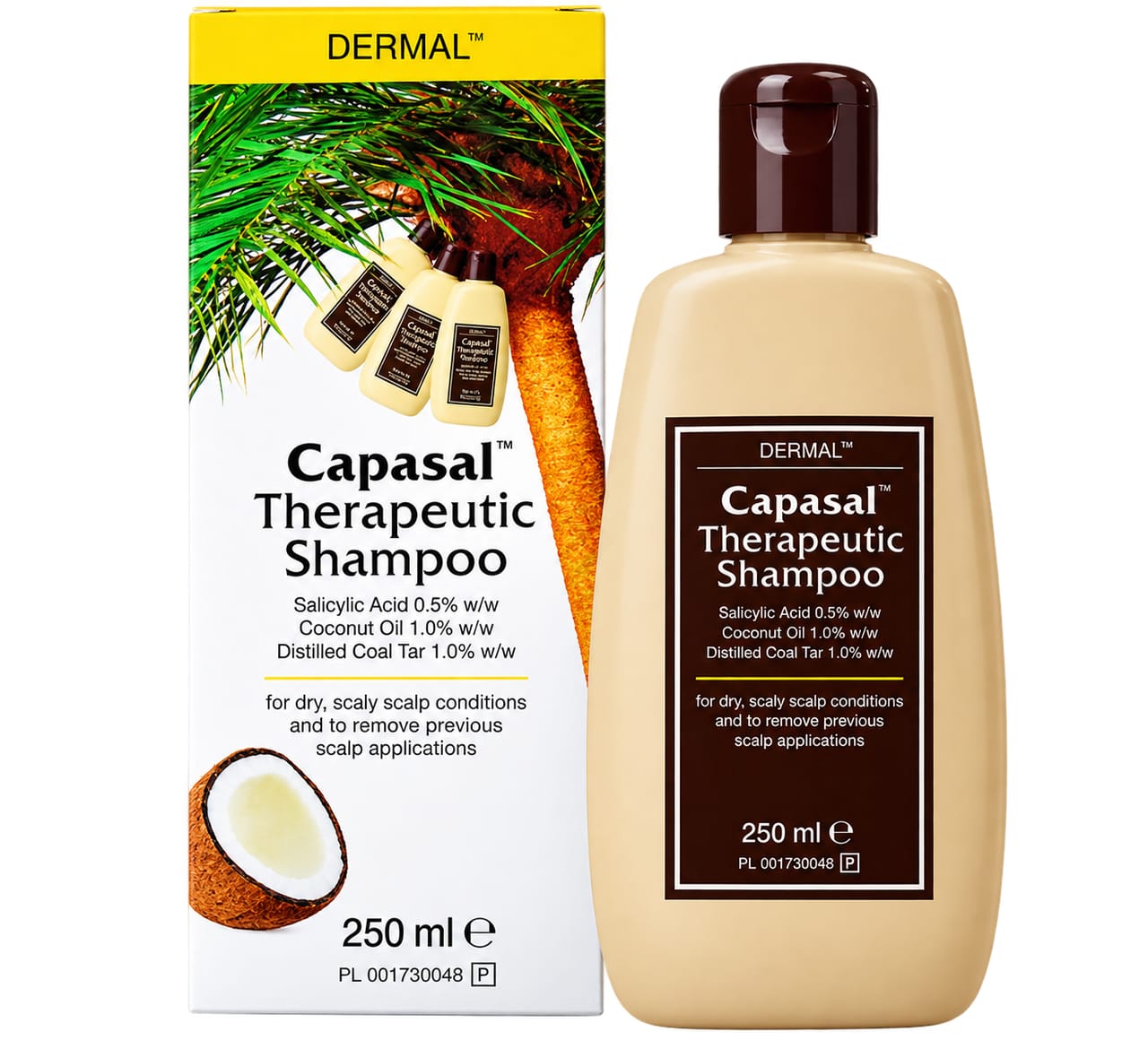
Capasal Therapeutic Shampoo is a triple action shampoo specifically formulated for dry and scaly scalp conditions. It contains three active ingredients: coal tar, coconut oil and salicylic acid.
Capasal Shampoo uses
- Psoriasis
- Dermatitis
- Eczema
- Dandruff
- Seborrhoeic dermatitis
- Removing other medications that have been applied to your scalp
Benefits of Capasal Shampoo
- Helps treat dry, scaly, and itchy scalp conditions.
- Helps reduce dandruff and scalp flaking.
- Can help manage symptoms of scalp psoriasis and seborrheic dermatitis.
- Salicylic acid helps loosen and remove thick scales and dead skin.
- Coal tar helps slow excessive skin-cell turnover and reduce itching and inflammation.
- Coconut oil helps soften, moisturize, and condition a dry scalp.
How Capasal Shampoo works
The shampoo uses salicylic acid to remove scaly and flaky skin, coconut oil to soften and moisturise the scalp, and distilled coal tar to stop itching and restore normal skin development.
Capasal Shampoo dosage
Massage a small amount of shampoo into the scalp. Leave the shampoo on the scalp for a couple of minutes. Remove as much of the product as you can using your hands to help remove debris. Rinse thoroughly once most of the product is out of your hair.
| Age group | Dose |
|---|---|
| Under 12 years | Use under medical/pharmacist advice, particularly for persistent scalp conditions |
| 12–17 years | Wet hair, apply to the scalp, massage thoroughly, leave in contact for a few minutes, then rinse well |
| 18–64 years | Apply to wet scalp, massage thoroughly, leave for a few minutes, then rinse; use as required according to the product directions |
| 65+ years | Same general use; reduce frequency if excessive dryness or irritation develops |
Available forms and strengths
- Shampoo
Side effects of Capasal Shampoo
Common
- Mild scalp irritation
- Redness or itching
- Mild burning or stinging
- Eye irritation if the shampoo gets into the eyes
Serious
- Irritant or allergic skin reactions, especially in very sensitive skin
- Severe or persistent rash
- Significant swelling or worsening irritation
- Severe allergic reaction with swelling of the face, lips, or throat
- Difficulty breathing
Warnings and precautions
- If you have an allergic reaction after using this product, stop using it and speak to your doctor or pharmacist for advice.
- Speak to your doctor or pharmacist before using this product if you have an underlying medical problem or are taking any other medicine or complementary therapy.
- If your symptoms get worse or continue after using this product, contact your doctor.
- This product is considered safe to use during pregnancy, but you should ask your doctor or pharmacist for advice before using any new product if you are pregnant, think you may be pregnant, or are planning a baby.
- If you are breastfeeding, ask your doctor or pharmacist for advice before using this product.
- No specific kidney-related precautions are normally required with topical shampoo use.
- No specific liver-related precautions are normally required with topical shampoo use.
- No known interaction with alcohol.
- Not known to affect driving or the ability to operate machinery.
Storage
- Store below 25°C (77°F) or as directed on the product label.
- Keep in a cool, dry place away from excessive heat.
- Protect from direct sunlight and extreme temperatures.
- Keep the bottle tightly closed after each use.
- Do not freeze and avoid prolonged exposure to high temperatures.
- Keep out of reach of children.
When to see a doctor
- Get emergency medical help right away if you notice signs of a severe allergic reaction, such as swelling of the face and throat, skin rash, trouble breathing, or loss of consciousness.
Alternatives
- Selenium Sulfide Shampoo
- Nizoral Shampoo
- Ketoconazole Shampoo
- T/Gel Shampoo
- Polytar Shampoo
Watch the video
FAQs
What is Capasal Shampoo used for?
Capasal Shampoo is used for dry and scaly scalp conditions such as psoriasis, dermatitis, eczema, dandruff, and seborrhoeic dermatitis. It can also help remove other medications applied to the scalp.
What are the active ingredients in Capasal Shampoo?
Capasal Shampoo contains three active ingredients: coal tar, coconut oil, and salicylic acid, which work together to loosen scales, soothe itching and inflammation, and moisturise the scalp.
How do you use Capasal Shampoo?
Massage a small amount of shampoo into the scalp, leave it on for a couple of minutes, then use your hands to help remove debris before rinsing thoroughly once most of the product is out of your hair.
What are the side effects of Capasal Shampoo?
Common side effects include mild scalp irritation, redness or itching, mild burning or stinging, and eye irritation if the shampoo gets into the eyes. Serious effects can include irritant or allergic skin reactions, severe or persistent rash, and in rare cases, a severe allergic reaction with swelling of the face, lips, or throat and difficulty breathing.
Is Capasal Shampoo safe to use during pregnancy?
Capasal Shampoo is considered safe to use during pregnancy, but you should ask your doctor or pharmacist for advice before using any new product if you are pregnant, think you may be pregnant, or are planning a baby.
General information, not medical advice
Your prescriber and the leaflet in your pack know your situation. This page does not.
- Follow your prescriber and the leaflet
- Don't start, stop, or change a dose on your own
- Doses and warnings differ by country and product
Sources
Video
Related medicines

Injectafer Injection: Uses, Dosage, Side Effects, Precautions and Alternates
Iron products
Injectafer (ferric carboxymaltose) treats iron deficiency anemia and heart failure-related iron deficiency via IV. Learn uses, dosage, side effects, and

Gliclazide Tablet: Uses, Dosage, Side Effects, Precautions and Alternates
Sulfonylurea (hypoglycemic/antidiabetic agent)
Gliclazide Tablet is a sulfonylurea for type 2 diabetes that boosts insulin release. Learn about dosage, side effects, warnings, and precautions.