
Safety
General information, not medical advice
Your prescriber and the leaflet in your pack know your situation. This page does not.
- Follow your prescriber and the leaflet
- Don't start, stop, or change a dose on your own
- Doses and warnings differ by country and product
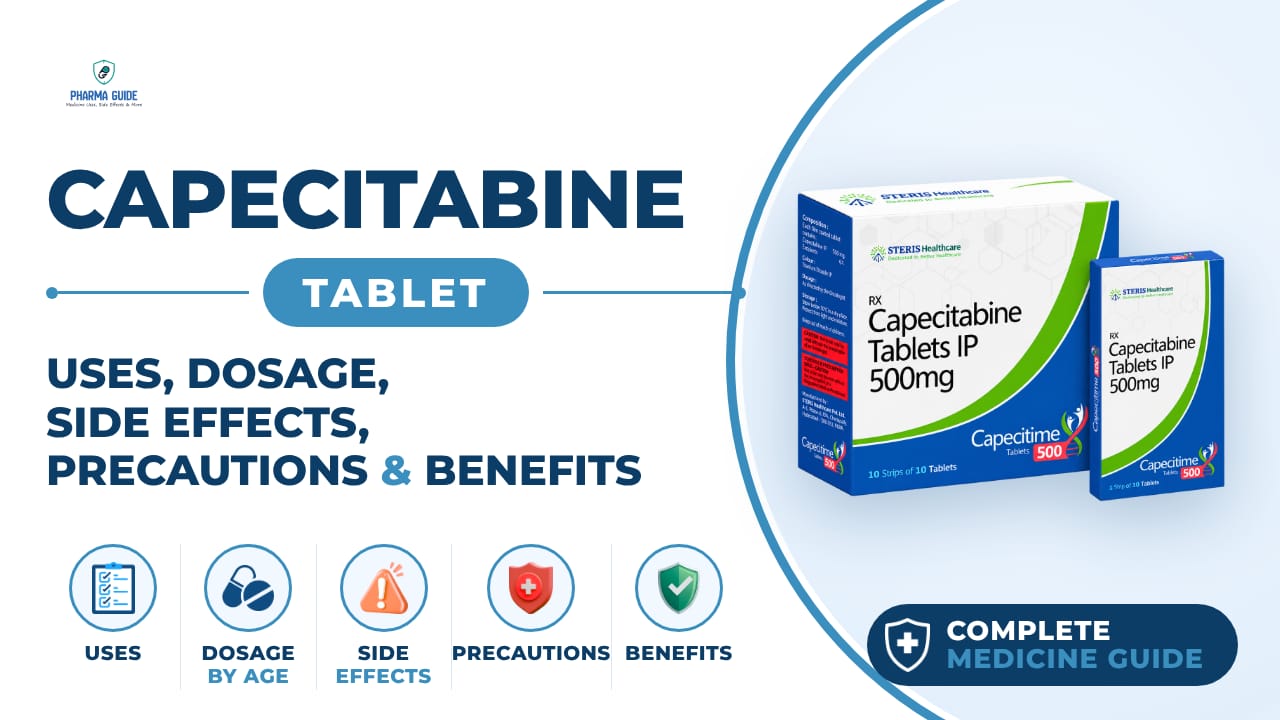
Capecitabine Tablet: Uses, Dosage, Side Effects, Precautions and Alternates
| Generic name | capecitabine |
|---|---|
| Drug class | Nucleoside metabolic inhibitor (antimetabolite, fluoropyrimidine carbamate) |
| Forms | Film-coated tablets, 150 mg, Film-coated tablets, 500 mg |
Quick overview
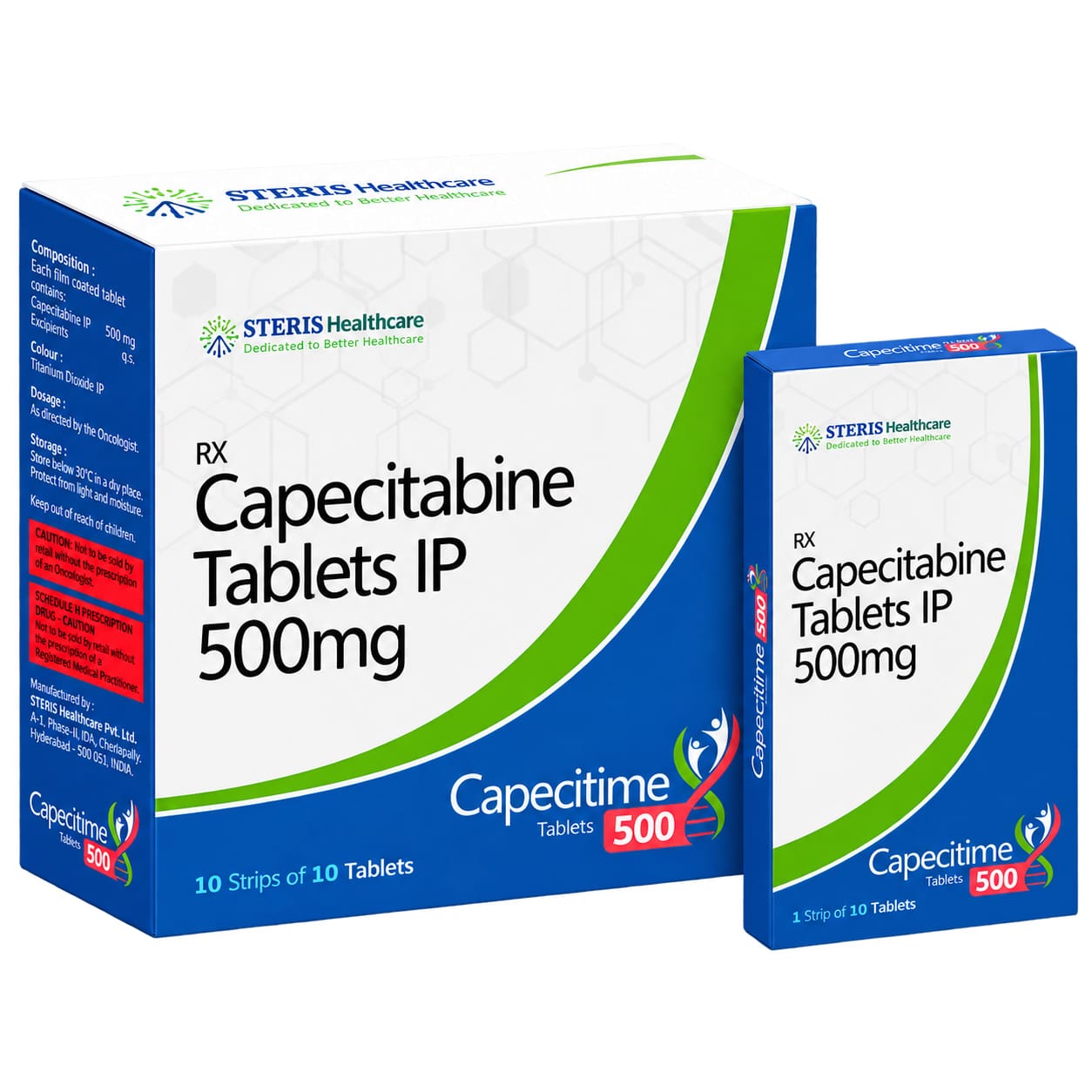
Capecitabine Tablet (capecitabine) is a chemotherapy medicine belonging to the nucleoside metabolic inhibitor class, an antimetabolite fluoropyrimidine carbamate. It is used to treat several types of cancer, including colon, rectal, breast, stomach, esophageal, and pancreatic cancers. The body converts capecitabine into an active cancer-fighting substance that works inside tumor cells. It is taken by mouth in cycles according to a prescribed schedule.
What is Capecitabine Tablet
Capecitabine is a chemotherapy tablet that the body converts into a cancer-fighting medicine. It is used to treat several types of cancer, including colon, rectal, breast, stomach, esophageal, and pancreatic cancers.
Capecitabine Tablet uses
- Adjuvant treatment of Stage III colon cancer, alone or combined with other chemotherapy
- Perioperative treatment of adults with locally advanced rectal cancer as part of chemoradiotherapy
- Treatment of unresectable or metastatic colorectal cancer, alone or combined with other chemotherapy
- Treatment of advanced or metastatic breast cancer alone, when anthracycline or taxane chemotherapy is not suitable
- Treatment of advanced or metastatic breast cancer combined with docetaxel after prior anthracycline-based chemotherapy
- Treatment of unresectable or metastatic gastric, esophageal, or gastroesophageal junction cancer as part of combination chemotherapy
- Treatment of HER2-positive metastatic gastric or gastroesophageal junction cancer as part of combination treatment
- Adjuvant treatment of pancreatic cancer as part of combination chemotherapy
Benefits of Capecitabine Tablet
- Treats certain colorectal cancers
- Treats certain breast cancers
- Used for some gastric, esophageal, and gastroesophageal-junction cancers
- Used in selected pancreatic cancer regimens
- Provides an oral fluoropyrimidine chemotherapy option
How Capecitabine Tablet works
Capecitabine itself is not active. After you swallow it, your body changes it step by step into a substance called 5-fluorouracil (5-FU), which builds up more in tumor tissue than in normal tissue. 5-FU then blocks cancer cells from making the DNA and RNA they need to grow and divide, which causes the cancer cells to die.
Capecitabine Tablet dosage
Swallow tablets whole with water within 30 minutes after a meal. Do not chew, cut, or crush the tablets. Take your two daily doses about 12 hours apart, at the same times each day.
If you vomit after a dose, do not take an extra dose — just continue with your next scheduled dose. If you miss a dose, skip it and continue with your next scheduled dose; do not double up.
Treatment is usually given for a number of days followed by a rest period with no tablets, repeated in cycles. Older adults may be more sensitive to side effects such as diarrhea, nausea, and vomiting and should be watched carefully. Do not take folic acid or folate-containing products during treatment unless your healthcare provider tells you to.
| Age group | Dose |
|---|---|
| 18–39 years | Usually 1,000–1,250 mg/m² twice daily, depending on the cancer regimen |
| 40–64 years | Usually 1,000–1,250 mg/m² twice daily, depending on the cancer regimen |
Available forms and strengths
- Film-coated tablets, 150 mg
- Film-coated tablets, 500 mg
Side effects of Capecitabine Tablet
Common
- Hand-foot syndrome (redness, pain, swelling of palms and soles)
- Diarrhea
- Nausea and vomiting
- Tiredness/fatigue
- Abdominal pain
- Mouth and tongue sores (stomatitis)
- Decreased appetite
- Low red blood cell count (anemia)
- Increased bilirubin (a liver-related blood test)
- Hair loss
- Headache, dizziness, altered taste
Serious
- Heart problems including chest pain, irregular heartbeat, heart attack, heart failure, sudden death
- Severe diarrhea leading to dehydration
- Dehydration and kidney failure
- Severe skin reactions including blistering, peeling skin, Stevens-Johnson Syndrome, and toxic epidermal necrolysis
- Low white blood cell counts leading to serious infection
- Severe bleeding, especially if also taking blood thinners like warfarin
- Severe or life-threatening toxicity in people with dihydropyrimidine dehydrogenase (DPD) enzyme deficiency
- Severe allergic reactions (swelling of face/lips/tongue/throat, difficulty breathing or swallowing)
- Jaundice (yellowing of skin or eyes) from liver problems
Warnings and precautions
- People with a complete deficiency of the DPD enzyme are at high risk of severe or fatal side effects and should not take this medicine. Testing for this enzyme deficiency is recommended before starting treatment.
- Taking this medicine together with blood thinners like warfarin can cause dangerous bleeding or abnormal blood clotting, which can be fatal. Blood clotting tests should be checked more often.
- This medicine can cause serious heart problems, including heart attack, abnormal heart rhythms, and sudden death, especially in people with a history of heart disease.
- Severe dehydration can occur and may lead to kidney failure, which can be fatal. Drink enough fluids and contact your doctor if you have ongoing vomiting, diarrhea, or inability to eat or drink.
- Severe diarrhea can occur and sometimes requires stopping the medicine.
- Serious and sometimes fatal skin reactions can occur, including Stevens-Johnson Syndrome and toxic epidermal necrolysis.
- This medicine can lower blood cell counts, increasing risk of infection, bleeding, and anemia. Blood counts should be checked regularly.
- Accidental exposure to crushed or cut tablets can cause eye irritation, skin rash, and other reactions, so tablets should never be crushed or cut and should be handled carefully.
- Capecitabine can seriously harm an unborn baby and should not be used during pregnancy. Women who can become pregnant should have a pregnancy test before starting treatment and use effective birth control during treatment and for 6 months after the last dose.
- Men should use effective birth control for 3 months after their last dose if their partner could become pregnant.
- Women should not breastfeed during treatment and for 1 week after the last dose because of the risk of serious side effects in a nursing baby.
- People with severe kidney problems should not take this medicine. People with moderate kidney impairment need a lower dose and closer monitoring.
- People with liver problems should be monitored more closely while taking this medicine, since the body's handling of the drug may be affected.
- This medicine can cause dizziness, tiredness, and nausea, which may affect your ability to safely drive or use machines.
Storage
- Store at room temperature between 68°F to 77°F (20°C to 25°C)
- Keep in a tightly closed, light-resistant container
- Keep out of reach of children
- Capecitabine is a hazardous drug; follow special handling and disposal procedures, and ask your pharmacist or healthcare provider how to safely throw away any unused medicine
When to see a doctor
- Get medical help right away if you have severe mouth or throat sores, severe diarrhea, fever, chills, cough or other signs of infection, trouble walking or with balance, or changes in mood, thinking, memory, or sleep.
- Get medical help immediately for signs of bleeding if you are taking a blood thinner together with this medicine.
- Stop the medicine and get emergency help for new chest pain, shortness of breath, dizziness, or lightheadedness, which could signal a heart problem.
- Stop the medicine and call your doctor right away if you have a large increase in bowel movements, bloody diarrhea with severe stomach pain and fever, vomiting more than once a day, or are unable to eat or drink due to nausea.
- Contact your doctor immediately if you develop a skin rash, blistering, or peeling of the skin.
- Call your doctor right away if you have painful numbness, tingling, redness, or swelling of your hands or feet that stops you from doing normal activities.
- Call your doctor right away if you develop a fever of 100.5°F or higher, or other signs of infection, since this can indicate a dangerously low white blood cell count.
- Contact your doctor right away if you notice yellowing of your skin or the whites of your eyes, which can be a sign of liver problems.
- Seek emergency care for signs of a severe allergic reaction, such as hives, swelling of the face, lips, tongue or throat, or trouble swallowing or breathing.
Alternatives
- Fluorouracil (5-FU)
- Oxaliplatin-based regimens
Watch the video
FAQs
What is Capecitabine Tablet used for?
It is used to treat several cancers, including colon, rectal, breast, stomach, esophageal, and pancreatic cancers, either alone or combined with other chemotherapy.
How does Capecitabine Tablet work?
Capecitabine itself is inactive. The body converts it step by step into 5-fluorouracil (5-FU), which builds up more in tumor tissue than normal tissue and blocks cancer cells from making the DNA and RNA they need to grow, causing the cancer cells to die.
How should I take Capecitabine Tablet?
Swallow tablets whole with water within 30 minutes after a meal, without chewing, cutting, or crushing them. Take the two daily doses about 12 hours apart at the same times each day, usually for a number of days followed by a rest period, repeated in cycles.
What are the common side effects of Capecitabine Tablet?
Common side effects include hand-foot syndrome, diarrhea, nausea and vomiting, fatigue, abdominal pain, mouth and tongue sores, decreased appetite, anemia, increased bilirubin, hair loss, headache, dizziness, and altered taste.
Who should not take Capecitabine Tablet?
People with a complete deficiency of the DPD enzyme are at high risk of severe or fatal side effects and should not take this medicine, and testing for this deficiency is recommended before starting treatment. It should also not be used during pregnancy or by people with severe kidney problems.
General information, not medical advice
Your prescriber and the leaflet in your pack know your situation. This page does not.
- Follow your prescriber and the leaflet
- Don't start, stop, or change a dose on your own
- Doses and warnings differ by country and product
Sources
Video
Related medicines

Injectafer Injection: Uses, Dosage, Side Effects, Precautions and Alternates
Iron products
Injectafer (ferric carboxymaltose) treats iron deficiency anemia and heart failure-related iron deficiency via IV. Learn uses, dosage, side effects, and

Gliclazide Tablet: Uses, Dosage, Side Effects, Precautions and Alternates
Sulfonylurea (hypoglycemic/antidiabetic agent)
Gliclazide Tablet is a sulfonylurea for type 2 diabetes that boosts insulin release. Learn about dosage, side effects, warnings, and precautions.