
Safety
General information, not medical advice
Your prescriber and the leaflet in your pack know your situation. This page does not.
- Follow your prescriber and the leaflet
- Don't start, stop, or change a dose on your own
- Doses and warnings differ by country and product
Carac Cream: Uses, Dosage, Side Effects, Precautions and Alternates
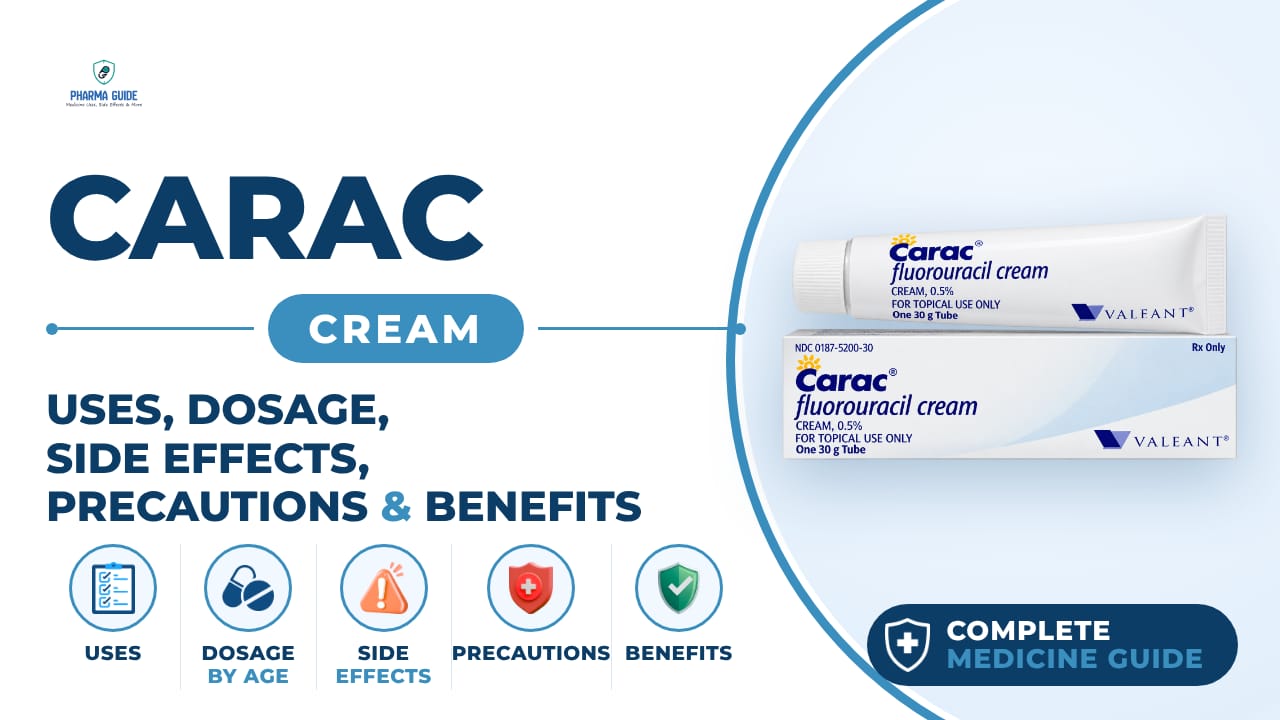
| Generic name | fluorouracil |
|---|---|
| Drug class | Topical antineoplastics (antimetabolite) |
| Forms | Cream |
Quick overview
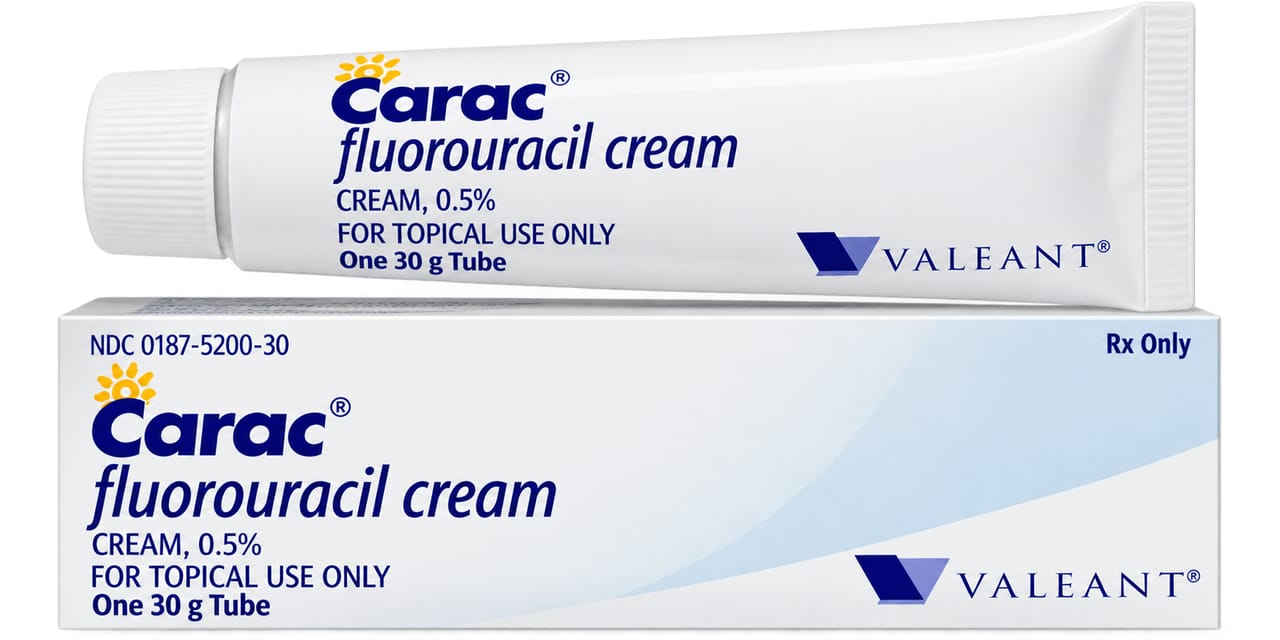
Carac Cream contains fluorouracil, a topical antineoplastic from the antimetabolite class. It is a prescription cream used by adults to treat pre-cancerous actinic (solar) keratosis on the face and front of the scalp, as well as superficial basal cell carcinoma. It is applied once daily directly to the skin and is not intended for use in children or anyone under 18 years old.
What is Carac Cream
Carac Cream is a prescription cream used by adults to treat pre-cancerous skin spots called actinic or solar keratosis on the face and front of the scalp. It is also used for a type of early skin cancer called superficial basal cell carcinoma.
Carac Cream uses
- Treating multiple actinic (solar) keratoses of the face and front of the scalp
- Treating superficial basal cell carcinoma
- Treats actinic keratosis
- Treats solar keratosis
- Targets abnormal sun-damaged skin cells
- Used mainly on the face and anterior scalp
Benefits of Carac Cream
- Can clear pre-cancerous skin lesions after a short course of treatment
- Continuing treatment up to 4 weeks leads to greater clearing of lesions than shorter courses
- Provides once-daily topical treatment
- Targets precancerous sun-damaged cells
- Can treat multiple lesions across an affected area
- Avoids a procedure for some patients
How Carac Cream works
Carac works by interfering with how skin cells make DNA and RNA, which are needed for cells to grow and divide. This effect is strongest on cells that are growing and dividing quickly, such as abnormal skin cells, causing them to die while leaving normal cells less affected.
Carac Cream dosage
Apply Carac only to the skin — do not take it by mouth and do not use it in the eyes, nose, mouth, or on mucous membranes. Clean the treatment area, rinse well, dry with a towel, and wait about 10 minutes before applying the cream. Apply using your fingertips, using just enough to cover the affected area with a thin film, then wash your hands right away after applying. Do not cover the treated skin with a dressing or bandage unless your doctor tells you to.
A moisturizer or sunscreen may be applied about 2 hours after the cream; do not use other skin products, creams, lotions, or cosmetics on the area unless your doctor says it is okay. Avoid sun exposure and tanning beds during treatment, and wear a hat and sunscreen when outdoors.
Carac is not for use in children or anyone under 18 years old. No notable differences in safety or effectiveness were seen in patients 65 and older compared with younger adults.
If you miss an application, apply it when you remember, but skip it if it is almost time for your next dose — do not apply two doses at once.
| Age group | Dose |
|---|---|
| Under 18 years | Safety and effectiveness are not established |
| 18–39 years | Apply a thin film once daily to the prescribed affected area |
| 40–64 years | Apply a thin film once daily |
Available forms and strengths
- Cream
Side effects of Carac Cream
Common
- Skin redness, irritation, and dryness
- Scaling or peeling of skin
- Burning or stinging sensation
- Pain, tenderness, or soreness at the application site
- Swelling of treated skin
- Skin erosion (loss of the top layer of skin)
- Eye irritation (burning, watering, sensitivity, stinging, itching)
- Skin darkening or scarring
- Small blood vessels visible under the skin
- Headache, common cold, or sinus infection (less common)
Serious
- Severe pain or swelling of treated skin
- Severe itching, burning, or irritation
- New or worsening skin sores
- Fever or chills
- Severe stomach pain, bloody diarrhea, or vomiting (possible sign of DPD enzyme deficiency reaction)
- Signs of an allergic reaction: hives, difficulty breathing, swelling of the face, lips, tongue, or throat
Warnings and precautions
- People may have a delayed allergic reaction to fluorouracil, and skin testing may not reliably confirm it.
- Stop using Carac if you develop symptoms of DPD enzyme deficiency, a rare condition that can cause serious, even life-threatening reactions with fluorouracil-containing products.
- Do not apply Carac to the mucous membranes (such as inside the mouth, nose, or eyes), since this can cause inflammation and sores.
- Carac should not be used by anyone with a known DPD enzyme deficiency, since the drug may build up and cause serious toxic effects.
- Carac can be fatal to pets if they lick or swallow it, so keep it and any treated skin, clothing, or surfaces away from animals.
- Carac must not be used during pregnancy or if you may become pregnant, since it can cause serious harm to an unborn baby, including birth defects and miscarriage. Tell your doctor right away if you become pregnant while using it.
- It isn't known whether fluorouracil passes into breast milk. Because of the potential for serious side effects in a nursing baby, you and your doctor should decide whether to stop breastfeeding or stop using Carac.
- No routine renal dose adjustment is established for topical use. No routine hepatic dose adjustment is established. No major direct topical interaction with alcohol is established. Carac is not generally expected to impair driving.
Storage
- Store at room temperature, 68° to 77°F (20° to 25°C)
- Keep away from moisture and heat; do not freeze
- Keep the container tightly closed when not in use
- Keep out of reach of children and pets
- Throw away unused medicine
- Fluorouracil can be fatal to pets if licked or ingested — keep pets away from the tube and from treated skin, and safely discard or clean any cloth or applicator that touched the cream
When to see a doctor
- Get emergency help right away if you have signs of a serious allergic reaction, such as trouble breathing, throat tightness, or swelling of the lips, face, or tongue, or hives.
- Stop using Carac and contact your doctor right away if you develop stomach pain, bloody diarrhea, vomiting, fever, or chills, since these could be signs of a rare but serious reaction linked to a DPD enzyme deficiency.
- Call your doctor if you have severe pain or swelling of treated skin, severe itching, burning, or irritation, or new or worsening skin sores.
- If Carac is accidentally swallowed, seek emergency medical help or contact a poison control service right away.
Alternatives
- Efudex
- Fluorouracil 5% cream
- Imiquimod
- Diclofenac topical gel
Watch the video
FAQs
What is Carac Cream used for?
Carac Cream is a prescription cream used by adults to treat pre-cancerous actinic (solar) keratosis on the face and front of the scalp, as well as superficial basal cell carcinoma.
How is Carac Cream applied?
Clean the treatment area, rinse well, dry with a towel, and wait about 10 minutes before applying. Use your fingertips to apply a thin film once daily to cover the affected area, then wash your hands right away.
Can I use moisturizer or sunscreen with Carac Cream?
A moisturizer or sunscreen may be applied about 2 hours after the cream, but other skin products, creams, lotions, or cosmetics should not be used on the area unless your doctor approves.
What are the serious side effects of Carac Cream?
Serious side effects include severe pain or swelling of treated skin, severe itching or irritation, new or worsening skin sores, fever or chills, and severe stomach pain, bloody diarrhea, or vomiting, which may indicate a DPD enzyme deficiency reaction.
Is Carac Cream safe during pregnancy?
No, Carac must not be used during pregnancy or if you may become pregnant, since it can cause serious harm to an unborn baby, including birth defects and miscarriage.
General information, not medical advice
Your prescriber and the leaflet in your pack know your situation. This page does not.
- Follow your prescriber and the leaflet
- Don't start, stop, or change a dose on your own
- Doses and warnings differ by country and product
Sources
Video
Related medicines

Injectafer Injection: Uses, Dosage, Side Effects, Precautions and Alternates
Iron products
Injectafer (ferric carboxymaltose) treats iron deficiency anemia and heart failure-related iron deficiency via IV. Learn uses, dosage, side effects, and

Gliclazide Tablet: Uses, Dosage, Side Effects, Precautions and Alternates
Sulfonylurea (hypoglycemic/antidiabetic agent)
Gliclazide Tablet is a sulfonylurea for type 2 diabetes that boosts insulin release. Learn about dosage, side effects, warnings, and precautions.