
Safety
General information, not medical advice
Your prescriber and the leaflet in your pack know your situation. This page does not.
- Follow your prescriber and the leaflet
- Don't start, stop, or change a dose on your own
- Doses and warnings differ by country and product
Carafate Tablet: Uses, Dosage, Side Effects, Precautions and Alternates
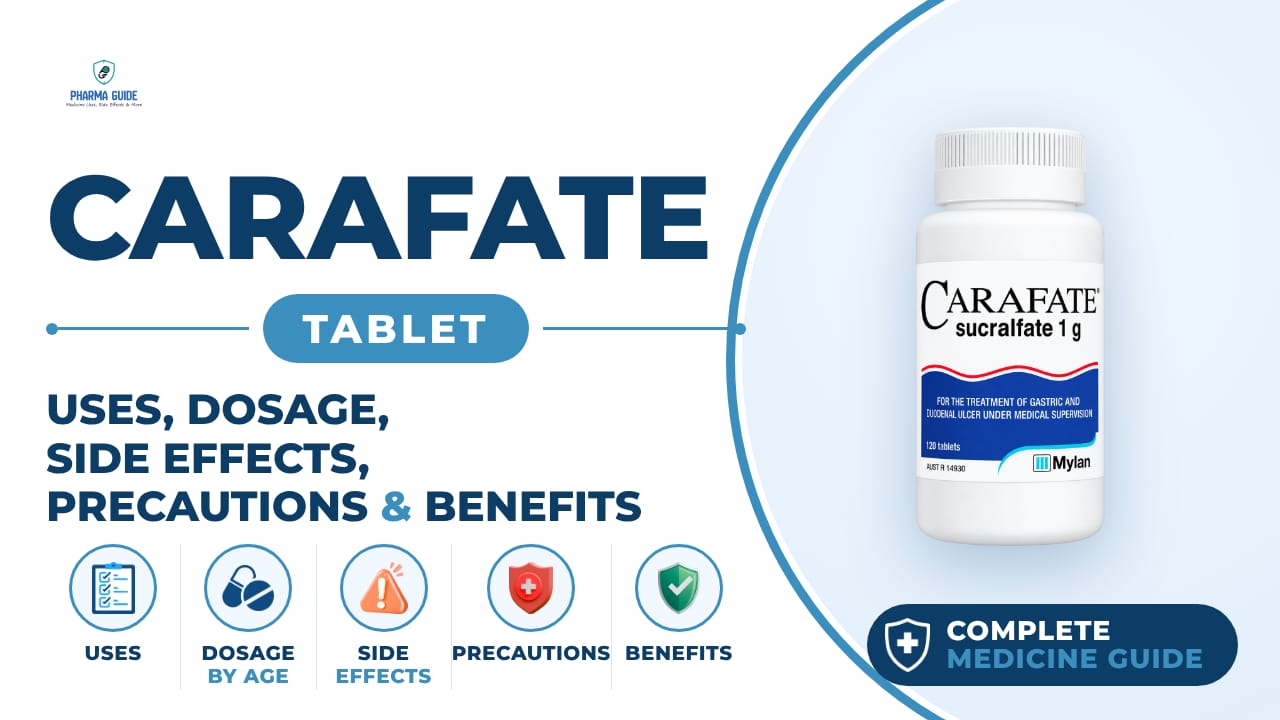
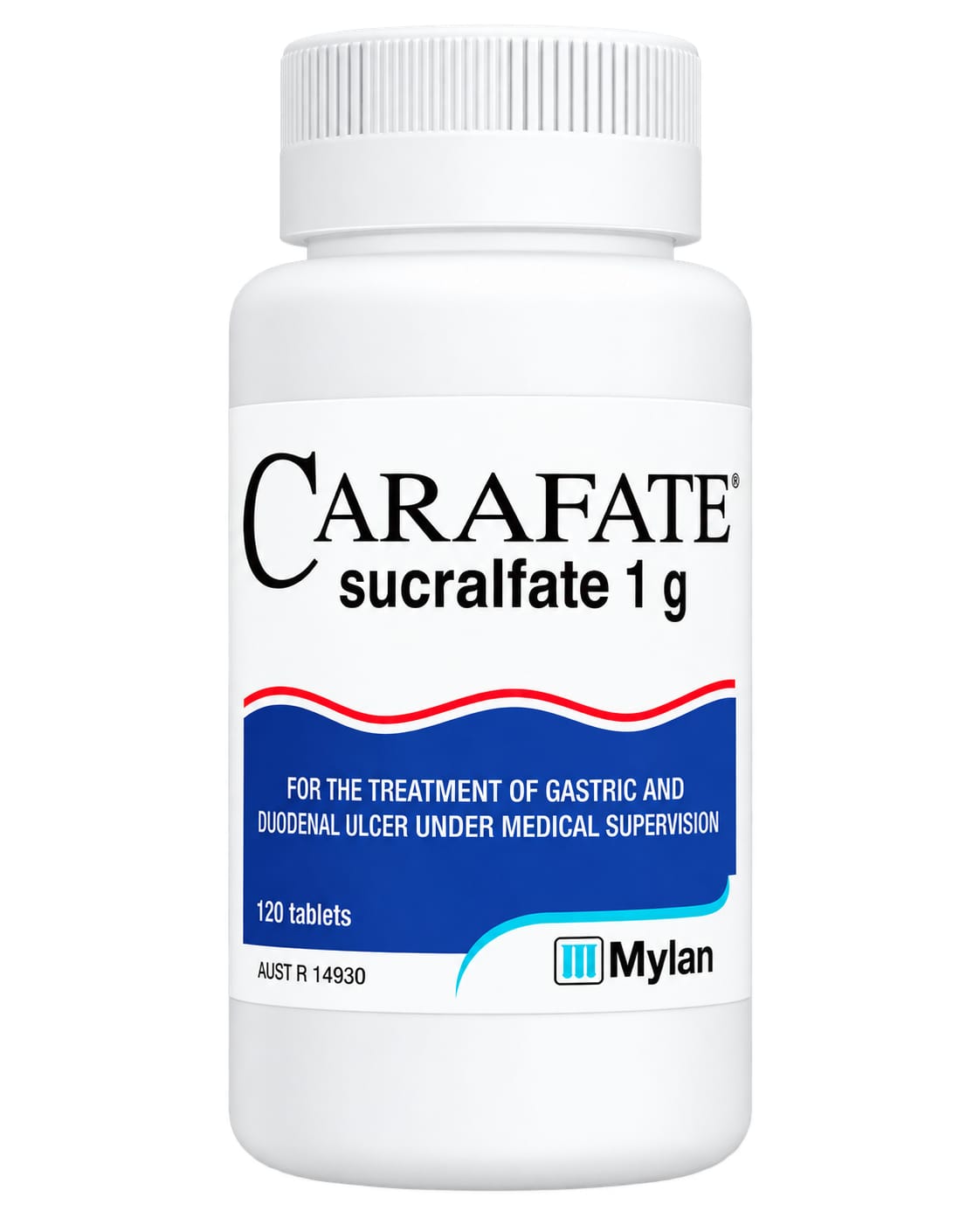
| Generic name | sucralfate |
|---|---|
| Drug class | gastric protectant (antiulcer agent) |
| Forms | Tablet, Oral suspension (liquid) |
Quick overview
Carafate Tablet (sucralfate) is a prescription gastric protectant used to treat active duodenal ulcers and, at a lower dose, to help prevent their recurrence after healing. It comes as a tablet or oral liquid suspension and works mainly within the stomach and gut lining rather than being absorbed into the body. It is typically taken on an empty stomach, spaced apart from other medicines and antacids.
What is Carafate Tablet
Carafate is a prescription medicine used to treat ulcers in the upper part of the small intestine (duodenal ulcers). It comes as a tablet or a liquid suspension and works mainly in the stomach and gut lining rather than being absorbed into the body.
Carafate Tablet uses
- Short-term treatment (up to 8 weeks) of active duodenal ulcer
- Maintenance therapy at a lower dose after a duodenal ulcer has healed, to help reduce the chance of it coming back
- Treats active duodenal ulcers
- Helps protect damaged gastrointestinal lining
- Supports healing of ulcerated tissue
- May be used for maintenance after duodenal-ulcer healing
Benefits of Carafate Tablet
- Forms a protective coating over the ulcer site to shield it from stomach acid, enzymes, and bile salts
- Helps the ulcer heal without being absorbed much into the rest of the body
- May help reduce the recurrence of duodenal ulcers when used as maintenance therapy
How Carafate Tablet works
Carafate works mostly inside the stomach and gut rather than through the bloodstream. It sticks to the ulcer and forms a protective barrier that keeps stomach acid, the digestive enzyme pepsin, and bile salts from causing more damage, which gives the ulcer a chance to heal.
Carafate Tablet dosage
Take this medicine on an empty stomach. Avoid taking other medicines within 2 hours before or after taking Carafate, since it can reduce how well your body absorbs them. If you take antacids for pain relief, do not take them within half an hour before or after your Carafate dose. Shake the oral liquid well before measuring each dose, and use a proper measuring device instead of a kitchen spoon. Continue taking this medicine for the full length of time your doctor prescribes, even if you start feeling better quickly. If you miss a dose, take it as soon as you remember, but skip it if it is almost time for your next dose — do not take two doses at once. Older adults may need a more cautious starting dose because of a higher chance of reduced liver, kidney, or heart function.
| Age group | Dose |
|---|---|
| Under 18 years | Safety and effectiveness are not established; no standard pediatric dose |
| 18–39 years | For active duodenal ulcer: 1 g four times daily on an empty stomach |
| 40–64 years | 1 g four times daily for active duodenal ulcer |
Available forms and strengths
- Tablet
- Oral suspension (liquid)
Side effects of Carafate Tablet
Common
- Constipation
- Diarrhea
- Nausea, vomiting
- Gas, indigestion, stomach discomfort
- Dry mouth
- Itching or rash
- Dizziness or feeling off balance
- Drowsiness or trouble sleeping
- Headache
- Back pain
Serious
- Signs of a severe allergic reaction, such as hives, trouble breathing, or swelling of the face, lips, tongue, or throat
- Racing heart, fever, or swollen lymph nodes during an allergic reaction
- A blockage in the intestines (bezoar) that can cause loss of appetite, feeling full quickly, nausea or vomiting, stomach pain or bloating, or blood in the stool
Warnings and precautions
- The liquid form of this medicine must never be injected into the body — it is meant to be swallowed only, as injection can be fatal.
- People who have trouble swallowing, or conditions that affect the throat or gag reflex, should use the tablets with caution, since there have been reports of tablets being accidentally breathed into the airway and causing breathing problems.
- People with diabetes may experience high blood sugar while using this medicine, so blood sugar should be monitored closely and diabetes medication doses may need adjusting.
- Taking this medicine along with other oral medicines can reduce how well your body absorbs those other medicines, so it's best to space doses apart.
- Pregnancy: It is not known for certain if this medicine is safe during pregnancy. Tell your doctor if you are or plan to become pregnant, so they can weigh the benefits and risks.
- Breastfeeding: It isn't known whether this medicine passes into breast milk, so caution is advised if you are breastfeeding.
- Kidney: People with chronic kidney failure or those on dialysis should use this medicine with caution, since their bodies may have trouble clearing the small amount of aluminum absorbed from the medicine, which can build up and cause toxicity.
- Alcohol: It isn't known whether drinking alcohol affects this medicine.
- Driving: This medicine can cause dizziness, sleepiness, or vertigo. Avoid driving or operating machinery until you know how it affects you.
Storage
- Store at controlled room temperature, between 68°F and 77°F (20°C to 25°C)
- Oral liquid: shake well before using and avoid freezing
- Keep in a cool, dry place away from moisture and heat
- Keep out of reach of children
When to see a doctor
- Get emergency help right away if you have signs of a serious allergic reaction, including hives, difficulty breathing, or swelling of the face, lips, tongue, or throat.
- Call your healthcare provider right away if you notice signs of a blockage in your intestines, such as loss of appetite, feeling full after eating very little, nausea or vomiting, stomach pain or bloating, or blood in your stool.
- If you think you or someone else has taken too much of this medicine, get medical help right away or contact a poison control center.
Alternatives
- Omeprazole
- Esomeprazole
- Pantoprazole
Watch the video
FAQs
What is Carafate Tablet used for?
Carafate is used for short-term treatment (up to 8 weeks) of active duodenal ulcers and, at a lower dose, as maintenance therapy to help reduce the chance of the ulcer coming back after healing.
How does Carafate Tablet work?
Carafate works mostly inside the stomach and gut rather than through the bloodstream. It sticks to the ulcer and forms a protective barrier that keeps stomach acid, pepsin, and bile salts from causing more damage, giving the ulcer a chance to heal.
How should I take Carafate Tablet?
Take it on an empty stomach, and avoid taking other medicines within 2 hours before or after your dose since it can reduce their absorption. If taking antacids for pain, avoid them within half an hour before or after your Carafate dose. Shake the oral liquid well before measuring with a proper device.
What are the common side effects of Carafate Tablet?
Common side effects include constipation, diarrhea, nausea, vomiting, gas, indigestion, stomach discomfort, dry mouth, itching or rash, dizziness, drowsiness or trouble sleeping, headache, and back pain.
What should I do if I miss a dose of Carafate Tablet?
If you miss a dose, take it as soon as you remember, but skip it if it is almost time for your next dose. Do not take two doses at once.
General information, not medical advice
Your prescriber and the leaflet in your pack know your situation. This page does not.
- Follow your prescriber and the leaflet
- Don't start, stop, or change a dose on your own
- Doses and warnings differ by country and product
Sources
Video
Related medicines

Injectafer Injection: Uses, Dosage, Side Effects, Precautions and Alternates
Iron products
Injectafer (ferric carboxymaltose) treats iron deficiency anemia and heart failure-related iron deficiency via IV. Learn uses, dosage, side effects, and

Gliclazide Tablet: Uses, Dosage, Side Effects, Precautions and Alternates
Sulfonylurea (hypoglycemic/antidiabetic agent)
Gliclazide Tablet is a sulfonylurea for type 2 diabetes that boosts insulin release. Learn about dosage, side effects, warnings, and precautions.