
Safety
General information, not medical advice
Your prescriber and the leaflet in your pack know your situation. This page does not.
- Follow your prescriber and the leaflet
- Don't start, stop, or change a dose on your own
- Doses and warnings differ by country and product
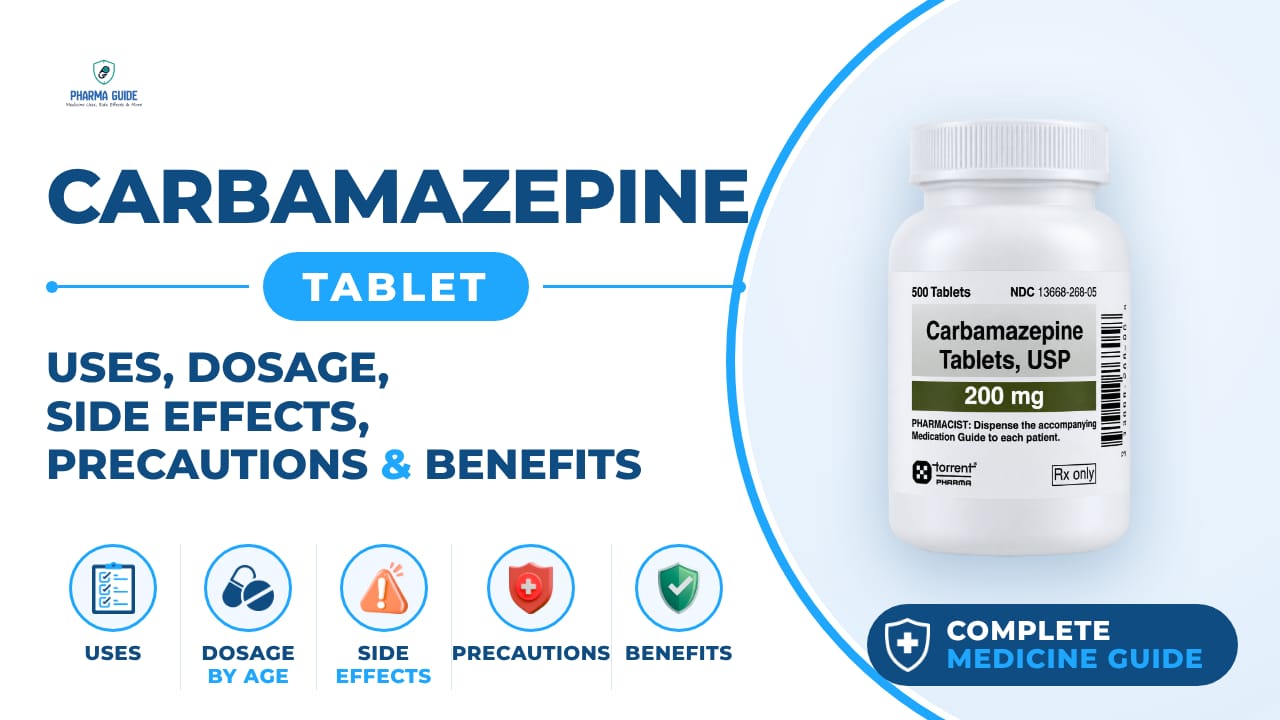
Carbamazepine Tablet: Uses, Dosage, Side Effects, Precautions and Alternates
| Generic name | carbamazepine |
|---|---|
| Drug class | Anticonvulsant (dibenzazepine anticonvulsants) |
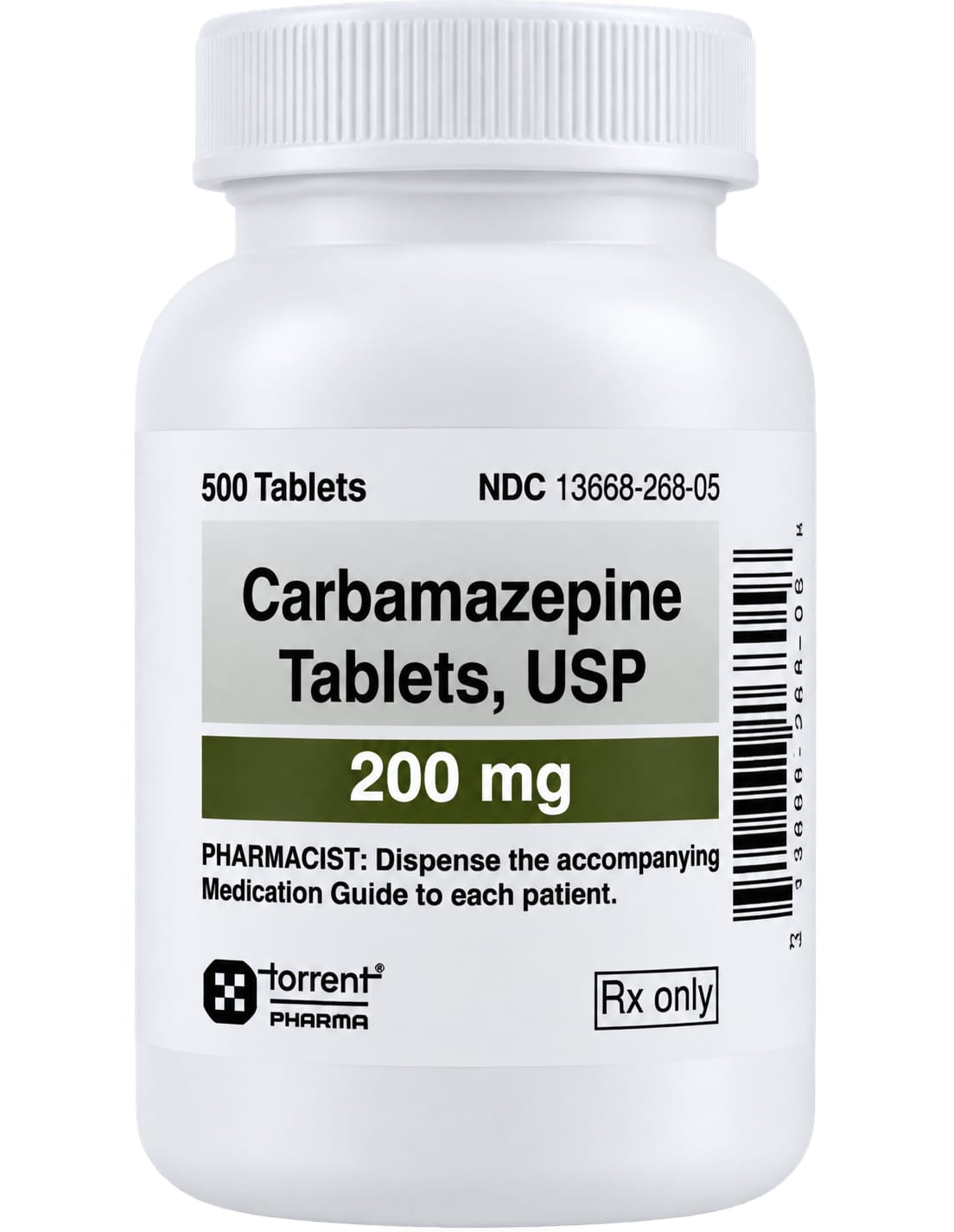
| Forms | Tablet, Extended-release (controlled-release) tablet, Extended-release capsule, Chewable tablet, Oral suspension (liquid) |
Quick overview
Carbamazepine Tablet (generic name: carbamazepine) is an anticonvulsant medicine used to help control seizures, treat certain types of nerve pain such as trigeminal neuralgia and diabetic neuropathy, and manage mood disorders like bipolar disorder. It works by calming overactive electrical signals in the brain and nerves. It comes in several forms, including regular tablets, extended-release tablets and capsules, chewable tablets, and an oral suspension, and should be taken exactly as prescribed by a doctor.
What is Carbamazepine Tablet
Carbamazepine is an anticonvulsant medicine belonging to the dibenzazepine anticonvulsant class. It is used to help control seizures, treat certain types of nerve pain, and manage mood disorders like bipolar disorder.
Carbamazepine Tablet uses
- Controlling certain types of seizures (epilepsy)
- Treating trigeminal neuralgia, a condition that causes facial nerve pain
- Treating episodes of mania or mixed episodes in people with bipolar disorder
- Treating diabetic neuropathy (nerve pain)
Benefits of Carbamazepine Tablet
- Reduces the number of seizures a person experiences
- Relieves the pain of trigeminal neuralgia, often within 24 to 48 hours
- Helps control acute mania and can help prevent future manic episodes in bipolar disorder
How Carbamazepine Tablet works
Carbamazepine works by calming down overactive electrical signals in the brain and nerves. This helps prevent seizures, reduces nerve pain, and can help stabilize mood.
Carbamazepine Tablet dosage
Take carbamazepine exactly as your doctor directs — do not take more, less, or more often than prescribed. Take the regular tablets with food; extended-release capsules can be taken with or without food. Swallow extended-release tablets whole — do not crush, chew, or split them. Chewable tablets must be chewed before swallowing. Shake the oral suspension (liquid) well before measuring each dose, and use a proper dosing device rather than a kitchen spoon. Do not take the oral suspension at the same time as other liquid medicines.
Try to take your doses at the same times every day and space them evenly through the day. It may take several weeks before you notice the full benefit of this medicine. Keep taking this medicine even if you feel well — do not stop without talking to your doctor first. Elderly patients are usually started on a lower dose due to differences in how the body processes the drug.
| Age group | Dose |
|---|---|
| Under 6 Years | Usually 10–20 mg/kg/day in divided doses (under doctor supervision) |
| 6–12 Years | Usually 100 mg twice daily initially; adjusted as needed |
| 13–17 Years | Usually 100–200 mg twice daily; adjusted based on response |
| Adults (18–64 Years) | Usually 200 mg once or twice daily initially; maintenance varies |
| Older Adults (65+ years) | Usually lower starting dose; adjusted carefully |
Available forms and strengths
- Tablet
- Extended-release (controlled-release) tablet
- Extended-release capsule
- Chewable tablet
- Oral suspension (liquid)
Side effects of Carbamazepine Tablet
Common
- Dizziness
- Drowsiness or sleepiness
- Loss of coordination or problems with walking
- Nausea and vomiting
- Difficulty speaking or slurred speech
- Uncontrollable shaking of a part of the body
- Constipation
- Dry mouth
Serious
- Skin rash, no matter how mild, or a severe rash with blistering and peeling
- Fever, sore throat, chills, mouth sores, or other signs of infection
- Unusual bleeding or bruising, nosebleeds, bleeding gums, tiny red or purple spots on the skin
- Yellowing of the skin or eyes, dark urine, loss of appetite, right-sided upper stomach pain
- Slow, fast, or pounding heartbeats
- Swelling of the face, eyes, lips, or tongue, and difficulty breathing or swallowing
- Headache, confusion, severe weakness, feeling unsteady, or increased seizures (signs of low sodium levels)
- Swollen glands, joint pain, muscle aches, or severe weakness
- Thoughts of suicide or self-harm, new or worsening depression, anxiety, agitation, or behavior changes
Warnings and precautions
- Carbamazepine can harm an unborn baby and increases the chance of birth defects. However, having a seizure during pregnancy can also harm both mother and baby, so your doctor will weigh the benefits and risks. Tell your doctor right away if you become pregnant or are planning to become pregnant.
- You generally should not breastfeed while taking carbamazepine, since it passes into breast milk and can cause side effects in the baby. Talk with your doctor about the risks and benefits.
- Tell your doctor if you have kidney disease or kidney problems linked with low sodium levels, since this medicine may need closer monitoring in that case.
- Carbamazepine should not be used by people with liver disease, since it can cause serious liver problems including liver failure. Your doctor will check your liver function before and during treatment.
- Avoid drinking alcohol while taking this medicine, as it can increase drowsiness and dizziness and raise your risk of seizures.
- Do not drive or operate machinery until you know how this medicine affects you, since it can cause dizziness, drowsiness, blurred or double vision, and problems with coordination.
- Carbamazepine can cause serious, sometimes fatal, skin reactions such as Stevens-Johnson syndrome and toxic epidermal necrolysis. The risk is higher in people of Asian ancestry, and your doctor may recommend a blood test before starting treatment.
- This medicine can lower the number of blood cells your body makes, which in rare cases can be serious or life-threatening. You will need regular blood tests during treatment.
- Do not stop taking this medicine suddenly, even if you feel fine, because this can cause increased seizures. Any changes to your dose should be made gradually under your doctor's guidance.
- Some people taking seizure medicines like this one have had thoughts of suicide or self-harm. Stay alert to changes in mood or behavior and tell your doctor about anything new or concerning.
- Avoid grapefruit and grapefruit juice while taking this medicine, as it can increase the amount of the drug in your blood and raise your risk of side effects.
- This medicine can make you more likely to sunburn. Protect your skin with clothing and sunscreen and avoid tanning beds.
- This medicine can make hormonal birth control (like the pill) less effective. Use a barrier method like condoms in addition to your regular birth control.
- Taking this medicine may increase your risk of falls due to dizziness, drowsiness, low blood pressure, or confusion, which can lead to fractures or other injuries.
Storage
- Store at room temperature away from moisture, heat, and light
- Keep out of the reach and sight of children
- Dispose of unneeded medication through a medicine take-back program rather than throwing it in household trash or flushing it
When to see a doctor
- Call your doctor right away if you have a fever, unusual weakness, bleeding, bruising, or a skin rash that causes blistering and peeling.
- Get emergency medical help if you notice signs of an allergic reaction such as hives, difficulty breathing, or swelling of the face or throat, or a severe skin reaction with fever, sore throat, or skin that blisters and peels.
- Seek medical care if you notice a serious reaction affecting many parts of the body, such as skin rash, fever, swollen glands, muscle aches, severe weakness, unusual bruising, or yellowing of your skin or eyes.
- Get immediate medical help if you or someone you are caring for has thoughts of suicide or harming themselves.
- Contact your doctor immediately if you develop signs of infection such as sore throat, fever, chills, or if you notice unusual bleeding or bruising, or shortness of breath.
- If you think you or someone else has taken too much of this medicine, seek emergency medical attention or contact your local poison control center right away, even if there are no symptoms.
Alternatives
- Lamotrigine
- Levetiracetam
- Topiramate
Watch the video
FAQs
What is Carbamazepine Tablet used for?
It is used to control certain types of seizures (epilepsy), treat trigeminal neuralgia (facial nerve pain), treat episodes of mania or mixed episodes in bipolar disorder, and treat diabetic neuropathy (nerve pain).
How quickly does carbamazepine relieve trigeminal neuralgia pain?
It often relieves the pain of trigeminal neuralgia within 24 to 48 hours.
Can I drink alcohol while taking carbamazepine?
No, you should avoid drinking alcohol while taking this medicine, as it can increase drowsiness and dizziness and raise your risk of seizures.
Does carbamazepine affect hormonal birth control?
Yes, carbamazepine can make hormonal birth control, like the pill, less effective, so you should use a barrier method such as condoms in addition to your regular birth control.
Can I stop taking carbamazepine suddenly if I feel fine?
No, you should not stop taking carbamazepine suddenly, even if you feel fine, because this can cause increased seizures. Any dose changes should be made gradually under your doctor's guidance.
General information, not medical advice
Your prescriber and the leaflet in your pack know your situation. This page does not.
- Follow your prescriber and the leaflet
- Don't start, stop, or change a dose on your own
- Doses and warnings differ by country and product
Sources
Video
Related medicines

Injectafer Injection: Uses, Dosage, Side Effects, Precautions and Alternates
Iron products
Injectafer (ferric carboxymaltose) treats iron deficiency anemia and heart failure-related iron deficiency via IV. Learn uses, dosage, side effects, and

Gliclazide Tablet: Uses, Dosage, Side Effects, Precautions and Alternates
Sulfonylurea (hypoglycemic/antidiabetic agent)
Gliclazide Tablet is a sulfonylurea for type 2 diabetes that boosts insulin release. Learn about dosage, side effects, warnings, and precautions.