
Safety
General information, not medical advice
Your prescriber and the leaflet in your pack know your situation. This page does not.
- Follow your prescriber and the leaflet
- Don't start, stop, or change a dose on your own
- Doses and warnings differ by country and product
Carbimazole Tablet: Uses, Dosage, Side Effects, Precautions and Alternates
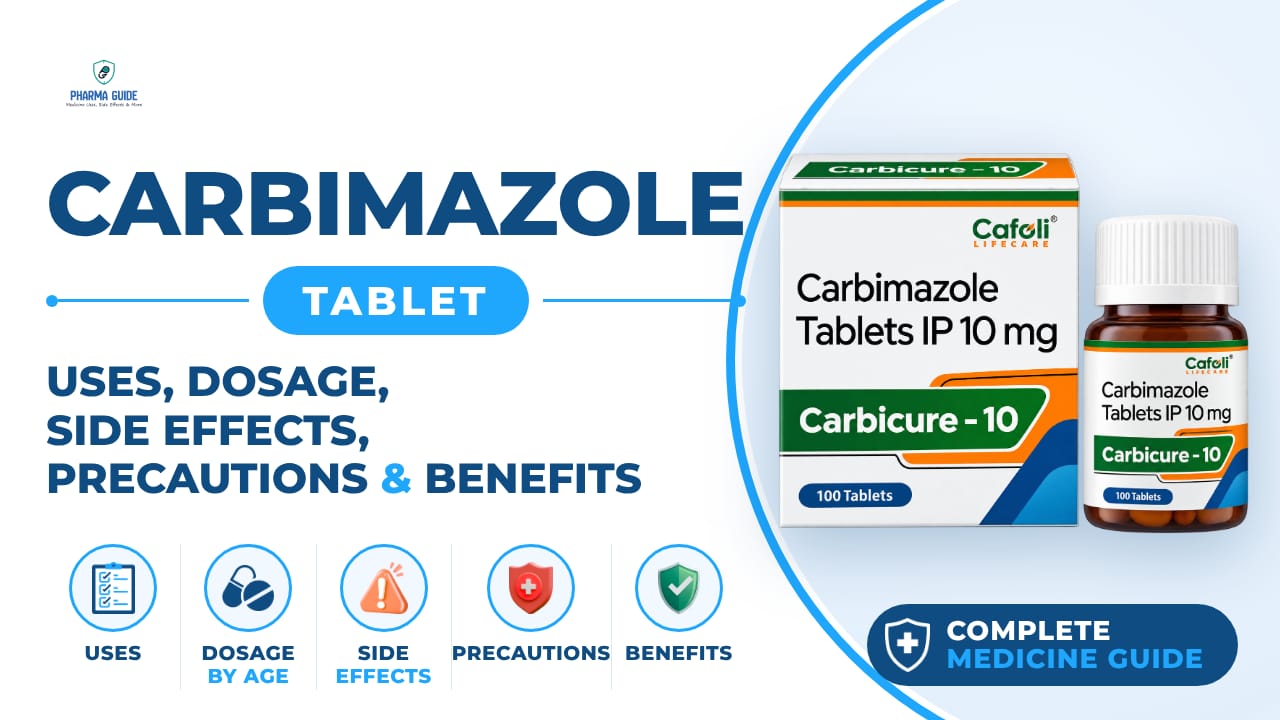
| Generic name | Carbimazole |
|---|---|
| Drug class | Anti-thyroid medicine (thionamide/sulfur-containing imidazole derivative) |
| Forms | Tablet |
Quick overview
Carbimazole Tablet contains carbimazole, an anti-thyroid medicine used to treat an overactive thyroid gland (hyperthyroidism). The body converts it into its active form, methimazole, which reduces the amount of thyroid hormones the thyroid gland makes. It is used in adults and children, often alongside other treatments such as surgery, radio-iodine therapy, or beta blockers. Dosage depends on age and thyroid hormone levels, and the medicine carries specific warnings around pregnancy, liver function, and certain serious side effects.
What is Carbimazole Tablet
Carbimazole is an anti-thyroid medicine used to treat an overactive thyroid gland. It is changed by the body into its active form, methimazole, which reduces the amount of thyroid hormones the thyroid gland makes.
Carbimazole Tablet uses
- Treating hyperthyroidism (an overactive thyroid gland) in adults and children
- Controlling excess thyroid hormones that cause weight loss, mood swings, and irritability
- Stabilising thyroid gland function before thyroid surgery
- Used together with other treatments for hyperthyroidism, such as before and after radio-iodine treatment
- Used with beta blockers to manage symptoms like a rapid heartbeat
Benefits of Carbimazole Tablet
- Helps lower thyroid hormone levels and ease symptoms like mood changes, sudden weight loss, and a fast heartbeat
- Can help restore normal thyroid gland function before surgery
- Hyperthyroidism Control: Reduces excessive thyroid hormone production
- Graves' Disease Management: Helps control an overactive thyroid caused by Graves' disease
How Carbimazole Tablet works
After you swallow the tablet, your body converts carbimazole into its active form, methimazole. Methimazole blocks an enzyme called thyroid peroxidase, which is needed to make thyroid hormones. This lowers the amount of the hormones T3 and T4 that your thyroid gland produces.
Carbimazole Tablet dosage
Take the tablets by mouth, swallowing them whole with water. They can be taken before, after, during, or without meals. Your doctor may divide your daily dose into two (morning and evening) or three doses (morning, noon, and night) spaced evenly through the day. The tablet has a score line only to help you break it if you have trouble swallowing it whole, not to split it into equal doses. Do not change your dose without talking to your doctor first. This medicine is not for use in children under two years old.
If you take too much, contact your doctor or nearest hospital emergency department right away and bring the container and any remaining tablets with you. If you forget a dose, take it as soon as you remember; if your next dose is due soon, take both doses together.
| Age group | Dose |
|---|---|
| Children | Dose is weight-based and adjusted according to thyroid hormone levels |
| Adults (18–64 Years) | Usually 15–40 mg/day initially, then reduced according to thyroid function |
| Older Adults (65+ Years) | Usually a lower individualized dose, based on thyroid function and medical condition |
| Pregnancy | Dose should be determined by a specialist; the lowest effective dose is generally used |
Available forms and strengths
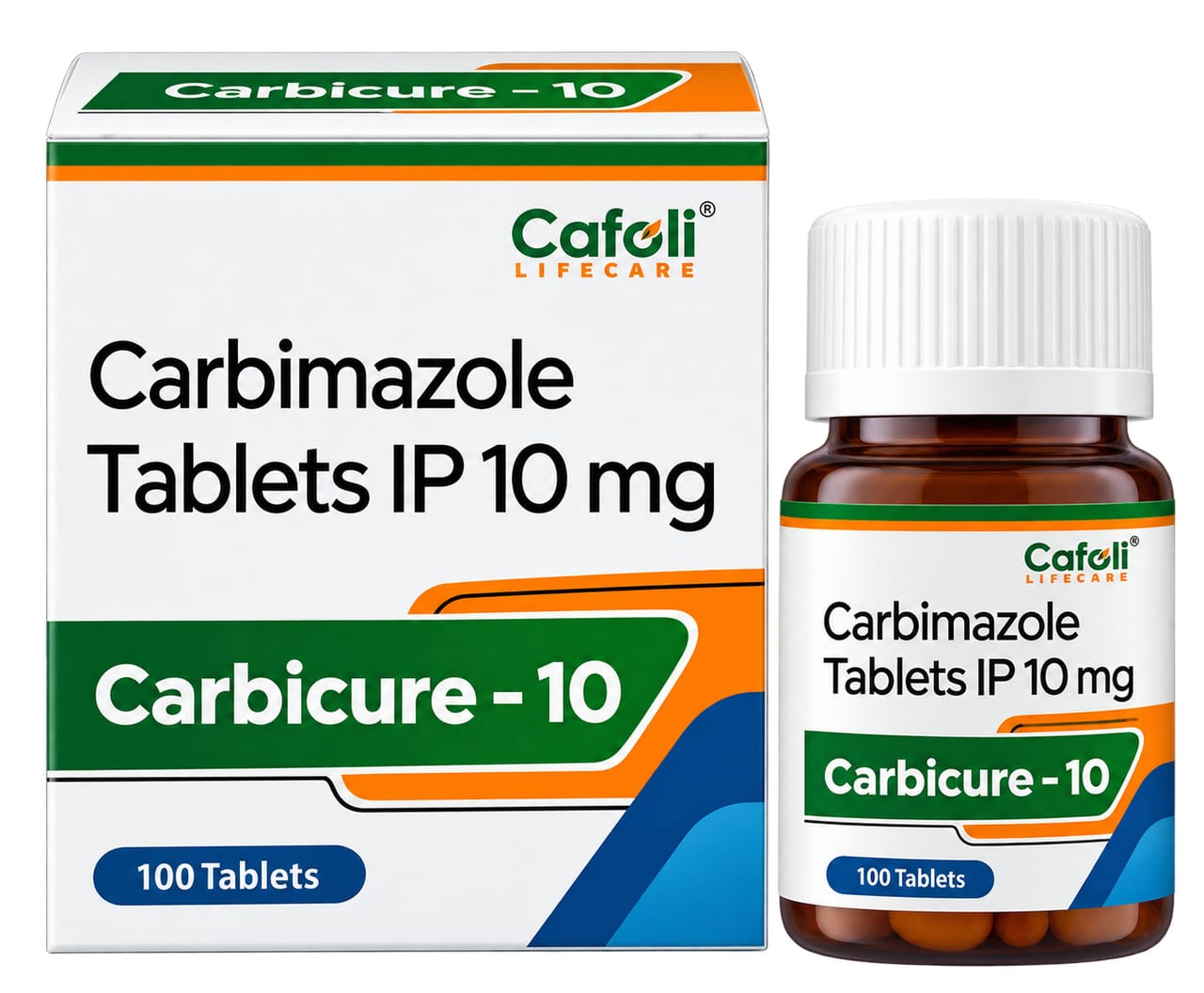
Carbimazole is available as a tablet.
Side effects of Carbimazole Tablet
Common
- Nausea/feeling sick
- Headache
- Joint pain
- Mild skin rashes, including nettle rash (urticaria)
- Hair thinning or hair loss
- Itching
- Stomach upset
- Loss of taste
- Drowsiness
Serious
- Signs of infection such as sore throat, fever, or mouth ulcers
- Significant tiredness
- Increased bruising or bleeding tendency
- Feeling generally unwell
- Yellowing of skin or eyes, or dark urine (possible liver problems)
- Muscle pain or weakness
- Nerve pain
- Swelling of lymph nodes or glands in the mouth
- Feeling faint (low blood sugar)
- Kidney problems, such as reduced urine, fluid retention, or blood in urine
- Sudden rash, swelling, or difficulty breathing (allergic reaction)
- Stevens-Johnson syndrome (blistering of skin, mouth, eyes, and genitals)
- Angioedema (swollen tongue, lips, face, or throat)
- Bone marrow depression, which lowers blood cell counts and can become life-threatening if untreated
- Inflammation of the pancreas (acute pancreatitis), with fever or abdominal pain
- Lung problems, such as shortness of breath or cough
Warnings and precautions
- Carbimazole can harm an unborn baby. If you could become pregnant, use reliable contraception during treatment. Tell your doctor if you are or might be pregnant; treatment may need to continue with the lowest possible dose if the benefits outweigh the risks, and may be stopped three to four weeks before your due date.
- You should not breastfeed while using carbimazole, because small amounts of the medicine may pass into breast milk.
- Talk to your doctor before taking carbimazole if you have mild or moderate liver problems. Do not take it at all if you have a severe liver disorder.
- You can drive while taking carbimazole, but do not drive until you know how the medicine affects you.
- Do not take carbimazole if you are allergic to it or any of its ingredients, have a serious blood disorder, have a severe liver disorder, or previously had pancreas inflammation (acute pancreatitis) after taking carbimazole or thiamazole.
- Tell your doctor right away if you get a fever or abdominal pain, as these may be signs of pancreas inflammation, and carbimazole may need to be stopped.
- Carbimazole tablets contain lactose. If you have been told you are intolerant to some sugars, talk to your doctor before taking this medicine.
- Do not stop taking carbimazole on your own without consulting your doctor first, even if you feel unwell.
Storage
- Keep this medicine out of the sight and reach of children
- Do not use after the expiry date shown on the label, carton, or blister after EXP; the expiry date refers to the last day of that month
- Store below 25°C (one source states no special storage conditions are needed; store in the original package to protect from moisture)
- Do not use if you notice any change in the appearance of the tablets
- Do not throw away medicines via wastewater or household waste; ask your pharmacist how to dispose of medicines you no longer use
When to see a doctor
- Stop taking carbimazole and see a doctor immediately if you notice a sudden rash, swelling, or difficulty breathing, which could be signs of an allergic reaction.
- Stop taking carbimazole and see a doctor right away if you get a sore throat, mouth ulcers, high fever, extreme tiredness, easy bruising or bleeding, or feel generally unwell or think you may have an infection.
- Contact your doctor immediately if you notice muscle pain or weakness, nerve pain, swollen glands, feeling faint, or yellowing of your skin or eyes, as these could signal muscle, liver, or kidney problems.
- If you take more carbimazole than you should, contact your doctor or the nearest hospital emergency department right away and bring the container and any remaining tablets with you.
Alternatives
- Methimazole
- Radioactive Iodine
- Beta Blockers
Watch the video
FAQs
What is Carbimazole Tablet used for?
It is used to treat hyperthyroidism (overactive thyroid) in adults and children, often alongside surgery, radio-iodine therapy, or beta blockers to control symptoms like weight loss, mood swings, and rapid heartbeat.
How does Carbimazole Tablet work?
The body converts carbimazole into its active form, methimazole, which blocks the enzyme thyroid peroxidase needed to make thyroid hormones, lowering T3 and T4 levels.
What is the usual dose of Carbimazole for adults?
Adults aged 18–64 usually start with 15–40 mg per day, which is then reduced according to thyroid function, while older adults typically need a lower, individualized dose.
Can I take Carbimazole Tablet during pregnancy?
Carbimazole can harm an unborn baby, so reliable contraception should be used if you could become pregnant. If pregnant, treatment may continue at the lowest effective dose under specialist care and may be stopped three to four weeks before the due date.
What serious side effects should prompt me to see a doctor?
Seek immediate medical help for signs of infection like sore throat or fever, easy bruising or bleeding, yellowing of skin or eyes, muscle pain or weakness, swollen glands, feeling faint, or signs of an allergic reaction such as rash, swelling, or difficulty breathing.
General information, not medical advice
Your prescriber and the leaflet in your pack know your situation. This page does not.
- Follow your prescriber and the leaflet
- Don't start, stop, or change a dose on your own
- Doses and warnings differ by country and product
Sources
Video
Related medicines

Injectafer Injection: Uses, Dosage, Side Effects, Precautions and Alternates
Iron products
Injectafer (ferric carboxymaltose) treats iron deficiency anemia and heart failure-related iron deficiency via IV. Learn uses, dosage, side effects, and

Gliclazide Tablet: Uses, Dosage, Side Effects, Precautions and Alternates
Sulfonylurea (hypoglycemic/antidiabetic agent)
Gliclazide Tablet is a sulfonylurea for type 2 diabetes that boosts insulin release. Learn about dosage, side effects, warnings, and precautions.