
Safety
General information, not medical advice
Your prescriber and the leaflet in your pack know your situation. This page does not.
- Follow your prescriber and the leaflet
- Don't start, stop, or change a dose on your own
- Doses and warnings differ by country and product
Carbomer Eye Gel: Uses, Dosage, Side Effects, Precautions and Alternates
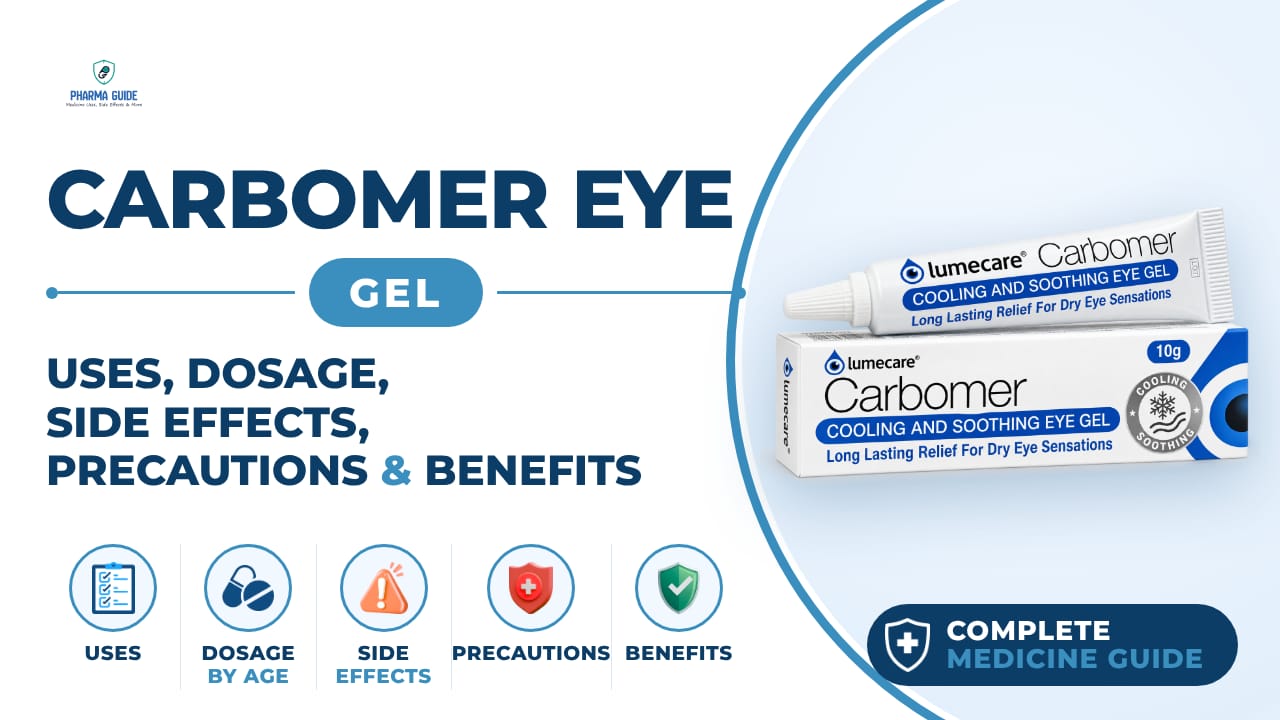
| Generic name | Carbomer |
|---|---|
| Drug class | Eye lubricant |
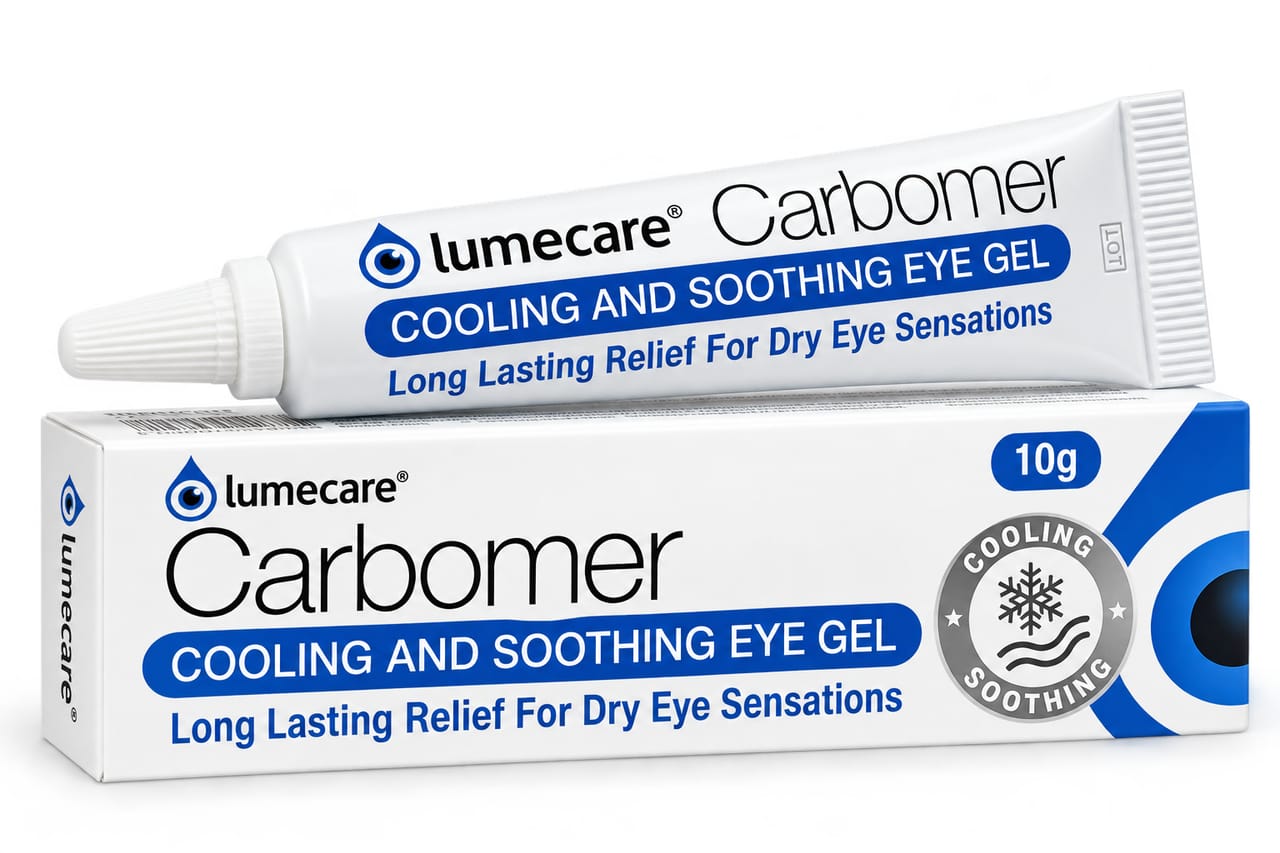
| Forms | Liquid eye gel in tubes, Single-dose (single-use) vials/containers |
Quick overview
Carbomer Eye Gel is a sterile, transparent gel that acts as an artificial tear, lubricating the eye surface to relieve dryness, grittiness, and irritation. It belongs to the eye lubricant drug class and forms a long-lasting protective film over the eye after blinking. It is used to manage dry eye caused by environmental factors, contact lens wear, allergies, or conjunctivitis.
What is Carbomer Eye Gel
Carbomer Eye Gel is a sterile, transparent gel used in the eye. It acts as an artificial tear, spreading over the surface of the eye when you blink to lubricate it and relieve dryness.
Carbomer Eye Gel uses
- Relief of dry eye sensation and soreness
- Relief of grittiness, itchiness, burning and foreign body sensation in the eyes
- Managing dry eye symptoms caused by environmental factors such as air conditioning, wind, pollution, or prolonged screen or computer use
- Managing dry eye linked to contact lens wear, allergies, or conjunctivitis
Benefits of Carbomer Eye Gel
- Forms a long-lasting protective film that lubricates and soothes the eye surface
- Gives lasting relief from dryness, irritation, and discomfort compared with simple watery eye drops because it stays on the eye longer
- Provides longer-lasting lubrication than many thin artificial tears
- May reduce the need for very frequent eye-drop use
- Soothes dry-eye discomfort
How Carbomer Eye Gel works
Carbomer is a water-binding polymer that forms a gel-like film over the eye. It sticks to the moist surface of the eye and releases water to add to the tear film, which lubricates the eye and helps protect it from drying out.
Carbomer Eye Gel dosage
Wash and dry your hands before use. Tilt your head back and pull down the lower eyelid to form a pocket, then release a drop into the eye without touching your eye with the tip of the container. Blink a few times after applying to help spread the gel over the eye. Wipe away any excess gel from around the eyelids with a clean, lint-free tissue.
If you wear soft contact lenses, remove them before use and wait about 15 to 30 minutes before putting them back in, unless your doctor says otherwise. If you use other eye drops or ointments, leave about 10 to 15 minutes between products and apply the carbomer gel last so it stays in contact with the eye longer.
If you forget a dose, use it when you remember; do not use extra to make up for a missed one. Do not share your eye gel with anyone else. Temporary blurring of vision can occur after use, so wait until your vision is clear before driving or using machinery or tools.
| Age group | Dose |
|---|---|
| Children | Usually 1 drop in the affected eye(s) as needed |
| 12–64 years | Commonly 1 drop in the affected eye(s) 3–4 times daily or as needed |
| 65–74 years | Same usual adult dosing; no routine age-based adjustment |
Available forms and strengths
- Liquid eye gel in tubes
- Single-dose (single-use) vials/containers
Side effects of Carbomer Eye Gel
Common
- Mild burning, stinging, or itching sensation in the eye that passes quickly
- Temporary blurred vision right after use
- Sticky eyelids
Serious
- Eye redness
- Increased tearing or eye swelling
- Mild pain
- Allergic reactions causing swelling and redness around the eye
Warnings and precautions
- Tell your doctor, pharmacist, or optician before using this if you have any other eye disorder, are allergic to any ingredient in the product, or are using any other eye medicines.
- Do not touch your eye or any other surface with the tip of the applicator, as this could contaminate the product.
- Remove contact lenses before using the gel, and for most products wait at least 15 to 30 minutes before putting them back in, since the preservative can affect soft contact lenses.
- If using other eye drops or treatments, space them out from this gel and use this gel last so it stays on the eye longer.
- If you are pregnant, talk to your doctor, pharmacist, or optician before using this product.
- If you are breastfeeding, talk to your doctor, pharmacist, or optician before using this product.
- No kidney-specific dose adjustment is required because systemic absorption is minimal.
- No liver-specific dose adjustment is generally required.
- No known direct interaction with carbomer eye gel. Alcohol generally does not affect how the gel works, but excessive alcohol may worsen dehydration and dry-eye symptoms in some people.
- This gel can cause temporary blurred vision after use. Do not drive, use tools, or operate machinery until your vision is clear again.
Storage
- Store out of the reach and sight of children
- Do not store above 25°C
- Do not use after the expiry date on the tube
- Discard the contents 28 days after first opening a multi-dose tube
- Single-dose units should be used immediately and the remaining content must be used within 12 hours of first opening, or discarded right after use
- Store in a cool, dry place, away from direct heat and light
When to see a doctor
- If your eye condition does not improve or gets worse, see your doctor or optician.
- If side effects such as irritation or stinging continue or get worse, contact your doctor promptly.
- If you think someone has swallowed some of the gel by accident, go to the emergency department of your local hospital and take the container with you, even if it is empty.
Alternatives
- Carboxymethylcellulose eye drops
- Hypromellose eye drops
- Sodium hyaluronate eye drops
- Lubricating eye ointment
Watch the video
FAQs
What is Carbomer Eye Gel used for?
It relieves dry eye sensation, soreness, grittiness, itchiness, burning, and foreign body sensation caused by environmental factors, contact lens wear, allergies, or conjunctivitis.
How often should I use Carbomer Eye Gel?
Adults and children aged 12-64 years commonly use 1 drop in the affected eye 3-4 times daily or as needed, while children usually use 1 drop as needed.
Can I wear contact lenses while using Carbomer Eye Gel?
You should remove soft contact lenses before use and wait about 15 to 30 minutes before putting them back in, since the preservative can affect soft contact lenses.
Does Carbomer Eye Gel cause blurred vision?
Yes, temporary blurred vision can occur right after use, so you should wait until your vision clears before driving or operating machinery or tools.
How long can I use a tube of Carbomer Eye Gel after opening?
A multi-dose tube should be discarded 28 days after first opening, while single-dose units should be used immediately and any remaining content used within 12 hours or discarded right after use.
General information, not medical advice
Your prescriber and the leaflet in your pack know your situation. This page does not.
- Follow your prescriber and the leaflet
- Don't start, stop, or change a dose on your own
- Doses and warnings differ by country and product
Sources
Video
Related medicines

Injectafer Injection: Uses, Dosage, Side Effects, Precautions and Alternates
Iron products
Injectafer (ferric carboxymaltose) treats iron deficiency anemia and heart failure-related iron deficiency via IV. Learn uses, dosage, side effects, and

Gliclazide Tablet: Uses, Dosage, Side Effects, Precautions and Alternates
Sulfonylurea (hypoglycemic/antidiabetic agent)
Gliclazide Tablet is a sulfonylurea for type 2 diabetes that boosts insulin release. Learn about dosage, side effects, warnings, and precautions.