
Safety
General information, not medical advice
Your prescriber and the leaflet in your pack know your situation. This page does not.
- Follow your prescriber and the leaflet
- Don't start, stop, or change a dose on your own
- Doses and warnings differ by country and product
Carboplatin Injection: Uses, Dosage, Side Effects, Precautions and Alternates
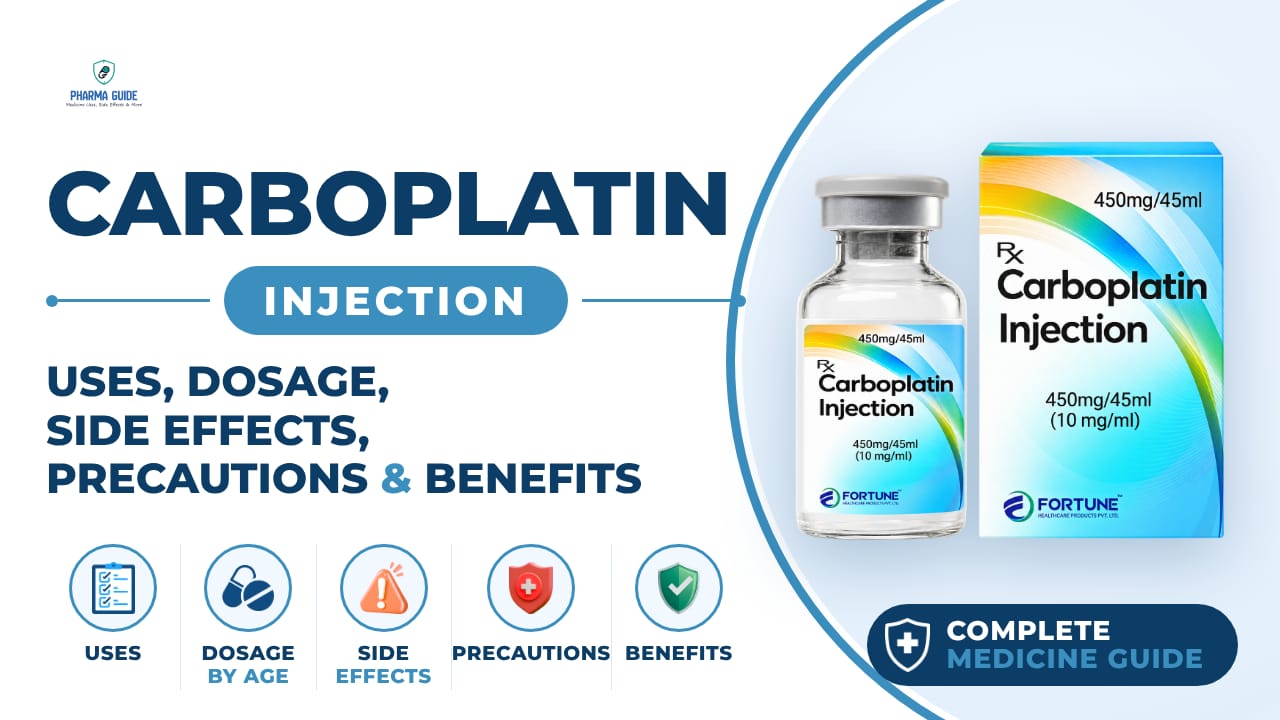
| Generic name | carboplatin |
|---|---|
| Drug class | alkylating agent, antineoplastic, platinum analog |
| Forms | Solution, Powder for Solution |
Quick overview
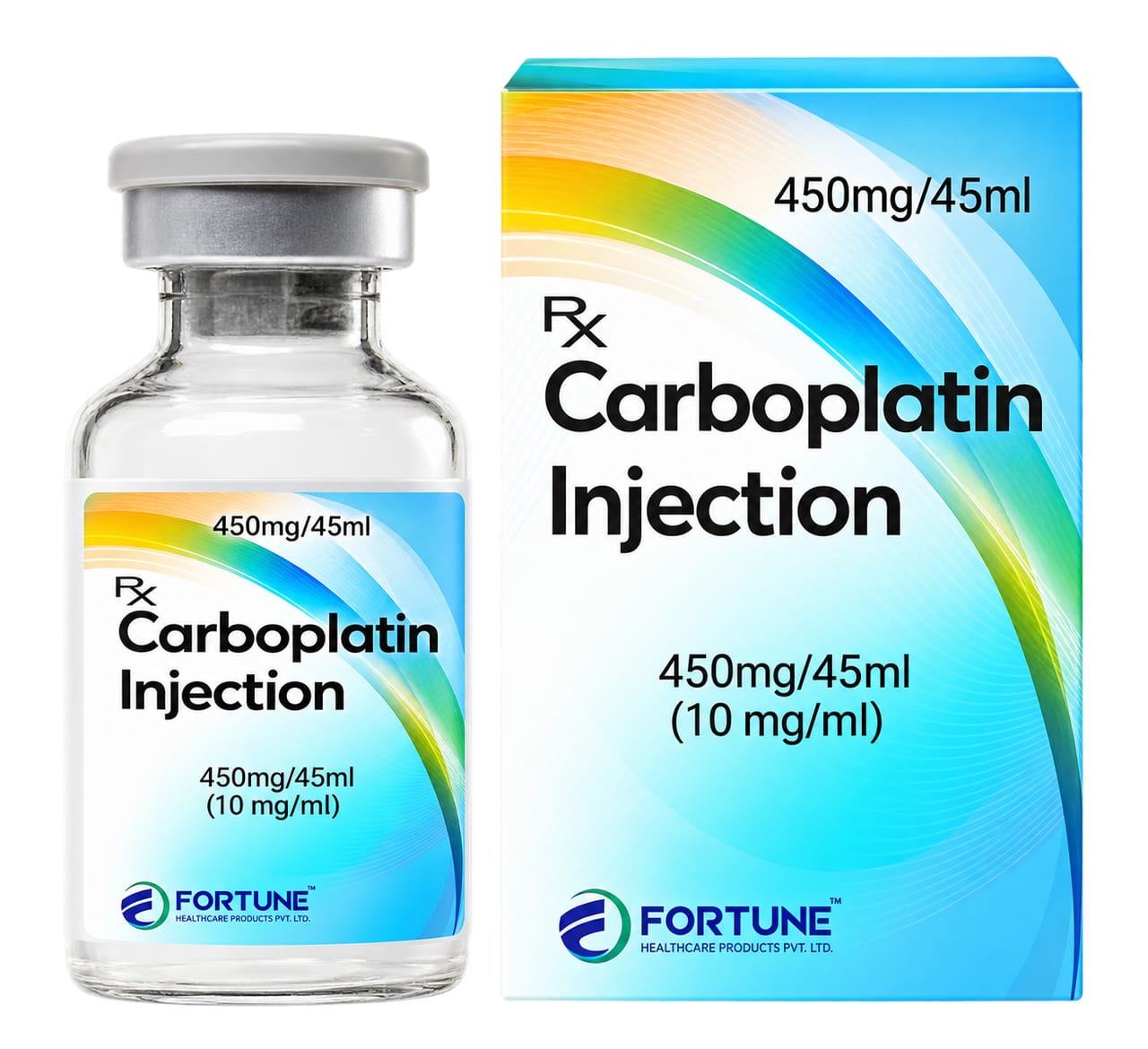
Carboplatin Injection (generic name: carboplatin) is a chemotherapy medicine from the alkylating agent, antineoplastic, platinum analog class. It is given by injection into a vein and is used to treat certain cancers, most commonly ovarian cancer. It works by damaging the DNA inside cancer cells, slowing or stopping their growth. It must be given in a hospital or medical facility by a doctor experienced in chemotherapy.
What is Carboplatin Injection
Carboplatin is a chemotherapy medicine given by injection into a vein. It belongs to a group of medicines called platinum-containing compounds and is used to treat certain cancers, most commonly ovarian cancer.
Carboplatin Injection uses
- Treats ovarian cancer, including cancer that has spread, not improved, or worsened after other treatment
- Used alone or combined with other cancer medicines
- Sometimes used for lung, bladder, breast, and endometrial cancer
- Sometimes used for head and neck cancer
- Sometimes used for cancer of the cervix and testicles
- Sometimes used for Wilms' tumor, a kidney cancer that occurs in children
- Sometimes used for certain brain tumors
- Sometimes used for neuroblastoma, a cancer that begins in nerve cells, mainly in children
- Sometimes used for retinoblastoma, a cancer in the eye
Benefits of Carboplatin Injection
- Interferes with the growth of cancer cells so the body can destroy them
- Can be used alone or combined with other cancer medicines for advanced or recurring ovarian cancer
How Carboplatin Injection works
Carboplatin is a type of chemotherapy called an alkylating agent. It damages the DNA inside cancer cells, which stops or slows the cells from multiplying.
Carboplatin Injection dosage
Carboplatin is given by a doctor or nurse in a hospital or medical facility, not at home. It is given slowly through an IV line placed in a vein, usually over at least 15 to 60 minutes, and is usually given about once every 4 weeks. It may cause nausea and vomiting, but treatment should continue even if you feel ill; your doctor can give you other medicine to help with these symptoms. If you miss a scheduled treatment appointment, call to reschedule as soon as possible.
Use exactly as prescribed by your doctor or pharmacist.
Available forms and strengths
- Solution
- Powder for Solution
Side effects of Carboplatin Injection
Common
- Nausea and vomiting
- Diarrhea
- Constipation
- Sores in the mouth and throat
- Pain, burning, or tingling in the hands or feet
- Pain, itching, redness, swelling, blisters, or sores at the injection site
- Hair loss
- Weakness
- Loss or change in ability to taste food
- Change or loss of taste
- Loss of appetite
Serious
- Signs of severe allergic reaction: hives, skin rash, itching, reddening of skin, difficulty breathing or swallowing, dizziness, faintness, fast heartbeat, swelling of face, lips, mouth, tongue, or throat
- Signs of low blood cell counts: fever, sore throat, chills, ongoing cough and congestion, unusual bleeding or bruising, black and tarry stools, red blood in stools, bloody vomit, or vomit that looks like coffee grounds
- Pale skin, unusual tiredness or weakness, fainting, or dizziness
- Sudden changes in vision, including color vision
- Decreased urination
- Swelling of the face, arms, hands, feet, ankles, or lower legs
- Shortness of breath with everyday activity or when lying flat
- Ringing in ears and difficulty hearing
- Burning, numbness, tingling, or painful sensations in the arms, hands, legs, or feet, or unsteadiness (possible nerve damage)
- Risk of developing a new cancer later
Warnings and precautions
- Carboplatin can severely lower the number of blood cells made in your bone marrow, raising your risk of serious infection or bleeding. Call your doctor right away if you notice fever, sore throat, chills, ongoing cough and congestion, or signs of bleeding such as black and tarry stools, blood in stool, or bloody vomit.
- Carboplatin can cause severe allergic reactions that may start within minutes of starting the infusion. Tell your doctor immediately if you get hives, skin rash, itching, reddened skin, trouble breathing or swallowing, dizziness, faintness, or a fast heartbeat.
- This medicine must only be given in a hospital or medical facility by a doctor experienced in giving chemotherapy for cancer.
- People who are allergic to carboplatin, cisplatin, or other platinum-based medicines should not use carboplatin. It should also not be used by people with significant active bleeding or severe bone marrow suppression.
- Do not get vaccines, including live vaccines, during or after treatment with carboplatin without your doctor's approval, since it can weaken your immune system. People in your household should avoid the oral polio vaccine or let you know if they've had it recently.
- Carboplatin can harm an unborn baby. If you can become pregnant, use effective birth control during treatment and for some time after your last dose. Tell your doctor right away if you think you might be pregnant.
- You should not breastfeed while receiving carboplatin, since it is not known whether it passes into breast milk.
- People with kidney disease need extra caution, since the body may remove carboplatin more slowly and side effects can be stronger. Kidney damage can also occur during treatment.
- Tell your doctor if you have liver problems before starting treatment. The oncology team should be told about any liver disease, as liver tests may be monitored during treatment.
- It isn't known exactly how alcohol affects carboplatin, but heavy drinking can weaken your immune system and make it harder for your body to fight cancer.
Storage
- Carboplatin is usually given by a health care provider in a hospital or clinic. You will not store it at home.
When to see a doctor
- Get medical help right away if you have signs of a serious allergic reaction, such as blurred vision, confusion, rash, diarrhea, fever or chills, hives, hoarseness, itching, lightheadedness or dizziness, sweating, trouble breathing, trouble swallowing, or swelling of your hands, face, or mouth.
- Call your doctor immediately if you think you might have an infection, or if you get fever, chills, cough or hoarseness, lower back or side pain, or painful or difficult urination.
- Call your doctor right away if you notice unusual bleeding or bruising, black tarry stools, blood in urine or stool, or small red spots on your skin.
- Call your doctor right away if you have burning, numbness, tingling, or painful sensations in the arms, hands, legs, or feet, or if you feel unsteady, since these could be signs of nerve damage.
- Get help right away if you have signs of kidney damage, such as needing to urinate less, swelling in your feet, ankles, or legs, weakness, trouble catching your breath, chest pain or pressure, confusion, nausea, or seizures.
- If someone takes too much carboplatin, get medical help right away or go to an emergency room.
Alternatives
- Cisplatin
- Docetaxel
- Paclitaxel
- Oxaliplatin
Watch the video
FAQs
What is Carboplatin Injection used for?
It is used mainly to treat ovarian cancer, including cancer that has spread, not improved, or worsened after other treatment. It is sometimes used for lung, bladder, breast, endometrial, head and neck, cervical, and testicular cancers, as well as Wilms' tumor, certain brain tumors, neuroblastoma, and retinoblastoma.
How is Carboplatin Injection given?
It is given by a doctor or nurse in a hospital or medical facility through an IV line, usually over at least 15 to 60 minutes, about once every 4 weeks.
How does Carboplatin Injection work?
It is an alkylating agent that damages the DNA inside cancer cells, which stops or slows the cells from multiplying so the body can destroy them.
What are the common side effects of Carboplatin Injection?
Common side effects include nausea and vomiting, diarrhea, constipation, mouth and throat sores, pain or tingling in the hands or feet, injection site reactions, hair loss, weakness, taste changes, and loss of appetite.
Can Carboplatin Injection be used during pregnancy?
No, it can harm an unborn baby. Effective birth control should be used during treatment and for some time after the last dose, and you should tell your doctor right away if you think you might be pregnant.
General information, not medical advice
Your prescriber and the leaflet in your pack know your situation. This page does not.
- Follow your prescriber and the leaflet
- Don't start, stop, or change a dose on your own
- Doses and warnings differ by country and product
Sources
Video
Related medicines
Cisplatin Injection: Uses, Dosage, Side Effects, Precautions and Alternates
alkylating agent, antineoplastic, platinum analog
Cisplatin Injection is a chemotherapy used for advanced bladder, ovarian, and testicular cancers. Learn dosage, side effects, and safety warnings.

Injectafer Injection: Uses, Dosage, Side Effects, Precautions and Alternates
Iron products
Injectafer (ferric carboxymaltose) treats iron deficiency anemia and heart failure-related iron deficiency via IV. Learn uses, dosage, side effects, and