
Safety
General information, not medical advice
Your prescriber and the leaflet in your pack know your situation. This page does not.
- Follow your prescriber and the leaflet
- Don't start, stop, or change a dose on your own
- Doses and warnings differ by country and product
Cisplatin Injection: Uses, Dosage, Side Effects, Precautions and Alternates
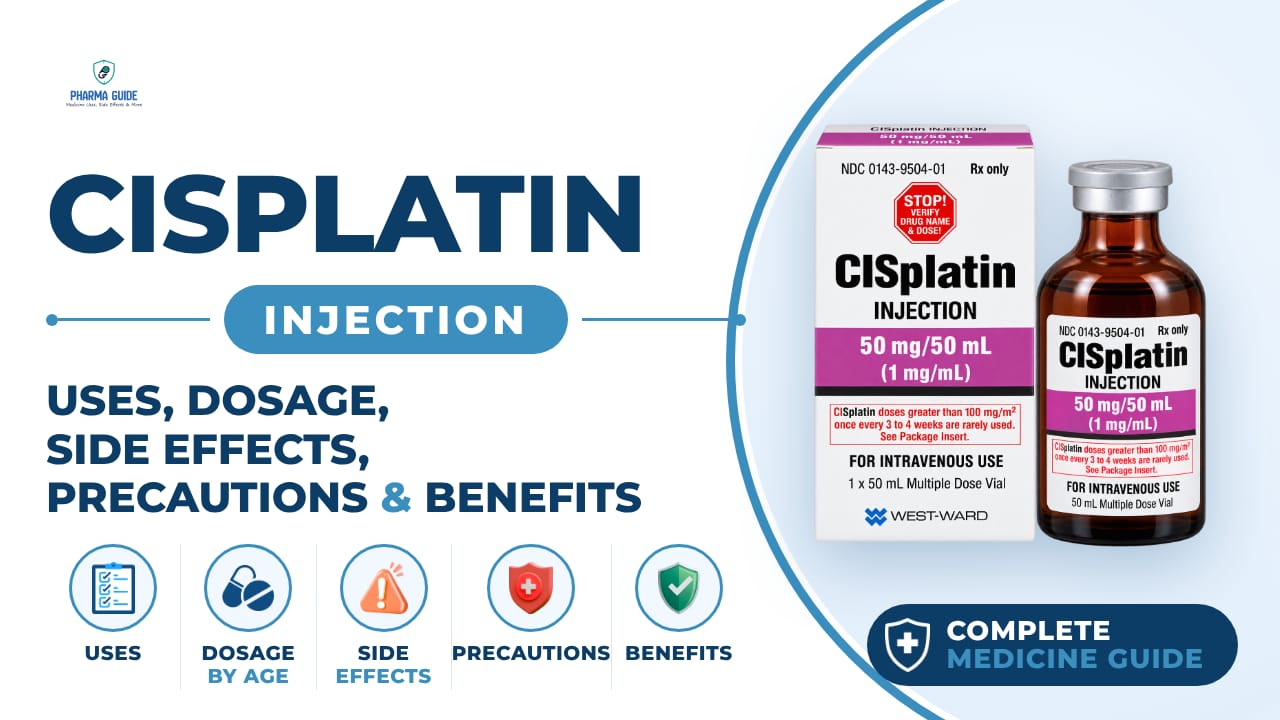
| Generic name | cisplatin |
|---|---|
| Drug class | alkylating agent, antineoplastic, platinum analog |
| Forms | Powder for Solution, Solution, Injectable liquid |
Quick overview
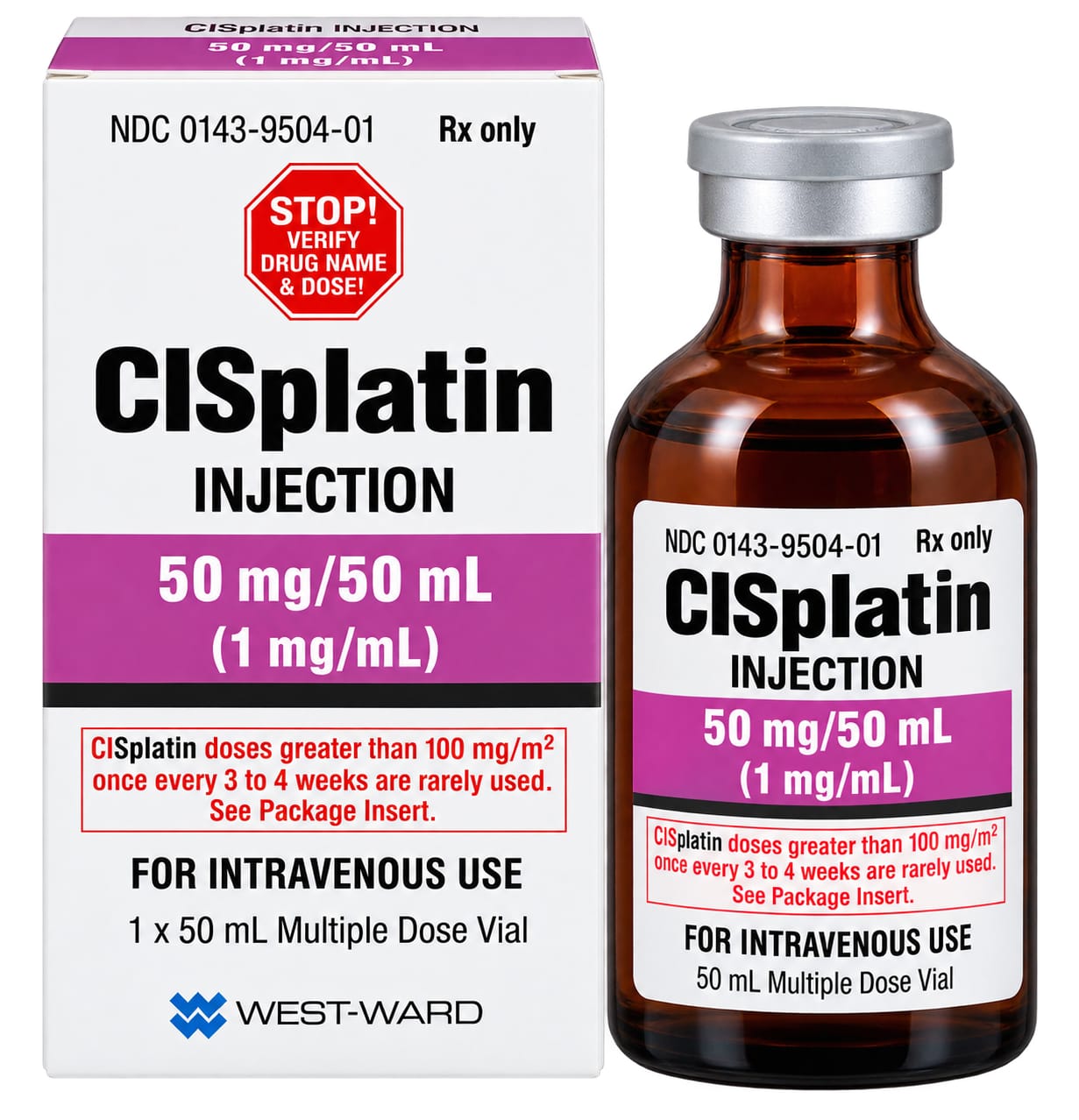
Cisplatin Injection (generic name: cisplatin) is a chemotherapy medicine belonging to the alkylating agent, antineoplastic, and platinum analog drug classes. It is given as an injection into a vein by a healthcare provider in a hospital or clinic to treat certain cancers, including advanced bladder cancer, ovarian cancer, and testicular cancer. It works by damaging the DNA inside cancer cells to stop them from multiplying.
What is Cisplatin Injection
Cisplatin is a chemotherapy medicine given as an injection into a vein. It is used to treat certain types of cancer and is given by a healthcare provider in a hospital or clinic.
Cisplatin Injection uses
- Advanced cancer of the bladder
- Ovarian cancer
- Testicular cancer
Benefits of Cisplatin Injection
Cisplatin helps slow down or stop the growth of cancer cells, which are eventually destroyed by the body.
How Cisplatin Injection works
Cisplatin is an alkylating agent that damages the DNA inside cancer cells, which stops them from multiplying.
Cisplatin Injection dosage
This medicine is given by a doctor or trained health professional through a needle placed into a vein, and must be given slowly so the needle stays in place for several hours. If it is given together with other medicines, make sure each one is taken at the right time.
Drink extra fluids as directed during treatment to help protect your kidneys and keep them working well. This medicine often causes nausea and vomiting, but it is important to keep receiving it even if you feel ill; other medicines can help manage these symptoms.
If you miss an appointment for a dose, contact your care team to reschedule as soon as possible. Special care may be needed when this medicine is used in children; talk to your care team.
| Age group | Dose |
|---|---|
| Under 18 Years | Dose is individualized by body surface area, cancer type, kidney function, and chemotherapy protocol |
| 18–64 Years | 50–100 mg/m² IV per treatment cycle, depending on the cancer and treatment protocol |
| 65+ Years | Dose individualized according to kidney function, hearing, blood counts, and overall health |
Available forms and strengths
- Powder for Solution
- Solution
- Injectable liquid
Side effects of Cisplatin Injection
Common
- Nausea and vomiting
- Hair loss
- Kidney damage
- Nerve problems (burning, numbness, tingling, or painful sensations in arms, hands, legs, or feet)
- Blood disorders (low white cells, platelets, or red blood cells)
- Hearing problems or ringing in the ears
Serious
- Severe allergic reactions (rash, hives, swelling of face/lips/tongue/throat, trouble breathing or swallowing, dizziness)
- Serious kidney problems (blood in urine, change in urination, swelling of feet or legs, increased thirst, loss of appetite, weakness)
- Peripheral neuropathy (burning, numbness, tingling, or pain in arms, hands, legs, or feet)
- Low blood cell counts leading to infection, unusual bleeding or bruising, black tarry stools, pinpoint red spots on skin
- Hearing or ear problems (dizziness, loss of balance, loss of hearing, ringing or buzzing in ears)
- Eye problems (blurred vision, difficulty reading, vision changes, optic neuritis, papilledema, cortical blindness)
- Increased risk of other cancers including leukemia (bone or joint pain, fever, pale skin, unusual bleeding or bruising, weight loss, swollen lymph glands)
- Tissue damage if the medicine leaks out of the vein (redness, pain, or swelling at the injection site)
Warnings and precautions
- Cisplatin may cause serious allergic reactions, including life-threatening anaphylaxis. Get medical help right away for rash, diarrhea, fever or chills, hives, hoarseness, itching, dizziness, trouble breathing or swallowing, or swelling of the hands, face, or mouth.
- Cisplatin may cause serious kidney problems.
- This medicine can lower white blood cells and platelets, increasing the risk of infection and bleeding.
- This medicine may increase the risk of other cancers, including leukemia.
- If cisplatin leaks out of the vein during injection, it may damage nearby tissue and cause scarring.
- This medicine may cause infertility in some men and women.
- This medicine may increase the risk of serious ear or hearing problems in children younger than 5 years old.
- Cisplatin can harm an unborn baby. A pregnancy test is required before starting treatment.
- Women who can become pregnant should use effective birth control during treatment and for at least 14 months after the last dose. Men should use effective birth control during treatment and for at least 11 months after the last dose.
- Do not breastfeed while using this medicine, since it passes into breast milk.
- This medicine should be used with caution in people with kidney disease, since it can make kidney problems worse and may cause serious kidney damage.
- Cisplatin can cause significant kidney toxicity; kidney function and fluid/electrolyte levels must be monitored before and during treatment.
- It is not known whether alcohol affects this medicine, but heavy drinking can weaken the immune system and make it harder for the body to fight cancer.
Storage
This medication is given in a hospital or clinic. It will not be stored at home.
When to see a doctor
- Call your doctor right away if you have a rash, diarrhea, fever or chills, hives, hoarseness, itching, lightheadedness or dizziness, trouble breathing, trouble swallowing, or swelling of the hands, face, or mouth.
- Tell your doctor right away if you have blood in urine, changes in how often or how much you urinate, difficulty breathing, drowsiness, increased thirst, loss of appetite, nausea or vomiting, or swelling of the feet or lower legs.
- Check with your doctor right away if you have burning, numbness, tingling, or painful sensations in your arms, hands, legs, or feet, which could be signs of nerve damage. These symptoms may appear weeks after the last dose.
- Check with your doctor immediately if you think you are getting an infection or have a fever or chills, cough or hoarseness, lower back or side pain, or painful or difficult urination.
- Check with your doctor immediately if you notice unusual bleeding or bruising, black tarry stools, blood in urine or stools, or pinpoint red spots on your skin.
- Check with your doctor right away if you have dizziness, loss of balance, loss of hearing, or ringing or buzzing in the ears.
- Call your doctor right away if you have blurred vision, difficulty reading, or any other change in vision during or after treatment.
- Tell your doctor right away if you notice redness, pain, or swelling at the injection site.
- If you think you have taken too much of this medicine, contact a poison control center or emergency room right away.
Alternatives
- Oxaliplatin
- Carboplatin
Watch the video
FAQs
What is Cisplatin Injection used for?
Cisplatin Injection is used to treat advanced cancer of the bladder, ovarian cancer, and testicular cancer.
How does Cisplatin Injection work?
Cisplatin is an alkylating agent that damages the DNA inside cancer cells, stopping them from multiplying so they can be destroyed by the body.
What are the common side effects of Cisplatin Injection?
Common side effects include nausea and vomiting, hair loss, kidney damage, nerve problems such as burning or tingling in the hands and feet, blood disorders, and hearing problems or ringing in the ears.
How is Cisplatin Injection given?
It is given by a doctor or trained health professional through a needle placed into a vein, administered slowly over several hours, often alongside extra fluids to help protect the kidneys.
What precautions should be taken with Cisplatin Injection?
Cisplatin can cause serious allergic reactions, kidney problems, low blood cell counts, and infertility. A pregnancy test is required before starting, effective birth control is needed during and after treatment, and breastfeeding should be avoided.
General information, not medical advice
Your prescriber and the leaflet in your pack know your situation. This page does not.
- Follow your prescriber and the leaflet
- Don't start, stop, or change a dose on your own
- Doses and warnings differ by country and product
Sources
Video
Related medicines
Carboplatin Injection: Uses, Dosage, Side Effects, Precautions and Alternates
alkylating agent, antineoplastic, platinum analog
Carboplatin Injection is a chemotherapy medicine used mainly for ovarian cancer. Learn how it works, dosage, side effects, and important warnings.

Injectafer Injection: Uses, Dosage, Side Effects, Precautions and Alternates
Iron products
Injectafer (ferric carboxymaltose) treats iron deficiency anemia and heart failure-related iron deficiency via IV. Learn uses, dosage, side effects, and