
Safety
General information, not medical advice
Your prescriber and the leaflet in your pack know your situation. This page does not.
- Follow your prescriber and the leaflet
- Don't start, stop, or change a dose on your own
- Doses and warnings differ by country and product
Cardace Tablet: Uses, Dosage, Side Effects, Precautions and Alternates
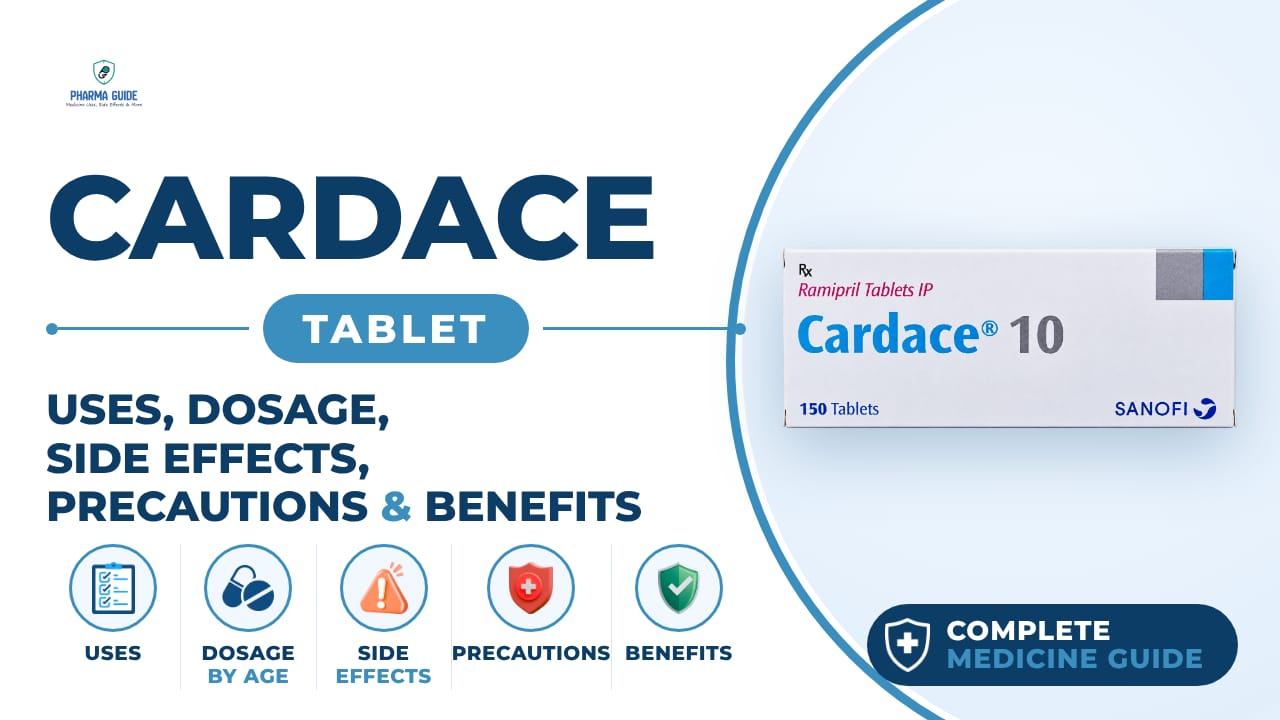
| Generic name | Ramipril |
|---|---|
| Drug class | ACE inhibitor (angiotensin converting enzyme inhibitor) |
| Forms | Tablet |
Quick overview
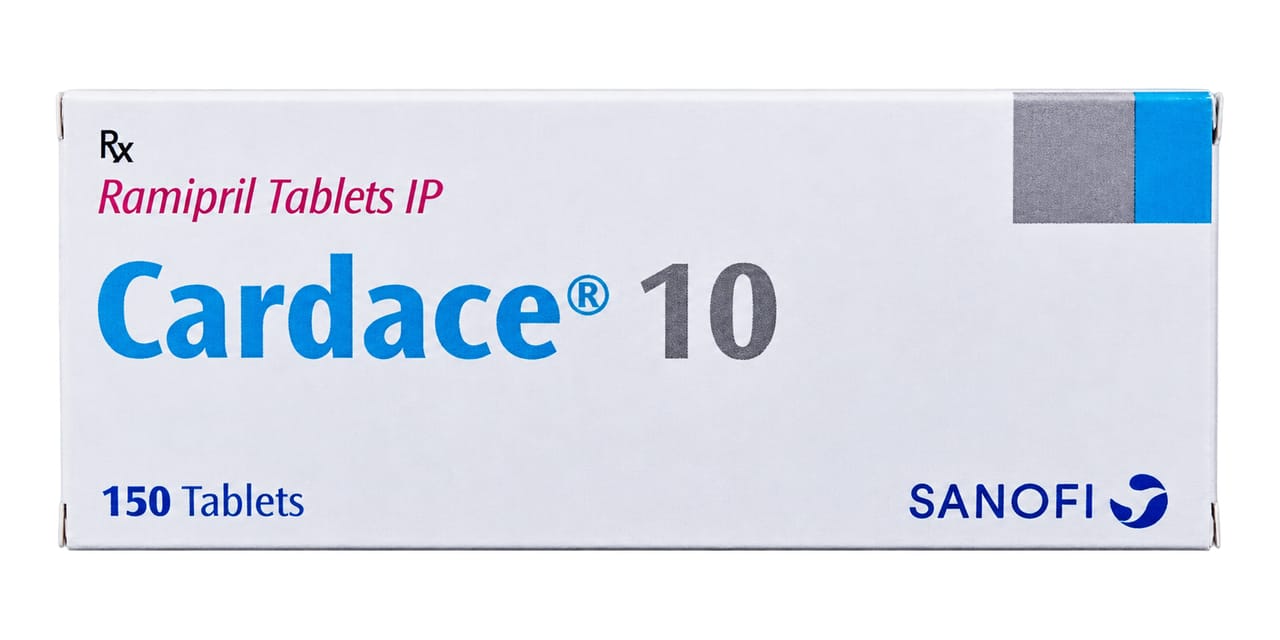
Cardace Tablet contains ramipril, an ACE inhibitor used to treat high blood pressure, support heart failure management, and protect kidney function in diabetic patients. It works by relaxing and widening blood vessels, which lowers blood pressure and improves blood flow. It is available as a tablet and should be used exactly as prescribed by your doctor.
What is Cardace Tablet
Cardace 1.25 Tablet is a medicine used to treat high blood pressure (hypertension), manage heart failure, and protect kidney function in diabetic patients. It contains ramipril, an ACE inhibitor.
Cardace Tablet uses
- High blood pressure (hypertension)
- Heart failure support - improves heart pumping efficiency
- Reducing the risk of heart attack and stroke in high-risk patients
- Protecting kidney function in diabetic patients with high blood pressure
Benefits of Cardace Tablet
- Lowers blood pressure to reduce strain on the heart and blood vessels
- Improves heart pumping efficiency in patients with heart failure
- Reduces the risk of major cardiovascular events in patients at high risk
- Helps protect kidney function in patients with diabetes and high blood pressure
How Cardace Tablet works
Ramipril blocks an enzyme called ACE that helps make a hormone called angiotensin II. Angiotensin II normally narrows blood vessels, so blocking it lets blood vessels relax and widen. This lowers blood pressure, improves blood flow, and also reduces water and salt retention in the body.
Cardace Tablet dosage
Take the tablet with or without food, but it is recommended to take it at the same time each day. Swallow the tablet whole with water; do not crush or chew it. Follow your doctor's dosage instructions carefully; your doctor may start with a low dose and increase it gradually based on your response. Do not stop taking this medicine without consulting your doctor, even if you feel well. If you miss a dose, take it as soon as you remember, but skip it if it is almost time for your next dose - do not double up. Avoid excessive use of salt substitutes containing potassium while on this medicine. This medicine is not recommended for use in children.
| Age group | Dose |
|---|---|
| Children | Dose based on body weight and medical condition (only as prescribed) |
| Adults (18–64 Years) | 2.5–5 mg once daily, adjusted according to response |
| Older Adults (65+ Years) | 1.25–2.5 mg once daily initially, adjusted as needed |
Available forms and strengths
- Tablet
Side effects of Cardace Tablet
Common
- Dizziness and headache, especially when starting treatment or standing up
- A persistent dry cough that does not clear
- Loose motions (diarrhoea)
- Tiredness and fatigue
- Nausea
- Changes in taste sensation
- Skin rash
Serious
- High blood potassium levels
- Swelling of the face, lips, tongue, or throat, which needs immediate medical help
- Reduced kidney function in susceptible patients
- Low blood pressure
Warnings and precautions
- If you are pregnant or planning to become pregnant, talk to your doctor before using this medicine, as it may not be suitable during pregnancy.
- If you are breastfeeding, talk to your doctor before taking this medicine so they can advise you on whether it is safe while nursing.
- Tell your doctor if you have kidney disease or are on dialysis, as dosage adjustments may be needed.
- If you have liver problems, tell your doctor before starting this medicine so they can assess if it's appropriate for you.
- Avoid drinking alcohol while taking this medicine, as it may increase the risk of dizziness or light-headedness. This medicine may cause dizziness or fatigue in some people.
- If you experience these symptoms, avoid driving or operating machinery.
- This medicine should not be given to children, as its safety in children has not been established.
- Older patients may need extra monitoring while taking this medicine because of the risk of low blood pressure and kidney problems.
- Do not stop taking this medicine suddenly without talking to your doctor, as this could cause a sudden rise in blood pressure or other problems.
- This medicine can raise potassium levels in the blood in some people, so levels should be checked regularly.
- Tell your doctor if you have any known allergy to ramipril or other ACE inhibitors before starting this medicine.
Storage
- Store Cardace 1.25 Tablet in a cool, dry place.
- Protect the medicine from light and moisture.
- Keep the product out of reach of children to prevent accidental ingestion.
- Use the medicine before its expiry date to ensure effectiveness.
- Store below 25°C
When to see a doctor
- If you develop a persistent dry cough or swelling of the lips, tongue, or throat, tell your doctor right away.
- If side effects do not improve or get worse, contact your doctor right away.
- If you take too many tablets by accident, get medical help immediately by contacting your doctor or going to the nearest hospital.
Alternatives
- Ramistar Tablet
- Lisinopril
- Telmisartan
Watch the video
FAQs
What is Cardace Tablet used for?
Cardace Tablet is used to treat high blood pressure, support heart failure management by improving heart pumping efficiency, reduce the risk of heart attack and stroke in high-risk patients, and protect kidney function in diabetic patients with high blood pressure.
How does Cardace Tablet work?
Cardace Tablet contains ramipril, which blocks an enzyme called ACE that helps make angiotensin II, a hormone that narrows blood vessels. By blocking it, blood vessels relax and widen, lowering blood pressure, improving blood flow, and reducing water and salt retention.
What is the dosage of Cardace Tablet for adults?
Adults aged 18-64 years are usually given 2.5-5 mg once daily, adjusted according to response. Older adults (65+ years) typically start with 1.25-2.5 mg once daily initially, adjusted as needed.
What are the common side effects of Cardace Tablet?
Common side effects include dizziness and headache, a persistent dry cough, diarrhoea, tiredness, nausea, changes in taste sensation, and skin rash.
Can Cardace Tablet be given to children?
No, Cardace Tablet is not recommended for use in children as its safety in children has not been established.
General information, not medical advice
Your prescriber and the leaflet in your pack know your situation. This page does not.
- Follow your prescriber and the leaflet
- Don't start, stop, or change a dose on your own
- Doses and warnings differ by country and product
Sources
- Altace Tablets (ramipril). (2009, August). U.S. Food & Drug Administration.
- KD Tripathi. Drugs Affecting Renin-Angiotensin System And plasma Kinins. Essentials of medical pharmacology. 7th edition. 2013. Page – 503
- Florim Cuculi, Paul Erne. Combined neutral endopeptidase inhibitors. NIH. National Library of Medicine, National center for biotechnology information. Pubmed.gov. April 2011.
Video
Related medicines
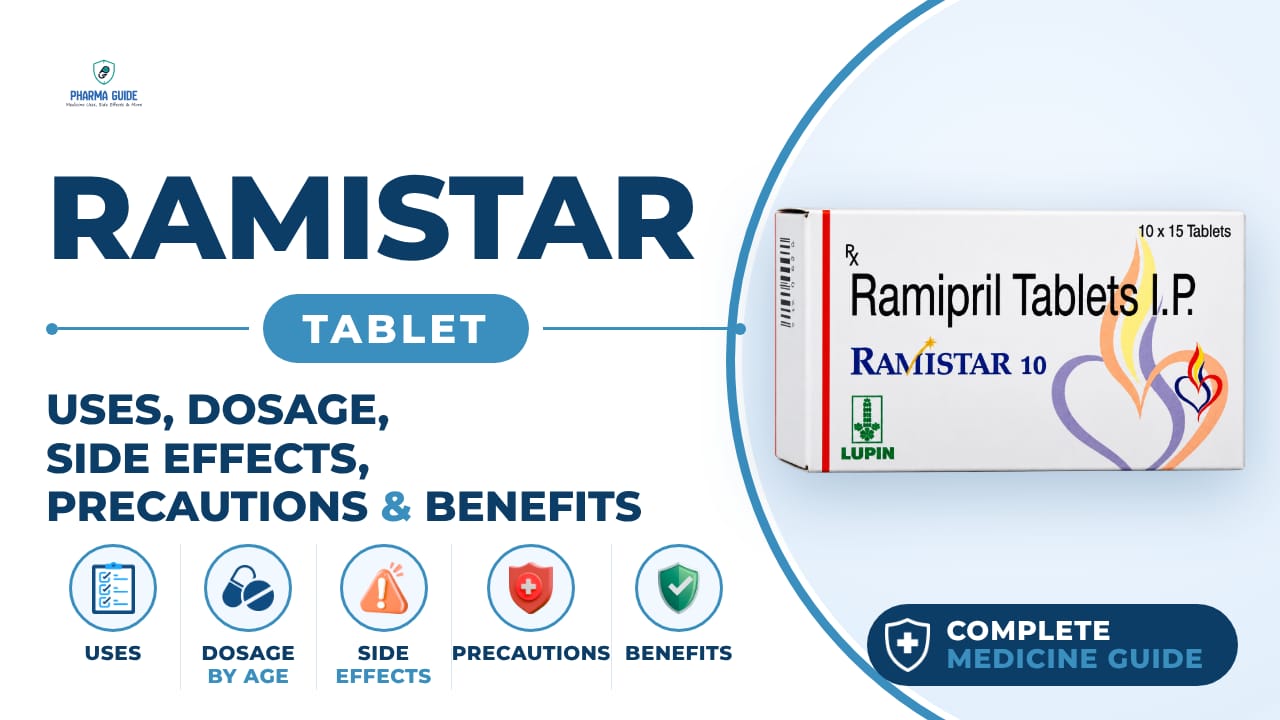
Ramistar Tablet: Uses, Dosage, Side Effects, Precautions and Alternates
ACE inhibitor (Angiotensin Converting Enzyme inhibitor)
Ramistar Tablet (Ramipril) treats high blood pressure and heart failure, lowers heart attack/stroke risk, and protects kidney function. Know dosage, side
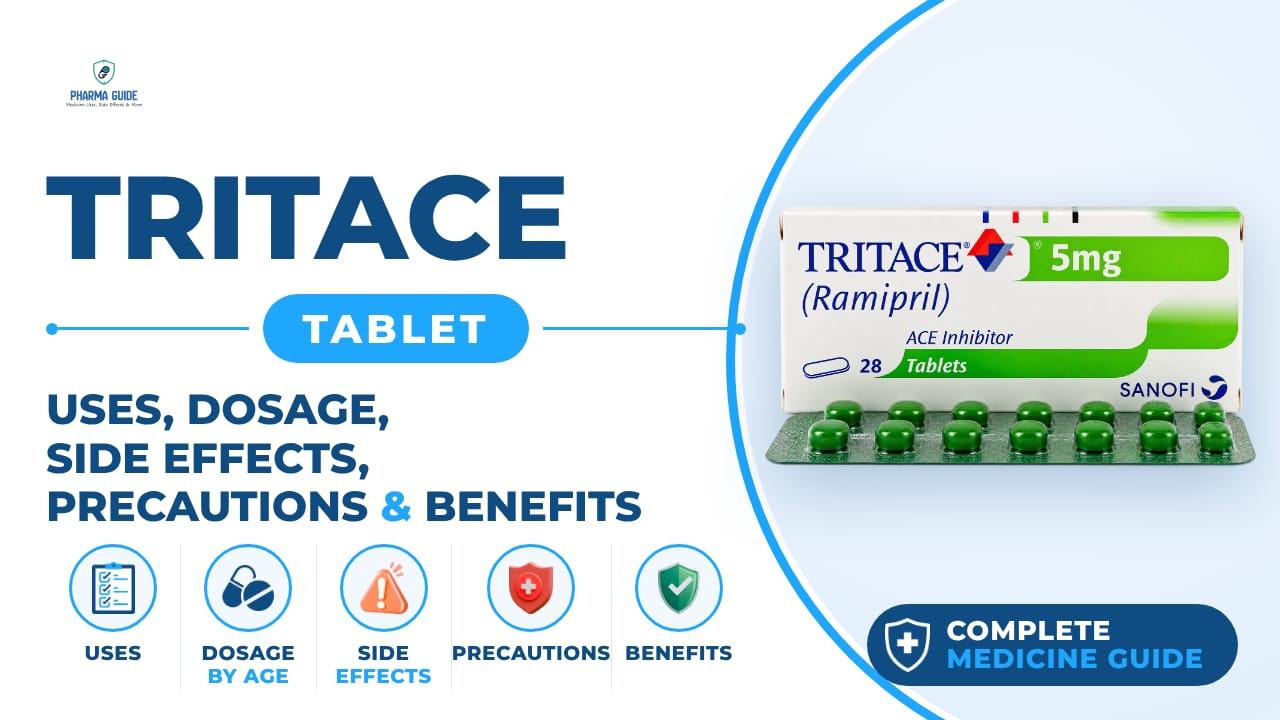
Tritace Tablet: Uses, Dosage, Side Effects, Precautions and Alternates
ACE Inhibitor (angiotensin-converting enzyme inhibitor)
Tritace Tablet (ramipril) treats high blood pressure, post-heart attack heart failure, and kidney problems. Learn about its uses, dosage, side effects, and