
Safety
General information, not medical advice
Your prescriber and the leaflet in your pack know your situation. This page does not.
- Follow your prescriber and the leaflet
- Don't start, stop, or change a dose on your own
- Doses and warnings differ by country and product
Tritace Tablet: Uses, Dosage, Side Effects, Precautions and Alternates
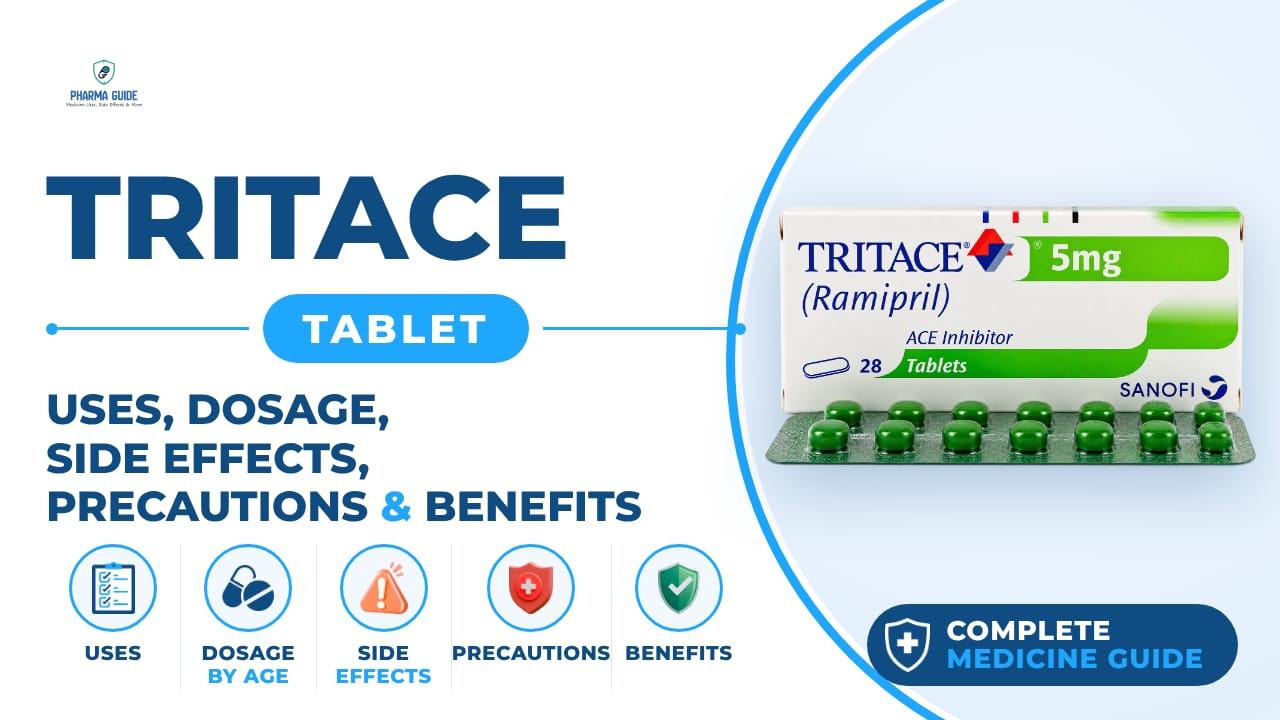
| Generic name | Ramipril |
|---|---|
| Drug class | ACE Inhibitor (angiotensin-converting enzyme inhibitor) |
| Forms | Tablet, Capsule |
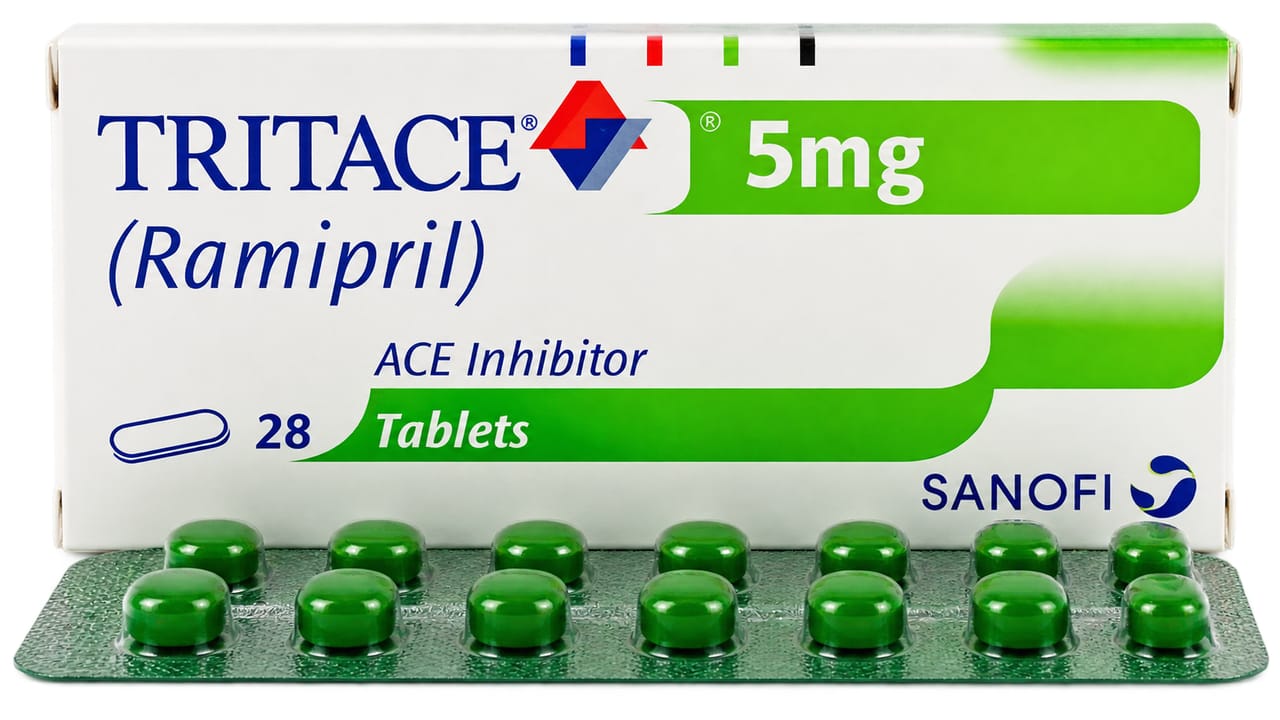
Quick overview
Tritace Tablet contains ramipril, an ACE inhibitor used to treat high blood pressure, heart failure following a heart attack, and certain kidney problems, and to help prevent cardiovascular problems in people at higher risk. It works by widening blood vessels to lower blood pressure and ease the workload on the heart. Common side effects include dizziness, dry cough, and headache, while certain warnings and precautions apply, including avoidance during pregnancy.
What is Tritace Tablet
Tritace is a prescription medicine containing the active ingredient ramipril, which belongs to a group of medicines called ACE inhibitors. It is used to treat high blood pressure, heart failure after a heart attack, certain kidney problems, and to help prevent cardiovascular problems in people at higher risk.
Tritace Tablet uses
- Treatment of hypertension (high blood pressure)
- Heart failure following a heart attack (post-MI heart failure)
- Prevention of progressive kidney (renal) failure in patients with persistent proteinuria over 1 g/day
- Reducing the risk of heart attack, stroke, cardiovascular death, or the need for revascularisation procedures in patients 55 years or older with evidence of coronary artery disease, stroke, or peripheral vascular disease
- Reducing the risk of heart attack, stroke, cardiovascular death, or revascularisation procedures in diabetic patients 55 years or older with certain risk factors
Benefits of Tritace Tablet
- Helps lower high blood pressure
- May reduce the risk of heart attack, stroke, and death after a heart attack
- May slow the progression of kidney damage in patients with proteinuria
- Helps reduce cardiovascular risk in high-risk patients
How Tritace Tablet works
Tritace works by widening blood vessels, which lowers the pressure in them and makes it easier for the heart to pump blood around the body. This increases the oxygen supply to the heart so it doesn't have to work as hard. It also improves blood flow through small blood vessels in the kidneys, helping them work more efficiently and slowing kidney damage caused by diabetes or high blood pressure.
Tritace Tablet dosage
Swallow the tablet whole with a glass of water; do not chew or crush it. It can be taken with or without food. Take it at about the same time each day to get the best effect and help you remember. If you forget a dose, skip it and take your next dose at the regular time; do not double up to make up for a missed dose. If two doses are prescribed, your doctor may want you to take them together or at different times depending on your condition. Keep taking this medicine until your doctor tells you to stop; do not stop or change the dose without checking with your doctor.
| Age group | Dose |
|---|---|
| Under 18 years | Not routinely recommended; doctor's advice required |
| 18 years & older | 2.5 mg once daily initially |
| Adults | 2.5 mg once daily initially; usual maintenance 2.5–10 mg/day |
| Older adults | 1.25–2.5 mg once daily initially may be appropriate depending on kidney function and blood pressure |
Available forms and strengths
- Tablet
- Capsule
Side effects of Tritace Tablet
Common
- Feeling light-headed, dizzy, or faint
- Dry cough
- Headache
- Feeling sick (nausea) or vomiting
- Stomach pain or discomfort
- Diarrhoea
- Indigestion
- Loss of taste or taste disturbances
- Upper respiratory tract infections
- Muscle cramps or spasms
- Aching muscles, muscle tenderness or weakness unrelated to exercise
- Unusual tiredness, weakness, or fatigue
- Ringing or buzzing in the ears
- Forgetfulness or confusion
- Chest discomfort
Serious
- Disturbed vision
- Symptoms of sunburn (redness, itching, swelling, blistering) occurring more quickly than normal
- Itchy or raised skin rash, hives or nettle rash
- Signs of anaemia such as tiredness, being short of breath and looking pale
- Yellowing of the skin and/or eyes
- Fast or irregular heart beat
- Shortness of breath or tightness in the chest
- Numbness, tingling and colour change in fingers or toes when exposed to cold
- Severe upper stomach pain, often with nausea and vomiting
- Frequent infections such as fever, severe chills, sore throat or mouth ulcers
- Passing little or no urine or more urine than is normal for you
- Bleeding or bruising more easily than normal
- Fainting within a few hours of taking a dose
- Severe dizziness and confusion with visual disturbances and speech problems
- Swelling of the face, lips, mouth, tongue or throat which may cause difficulty in swallowing or breathing
- Pink or red itchy spots on the skin which may blister and progress to form raised, red, pale-centred marks
- Severe blisters and bleeding in the lips, eyes, mouth, nose and genitals
- Chest pain
Warnings and precautions
- Do not take Tritace if you have had an allergic reaction to it or any ACE inhibitor before, or if you or your family have a history of unexplained swelling of the face, lips, tongue, throat, intestines, hands or feet.
- Tritace is contraindicated in patients with a history of angioedema linked to previous ACE inhibitor use, severe kidney impairment, or narrowing of the renal artery.
- Do not take potassium supplements or eat potassium-rich foods without medical advice, as this can raise blood potassium too high while on Tritace.
- Do not stop taking, or change the dose of, Tritace without checking with your doctor first.
- Tell your doctor if you plan to have surgery requiring a general anaesthetic, or if you are about to have blood tests, since Tritace can affect these.
- Stand or get up slowly, especially from bed or chairs, to reduce the chance of feeling light-headed, dizzy, or faint.
- Drink enough water during exercise and hot weather, especially if you sweat a lot, since not drinking enough can cause your blood pressure to drop too much.
- Tritace should not be used during pregnancy because it can harm the developing baby. If you become pregnant while taking this medicine, stop taking it and tell your doctor right away.
- Tritace is not recommended for breastfeeding mothers because it may pass into breast milk and affect the baby.
- People with kidney problems may need a dose adjustment and closer monitoring while taking Tritace.
- People with liver problems may need a dose adjustment and closer monitoring while taking Tritace.
- Drinking alcohol while taking Tritace is not recommended, as it can further lower blood pressure and increase side effects such as dizziness or light-headedness.
- Tritace may affect your ability to drive or operate machinery, especially when you start treatment. Only drive if you feel well.
Storage
- Keep tablets or capsules in the blister pack until it is time to take them
- Store in a cool, dry place where the temperature stays below 25°C
- Do not store in the bathroom, near a sink, in the car, or on windowsills
- Keep out of reach of children
- If no longer needed or out of date, take it to any pharmacy for safe disposal
- Do not use after the expiry date
When to see a doctor
- Call your doctor straight away, or go to the Emergency Department, if you notice disturbed vision, sunburn-like skin reactions, itchy or raised rash, signs of anaemia, yellowing of skin or eyes, fast or irregular heartbeat, shortness of breath or chest tightness, numbness or colour change in fingers/toes in the cold, severe stomach pain with nausea and vomiting, frequent infections, changes in urination, or unusual bleeding or bruising.
- Go straight to the Emergency Department if you experience fainting soon after a dose, severe dizziness and confusion with visual or speech problems, swelling of the face, lips, mouth, tongue or throat causing difficulty swallowing or breathing, severe skin blistering or bleeding in the lips, eyes, mouth, nose or genitals, or chest pain.
- Call your doctor right away if you have a lot of vomiting or diarrhoea while taking Tritace, as you could lose too much water and salt, causing your blood pressure to drop too much.
- Call your doctor right away if you feel light-headed or dizzy after your first dose or after your dose is increased.
- Call your doctor right away if you become pregnant or intend to become pregnant while taking Tritace.
- If you think you have taken too much Tritace, seek urgent medical attention even if you feel fine, by contacting your doctor, calling a poison control center, or going to the nearest hospital emergency department.
Alternatives
- Lisinopril
- Enalapril
- Perindopril
- Losartan
Watch the video
FAQs
What is Tritace Tablet used for?
Tritace Tablet is used to treat high blood pressure, heart failure following a heart attack, certain kidney problems with proteinuria, and to help prevent cardiovascular problems like heart attack and stroke in people at higher risk, including those 55 years or older with coronary artery disease, stroke, peripheral vascular disease, or diabetes with certain risk factors.
How does Tritace Tablet work?
Tritace works by widening blood vessels, which lowers blood pressure and makes it easier for the heart to pump blood. This increases oxygen supply to the heart so it doesn't have to work as hard, and it also improves blood flow through small blood vessels in the kidneys, slowing kidney damage caused by diabetes or high blood pressure.
What is the dosage of Tritace Tablet?
The tablet should be swallowed whole with water, not chewed or crushed, and can be taken with or without food at the same time each day. For adults, the usual starting dose is 2.5 mg once daily, with a maintenance dose of 2.5–10 mg/day. Older adults may start with 1.25–2.5 mg once daily depending on kidney function and blood pressure.
What are the common side effects of Tritace Tablet?
Common side effects include feeling light-headed, dizzy, or faint, dry cough, headache, nausea or vomiting, stomach discomfort, diarrhoea, indigestion, taste disturbances, muscle cramps, tiredness, ringing in the ears, and forgetfulness or confusion.
Can Tritace Tablet be taken during pregnancy?
No, Tritace should not be used during pregnancy because it can harm the developing baby. If you become pregnant while taking this medicine, you should stop taking it and tell your doctor right away.
General information, not medical advice
Your prescriber and the leaflet in your pack know your situation. This page does not.
- Follow your prescriber and the leaflet
- Don't start, stop, or change a dose on your own
- Doses and warnings differ by country and product
Sources
- https://www.doctoroncall.com/pharmacy/prescription-medicine/tritace-5mg-tablet-14s-strip
- https://www.dvago.pk/p/tritace-tablets-2-5-mg-28s
- Australian Product Information – Tritace (Ramipril), tritace-ccdsv19-piv27-19jun26
- Tritace Consumer Medicine Information (CMI), tritace-ccdsv19-cmiv20-19jun26
Video
Related medicines
Ramistar Tablet: Uses, Dosage, Side Effects, Precautions and Alternates
ACE inhibitor (Angiotensin Converting Enzyme inhibitor)
Ramistar Tablet (Ramipril) treats high blood pressure and heart failure, lowers heart attack/stroke risk, and protects kidney function. Know dosage, side
Cardace Tablet: Uses, Dosage, Side Effects, Precautions and Alternates
ACE inhibitor (angiotensin converting enzyme inhibitor)
Cardace Tablet (ramipril) treats high blood pressure, supports heart failure management, and protects kidney function in diabetics. Learn dosage, uses and side