
Safety
General information, not medical advice
Your prescriber and the leaflet in your pack know your situation. This page does not.
- Follow your prescriber and the leaflet
- Don't start, stop, or change a dose on your own
- Doses and warnings differ by country and product
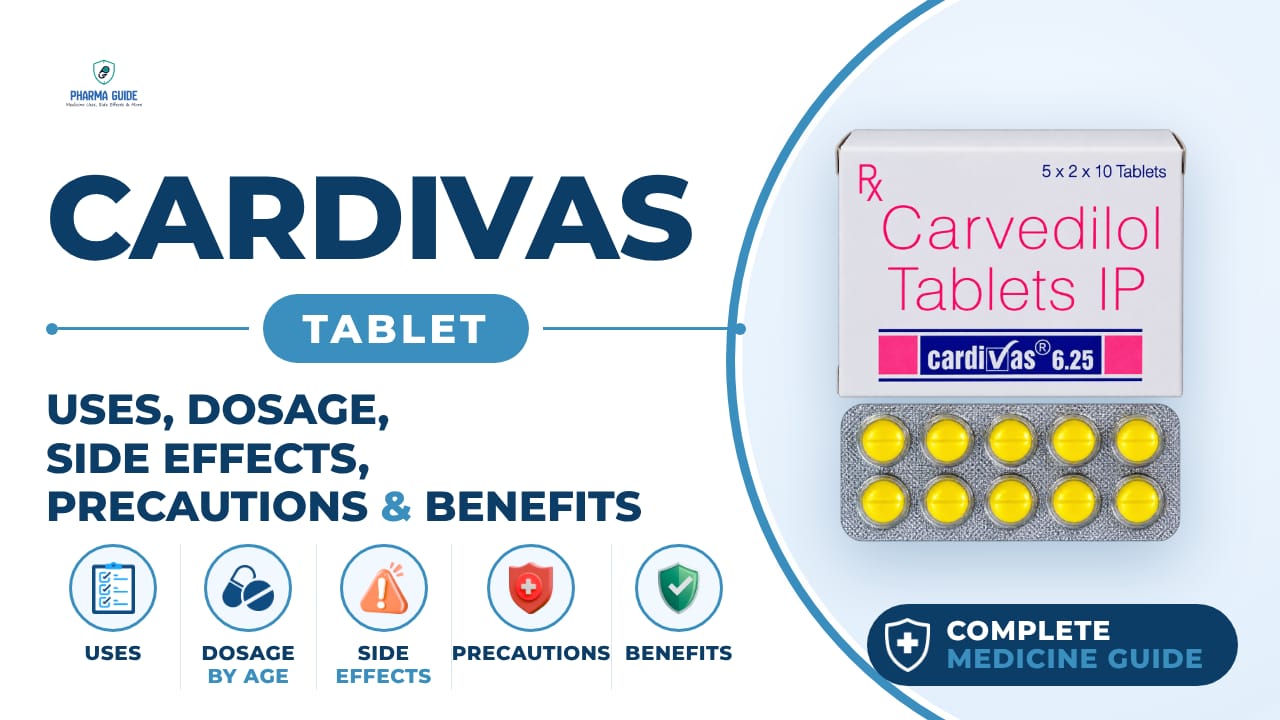
Cardivas Tablet: Uses, Dosage, Side Effects, Precautions and Alternates
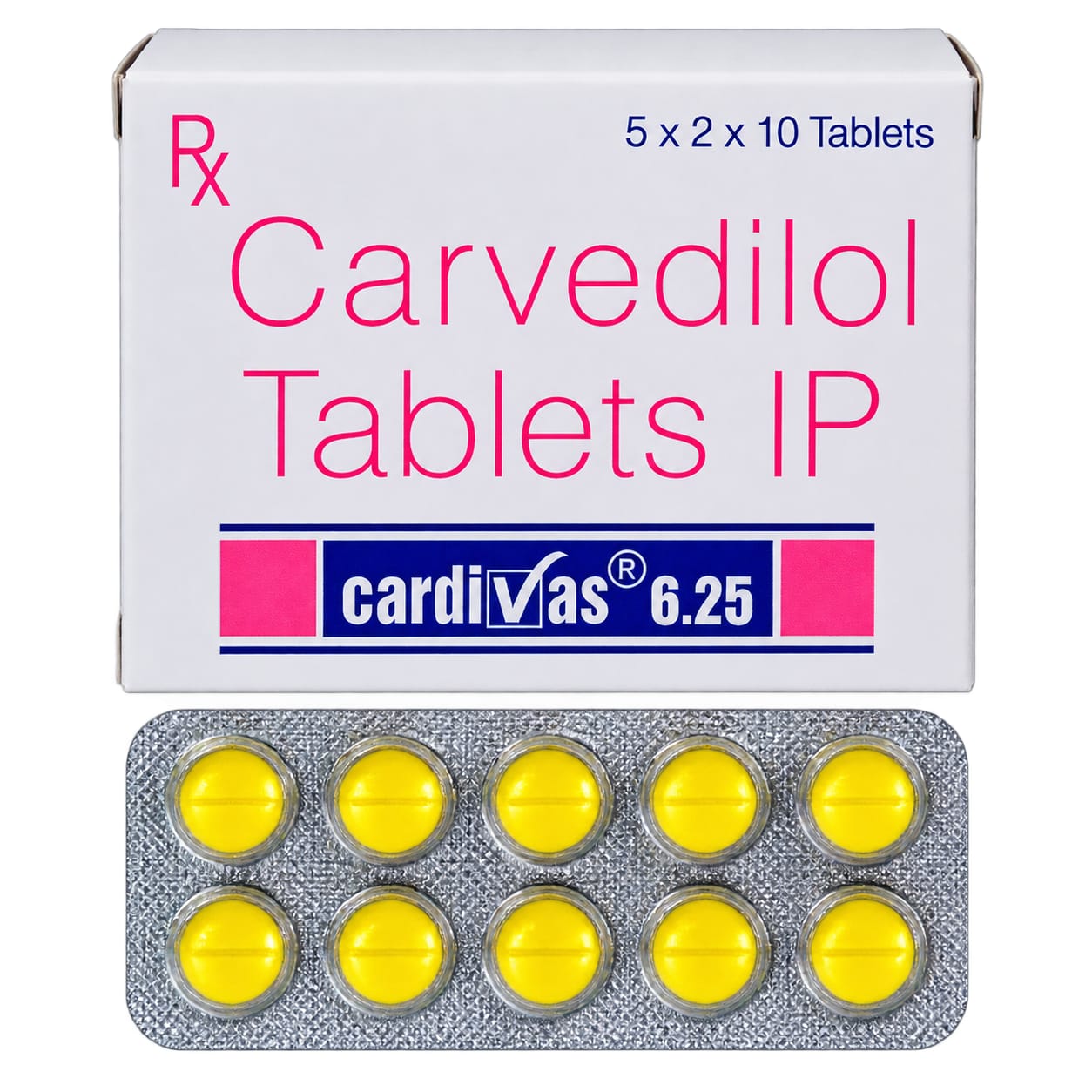
| Generic name | Carvedilol |
|---|---|
| Drug class | Beta-blocker (non-selective beta-adrenergic blocker with alpha-1 blocking activity) |
| Forms | Tablet |
Quick overview
Cardivas Tablet contains Carvedilol, a non-selective beta-blocker with alpha-1 blocking activity. It is used to manage high blood pressure, angina, congestive heart failure, and left ventricular dysfunction after a heart attack. It works by improving heart function and reducing the strain placed on the heart.
What is Cardivas Tablet
Cardivas is a cardiac medicine that contains Carvedilol, a beta-blocker used to manage high blood pressure, angina (chest pain), and congestive heart failure. It works by improving heart function and reducing the strain on the heart.
Cardivas Tablet uses
- Hypertension (high blood pressure)
- Angina (chest pain)
- Congestive heart failure
- Left ventricular dysfunction after a heart attack
Benefits of Cardivas Tablet
- Helps lower blood pressure by relaxing blood vessels and reducing the heart's workload
- Improves the heart's ability to pump blood more efficiently in heart failure
- May help reduce the risk of heart attack by controlling blood pressure and heart rate
- Helps manage angina by reducing the heart's oxygen demand
How Cardivas Tablet works
Cardivas works by blocking two types of receptors. Blocking beta receptors in the heart slows the heart rate and reduces how hard the heart squeezes, which lowers blood pressure. Blocking alpha receptors in blood vessels makes them relax and widen, further lowering blood pressure and reducing the workload on the heart.
Cardivas Tablet dosage
Take this medicine at the same time each day as directed by your doctor. Swallow the tablet whole with a full glass of water; do not chew or crush it, as this can affect how the medicine works. Take it with food to reduce the risk of dizziness or low blood pressure. Do not stop taking this medicine suddenly without consulting your doctor, as this can worsen your heart condition. If you miss a dose, take it as soon as you remember unless it is almost time for your next dose; do not take two doses at once. Rise slowly from sitting or lying down to reduce dizziness, especially when starting treatment or after a dose increase.
| Age group | Dose |
|---|---|
| Children | Dose based on body weight and medical condition (only if prescribed) |
| Adults (18–64 Years) | 3.125–6.25 mg twice daily initially, adjusted according to condition |
| Older Adults (65+ Years) | 3.125 mg twice daily initially, adjusted based on response |
Available forms and strengths
- Tablet
Side effects of Cardivas Tablet
Common
- Headache
- Dizziness, especially after standing up
- Tiredness and weakness
- Low blood pressure
- Slow heartbeat
- Diarrhea
- Stomach pain
- Constipation
- Tingling and numbness in fingers and toes
- Fluid retention and weight gain
- Increased blood sugar and cholesterol levels
- Swelling of arms and legs
- Upper respiratory tract or urinary tract infections
- Anaemia
- Hair loss
- Erectile dysfunction
- Dry eyes
- Blurred vision
Serious
- Chest pain with shortness of breath, sweating, and feeling sick
- Decreased urination with swelling of legs (possible kidney problems)
- Low blood sugar that may lead to seizures or unconsciousness
- Worsening heart failure symptoms
- Severe allergic reactions, including serious skin reactions
- Significant liver problems (yellowing of skin/eyes, dark urine)
Warnings and precautions
- This medicine is not recommended during pregnancy, especially in the second and third trimesters, because it may harm the developing baby by reducing blood flow to the placenta. Talk to your doctor about safer options if you are pregnant or planning pregnancy.
- Small amounts of this medicine can pass into breast milk, so caution is needed. Talk to your doctor about the risks and benefits if you are breastfeeding.
- This medicine is not recommended for people with severe kidney problems and should be used carefully in those with mild kidney problems, with dose adjustments and monitoring.
- This medicine is not recommended for people with severe liver problems and should be used carefully with monitoring in those with mild liver problems.
- Avoid alcohol while taking this medicine, as it can make you dizzier and increase the risk of low blood pressure.
- Do not drive or use machines if this medicine makes you feel drowsy or dizzy.
- Do not suddenly stop taking this medicine, as it can worsen heart problems, cause rebound high blood pressure, or trigger a heart attack. If you need to stop, your doctor will reduce the dose gradually.
- This medicine should not be used by people with asthma or a history of severe breathing problems, as it can trigger dangerous breathing difficulties.
- Tell your doctor if you have diabetes, thyroid problems, poor blood circulation, cold hands and feet, or a tumor of the adrenal gland before starting this medicine.
- This medicine can hide the warning signs of low blood sugar, such as a fast heartbeat, so people with diabetes should monitor their blood sugar closely.
- Avoid grapefruit juice while taking this medicine, as it may raise the levels of the medicine in your blood.
- This medicine is not recommended for children and teenagers under 18 due to a lack of safety data.
Storage
- Store at room temperature (below 30°C), away from light and moisture
- Keep out of reach of children
When to see a doctor
- Get immediate medical help if you have chest pain along with shortness of breath, sweating, and feeling sick.
- Get immediate medical help if you notice decreased urination along with swelling in your legs, which may indicate kidney problems.
- Get immediate medical help if you have signs of low blood sugar, which could lead to seizures or unconsciousness.
- If you think you or someone else has taken too much of this medicine, seek emergency medical care right away. Signs of overdose include severe dizziness, fainting, a very slow heartbeat, difficulty breathing, or seizures.
- Seek prompt medical attention for fainting, a very slow heart rate, severe dizziness, difficulty breathing, chest pain, or signs of liver problems such as yellowing of the skin or eyes and dark urine.
Alternatives
- Metoprolol
- Bisoprolol
- Atenolol
Watch the video
FAQs
What is Cardivas Tablet used for?
Cardivas Tablet is used to manage high blood pressure, angina (chest pain), congestive heart failure, and left ventricular dysfunction after a heart attack.
How does Cardivas Tablet work?
It works by blocking beta receptors in the heart to slow heart rate and reduce workload, and blocking alpha receptors in blood vessels to relax and widen them, lowering blood pressure.
What is the dosage of Cardivas Tablet for adults?
Adults aged 18–64 years typically start with 3.125–6.25 mg twice daily, which is adjusted according to the condition and response.
Can Cardivas Tablet be taken during pregnancy?
Cardivas is not recommended during pregnancy, especially in the second and third trimesters, as it may reduce blood flow to the placenta and harm the developing baby.
What are the common side effects of Cardivas Tablet?
Common side effects include headache, dizziness especially after standing up, tiredness, low blood pressure, slow heartbeat, diarrhea, stomach pain, constipation, and swelling of arms and legs.
General information, not medical advice
Your prescriber and the leaflet in your pack know your situation. This page does not.
- Follow your prescriber and the leaflet
- Don't start, stop, or change a dose on your own
- Doses and warnings differ by country and product
Sources
- KD. Tripathi. Antiadrenergic drugs and drugs for glaucoma, cardiovascular drugs. Essentials of medical pharmacology. Seventh edition. 2013.
- Carvedilol. StatPearls. NIH. National Center for Biotechnology Information. [Revised in January 2024].
- Carvedilol Tablets. U.S. Food and Drug Administration. Prescribing Information. [Revised in December 2008].
- Carvedilol Tablet. Patient Information Leaflet. EMC. UK. [Revised in January 2024].
- Carvedilol User Reviews and Ratings. Drugs.com.
- April Hazard Vallerand, Cynthia A. Sanoski. Sixteenth Edition. Philadelphia, China: F. A. Davis Company; 2019.
- US Food and Drug Administration (FDA); Package leaflet information for the user; Coreg® (carvedilol)
- US Food and Drug Administration (FDA); Package leaflet information for the user; Coreg Cr® (carvedilol phosphate)
- Therapeutic Goods Administration (TGA): Department of Health, Government of Australia; Package leaflet information for the user; Vedilol® (carvedilol)
Video
Related medicines

Injectafer Injection: Uses, Dosage, Side Effects, Precautions and Alternates
Iron products
Injectafer (ferric carboxymaltose) treats iron deficiency anemia and heart failure-related iron deficiency via IV. Learn uses, dosage, side effects, and

Gliclazide Tablet: Uses, Dosage, Side Effects, Precautions and Alternates
Sulfonylurea (hypoglycemic/antidiabetic agent)
Gliclazide Tablet is a sulfonylurea for type 2 diabetes that boosts insulin release. Learn about dosage, side effects, warnings, and precautions.