
Safety
General information, not medical advice
Your prescriber and the leaflet in your pack know your situation. This page does not.
- Follow your prescriber and the leaflet
- Don't start, stop, or change a dose on your own
- Doses and warnings differ by country and product
Cardizem Tablet: Uses, Dosage, Side Effects, Precautions and Alternates
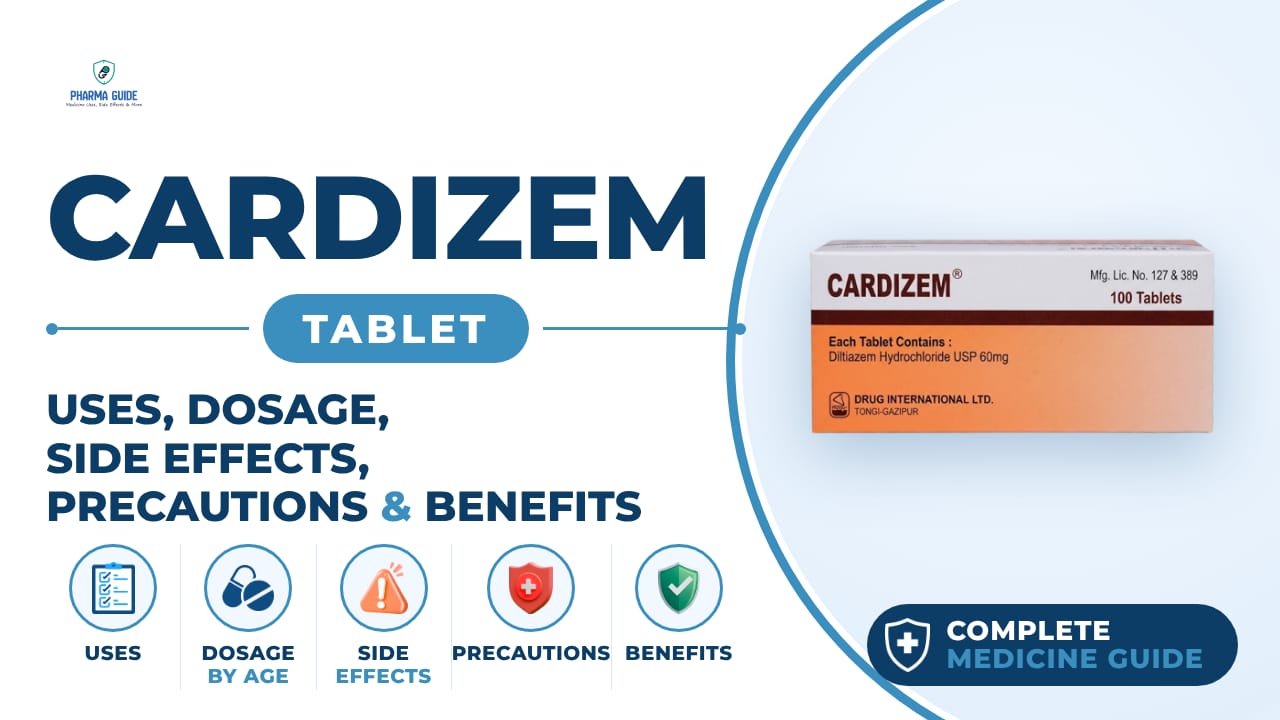
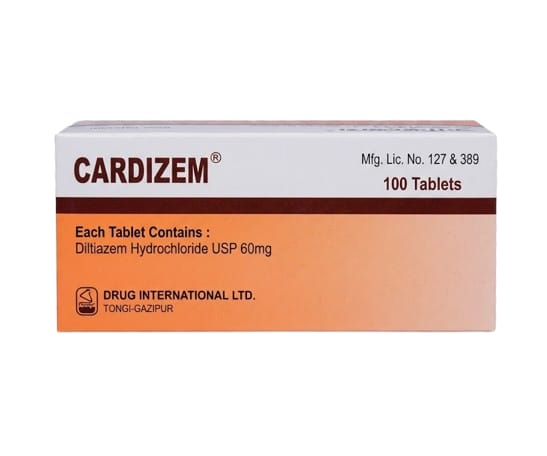
| Generic name | diltiazem hydrochloride |
|---|---|
| Drug class | Calcium channel blocker (calcium antagonist) |
| Forms | Tablet |
Quick overview
Cardizem Tablet contains diltiazem hydrochloride, a calcium channel blocker used to help prevent and manage angina (chest pain). It works by relaxing blood vessels so more blood and oxygen can reach the heart. The tablets are taken several times a day as directed by your doctor, and common side effects include flushing, headache, and dizziness.
What is Cardizem Tablet
Cardizem tablets contain diltiazem hydrochloride, a medicine that belongs to a group called calcium channel blockers. Cardizem tablets release the active ingredient quickly, so they must be taken several times a day.
Cardizem Tablet uses
- Prevent angina (chest pain)
- Management of chronic stable angina and angina due to coronary artery spasm
Benefits of Cardizem Tablet
- Helps prevent angina attacks
- Helps reduce chest pain caused by narrowed or spasming coronary arteries
- May improve exercise tolerance in people with angina
How Cardizem Tablet works
Cardizem relaxes and opens up blood vessels, which lowers blood pressure and allows more blood and oxygen to reach the heart. It does this by blocking the movement of calcium into heart and blood vessel muscle cells, without changing the amount of calcium in your blood or bones.
Cardizem Tablet dosage
Cardizem tablets can be taken three or four times a day, as instructed by your doctor. Swallow the tablets with a glass of water. Do not chew them. Take the medicine at the same time(s) every day. Follow all directions from your doctor and pharmacist carefully until you are told to stop.
If you are taking this medicine for angina, do not suddenly stop taking it, as this can cause severe angina for a day or two. If you miss a dose, skip the missed dose and take your next dose at the usual time if it is almost time for it; otherwise take it as soon as you remember. Do not take a double dose.
Do not give this medicine to a child, since safety and effectiveness have not been established in children. Dose selection for elderly patients is usually cautious, starting at the lower end of the dosing range.
| Age group | Dose |
|---|---|
| Under 18 years | Not recommended |
| 18–64 years | 120–240 mg, once/day |
| 65+ years | 120–240 mg, once/day |
Available forms and strengths
- Tablet
Side effects of Cardizem Tablet
Common
- Swelling or flushing (feeling hot suddenly)
- Headache
- Dizziness
- Loss of appetite
- Dry mouth
- Weight increase
- Weakness or tiredness
- Trouble sleeping
- Ringing or other persistent noise in the ears
- Nausea, vomiting, constipation, diarrhoea, indigestion, gastric pain
- Confusion, hallucinations, abnormal dreams, mood changes
- Nervousness, tremor
- Loss of memory
- Unusual or uncontrollable movements
- Small round, raised itchy areas on the skin, rash, or increased sensitivity to the sun
Serious
- Heart beating irregularly, slowly or very quickly
- Continuous light-headedness or dizziness
- Severe pain in the left arm and chest
- Difficulty breathing, wheezing or coughing
- Blisters and bleeding in the lips, eyes, mouth, nose or genitals
- Skin reactions such as red, painful or itchy spots, blisters or peeling of the skin
- Symptoms of lupus-like syndrome (swollen joints, tiredness and rashes)
- Signs of liver problems - loss of appetite, stomach pain, tiredness, itching, dark urine, clay-colored stools, yellowing of the skin or eyes
- Signs of heart failure - swelling, rapid weight gain, feeling short of breath
Warnings and precautions
- This medicine should not be used during pregnancy, as it may affect the developing baby. Talk to your doctor if you are pregnant or plan to become pregnant.
- The active ingredient passes into breast milk and may affect your baby. Talk to your doctor if you are breastfeeding, as a decision will need to be made about whether to stop breastfeeding or stop the medicine.
- This medicine should be used with caution if you have kidney problems, and it may need careful dose adjustment.
- This medicine is broken down by the liver, so it should be used with caution if you have liver problems and your liver function may need regular monitoring.
- Avoid drinking alcohol while taking the extended-release capsule form, since alcohol can increase how fast the medicine is released and raise the risk of side effects. Check with your doctor about alcohol use with the tablet form.
- Be careful driving or using machinery until you know how this medicine affects you, since it can cause dizziness and fainting, especially when you first start taking it.
- Do not use this medicine if you have certain abnormal heart rhythms, low blood pressure, have had a heart attack or other heart-related complications, or have fluid on the lungs.
- Do not use this medicine if you are allergic to diltiazem hydrochloride or any of the ingredients in the product.
- Do not take this medicine with dantrolene or ivabradine, as these combinations can be dangerous.
- If you are taking this medicine for angina, do not suddenly stop taking it, as this can cause severe angina for a day or two.
- Many other medicines can interact with this one, including blood thinners, certain antibiotics, heart medicines, cholesterol medicines, and sedatives. Tell your doctor about all medicines, vitamins, and supplements you take.
- Rare but serious liver injury has been reported with this medicine, usually reversible after stopping treatment.
- Serious skin reactions can occur, and the medicine should be stopped if a skin reaction does not go away.
Storage
- Keep this medicine in its packaging until it is time to take it.
- Store below 25°C.
- Store in a cool dry place away from moisture, heat or sunlight; do not store it in the bathroom, near a sink, in the car, or on window sills.
- A locked cupboard at least one-and-a-half metres above the ground is a good place to store medicines.
- Keep it where young children cannot reach it.
- If you no longer need this medicine or it is out of date, take it to any pharmacy for safe disposal.
- Do not use this medicine after the expiry date.
When to see a doctor
- Call your doctor straight away, or go straight to the Emergency Department, if you notice your heart beating irregularly, slowly or very quickly, feel severe pain in your left arm and chest, or feel continuously light-headed or dizzy.
- Get emergency help right away if you have signs of an allergic reaction, such as difficulty breathing, wheezing, or swelling of the face, lips or tongue.
- Seek medical attention immediately if you think you or someone else has taken too much of this medicine, even if there are no symptoms yet.
- Get medical attention immediately if you develop shortness of breath, which can appear up to one to two days after taking too much of this medicine, as this may be a sign of fluid build-up in the lungs.
- Seek medical attention if you notice blistering or peeling skin, or skin reactions along with fever, sore throat, or burning eyes.
Alternatives
- Nifedipine
- Verapamil
- Felodipine
Watch the video
FAQs
What is Cardizem Tablet used for?
Cardizem Tablet is used to prevent angina (chest pain) and to manage chronic stable angina and angina caused by coronary artery spasm.
How does Cardizem Tablet work?
It relaxes and opens up blood vessels by blocking calcium movement into heart and blood vessel muscle cells, lowering blood pressure and allowing more blood and oxygen to reach the heart.
What is the dosage of Cardizem Tablet?
Cardizem tablets are usually taken three or four times a day as directed, swallowed whole with water. For adults and elderly patients, doses of 120–240 mg once a day may also be prescribed, and it is not recommended for children under 18.
What are the common side effects of Cardizem Tablet?
Common side effects include flushing, headache, dizziness, dry mouth, nausea, weakness, trouble sleeping, and weight increase.
Can I suddenly stop taking Cardizem Tablet?
No, if you are taking this medicine for angina, you should not suddenly stop taking it, as this can cause severe angina for a day or two.
General information, not medical advice
Your prescriber and the leaflet in your pack know your situation. This page does not.
- Follow your prescriber and the leaflet
- Don't start, stop, or change a dose on your own
- Doses and warnings differ by country and product
Sources
Video
Related medicines

Injectafer Injection: Uses, Dosage, Side Effects, Precautions and Alternates
Iron products
Injectafer (ferric carboxymaltose) treats iron deficiency anemia and heart failure-related iron deficiency via IV. Learn uses, dosage, side effects, and

Gliclazide Tablet: Uses, Dosage, Side Effects, Precautions and Alternates
Sulfonylurea (hypoglycemic/antidiabetic agent)
Gliclazide Tablet is a sulfonylurea for type 2 diabetes that boosts insulin release. Learn about dosage, side effects, warnings, and precautions.