
Safety
General information, not medical advice
Your prescriber and the leaflet in your pack know your situation. This page does not.
- Follow your prescriber and the leaflet
- Don't start, stop, or change a dose on your own
- Doses and warnings differ by country and product
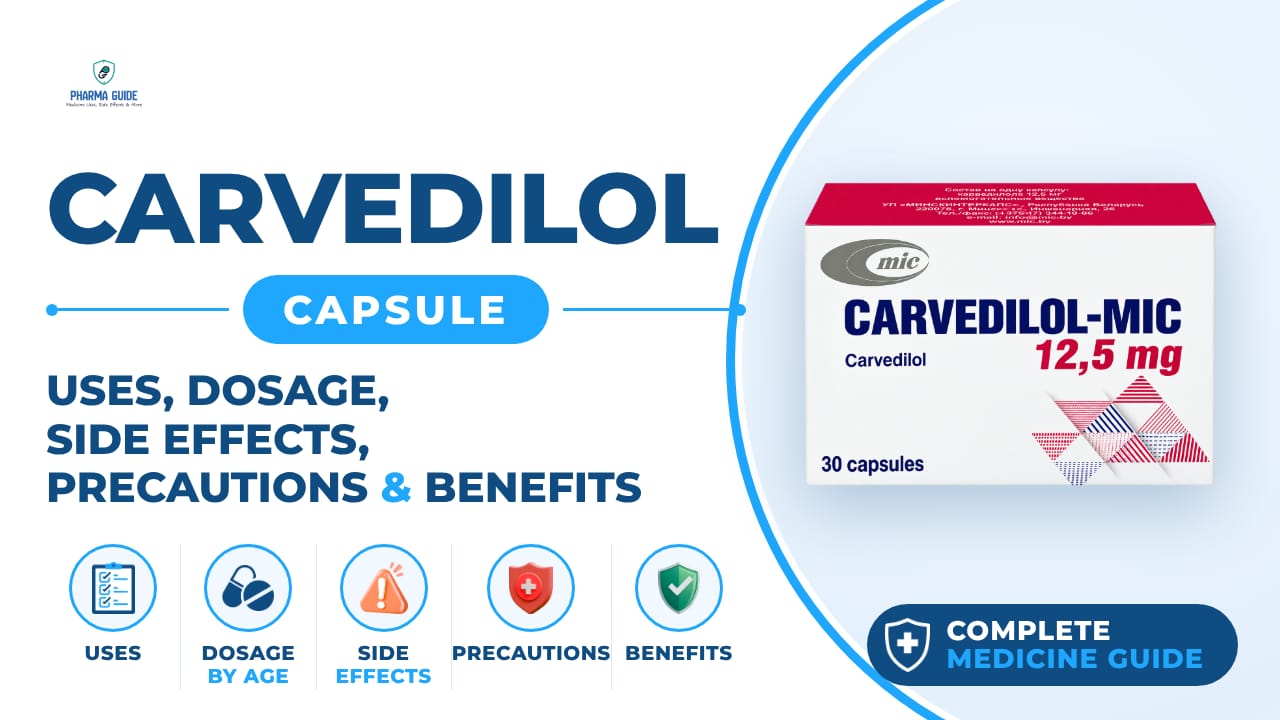
Carvedilol Capsule: Uses, Dosage, Side Effects, Precautions and Alternates
| Generic name | carvedilol |
|---|---|
| Drug class | Non-cardioselective beta blocker (alpha and beta blocker) |
| Forms | Oral tablet, Oral extended-release capsule |
Quick overview
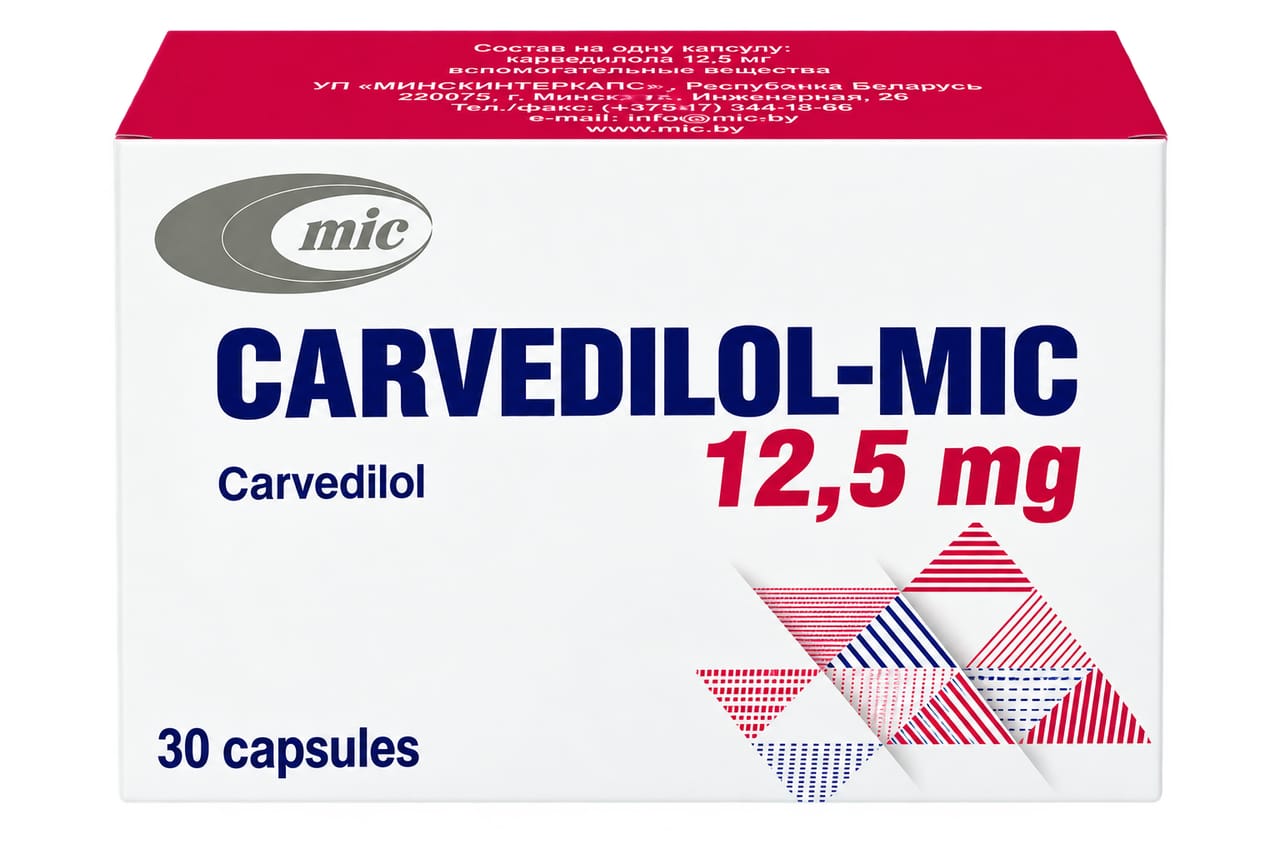
Carvedilol Capsule, known generically as carvedilol, is a non-cardioselective beta blocker that also blocks alpha receptors. It is used to treat heart failure and high blood pressure, and to help improve heart function after a heart attack. Carvedilol works by affecting the heart and blood flow through arteries and veins, lowering heart rate and blood pressure. It is available as an oral tablet and as an oral extended-release capsule.
What is Carvedilol Capsule
Carvedilol is a beta-blocker that affects the heart and blood flow through arteries and veins. It is used to treat heart failure and high blood pressure, and after a heart attack.
Carvedilol Capsule uses
- Heart failure
- High blood pressure (hypertension)
- Improving heart function after a heart attack that has caused the heart not to pump as well (left ventricular dysfunction)
Benefits of Carvedilol Capsule
- Helps lower high blood pressure (hypertension).
- Helps treat chronic heart failure and improve heart function.
- Reduces the heart rate and workload on the heart.
- Helps relax blood vessels and improve blood flow.
- May improve survival in certain patients with left ventricular dysfunction after a heart attack.
- Extended-release carvedilol capsules can provide once-daily blood-pressure and heart-failure control.
How Carvedilol Capsule works
Carvedilol blocks the action of natural substances like epinephrine on the heart and blood vessels. This lowers heart rate, blood pressure, and the strain on the heart. It also widens blood vessels, which helps lower blood pressure.
Carvedilol Capsule dosage
Take carvedilol with food to help reduce the risk of side effects. Swallow the extended-release capsule whole; do not crush or chew it. If you have trouble swallowing, you may open the capsule and sprinkle the contents into a spoonful of applesauce (not warm) and swallow right away without chewing; do not save the mixture for later, and discard the empty capsule.
Take carvedilol at the same time every day. Do not skip doses or stop taking carvedilol without talking to your doctor first, since stopping suddenly can cause chest pain or a heart attack. If you are switched between carvedilol tablets and extended-release capsules, follow your doctor's instructions carefully, as older adults may be more likely to feel dizzy or faint with this switch.
Keep taking this medicine even if you feel well, since high blood pressure often has no symptoms. If you miss a dose, take it as soon as you remember, but skip it if it is almost time for your next dose; do not take an extra dose to make up for a missed one.
Tell your surgeon or eye surgeon ahead of time if you are using carvedilol before any surgery, including cataract surgery.
| Age group | Dose |
|---|---|
| Under 18 years | Safety and effectiveness not established for routine use |
| 18–64 years – Hypertension | Usually 20 mg ER once daily initially; may increase according to response |
| 18–64 years – Heart failure | Usually 10 mg ER once daily initially, followed by gradual titration |
| 65+ years | Start at the lower end of the dosing range and titrate cautiously |
Available forms and strengths
- Oral tablet
- Oral extended-release capsule
Side effects of Carvedilol Capsule
Common
- Weakness, dizziness
- Diarrhea
- Dry eyes
- Tired feeling
- Weight gain
- Low blood pressure
- High blood sugar
- Slower heart rate
- Changes in sex drive or performance
- Dry, itchy skin
- Headache
- Nausea
Serious
- Allergic reaction: hives, difficulty breathing, swelling of face, lips, tongue, or throat
- Light-headed feeling, like you might pass out
- Slow or uneven heartbeats
- Swelling, rapid weight gain, feeling short of breath (even with mild exertion)
- Cold feeling or numbness in fingers or toes
- Chest pain, dry cough, wheezing, chest tightness, trouble breathing
- High blood sugar symptoms: increased thirst, increased urination, hunger, dry mouth, fruity breath odor, drowsiness, dry skin, blurred vision, weight loss
- Liver problems: dark-colored urine, vomiting, yellowing of skin or eyes
- Eye problems: change in eyesight, changes in how contact lenses feel
- Urinary problems: being unable to pass urine, change in how much urine you pass
- Worsening mood or feelings of depression
- Raynaud's symptoms: cool, numb, or painful fingers or toes that change color
Warnings and precautions
- Do not stop taking carvedilol suddenly without talking to your doctor, since this can cause changes in heart rhythm, worsened chest pain, or a heart attack. Your doctor will slowly lower your dose over one to two weeks if you need to stop.
- Carvedilol can cause dangerously low blood pressure, especially after your first doses and during dose increases. This can cause you to lose consciousness. Taking it with food and starting at a low dose that is slowly increased can lower this risk.
- You should not take carvedilol if you have asthma, bronchitis, emphysema, severe liver disease, severe heart failure requiring certain IV medications, or a serious heart condition such as heart block, sick sinus syndrome, or a slow heart rate (unless you have a pacemaker).
- Carvedilol can cause low blood sugar and delay how long it takes blood sugar to return to normal. It may also hide the usual warning signs of low blood sugar, so people with diabetes should use it carefully.
- A single dose of carvedilol can be fatal in people with asthma, so people with asthma or related lung conditions should not use this drug.
- If you have ever had an allergic reaction to carvedilol, do not take it again, as this could be fatal.
- Tell your eye surgeon ahead of time if you are taking carvedilol before cataract surgery, since it can affect your pupils during the procedure and increase the risk of a condition called small pupil syndrome.
- It is not known whether carvedilol will harm an unborn baby. This drug is in pregnancy category C, meaning animal studies showed risk to the fetus but there isn't enough human data. Tell your doctor if you are pregnant or planning to become pregnant.
- It is not known whether carvedilol passes into breast milk or if it could harm a nursing baby. Talk with your doctor about the best way to feed your baby if you are taking this medicine.
- Carvedilol can worsen kidney function in people with heart failure, especially if you have low blood pressure or heart or vascular disease. Your doctor will monitor your kidney function and may adjust your dose.
- You should not take carvedilol if you have severe liver disease. Since the drug is broken down by the liver, poor liver function can cause higher levels of the drug in your body, leading to serious side effects like dangerously low blood pressure or slow heart rate.
- Drinking alcohol can further lower your blood pressure and increase certain side effects. Avoid alcohol within 2 hours before or after taking the extended-release capsule, since alcohol may cause the medicine to be released too quickly into the body.
- This medicine may impair your thinking or reactions and can cause drowsiness and dizziness. Be careful driving or doing anything that requires alertness until you know how it affects you.
Storage
- Store at 20–25°C (68–77°F) or according to the specific product label.
- Keep in a cool, dry place away from excessive heat.
- Protect capsules from light and moisture.
- Keep in the original, tightly closed container until use.
- Avoid storing in bathrooms or other humid areas.
- Keep out of reach of children and pets.
When to see a doctor
- Get emergency help right away if you have signs of an allergic reaction, such as hives, difficulty breathing, or swelling of your face, lips, tongue, or throat.
- Call your doctor right away if you feel light-headed like you might pass out, have slow or uneven heartbeats, notice swelling or rapid weight gain, feel short of breath even with mild activity, or have chest pain, wheezing, or trouble breathing.
- If you think you have taken too much of this medicine, contact a poison control center or go to the emergency room right away. Overdose symptoms may include uneven heartbeats, shortness of breath, bluish-colored fingernails, dizziness, weakness, fainting, and seizures.
- Call your doctor if you notice signs of liver problems, such as dark-colored urine, vomiting, or yellowing of your skin or eyes.
Alternatives
- Amlodipine
- Propranolol
- Nebivolol
- Bisoprolol
- Metoprolol
Watch the video
FAQs
What is Carvedilol Capsule used for?
It is used to treat heart failure, high blood pressure, and to help improve heart function after a heart attack that has caused the heart not to pump as well.
How should I take the extended-release carvedilol capsule?
Take it with food at the same time every day. Swallow it whole, or if you have trouble swallowing, open it and sprinkle the contents into a spoonful of cool applesauce and swallow right away without chewing.
Can I stop taking carvedilol suddenly?
No, you should not stop taking carvedilol suddenly without talking to your doctor, as this can cause changes in heart rhythm, worsened chest pain, or a heart attack. Your doctor will lower your dose gradually over one to two weeks.
Who should not take carvedilol?
People with asthma, bronchitis, emphysema, severe liver disease, severe heart failure requiring certain IV medications, or serious heart conditions like heart block, sick sinus syndrome, or a slow heart rate (without a pacemaker) should not take carvedilol.
Can carvedilol affect blood sugar?
Yes, carvedilol can cause low blood sugar, delay how long it takes blood sugar to return to normal, and hide the usual warning signs of low blood sugar, so people with diabetes should use it carefully.
General information, not medical advice
Your prescriber and the leaflet in your pack know your situation. This page does not.
- Follow your prescriber and the leaflet
- Don't start, stop, or change a dose on your own
- Doses and warnings differ by country and product
Sources
Video
Related medicines

Injectafer Injection: Uses, Dosage, Side Effects, Precautions and Alternates
Iron products
Injectafer (ferric carboxymaltose) treats iron deficiency anemia and heart failure-related iron deficiency via IV. Learn uses, dosage, side effects, and

Gliclazide Tablet: Uses, Dosage, Side Effects, Precautions and Alternates
Sulfonylurea (hypoglycemic/antidiabetic agent)
Gliclazide Tablet is a sulfonylurea for type 2 diabetes that boosts insulin release. Learn about dosage, side effects, warnings, and precautions.