
Safety
General information, not medical advice
Your prescriber and the leaflet in your pack know your situation. This page does not.
- Follow your prescriber and the leaflet
- Don't start, stop, or change a dose on your own
- Doses and warnings differ by country and product
Carvykti Injection: Uses, Dosage, Side Effects, Precautions and Alternates
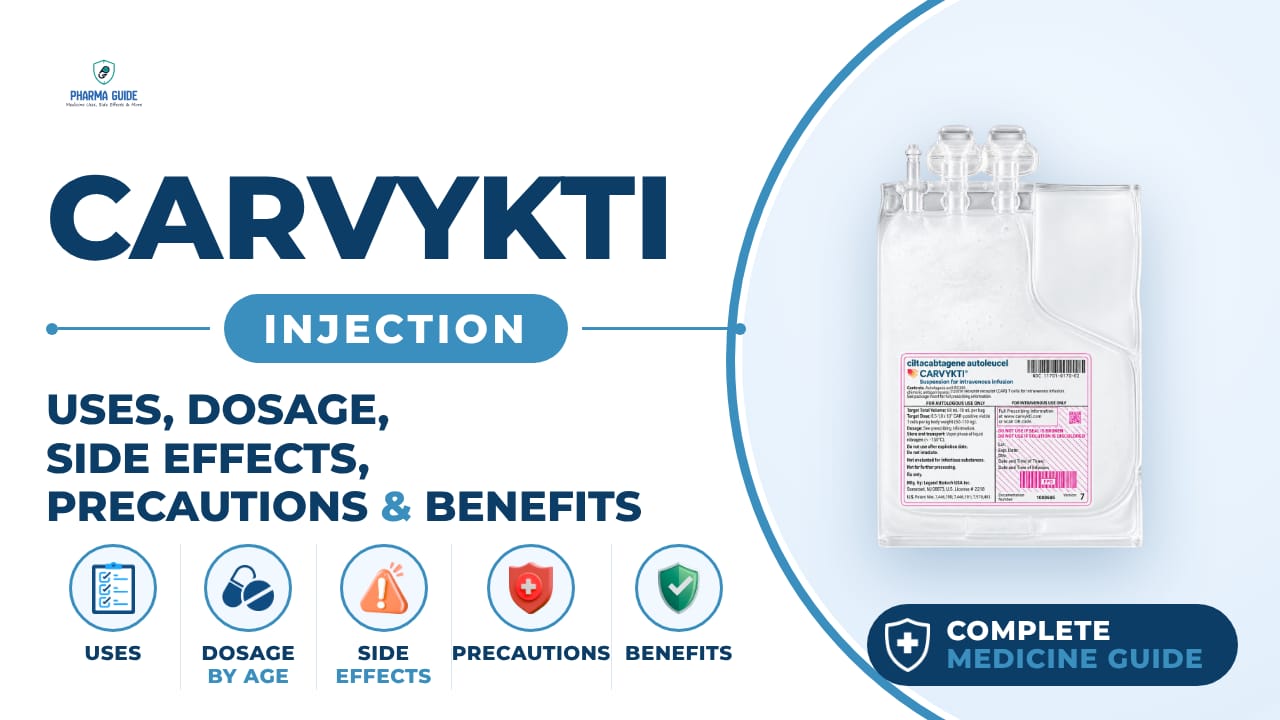
| Generic name | ciltacabtagene autoleucel |
|---|---|
| Drug class | CAR-T cell therapy (chimeric antigen receptor T-cell immunotherapy), BCMA-directed genetically modified autologous T cell immunotherapy |
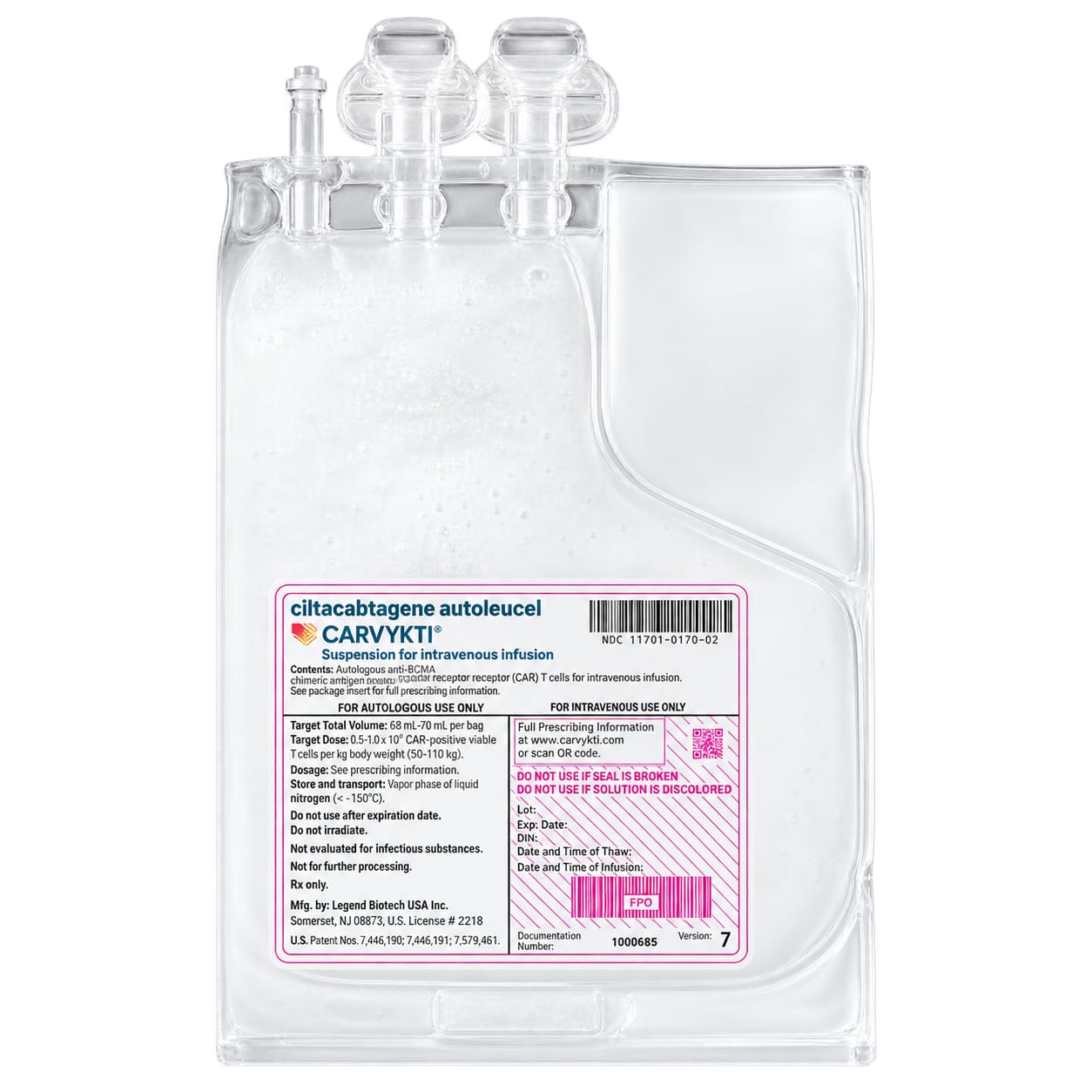
| Forms | Dispersion for infusion (given intravenously), supplied in a single-use infusion bag within a cryo cassette |
Quick overview
Carvykti Injection (ciltacabtagene autoleucel) is a BCMA-directed CAR-T cell immunotherapy made from a patient's own genetically modified T cells. It is used to treat adults with relapsed and refractory multiple myeloma who have already received several prior therapies. Carvykti is given as a single intravenous infusion after a short course of conditioning chemotherapy, and it carries serious risks such as cytokine release syndrome and neurologic toxicities that require close monitoring.
What is Carvykti Injection
Carvykti is a one-time cell therapy made from your own white blood cells (T cells). Your T cells are collected, sent to a lab, and genetically modified to carry a special receptor (CAR) that recognizes a protein called BCMA found on multiple myeloma cells. The modified cells are then infused back into your body to find and destroy the cancer cells.
Carvykti Injection uses
- Treatment of adult patients with relapsed and refractory multiple myeloma who have received at least three prior therapies, including an immunomodulatory agent, a proteasome inhibitor and an anti-CD38 antibody, and have demonstrated disease progression on the last therapy
- May be used as early as after one prior line of therapy in certain patients whose disease no longer responds to lenalidomide and who have already been treated with a proteasome inhibitor and an immunomodulatory agent (per US prescribing information)
Benefits of Carvykti Injection
- Treats certain relapsed or refractory multiple myeloma
- Targets BCMA on malignant plasma cells
- Uses the patient's own genetically modified T cells
- Provides a single-infusion CAR T-cell treatment
- Can produce deep and durable responses in eligible patients
How Carvykti Injection works
Carvykti reprograms a patient's own T cells to carry a chimeric antigen receptor (CAR) that recognizes BCMA, a protein found mainly on malignant multiple myeloma cells as well as some normal late-stage B cells and plasma cells. When the CAR on the T cells binds to BCMA on these cells, it activates the T cells, causing them to multiply and destroy the cells carrying BCMA.
Carvykti Injection dosage
Treatment involves several steps: collection of your blood cells (apheresis), manufacturing of the modified cells over about four weeks, a short course of chemotherapy to prepare your body, and then a single infusion of the cell therapy. You may receive other anti-myeloma treatment (bridging therapy) while your cells are being manufactured, to help keep the disease stable. A short course of conditioning chemotherapy is given in the days before the infusion to reduce the number of your existing white blood cells so the modified cells can expand better in your body.
The infusion itself is given into a vein and usually takes less than 60 minutes. After the infusion, you should remain near the treatment center for at least 4 weeks so your care team can monitor you daily at first and then periodically for signs of serious reactions. Because of the risk of neurological effects, you should avoid driving, operating machinery, or engaging in hazardous activities for at least 8 weeks after infusion, or longer if symptoms are present.
This is a one-time treatment and is not repeated in the same way as typical ongoing medications; retreatment may be considered only in specific circumstances agreed with your doctor. Live vaccines should be avoided for a period before and after treatment while your immune system recovers.
| Age group | Dose |
|---|---|
| 18–64 years | Not dosed in mg; target dose is 0.5–1.0 × 10⁶ CAR-positive viable T cells/kg as a single IV infusion, with a maximum of 1 × 10⁸ CAR-positive viable T cells |
Available forms and strengths
- Dispersion for infusion (given intravenously), supplied in a single-use infusion bag within a cryo cassette
Side effects of Carvykti Injection
Common
- Low blood cell counts (neutropenia, anemia, thrombocytopenia, leukopenia, lymphopenia)
- Fever
- Cytokine release syndrome
- Low immunoglobulin levels
- Low blood pressure
- Muscle and joint pain
- Fatigue/tiredness
- Infections (upper respiratory tract infection, bacterial infection)
- Diarrhea
- Chills
- Nausea, vomiting, constipation, decreased appetite
- Headache
- Cough
- Dizziness
- Swelling (oedema)
- Fast heartbeat (tachycardia)
- Hypertension
Serious
- Cytokine release syndrome (CRS), including fatal or life-threatening reactions, with fever, chills, low blood pressure, difficulty breathing, fast heartbeat
- Neurologic toxicities including immune effector cell-associated neurotoxicity syndrome (ICANS): confusion, difficulty speaking, decreased consciousness, seizures
- Movement and neurocognitive toxicity with signs of parkinsonism (tremor, slowed movement, small handwriting, personality changes) that may be delayed in onset and long-lasting
- Guillain-Barré syndrome and peripheral neuropathy
- Cranial nerve palsies
- Prolonged or recurrent low blood cell counts (cytopenias) leading to bleeding or infection risk
- Serious or life-threatening infections, including viral, bacterial, and fungal infections
- Hemophagocytic lymphohistiocytosis/macrophage activation syndrome (HLH/MAS)
- Hypogammaglobulinemia (low antibody levels) increasing infection risk
- Secondary cancers, including myelodysplastic syndrome and acute myeloid leukemia, and T-cell malignancies
- Immune effector cell-associated enterocolitis (severe or persistent diarrhea, abdominal pain, risk of bowel rupture)
- Severe hypersensitivity/allergic reactions during infusion
- Increased risk of early death, including from disease progression or treatment-related side effects
Warnings and precautions
- Carvykti can cause cytokine release syndrome (CRS), a serious and potentially life-threatening immune reaction with fever, low blood pressure, and breathing problems, usually occurring within the first couple of weeks after infusion.
- Serious and sometimes fatal neurologic toxicities can occur, including immune effector cell-associated neurotoxicity syndrome (ICANS), movement and neurocognitive problems resembling parkinsonism, Guillain-Barré syndrome, peripheral neuropathy, and cranial nerve palsies.
- Treatment can cause prolonged low blood cell counts, increasing risk of bleeding and infection, which may last for weeks after infusion.
- Serious, life-threatening infections can occur after treatment, and prior hepatitis B infection may reactivate.
- Secondary cancers, including blood cancers such as myelodysplastic syndrome and acute myeloid leukemia, as well as T-cell malignancies, have occurred after treatment with CAR-T therapies like Carvykti.
- Because of these serious risks, Carvykti is only available through a controlled distribution program, and treatment centers must have certain medications available on-site before giving the infusion.
- Carvykti should not be given to patients with clinically significant active infections or inflammatory disorders, and its infusion should be delayed in certain situations, such as unresolved serious side effects from prior therapies.
- Pregnancy must be ruled out before starting treatment. Carvykti is not recommended for women who are pregnant or who are not using contraception, as the effects on an unborn baby are unknown and there may be risks to the fetus.
- It isn't known whether Carvykti passes into breast milk, so there may be a risk to a breastfed infant. Discuss breastfeeding plans with your treating doctor before and after treatment.
- No dedicated studies were done in people with kidney problems, but mild kidney impairment did not appear to change how the treatment behaves in the body. Patients with inadequate kidney function were excluded from the main clinical trial.
- No dedicated studies were done in people with liver problems, but mild liver impairment did not appear to change how the treatment behaves in the body. Patients with significantly abnormal liver function were excluded from the main clinical trial.
- Carvykti can affect your ability to safely drive or use machinery due to risks of confusion, dizziness, seizures, and coordination problems, particularly in the weeks after infusion. You should not drive or use machines for at least 8 weeks after treatment, or longer if symptoms continue.
Storage
- The product must be stored and transported frozen in the vapor phase of liquid nitrogen at or below -120°C until it is ready to be used
- The medicine must not be thawed until the treatment team is ready to administer it
- Once thawed, the product must not be refrozen or refrigerated and should not be shaken
- After thawing, the infusion must be completed within 2.5 hours
- Unused medicine or waste material must be disposed of according to local guidelines for handling of human-derived material
When to see a doctor
- Seek medical help immediately if you develop signs of cytokine release syndrome, including fever, chills, fast heartbeat, difficulty breathing, dizziness, or low blood pressure.
- Seek medical help immediately if you notice confusion, disorientation, memory loss, difficulty speaking or slurred speech, slowed movements, changes in handwriting, loss of coordination, or difficulty understanding words, as these may be signs of serious nervous system effects.
- Contact your care team right away if you have signs of infection such as fever, chills, body aches, or fast heartbeat, as Carvykti can increase the risk of life-threatening infections.
- Tell your doctor right away if you develop diarrhea, abdominal pain, weight loss, fever, chills, or any signs of infection, as these could indicate serious bowel inflammation (immune effector cell-associated enterocolitis).
- Seek emergency help for any signs of a severe allergic reaction, such as hives, swelling of the face, lips, tongue, or throat, or difficulty breathing.
Alternatives
- Abecma
- Tecvayli
- Elrexfio
Watch the video
FAQs
What is Carvykti Injection used for?
Carvykti is used to treat adults with relapsed and refractory multiple myeloma who have received at least three prior therapies, including an immunomodulatory agent, a proteasome inhibitor, and an anti-CD38 antibody, and whose disease progressed on the last therapy. It may also be used after one prior line of therapy in certain patients whose disease no longer responds to lenalidomide.
How does Carvykti work?
Carvykti reprograms a patient's own T cells to carry a chimeric antigen receptor (CAR) that recognizes BCMA, a protein found mainly on malignant multiple myeloma cells. When the CAR binds to BCMA, it activates the T cells, causing them to multiply and destroy the cells carrying BCMA.
What are the serious side effects of Carvykti?
Serious side effects include cytokine release syndrome, neurologic toxicities such as ICANS and parkinsonism-like symptoms, Guillain-Barré syndrome, prolonged low blood cell counts, serious infections, HLH/MAS, hypogammaglobulinemia, secondary cancers, and severe bowel inflammation (immune effector cell-associated enterocolitis).
How is Carvykti administered?
Treatment involves collecting your blood cells, manufacturing the modified cells over about four weeks, a short course of conditioning chemotherapy, and then a single IV infusion that usually takes less than 60 minutes. You must remain near the treatment center for at least 4 weeks for monitoring.
How long should I avoid driving after Carvykti treatment?
You should avoid driving, operating machinery, or engaging in hazardous activities for at least 8 weeks after the infusion, or longer if neurological symptoms are present.
General information, not medical advice
Your prescriber and the leaflet in your pack know your situation. This page does not.
- Follow your prescriber and the leaflet
- Don't start, stop, or change a dose on your own
- Doses and warnings differ by country and product
Sources
- https://www.ema.europa.eu/en/documents/assessment-report/carvykti-epar-public-assessment-report_en.pdf
- https://ec.europa.eu/health/documents/community-register/2023/20230324158506/anx_158506_en.pdf
- https://www.goodrx.com/carvykti/what-is?srsltid=AU7gw4WC_ygZFBx02S11oVpJ7dhoVxfwiP6zMqYU36NwTBuV6nm0h8AD
Video
Related medicines

Injectafer Injection: Uses, Dosage, Side Effects, Precautions and Alternates
Iron products
Injectafer (ferric carboxymaltose) treats iron deficiency anemia and heart failure-related iron deficiency via IV. Learn uses, dosage, side effects, and

Gliclazide Tablet: Uses, Dosage, Side Effects, Precautions and Alternates
Sulfonylurea (hypoglycemic/antidiabetic agent)
Gliclazide Tablet is a sulfonylurea for type 2 diabetes that boosts insulin release. Learn about dosage, side effects, warnings, and precautions.