
Safety
General information, not medical advice
Your prescriber and the leaflet in your pack know your situation. This page does not.
- Follow your prescriber and the leaflet
- Don't start, stop, or change a dose on your own
- Doses and warnings differ by country and product
Cefazolin Injection: Uses, Dosage, Side Effects, Precautions and Alternates
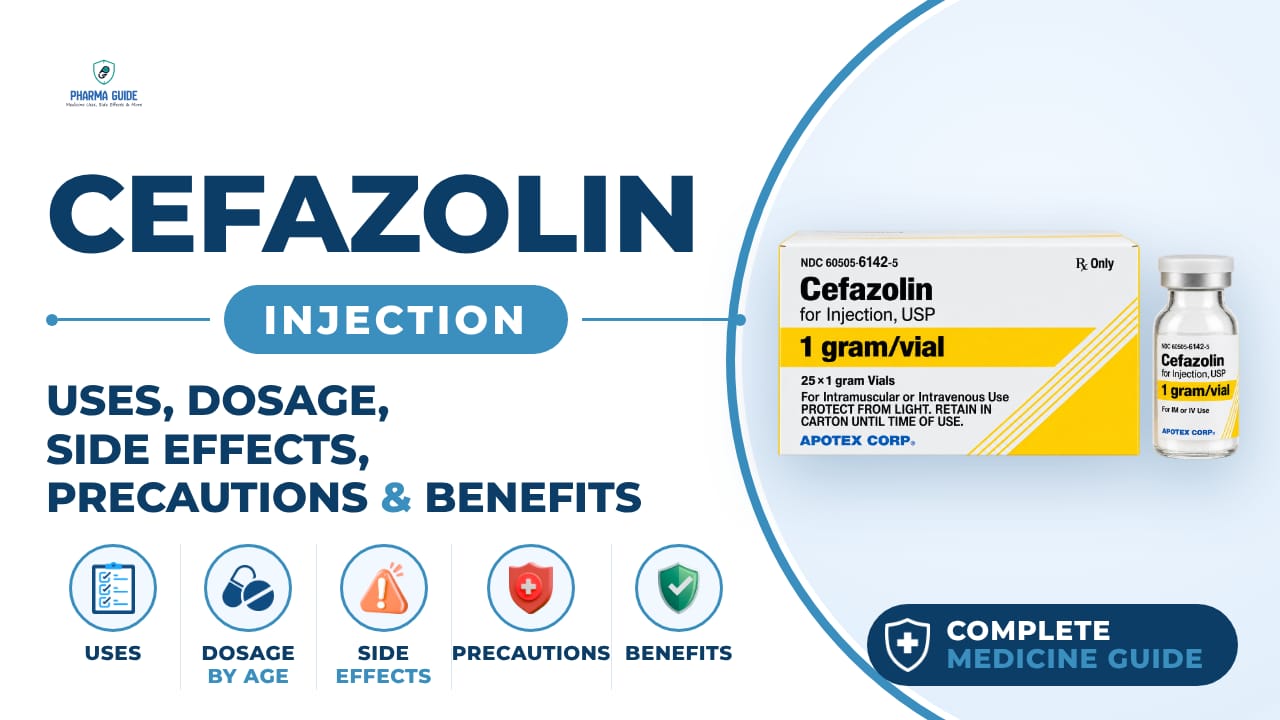
| Generic name | cefazolin sodium |
|---|---|
| Drug class | Cephalosporin antibiotic |
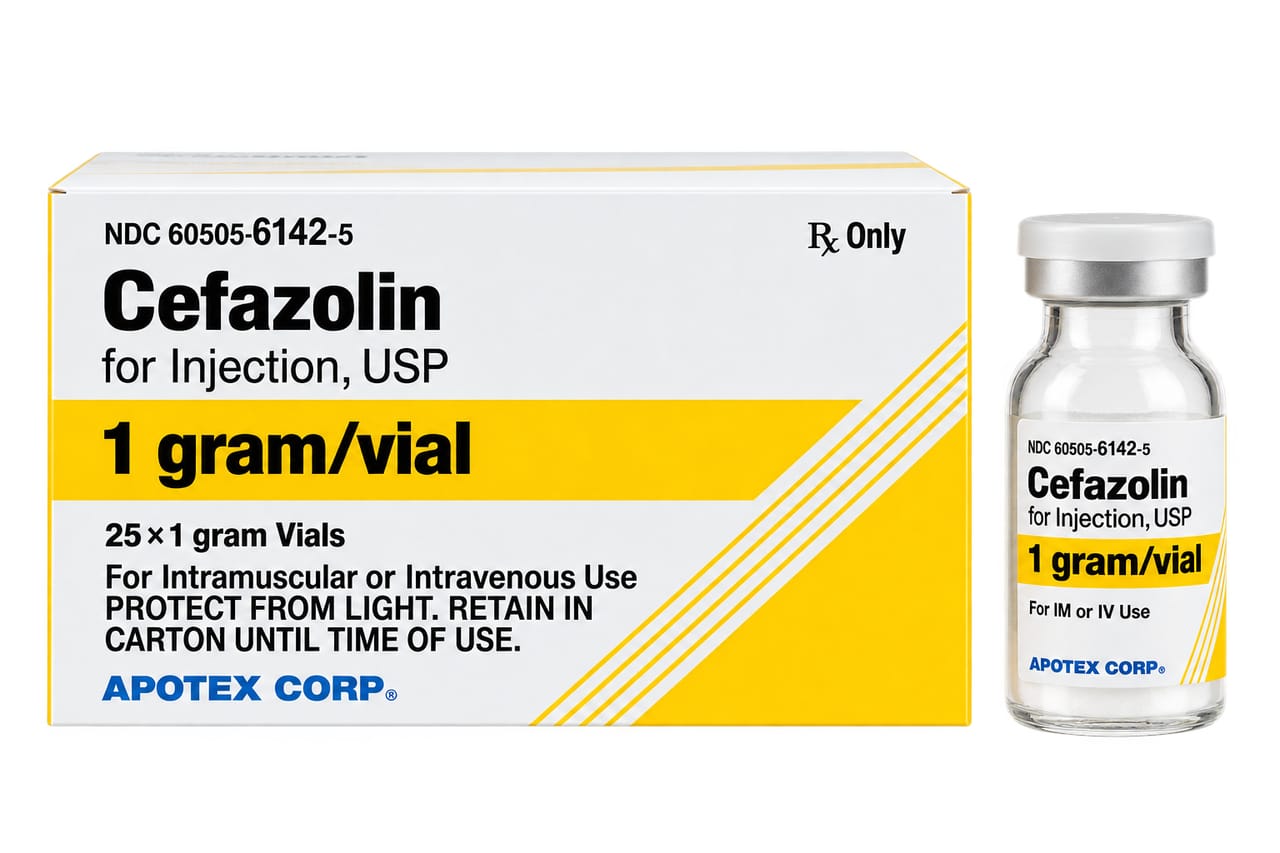
| Forms | Premixed frozen solution for intravenous infusion in single-dose plastic (GALAXY) containers, available as 1000 mg in 50 mL or 2000 mg in 100 mL, Powder to be mixed with liquid for injection, or a premixed product for intravenous or intramuscular injection |
Quick overview
Cefazolin Injection (cefazolin sodium) is a cephalosporin antibiotic given by injection to treat bacterial infections in many parts of the body. It comes as a ready-to-use sterile solution and can also be given to help prevent infections before and after surgery. It works by stopping bacteria from building their cell walls, which kills them.
What is Cefazolin Injection
Cefazolin is an antibiotic that belongs to a class of drugs called cephalosporins. It is given by injection to treat bacterial infections and comes as a ready-to-use sterile solution.
Cefazolin Injection uses
- Treating infections caused by certain bacteria in many parts of the body, including pneumonia
- Respiratory tract infections
- Urinary tract infections
- Skin and soft tissue infections
- Bone and joint infections
- Biliary tract infections
- Genital infections
- Septicemia (blood infection)
- Endocarditis (heart valve infection)
- Preventing infections before and after surgery (perioperative prophylaxis)
Benefits of Cefazolin Injection
- Provides effective activity against many susceptible Gram-positive bacteria
- Widely used for perioperative infection prevention
- Can be given by IV or IM injection
- Has an established role in treating susceptible MSSA infections
How Cefazolin Injection works
Cefazolin works by killing bacteria. It stops bacteria from being able to build their cell walls, which kills them.
Cefazolin Injection dosage
This medicine is given by a healthcare professional as an injection into a vein, usually over about 30 minutes; it can also be given into a muscle. Use it exactly as directed even if you start feeling better early in treatment. Keep taking the full course of treatment; stopping early or skipping doses can let bacteria survive and become resistant to the antibiotic. Do not share this medicine with anyone else.
For beta-haemolytic streptococcal infections, treatment is usually continued for at least 10 days to avoid complications. You can follow your normal diet while receiving this medicine unless your doctor tells you otherwise. If you miss a scheduled injection appointment, contact your healthcare professional as soon as possible.
| Age group | Dose |
|---|---|
| 12–17 years | Usually weight-based; larger adolescents may receive adult dosing depending on body weight and infection |
| 18–64 years | Commonly 500 mg–1 g IV/IM every 6–8 hours, depending on infection severity |
Available forms and strengths
- Premixed frozen solution for intravenous infusion in single-dose plastic (GALAXY) containers, available as 1000 mg in 50 mL or 2000 mg in 100 mL
- Powder to be mixed with liquid for injection, or a premixed product for intravenous or intramuscular injection
Side effects of Cefazolin Injection
Common
- Diarrhea
- Nausea
- Vomiting
- Stomach cramps
- Loss of appetite
- Oral thrush (white patches in mouth)
- Rash, itching
- Pain, tenderness, redness, swelling, or a hardened mass at the injection site
- Vaginal and anal itching
Serious
- Severe allergic reaction: rash, hives, swelling of the face, lips, tongue or throat, difficulty breathing or swallowing, or blistering/peeling skin
- Watery or bloody diarrhea, stomach cramps, or fever during or for up to two or more months after treatment (possible bowel infection called pseudomembranous colitis)
- Liver problems: yellowing of skin or eyes, dark urine, abdominal pain, nausea, vomiting, loss of appetite
- Anemia: fatigue, loss of energy, weakness, shortness of breath
- Swelling in legs and feet, decreased urination (possible kidney problems)
- Fainting
- Seizures, especially in people with kidney problems
- Signs of low white blood cells: infection, fatigue, fever, aches, flu-like symptoms
- Signs of increased platelets: burning, redness, throbbing, numbness or tingling in hands and feet, headache, dizziness, weakness, chest pain, vision changes
- Return of fever, sore throat, chills, or other signs of infection
Warnings and precautions
- This medicine should not be used if you have had an allergic reaction to cefazolin or other cephalosporin antibiotics.
- People allergic to penicillin may also react to cefazolin, since there is some cross-reaction between the two drug types. This should be used cautiously in penicillin-allergic patients, and serious allergic reactions have occurred, including rare fatal cases.
- Antibiotic use, including this medicine, has been linked to a serious bowel condition called pseudomembranous colitis, which can cause diarrhea during or even months after treatment.
- People with reduced kidney function who receive doses that are too high for their kidney function may have seizures.
- This medicine contains dextrose, so it should be used cautiously in people allergic to corn or corn products.
- Using this antibiotic when it is not truly needed will not help you and increases the risk that bacteria will become resistant to it.
- The safety of using cefazolin during pregnancy has not been firmly established, though available studies have not shown it causes major birth defects or pregnancy problems.
- Tell your doctor if you are pregnant or planning to become pregnant.
- Only very small amounts of cefazolin pass into breast milk. It should be used with caution by breastfeeding mothers, and you should tell your doctor if you are breastfeeding.
- People with reduced kidney function need lower doses of cefazolin, given less often, because the drug is removed from the body by the kidneys. Tell your doctor if you have kidney problems.
- Tell your doctor if you have kidney problems with or without liver problems before starting this medicine.
- No major direct interaction with alcohol is established.
- This medicine usually does not impair driving, but avoid driving if dizziness or confusion occurs.
Storage
- Frozen bags are stored by your healthcare professional at or below -20°C and thawed at room temperature before use
- Thaw frozen container at room temperature or under refrigeration; do not force thaw by immersing in water baths or using a microwave
- If leaks are found when checking the container, the solution should be discarded because sterility may be affected
- The thawed solution is stable for 30 days under refrigeration and 48 hours at room temperature; do not refreeze thawed antibiotics
- Keep out of reach and sight of children
- Dispose of unneeded medication so that pets, children, and other people cannot access it; do not flush it down the toilet, and use a medicine take-back program if available
When to see a doctor
- Get emergency medical help right away if you have signs of a severe allergic reaction, such as rash, hives, swelling of the face, lips, tongue, or throat, or trouble breathing or swallowing.
- Stop the medicine and get medical help if you develop watery or bloody diarrhea with stomach cramps or fever, even up to two months after finishing treatment — this could be a serious bowel infection.
- Seek medical attention for signs of liver problems such as yellowing of the skin or eyes, dark urine, or pain in the upper right stomach area.
- Get help if you have seizures while on this medicine.
- Tell your healthcare professional right away if you think you may have been given too much of this medicine, even if you feel fine.
- Call your doctor if you have a return of fever, sore throat, chills, or other signs of a new infection.
Alternatives
- Cephalexin
- Nafcillin
- Oxacillin
Watch the video
FAQs
What is Cefazolin Injection used for?
It treats bacterial infections such as pneumonia, respiratory and urinary tract infections, skin and soft tissue infections, bone and joint infections, biliary and genital infections, septicemia, and endocarditis. It is also used to prevent infections before and after surgery.
How does Cefazolin Injection work?
Cefazolin kills bacteria by stopping them from building their cell walls.
How is Cefazolin Injection given?
It is given by a healthcare professional as an injection into a vein, usually over about 30 minutes, or it can be given into a muscle. It's important to complete the full course even if you feel better early.
Can people allergic to penicillin take Cefazolin Injection?
People allergic to penicillin may also react to cefazolin due to cross-reaction between the two drug types, so it should be used cautiously in penicillin-allergic patients, as serious allergic reactions, including rare fatal cases, have occurred.
What are the common side effects of Cefazolin Injection?
Common side effects include diarrhea, nausea, vomiting, stomach cramps, loss of appetite, oral thrush, rash, itching, injection site reactions, and vaginal or anal itching.
General information, not medical advice
Your prescriber and the leaflet in your pack know your situation. This page does not.
- Follow your prescriber and the leaflet
- Don't start, stop, or change a dose on your own
- Doses and warnings differ by country and product
Sources
Video
Related medicines
Duricef Capsule: Uses, Dosage, Side Effects, Precautions and Alternates
Cephalosporin antibiotic
Duricef Capsule (cefadroxil) treats UTIs, skin infections, and strep throat. Learn uses, dosage, side effects, warnings, and precautions before taking it.
Ancef Injection: Uses, Dosage, Side Effects, Precautions and Alternates
cephalosporin antibiotic
Ancef Injection (cefazolin) is a cephalosporin antibiotic used to treat infections and prevent surgical infections. Learn uses, dosage, and side effects.