
Safety
General information, not medical advice
Your prescriber and the leaflet in your pack know your situation. This page does not.
- Follow your prescriber and the leaflet
- Don't start, stop, or change a dose on your own
- Doses and warnings differ by country and product
Cefepime Injection: Uses, Dosage, Side Effects, Precautions and Alternates
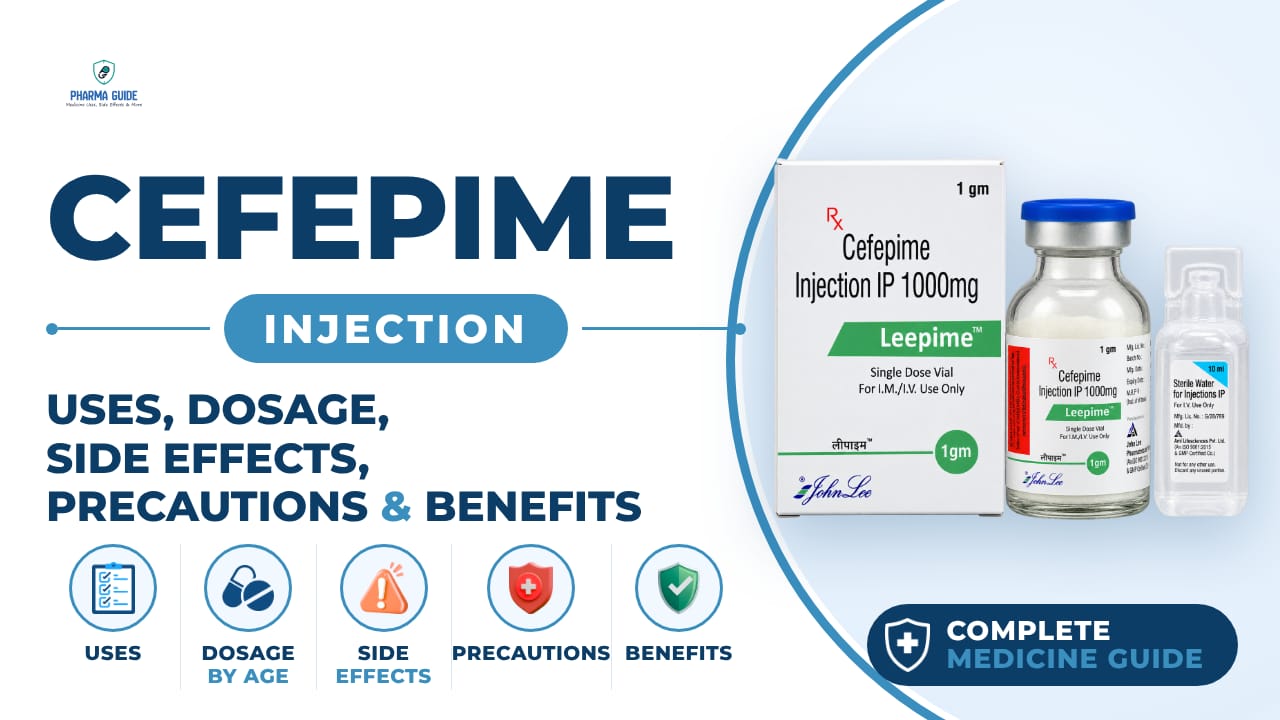
| Generic name | Cefepime hydrochloride |
|---|---|
| Drug class | Cephalosporin antibiotic |
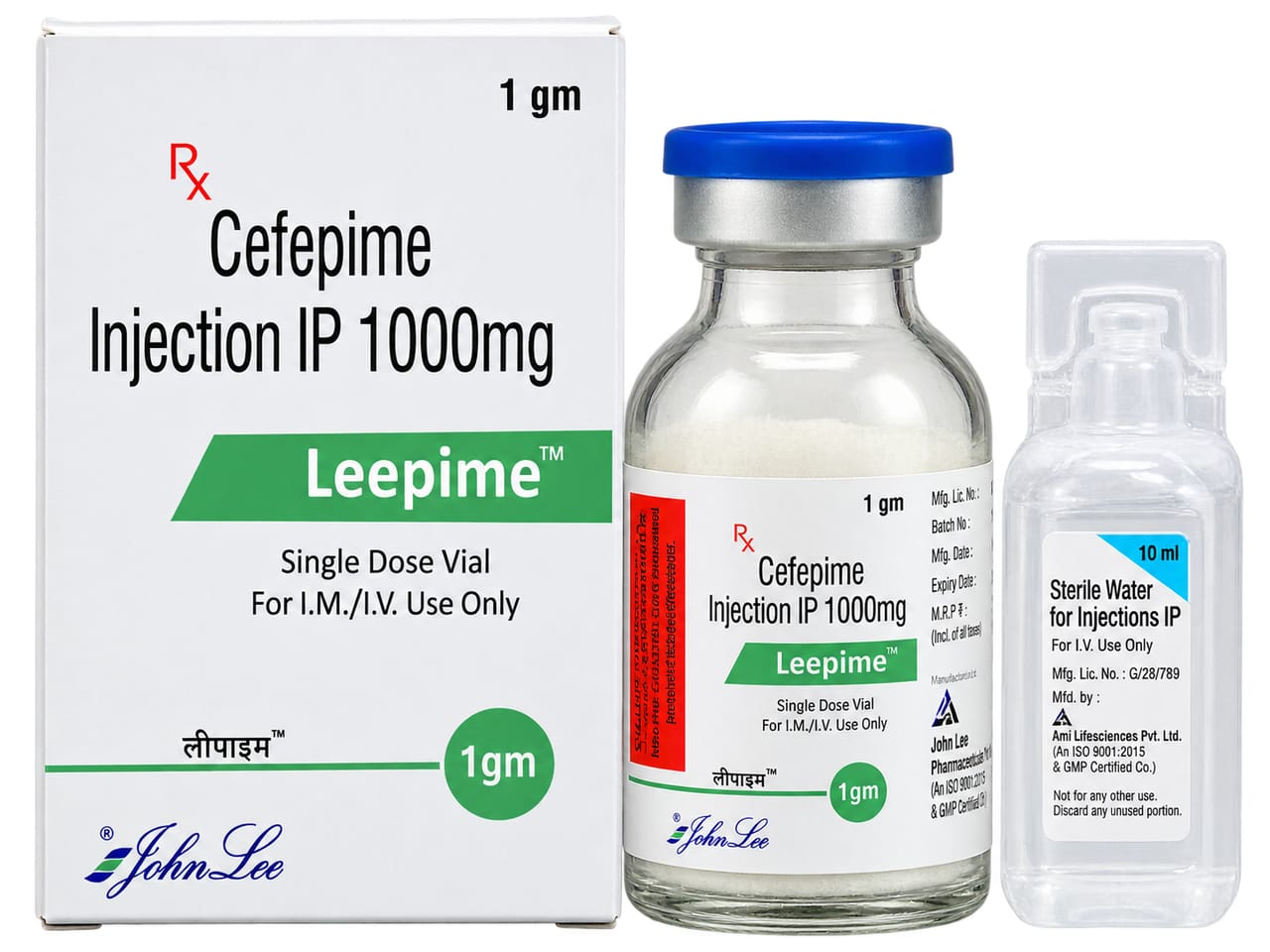
| Forms | Powder for injection (500 mg, 1 g, and 2 g vials), ADD-Vantage vials, Premixed frozen solution in Galaxy Containers (1 g in 50 mL, 2 g in 100 mL) |
Quick overview
Cefepime Injection (cefepime hydrochloride) is a cephalosporin antibiotic given by injection into a vein or muscle to treat serious bacterial infections such as pneumonia, urinary tract infections, skin infections, and bloodstream infections. It works by stopping bacteria from building their cell walls, which causes the bacteria to die. It is given by a healthcare provider, and dosing depends on age, body weight, and kidney function.
What is Cefepime Injection
Cefepime is an intravenous or intramuscular antibiotic that belongs to a group of medicines called cephalosporins. It is used to treat serious bacterial infections and only works against bacteria, not viruses.
Cefepime Injection uses
- Pneumonia (moderate to severe), including cases with bloodstream infection
- Empiric treatment of fever in patients with a low white blood cell count (febrile neutropenia)
- Uncomplicated and complicated urinary tract infections, including kidney infections (pyelonephritis)
- Uncomplicated skin and skin structure infections
- Complicated infections inside the abdomen (used together with metronidazole)
- Bacterial bloodstream infections (septicemia)
- Peritonitis related to appendicitis
- Acute flare-ups of chronic bronchitis
Benefits of Cefepime Injection
- Kills a broad range of bacteria, including many resistant to other antibiotics
- Can be used as a single antibiotic (monotherapy) for many serious infections
- Effective against both Gram-positive and Gram-negative bacteria
- Has activity against Pseudomonas aeruginosa
How Cefepime Injection works
Cefepime kills bacteria by stopping them from building their cell walls, which causes the bacteria to die.
Cefepime Injection dosage
Cefepime is given by a healthcare provider as an injection into a vein (usually over about 30 minutes) or as a deep injection into a large muscle. It should be used exactly as directed, and the full course should be completed even if you feel better early in treatment. Skipping doses or stopping early may make the infection harder to treat and increase the chance of future antibiotic resistance. Doses and timing are adjusted for patients with kidney problems, and on dialysis days the dose is given after dialysis. It is not recommended for infants under 2 months of age due to limited data.
| Age group | Dose |
|---|---|
| Under 2 months | Safety and effectiveness are not established for routine use |
| 2 months–16 years, ≤40 kg | Commonly 50 mg/kg IV every 8–12 hours, depending on infection severity |
| 18–64 years | Commonly 1–2 g IV every 8–12 hours, depending on the infection |
Available forms and strengths
- Powder for injection (500 mg, 1 g, and 2 g vials)
- ADD-Vantage vials
- Premixed frozen solution in Galaxy Containers (1 g in 50 mL, 2 g in 100 mL)
Side effects of Cefepime Injection
Common
- Pain, redness, swelling, or irritation at the injection site (including phlebitis)
- Rash
- Diarrhea
- Nausea and vomiting
- Headache
- Fever
- Itching (pruritus)
- Vaginal itching or discharge
- Mouth sores or oral thrush
- Changes in some blood test results (such as positive Coombs' test, changes in liver enzymes, phosphorus, or clotting times)
Serious
- Severe allergic reaction (swelling of face/lips/tongue/throat, difficulty breathing, hives, chest tightness)
- Severe or bloody diarrhea that may signal a serious bowel infection (Clostridioides difficile-associated diarrhea), which can occur even weeks after stopping the drug
- Confusion, hallucinations, disturbed consciousness, stupor, or coma (encephalopathy)
- Seizures, muscle twitching or jerking (myoclonus)
- Severe skin reactions such as Stevens-Johnson syndrome or toxic epidermal necrolysis
- Blood disorders such as low white blood cells, low platelets, or anemia
- Liver problems, including yellowing of skin or eyes, dark urine, or pale stools
- Kidney problems, including reduced urination or swelling
Warnings and precautions
- Tell your doctor before treatment if you have ever had an immediate allergic reaction to cefepime, other cephalosporins, penicillins, or other beta-lactam antibiotics, since cross-reactions can occur.
- Serious and sometimes fatal brain and nervous system problems, including confusion, hallucinations, coma, muscle twitching, and seizures, have occurred, especially in people with kidney problems who received doses too high for their kidney function.
- This medicine can cause a serious bowel infection called Clostridioides difficile-associated diarrhea, which can range from mild diarrhea to life-threatening colitis.
- Use this medicine only for infections known or strongly suspected to be caused by bacteria, since unnecessary use increases the risk that bacteria will become resistant to treatment.
- Use with caution in people with a history of bowel disease, particularly colitis.
- There is not enough research in pregnant women to know for certain how cefepime affects pregnancy; it should be used during pregnancy only if clearly needed, based on your doctor's advice.
- Small amounts of cefepime pass into breast milk, so caution is advised when used by breastfeeding mothers.
- People with reduced kidney function need a lower dose or less frequent dosing because the drug is cleared from the body mainly through the kidneys; taking too much in this situation raises the risk of serious nervous system side effects.
- No dose change is needed for people with liver problems.
- It isn't known whether alcohol affects cefepime, but heavy drinking can weaken the immune system and make it harder for the body to fight infection.
- Cefepime does not usually affect the ability to drive, but it can cause dizziness or drowsiness in some people, so caution is advised until you know how it affects you.
Storage
- Store dry powder between 2°C and 25°C (36°F to 77°F) and protect from light.
- Store at or below -20°C (-4°F) for the premixed frozen solution; thaw at room temperature or under refrigeration; do not force thaw by immersion in water baths or microwave irradiation; do not refreeze.
- Keep out of reach of children.
- Cefepime is usually stored and handled by hospital or clinic staff, not at home.
When to see a doctor
- Get emergency help right away for signs of a severe allergic reaction, such as swelling of the face, lips, mouth, or throat, trouble breathing, wheezing, fast heartbeat, dizziness, or hives.
- Contact your doctor right away if you develop watery or bloody diarrhea, severe stomach cramps, or fever, even if this happens weeks after finishing treatment.
- Tell your healthcare provider immediately if you notice confusion, hallucinations, loss of consciousness, seizures, or unusual muscle twitching.
- Seek medical attention for signs of severe skin reactions, such as painful red or purple skin that looks burned and peels, or blistering of the skin, mouth, or eyes.
Alternatives
- Piperacillin/tazobactam
- Ceftazidime
- Meropenem
Watch the video
FAQs
What is Cefepime Injection used for?
It is used to treat serious bacterial infections such as pneumonia, febrile neutropenia, urinary tract infections including kidney infections, skin infections, complicated abdominal infections (with metronidazole), bloodstream infections, peritonitis related to appendicitis, and flare-ups of chronic bronchitis.
How is Cefepime Injection given?
It is given by a healthcare provider as an injection into a vein, usually over about 30 minutes, or as a deep injection into a large muscle. Doses are adjusted for kidney function, and on dialysis days the dose is given after dialysis.
What are the common side effects of Cefepime Injection?
Common side effects include pain, redness, or swelling at the injection site, rash, diarrhea, nausea and vomiting, headache, fever, itching, vaginal itching or discharge, mouth sores or oral thrush, and changes in certain blood test results.
What serious side effects should I watch for with Cefepime Injection?
Serious side effects include severe allergic reactions, severe or bloody diarrhea that may signal a bowel infection, confusion, hallucinations, seizures or muscle twitching, severe skin reactions, blood disorders, and liver or kidney problems.
Can Cefepime Injection be used in children or infants?
It is not recommended for infants under 2 months of age due to limited data. For children aged 2 months to 16 years weighing 40 kg or less, the dose is commonly 50 mg/kg IV every 8 to 12 hours depending on infection severity.
General information, not medical advice
Your prescriber and the leaflet in your pack know your situation. This page does not.
- Follow your prescriber and the leaflet
- Don't start, stop, or change a dose on your own
- Doses and warnings differ by country and product
Sources
Video
Related medicines
Duricef Capsule: Uses, Dosage, Side Effects, Precautions and Alternates
Cephalosporin antibiotic
Duricef Capsule (cefadroxil) treats UTIs, skin infections, and strep throat. Learn uses, dosage, side effects, warnings, and precautions before taking it.

Ancef Injection: Uses, Dosage, Side Effects, Precautions and Alternates
cephalosporin antibiotic
Ancef Injection (cefazolin) is a cephalosporin antibiotic used to treat infections and prevent surgical infections. Learn uses, dosage, and side effects.