
Safety
General information, not medical advice
Your prescriber and the leaflet in your pack know your situation. This page does not.
- Follow your prescriber and the leaflet
- Don't start, stop, or change a dose on your own
- Doses and warnings differ by country and product
Cefotaxime Injection: Uses, Dosage, Side Effects, Precautions and Alternates
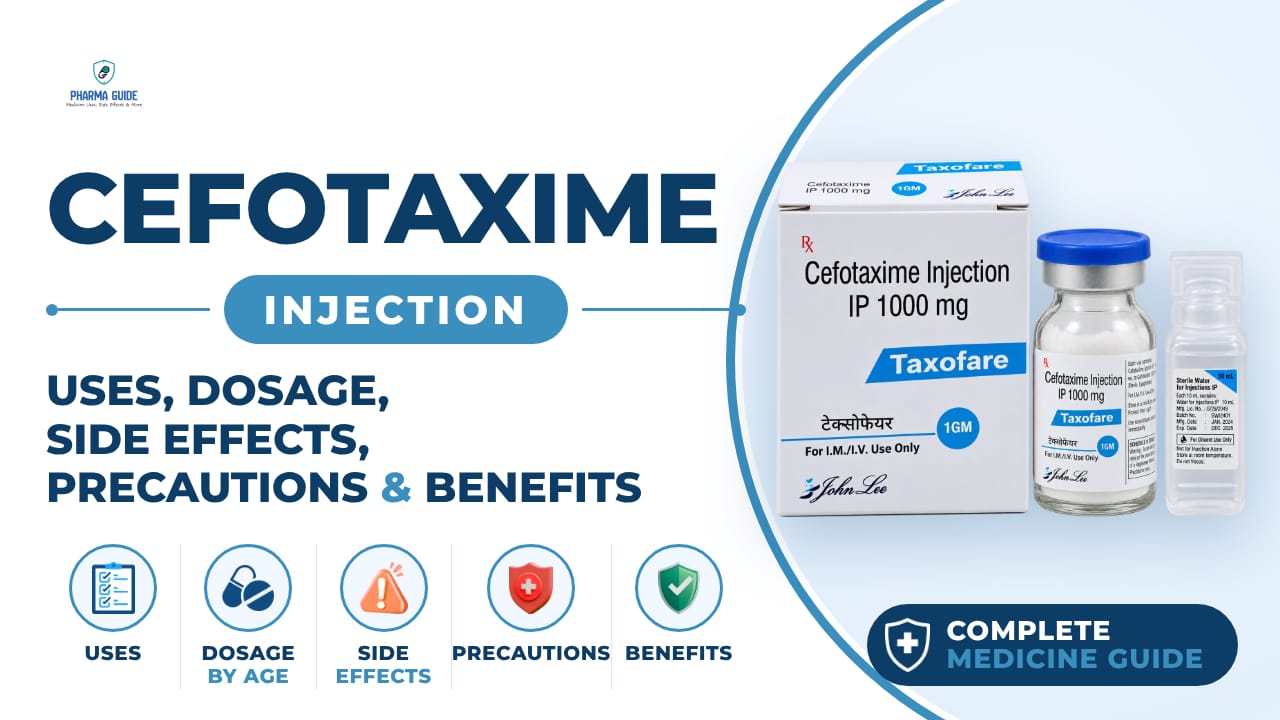
| Generic name | Cefotaxime sodium |
|---|---|
| Drug class | Third generation cephalosporin antibiotic |
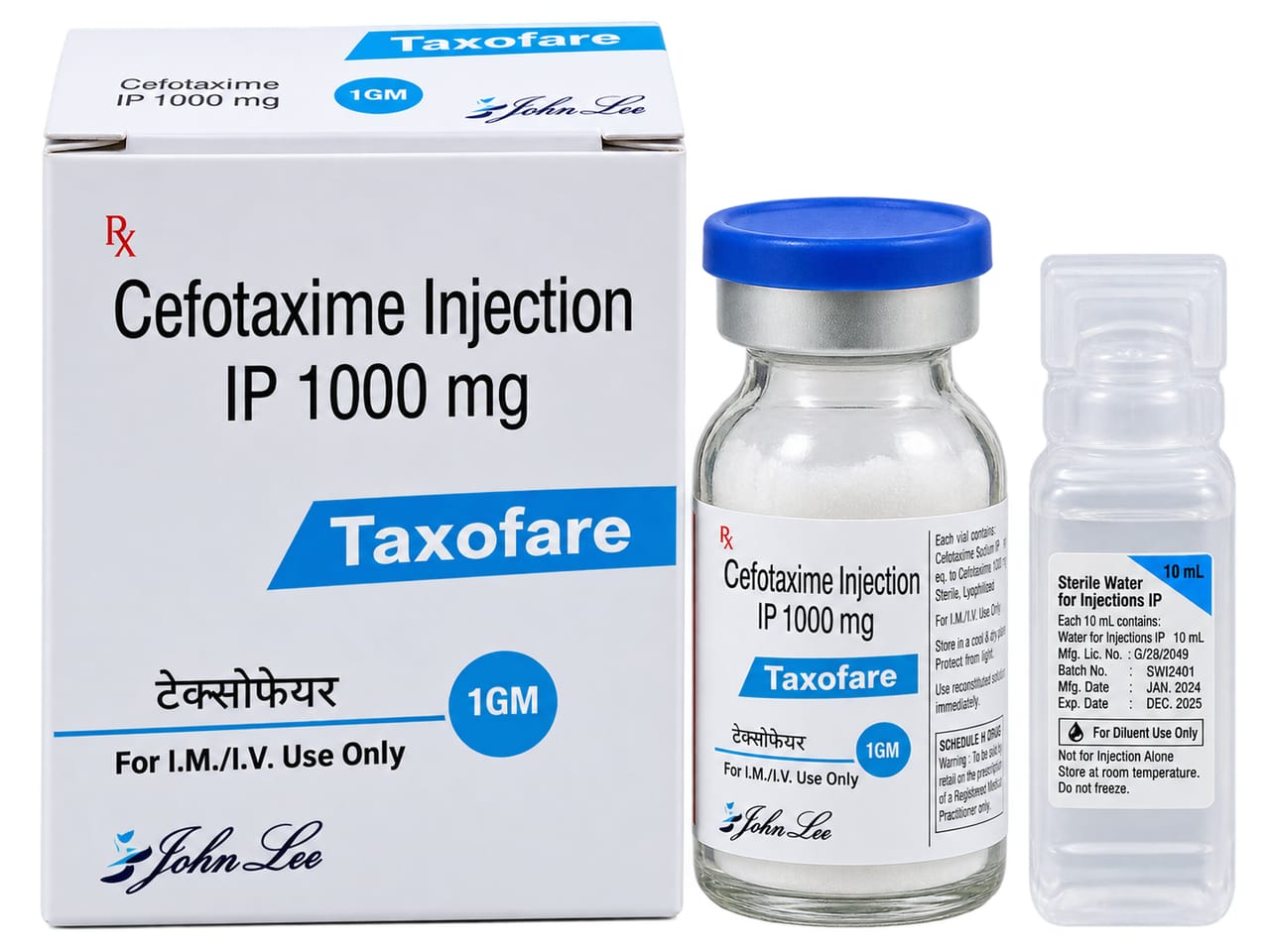
| Forms | Injectable powder for injection, Premixed solution for intravenous injection, White to pale yellow crystalline powder in a glass vial |
Quick overview
Cefotaxime Injection (cefotaxime sodium) is a third generation cephalosporin antibiotic given by injection. It is used to treat many kinds of bacterial infections, including severe ones, and to help prevent infection during certain surgeries. It works by killing the bacteria causing the infection and is given into a vein or as a deep injection into a muscle, usually by a doctor or nurse.
What is Cefotaxime Injection
Cefotaxime is a cephalosporin antibiotic given by injection. It is used to treat many kinds of bacterial infections, including severe ones, and to help prevent infection during certain surgeries.
Cefotaxime Injection uses
- Infections of the kidneys and bladder
- Infections of the blood (septicaemia)
- Infections of the skin and tissue just under the skin
- Bone infections
- Heart valve infections
- Brain infections (meningitis)
- Abdominal infections (peritonitis)
- Some sexually transmitted infections (gonorrhoea)
- Lower respiratory tract infections such as pneumonia
- Pelvic and female reproductive organ infections
- Joint infections
- Preventing infection before, during, or after surgery, including cesarean section
Benefits of Cefotaxime Injection
- Treats many kinds of serious bacterial infections
- Can be used to help prevent infection during certain types of surgery
- Used for certain pneumonias
- Treats selected urinary tract infections
- Used for some bloodstream infections
- Can treat certain cases of bacterial meningitis
- Covers numerous susceptible Gram-positive and Gram-negative bacteria
How Cefotaxime Injection works
Cefotaxime belongs to a group of antibiotics called cephalosporins. It works by killing the bacteria that cause the infection.
Cefotaxime Injection dosage
Cefotaxime is given by injection into a vein (as a direct injection or slow infusion) or as a deep injection into a large muscle. It should only be given by a doctor or nurse, though some people may be taught to give it to themselves at home. For most infections, it is usually given in divided doses throughout the day, though sometimes only a single dose is needed for certain infections.
Continue using it for the full length of time prescribed, even if you feel better, to avoid the infection coming back or becoming resistant to treatment. It will not work against infections caused by viruses such as colds or the flu. No special dietary changes are needed unless your doctor says otherwise.
If a dose is missed, it should be given as soon as possible, but skip it if it is almost time for the next dose; do not give double doses.
| Age group | Dose |
|---|---|
| Birth–7 days | 50 mg/kg IV every 12 hours |
| 29 days–12 years, <50 kg | 50–180 mg/kg/day IV or IM, divided into 4–6 doses |
| Adults 18–64 years | Commonly 1–2 g IV/IM every 8–12 hours, depending on infection severity |
Available forms and strengths
- Injectable powder for injection
- Premixed solution for intravenous injection
- White to pale yellow crystalline powder in a glass vial
Side effects of Cefotaxime Injection
Common
- White, furry, sore tongue and mouth
- Sore and itchy vagina and/or discharge
- Signs of frequent infections such as fever, sore throat, swollen glands or mouth ulcers
- Nausea or diarrhoea
- Pain, swelling, redness or tenderness near the injection site
- Skin rash
- Itchiness
- Vomiting
Serious
- Signs of an allergic reaction such as rash, itching or hives, swelling of the face, lips, tongue or other parts of the body, shortness of breath, wheezing or difficulty breathing
- Severe blisters and bleeding in the lips, eyes, mouth, nose or genitals
- Ulceration or lesions on the skin or in the mouth
- Itchy spots with fever and feeling unwell
- Loss of appetite
- Severe abdominal cramps, severe persistent diarrhoea which may be bloody, with or without fever (may occur during treatment or weeks after stopping)
- Fast or irregular heartbeat or changes in heart rhythm
- Chest pain
- Blood in the urine, decreased urine output, or fluid retention with swelling of the legs, ankles or feet
- Unusual bleeding or bruising under the skin
- Signs of anaemia such as tiredness, headache, dizziness, shortness of breath when exercising, or looking pale
- Yellowing of the skin or eyes (jaundice)
- Seizures or abnormal movements
- Difficulty swallowing or breathing, hoarseness, hives, peeling or shedding skin
Warnings and precautions
- Do not use this medicine if you have ever had an allergic reaction to cefotaxime or similar antibiotics called cephalosporins, or a major allergic reaction to penicillin.
- If mixed with lignocaine, this medicine should not be given to people who have had an allergic reaction to lignocaine or other local anaesthetics, people with heart failure or heart block, or infants younger than 30 months.
- Check with your doctor if you have kidney disease, liver disease, stomach or bowel problems, asthma, a low white blood cell count, or are on a low salt diet.
- This medicine may affect the results of urine sugar tests and some blood tests, so tell your doctor you are using it before any tests.
- Some antibiotics may make birth control pills less effective, so talk to your doctor about using an extra method of contraception, even though this has not been shown specifically with cefotaxime.
- Tell your doctor if you are pregnant or planning to become pregnant. This medicine should not be given if you are pregnant.
- Tell your doctor if you are breastfeeding or planning to breastfeed. This medicine should not be given while breastfeeding.
- Tell your doctor if you have kidney disease before being given this medicine.
- Tell your doctor if you have liver disease before being given this medicine.
- This medicine may cause dizziness, drowsiness, seizures or unusual body movements. Be careful before driving or using machines until you know how it affects you.
Storage
- Will be stored in the hospital pharmacy or on the ward in a cool, dry place, protected from heat and light, where the temperature stays below 25°C
- The reconstituted solution must be used immediately and any unused solution should be discarded
- Keep it where young children cannot reach it
- Discard any medicine that has passed the expiry date
- This medicine should only be used in one patient and any unused medicine should be discarded
- Store the unmixed medicine at cool room temperature (not above 77 degrees F)
- Mixed medicine must be used within a certain number of hours or days, depending on the diluent used, and may need to be refrigerated
When to see a doctor
- Call your doctor right away if your infection symptoms do not improve within a few days or get worse.
- Call your doctor right away if you get severe diarrhoea, even if it happens weeks after stopping the medicine, and do not take anti-diarrhoea medicine without checking with your doctor first.
- Tell your doctor if you get a sore white mouth or tongue, or vaginal itching or discharge, as this may be a fungal infection.
- Tell your doctor right away if you become pregnant while being treated with this medicine.
- Get emergency help for signs of a severe allergic reaction such as swelling of the face, throat, tongue, lips or eyes, difficulty swallowing or breathing, hoarseness, hives, rash, itching, or skin peeling, blistering or shedding.
- Call your doctor immediately or get emergency care if you have watery or bloody stools, stomach cramps, or fever during treatment or for up to two months or more after stopping treatment.
- If you think you have been given too much of this medicine, seek urgent medical attention even if you feel fine, by contacting your doctor, going to the nearest hospital emergency department, or calling your local poison control center.
Alternatives
- Ceftriaxone
- Cefepime
- Ceftazidime
Watch the video
FAQs
What is Cefotaxime Injection used for?
It is used to treat many kinds of bacterial infections, including kidney and bladder infections, septicaemia, skin infections, bone infections, heart valve infections, meningitis, peritonitis, gonorrhoea, pneumonia, pelvic infections, and joint infections. It is also used to help prevent infection during certain surgeries, including cesarean section.
How is Cefotaxime Injection given?
It is given by injection into a vein (as a direct injection or slow infusion) or as a deep injection into a large muscle, usually by a doctor or nurse, though some people may be taught to give it to themselves at home. It is usually given in divided doses throughout the day, though sometimes only a single dose is needed.
What should I do if I miss a dose of Cefotaxime Injection?
If a dose is missed, it should be given as soon as possible, but skip it if it is almost time for the next dose. Do not give double doses.
What are the common side effects of Cefotaxime Injection?
Common side effects include a white, furry, sore tongue and mouth, sore and itchy vagina and/or discharge, signs of frequent infections, nausea or diarrhoea, pain or swelling near the injection site, skin rash, itchiness, and vomiting.
Can Cefotaxime Injection be used during pregnancy or breastfeeding?
Tell your doctor if you are pregnant or planning to become pregnant, or if you are breastfeeding or planning to breastfeed, as this medicine should not be given during pregnancy or while breastfeeding.
General information, not medical advice
Your prescriber and the leaflet in your pack know your situation. This page does not.
- Follow your prescriber and the leaflet
- Don't start, stop, or change a dose on your own
- Doses and warnings differ by country and product
Sources
Video
Related medicines

Monocef Injection: Uses, Dosage, Side Effects, Precautions and Alternates
Third-generation cephalosporin antibiotic
Monocef Injection contains ceftriaxone, used to treat meningitis, pneumonia, UTIs, and other severe bacterial infections. Know uses, dosage, and side effects.

Injectafer Injection: Uses, Dosage, Side Effects, Precautions and Alternates
Iron products
Injectafer (ferric carboxymaltose) treats iron deficiency anemia and heart failure-related iron deficiency via IV. Learn uses, dosage, side effects, and