
Safety
General information, not medical advice
Your prescriber and the leaflet in your pack know your situation. This page does not.
- Follow your prescriber and the leaflet
- Don't start, stop, or change a dose on your own
- Doses and warnings differ by country and product
Monocef Injection: Uses, Dosage, Side Effects, Precautions and Alternates

| Generic name | Ceftriaxone |
|---|---|
| Drug class | Third-generation cephalosporin antibiotic |
| Forms | Injection (vial for intravenous or intramuscular use) |
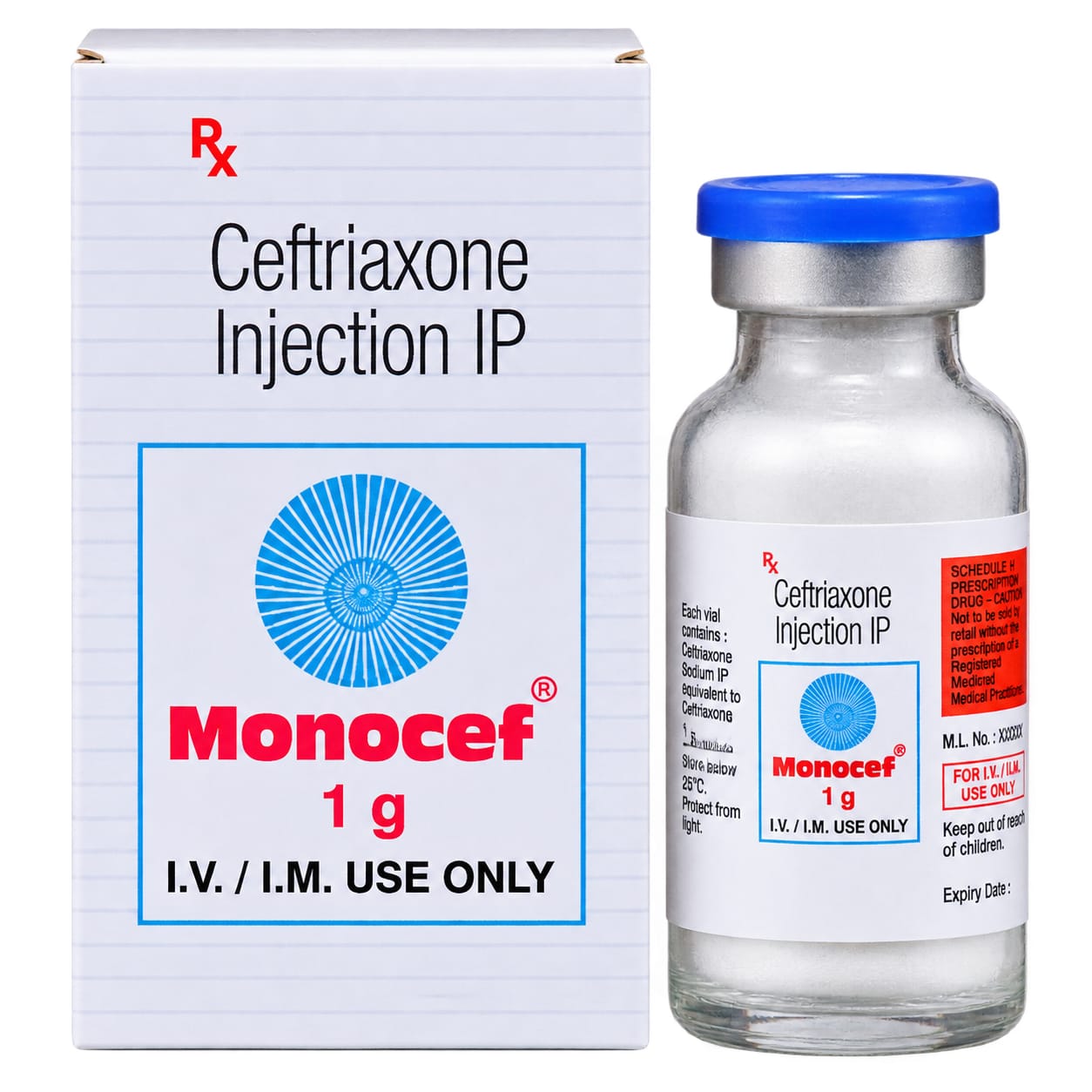
Quick overview
Monocef Injection contains ceftriaxone, a third-generation cephalosporin antibiotic used to treat severe bacterial infections. It is given by a healthcare professional as an injection into a vein or muscle and works by stopping bacteria from building their protective cell wall. It is used for infections such as meningitis, septicaemia, pneumonia, and urinary tract infections, among others.
What is Monocef Injection
Monocef is an antibiotic injection used to treat severe bacterial infections. It contains ceftriaxone and is given by a healthcare professional as an injection into a vein or muscle.
Monocef Injection uses
- Bacterial meningitis
- Bacterial septicaemia (bloodstream infections)
- Gonorrhoea
- Urinary tract infections, including complicated ones
- Community-acquired pneumonia and other respiratory tract infections
- Bone and joint infections
- Skin and soft tissue infections
- Acute bacterial otitis media (ear infections)
- Pelvic inflammatory disease
- Intra-abdominal infections
- Bronchitis
- Bacterial endocarditis
- Lyme disease
Benefits of Monocef Injection
- Kills or stops the growth of bacteria causing infection
- Works quickly, with effects starting immediately after the injection
- Can treat a wide range of serious bacterial infections in infants, children, and adults
How Monocef Injection works
Monocef contains ceftriaxone, which stops bacteria from building their protective cell wall. It does this by blocking proteins the bacteria need to form their cell wall. This weakens the wall until the bacteria burst and die, clearing the infection.
Monocef Injection dosage
This medicine is given by a healthcare professional as an injection into a vein or muscle; do not give it to yourself at home. When given into a vein, it is usually infused over about 30 minutes. Your doctor will decide how often you need the injection based on your condition.
Complete the full course of treatment, even if you feel better, to stop the infection from coming back and to reduce the risk of antibiotic resistance. If a dose is missed, it should be given as soon as remembered, but if it is almost time for the next dose, the missed one should be skipped rather than doubled up.
Consult your doctor before use if you have allergies to cephalosporins or penicillins, gallbladder problems, or severe liver or kidney disease.
| Age group | Dose |
|---|---|
| Newborns (0–28 Days) | Dose based on body weight and infection type; specialist supervision required |
| Infants & Children | 50–75 mg/kg/day depending on infection severity |
| Adults (18–64 Years) | Usually 1–2 g once daily; severe infections may require higher doses |
| Older Adults (65+ Years) | Usually 1–2 g once daily; adjustment based on kidney/liver condition |
Available forms and strengths
- Injection (vial for intravenous or intramuscular use)
Side effects of Monocef Injection
Common
- Diarrhoea
- Pain, swelling, or redness at the injection site
- Rash or itching
- Headache
- Nausea and abdominal discomfort
- Dizziness
- Weakness
- Excessive gas in the stomach
- Acid or sour stomach
Serious
- Black or tarry stools
- Chills
- Difficulty or painful urination
- Abnormal liver function test results
Warnings and precautions
- Do not use this medicine if you have a known allergy to ceftriaxone or other cephalosporin antibiotics.
- This medicine may interact with calcium-containing products, so tell your doctor if you are receiving calcium products.
- Do not stop treatment early, as stopping abruptly can lead to antibiotic resistance and cause your symptoms to return.
- Taking this medicine with certain antibiotics called aminoglycosides may increase the risk of kidney damage.
- Probenecid can reduce how quickly this medicine is removed from your body, which may lead to higher than intended levels in your blood.
- Older patients should use this medicine under medical supervision because they may be more prone to side effects.
- Children under 18 should only receive this medicine after consulting a doctor.
- Monocef may be safe to use in pregnancy to treat bacterial infections, based on animal studies showing no risk to the baby, but there isn't enough human data. Use it only if your doctor recommends it.
- Small amounts of this medicine can pass into breast milk, so it should only be used while breastfeeding if your doctor prescribes it. Watch your baby for symptoms such as diarrhoea if you use this medicine.
- Patients with kidney impairment or on dialysis may need their dose adjusted. Always tell your doctor if you have a history of kidney disease before starting this medicine.
- If you have liver problems, use this medicine with caution and discuss your liver health with your doctor before starting treatment.
- There is no known interaction between this medicine and alcohol, but it's still wise to check with your doctor if you drink alcohol regularly.
- This medicine is not known to affect your ability to drive or operate machinery. However, if you feel unwell after the injection, avoid these activities and talk to your doctor.
Storage
- Keep the injection in a cool, dry place where the temperature does not exceed 30°C.
- Always ensure that the medicine is out of reach of children.
When to see a doctor
- Contact your doctor if any side effects continue for a long time.
- If side effects do not improve or become serious, speak to your doctor right away.
- If you think you have received more than the prescribed dose, symptoms like nausea, vomiting, or diarrhoea may occur — tell your doctor if you suspect an overdose.
Alternatives
- Meropenem Injection
- Piperacillin + Tazobactam Injection
- Cefepime Injection
- Cefotaxime Injection
Watch the video
FAQs
What is Monocef Injection used for?
Monocef Injection is used to treat severe bacterial infections such as bacterial meningitis, septicaemia, pneumonia and other respiratory infections, urinary tract infections, bone and joint infections, skin infections, gonorrhoea, pelvic inflammatory disease, and intra-abdominal infections.
How does Monocef Injection work?
Monocef contains ceftriaxone, which blocks proteins bacteria need to build their protective cell wall. This weakens the wall until the bacteria burst and die, clearing the infection.
How is Monocef Injection given?
Monocef is given by a healthcare professional as an injection into a vein or muscle; it should not be self-administered at home. When given into a vein, it is usually infused over about 30 minutes, with frequency decided by your doctor.
What are the common side effects of Monocef Injection?
Common side effects include diarrhoea, pain or redness at the injection site, rash or itching, headache, nausea, abdominal discomfort, dizziness, weakness, and excess gas or sour stomach.
Is Monocef Injection safe during pregnancy and breastfeeding?
Monocef may be safe in pregnancy based on animal studies showing no risk, though human data is limited, so it should only be used if recommended by a doctor. Small amounts can pass into breast milk, so use during breastfeeding should also be under medical guidance.
General information, not medical advice
Your prescriber and the leaflet in your pack know your situation. This page does not.
- Follow your prescriber and the leaflet
- Don't start, stop, or change a dose on your own
- Doses and warnings differ by country and product
Sources
Video
Related medicines

Cefotaxime Injection: Uses, Dosage, Side Effects, Precautions and Alternates
Third generation cephalosporin antibiotic
Cefotaxime Injection is a cephalosporin antibiotic used to treat serious bacterial infections and prevent surgical infections. Learn uses, dosage, and side

Injectafer Injection: Uses, Dosage, Side Effects, Precautions and Alternates
Iron products
Injectafer (ferric carboxymaltose) treats iron deficiency anemia and heart failure-related iron deficiency via IV. Learn uses, dosage, side effects, and