
Safety
General information, not medical advice
Your prescriber and the leaflet in your pack know your situation. This page does not.
- Follow your prescriber and the leaflet
- Don't start, stop, or change a dose on your own
- Doses and warnings differ by country and product
Cefotetan Injection: Uses, Dosage, Side Effects, Precautions and Alternates

| Generic name | Cefotetan |
|---|---|
| Drug class | Cephalosporin antibiotic |
| Forms | Powder for injection to be mixed with fluid, Premixed solution for intravenous infusion, Injection for intramuscular use |
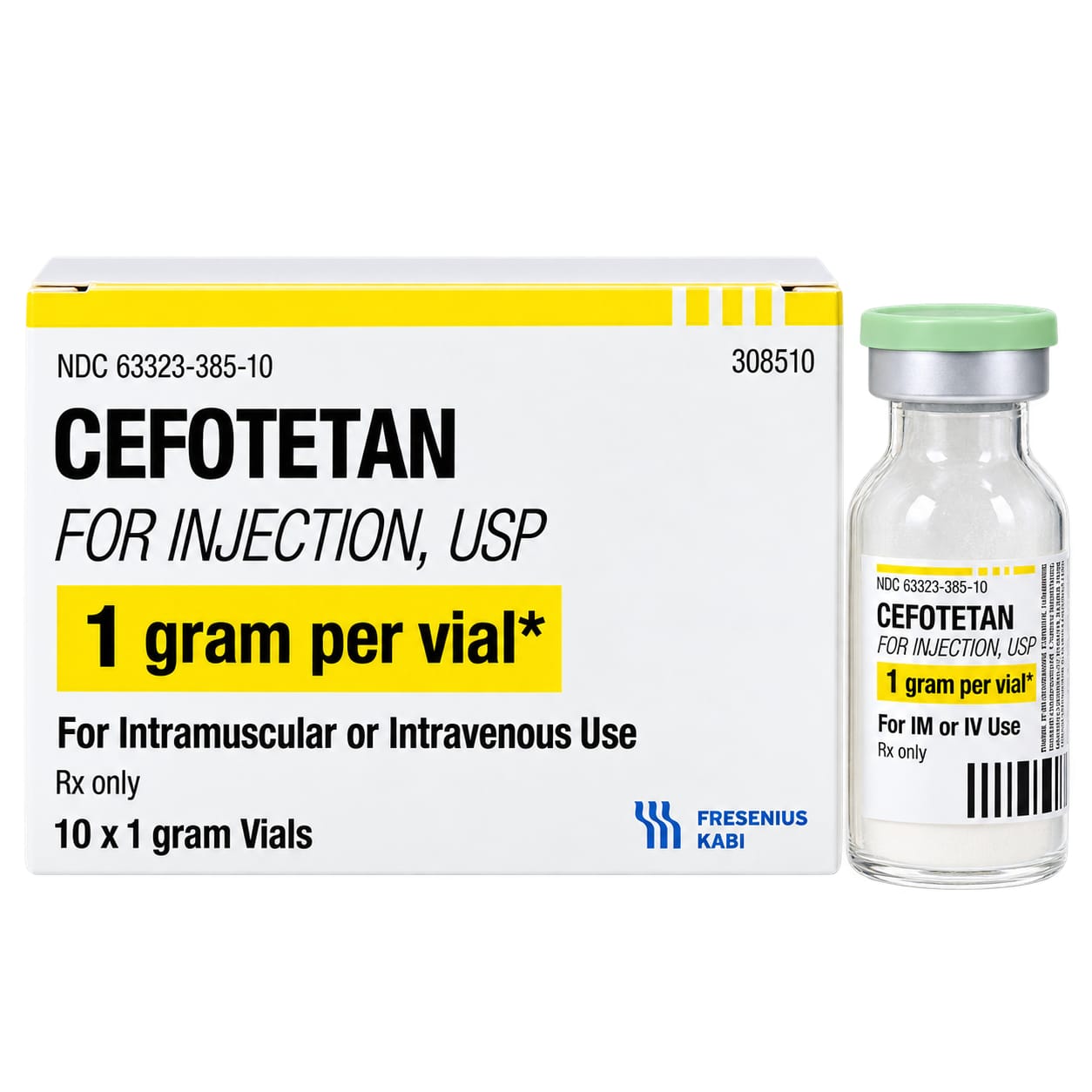
Quick overview
Cefotetan Injection, known generically as Cefotetan, is a cephalosporin antibiotic used to treat certain bacterial infections, including urinary tract, respiratory, skin, gynecologic, intra-abdominal, and bone and joint infections. It works by killing bacteria and stopping them from building their cell walls. It is given by injection into a vein or muscle, usually every 12 or 24 hours, and should be used for the full prescribed course.
What is Cefotetan Injection
Cefotetan injection is an antibiotic used to treat certain infections caused by bacteria. It belongs to the cephalosporin class of antibiotics and works by killing bacteria.
Cefotetan Injection uses
- Treatment of urinary tract infections
- Treatment of lower respiratory tract infections
- Treatment of skin and skin structure infections
- Treatment of gynecologic infections
- Treatment of intra-abdominal infections
- Treatment of bone and joint infections
- Used before surgery to help prevent certain infections
Benefits of Cefotetan Injection
- Provides Gram-positive and Gram-negative antibacterial activity
- Offers useful anaerobic coverage
- Can be administered by IV or IM injection
- Useful for selected abdominal and pelvic infections
How Cefotetan Injection works
Cefotetan works by stopping bacteria from building their cell walls, which kills the bacteria.
Cefotetan Injection dosage
Cefotetan is given as an injection into a vein or into a large muscle; a premixed version is also given into a vein. It is given on a regular schedule every 12 or 24 hours. You may receive this medicine in a hospital, or you may be shown how to give it to yourself at home.
You should begin to feel better during the first few days of treatment; call your doctor if your symptoms do not improve or get worse. Keep using this medicine until you finish the full prescribed course, even if you feel better, because stopping too soon or skipping doses may let the infection come back and make the bacteria harder to treat.
If you forget a dose, use it as soon as you remember unless it is almost time for your next dose — in that case skip the missed dose and continue your regular schedule; do not double up doses. Antibiotics like this one will not work for colds, flu, or other viral infections.
| Age group | Dose |
|---|---|
| 18–64 years – mild/moderate infections | Commonly 1,000–2,000 mg IV/IM every 12 hours, depending on infection |
| 18–64 years – severe infections | 2,000 mg IV every 12 hours |
| 65–74 years | Same adult dosing may be used when kidney function is adequate |
Available forms and strengths
- Powder for injection to be mixed with fluid
- Premixed solution for intravenous infusion
- Injection for intramuscular use
Side effects of Cefotetan Injection
Common
- Nausea
- Diarrhea
- Redness, pain, or swelling at the injection site
Serious
- Shortness of breath
- Fast heartbeat
- Headache
- Dizziness, confusion
- Pale skin
- Extreme tiredness
- Watery or bloody stools, stomach cramps, or fever during treatment or for up to two or more months after stopping treatment
- Unusual bleeding or bruising
- Hives, itching, skin rash; difficulty breathing or swallowing; swelling of the throat or tongue
- A return of fever, sore throat, chills, or other signs of infection
Warnings and precautions
- Serious and sometimes fatal allergic reactions, including anaphylaxis, can occur with this medicine. If an allergic reaction happens, the drug should be stopped.
- This medicine can cause a serious, sometimes fatal, type of anemia from destruction of red blood cells. If anemia develops, the drug should be stopped.
- This medicine can reduce your blood's ability to clot properly, raising the risk of bleeding. Your doctor may monitor your clotting function and give vitamin K if needed.
- This medicine can cause diarrhea linked to an overgrowth of a bacteria called C. difficile, which can range from mild to a severe, life-threatening bowel infection.
- This medicine should not be used if you have had a severe allergic reaction to cefotetan or other beta-lactam antibiotics, or a history of hemolytic anemia linked to a cephalosporin medicine.
- This medicine may make hormonal birth control (pills, patches, rings, injections) less effective, so another method of birth control should be used while taking it.
- Tell your doctor if you are pregnant or plan to become pregnant. If you become pregnant while taking this medicine, call your doctor.
- Tell your doctor if you are breastfeeding before using this medicine.
- Tell your doctor if you have kidney disease, since this can affect how the drug is used safely.
- Tell your doctor if you have liver disease before using this medicine.
- Do not drink alcohol while using this medicine and for 3 days after your last dose, as it can cause headache, fast heartbeat, sweating, and facial flushing.
- Avoid driving if dizziness or weakness occurs.
Storage
- Your healthcare provider will tell you how to store your medication; store it only as directed
- Keep all medication out of the sight and reach of children
- Dispose of unneeded medication through a medicine take-back program rather than flushing it down the toilet
- Unactivated product should be stored at controlled room temperature and protected from light; do not freeze
When to see a doctor
- Get medical help right away if you have shortness of breath, a fast heartbeat, severe headache, dizziness or confusion, pale skin, or extreme tiredness.
- Get medical help right away if you have watery or bloody stools, stomach cramps, or fever, even up to two months after finishing treatment.
- Get medical help right away if you have unusual bleeding or bruising.
- Get medical help right away if you develop hives, itching, a skin rash, difficulty breathing or swallowing, or swelling of the throat or tongue — these can be signs of a serious allergic reaction.
- Call your doctor if fever, sore throat, chills, or other signs of infection return after treatment.
Alternatives
- Cefoxitin
- Ceftriaxone
- Ertapenem
Watch the video
FAQs
What is Cefotetan Injection used for?
It treats bacterial infections such as urinary tract, lower respiratory tract, skin, gynecologic, intra-abdominal, and bone and joint infections, and is also used before surgery to help prevent certain infections.
How is Cefotetan Injection given?
It is given as an injection into a vein or a large muscle, usually on a regular schedule every 12 or 24 hours, either in a hospital or at home after being shown how to administer it.
What should I do if I miss a dose of Cefotetan Injection?
Use the missed dose as soon as you remember unless it is almost time for your next dose, in which case you should skip it and continue your regular schedule without doubling up.
What are the serious side effects of Cefotetan Injection?
Serious side effects include shortness of breath, fast heartbeat, headache, dizziness or confusion, pale skin, extreme tiredness, watery or bloody stools with stomach cramps or fever, unusual bleeding or bruising, and allergic reactions like hives or swelling of the throat or tongue.
Can I drink alcohol while using Cefotetan Injection?
No, alcohol should be avoided while using this medicine and for 3 days after the last dose, as it can cause headache, fast heartbeat, sweating, and facial flushing.
General information, not medical advice
Your prescriber and the leaflet in your pack know your situation. This page does not.
- Follow your prescriber and the leaflet
- Don't start, stop, or change a dose on your own
- Doses and warnings differ by country and product
Sources
Video
Related medicines
Duricef Capsule: Uses, Dosage, Side Effects, Precautions and Alternates
Cephalosporin antibiotic
Duricef Capsule (cefadroxil) treats UTIs, skin infections, and strep throat. Learn uses, dosage, side effects, warnings, and precautions before taking it.
Ancef Injection: Uses, Dosage, Side Effects, Precautions and Alternates
cephalosporin antibiotic
Ancef Injection (cefazolin) is a cephalosporin antibiotic used to treat infections and prevent surgical infections. Learn uses, dosage, and side effects.