
Safety
General information, not medical advice
Your prescriber and the leaflet in your pack know your situation. This page does not.
- Follow your prescriber and the leaflet
- Don't start, stop, or change a dose on your own
- Doses and warnings differ by country and product
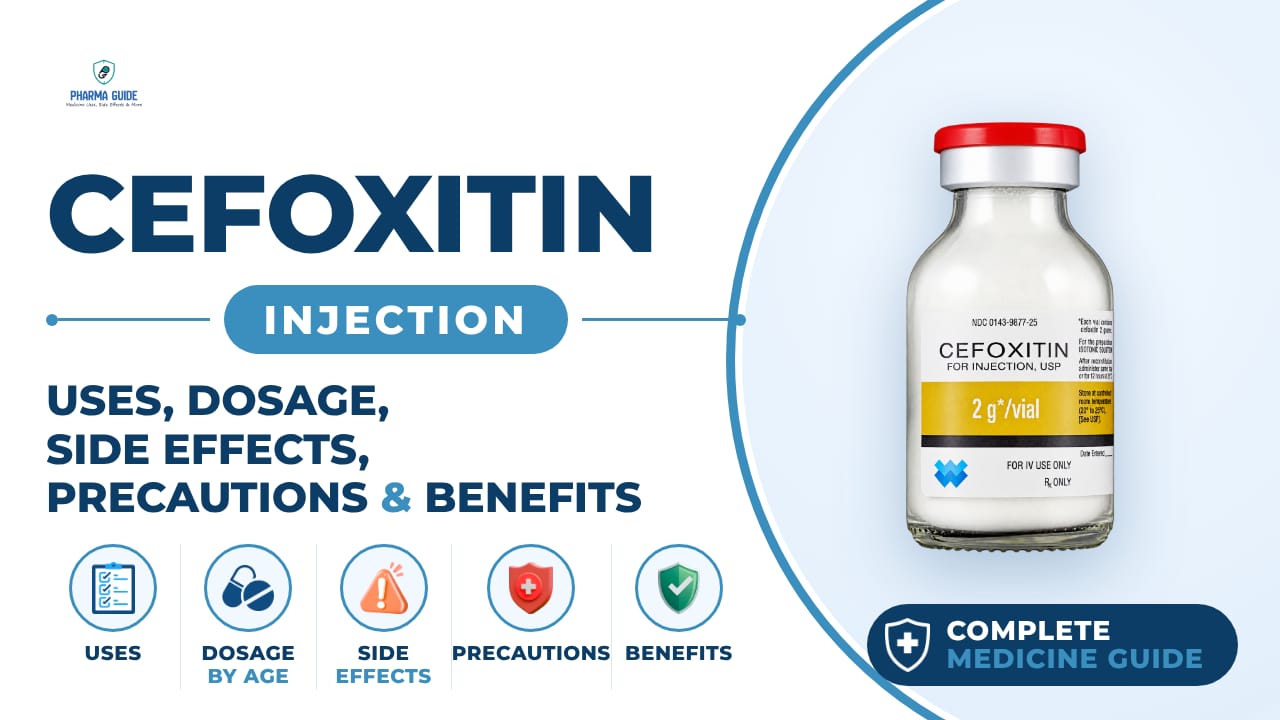
Cefoxitin Injection: Uses, Dosage, Side Effects, Precautions and Alternates
| Generic name | cefoxitin sodium |
|---|---|
| Drug class | cephamycin antibiotic (cephalosporin-class) |
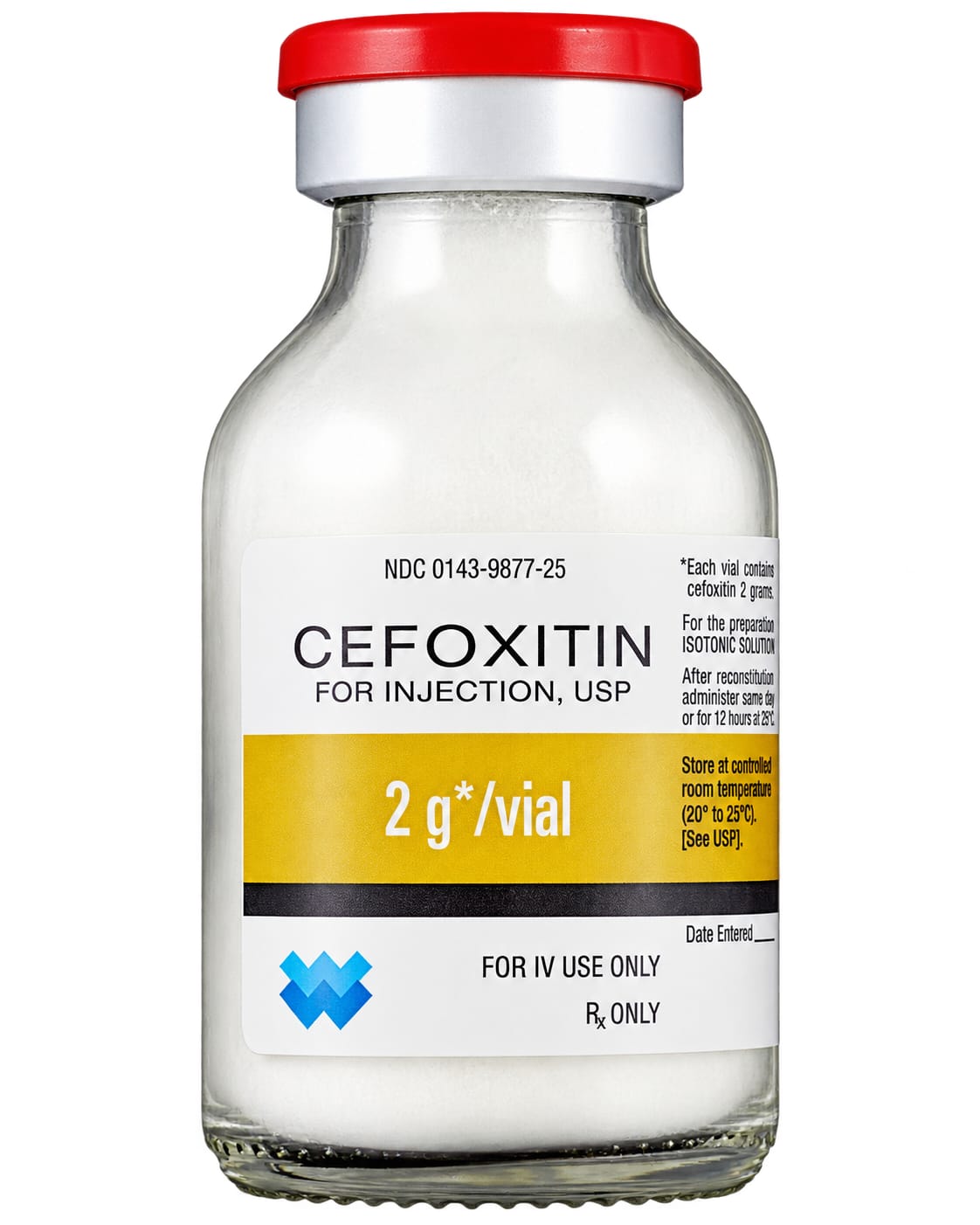
| Forms | Injection (powder for solution, to be mixed with liquid), Premixed intravenous solution (DUPLEX dual-chamber container) |
Quick overview
Cefoxitin Injection (cefoxitin sodium) is a prescription cephamycin antibiotic, related to cephalosporins, given into a vein to treat or prevent certain bacterial infections. It is used for infections of the lungs, skin, urinary tract, blood, bones, joints, female genital organs, and abdomen, as well as to help prevent infection during certain surgeries. It works by stopping bacteria from building their cell wall. Dosing depends on age, body weight, and the infection being treated.
What is Cefoxitin Injection
Cefoxitin injection is a prescription antibiotic given into a vein. It belongs to a group of antibiotics called cephamycins, which are related to cephalosporins, and it is used to treat or prevent certain bacterial infections.
Cefoxitin Injection uses
- Lung infections, such as pneumonia
- Skin or related tissue infections
- Kidney and bladder infections
- Infections in the blood (septicemia)
- Bone or joint infections
- Female genital infections (such as pelvic inflammatory disease)
- Infections in the abdomen or stomach area
- Prevention of infection before and during certain surgeries (gastrointestinal surgery, vaginal or abdominal hysterectomy, cesarean section)
- Sometimes used to treat gonorrhea
Benefits of Cefoxitin Injection
- Provides activity against many Gram-positive and Gram-negative bacteria
- Has useful anaerobic coverage
- Frequently used for abdominal and pelvic infections
- Can be used for perioperative infection prevention
How Cefoxitin Injection works
Cefoxitin kills bacteria by stopping them from building their outer cell wall, which the bacteria need to survive.
Cefoxitin Injection dosage
Cefoxitin injection comes as a powder mixed with liquid, or as a premixed solution, that is given into a vein. It is usually given every six to eight hours. You may receive it in a hospital, or a healthcare provider may teach you to give it at home.
You should begin to feel better during the first few days of treatment; call your doctor if symptoms do not improve or get worse. Use the medicine for the full length of treatment prescribed, even if you feel better, to make sure the infection is fully treated.
For prevention before surgery, it is usually given one-half to one hour before the operation, and prophylactic use is usually stopped within 24 hours.
| Age group | Dose |
|---|---|
| 3 months–11 years | Commonly 80–160 mg/kg/day IV or IM, divided every 4–6 hours |
| 12–17 years | Usually weight-based; larger adolescents may receive adult dosing depending on body size and infection |
| 18–64 years | Commonly 1–2 g IV or IM every 6–8 hours, depending on infection severity |
Available forms and strengths
- Injection (powder for solution, to be mixed with liquid)
- Premixed intravenous solution (DUPLEX dual-chamber container)
Side effects of Cefoxitin Injection
Common
- Pain, itching, swelling, redness, or bleeding near the injection site
- Diarrhea
- Pale skin, weakness, or shortness of breath when exercising
Serious
- Watery or bloody stools, stomach cramps, or fever during treatment or for up to two or more months after stopping treatment
- Flushing
- Rash, itching, hives; swelling of the face, throat, tongue, lips, and eyes; difficulty swallowing or breathing; hoarseness
- Peeling, blistering, or shedding skin
- Yellow skin or eyes
- Decreased urination
- Swelling in legs and feet
- A return of fever, sore throat, chills, or other signs of infection
- Severe allergic reactions including breathing problems, racing heart, swollen lymph nodes, dizziness, or fainting
- Blood disorders such as easy bruising or bleeding, unusual tiredness, frequent infection, or fast heartbeat
- Liver damage symptoms such as nausea, stomach pain, loss of appetite, dark urine, or yellowing of skin or eyes
- Kidney damage symptoms such as reduced urination, swelling, confusion, or trouble breathing
- Seizures, including muscle twitching, jerking, confusion, or loss of consciousness
Warnings and precautions
- Serious and sometimes fatal allergic reactions can occur. Tell your doctor about any past reactions to penicillins or cephalosporins before starting treatment, and stop the drug right away if an allergic reaction happens.
- This antibiotic can cause a serious intestinal infection called C. difficile-associated diarrhea, which can range from mild diarrhea to life-threatening colitis, and can appear up to two months or more after finishing treatment.
- Using this antibiotic when it isn't needed, or not finishing the full course, can make bacteria resistant to it and other antibiotics in the future.
- This medicine should be used carefully in people with a history of stomach or intestinal disease, especially colitis.
- Taking cefoxitin with certain other antibiotics called aminoglycosides may increase the risk of kidney damage.
- Cefoxitin may make hormonal birth control (pills, patches, rings, injections) less effective, so another method of contraception should be used during treatment.
- Seizures have occurred with cefoxitin and similar antibiotics, especially in people with kidney problems who did not get a reduced dose.
- It is not fully known if cefoxitin could affect pregnancy or harm an unborn baby. Tell your healthcare provider if you are or plan to become pregnant, and use it only if clearly needed.
- Cefoxitin passes into breast milk in low amounts. Caution should be used, and your doctor should weigh the benefits of breastfeeding against the small amount of drug the baby may receive.
- People with kidney problems need a lower dose because the drug is removed from the body mainly by the kidneys, and high levels can build up and become toxic.
- Cefoxitin can rarely cause liver problems such as elevated liver enzymes or jaundice.
- It isn't known for certain if alcohol affects cefoxitin, but heavy drinking can weaken your immune response and make it harder for your body to fight the infection.
- Usually does not impair driving, but avoid driving if dizziness or confusion occurs.
Storage
- Your healthcare provider will tell you how to store your medication; store it only as directed.
- Keep all medication out of sight and reach of children as many containers are not child-resistant. Always lock safety caps.
- Dispose of unneeded medications in a way so that pets, children, and other people cannot take them. Do not flush this medication down the toilet. Use a medicine take-back program.
- Store the unactivated unit at 20-25°C (68-77°F). Excursions permitted to 15-30°C (59-86°F). Do not freeze.
When to see a doctor
- Get emergency help right away for signs of a severe allergic reaction, such as trouble breathing, swelling of the face/lips/tongue/throat, or severe rash.
- Stop the medicine and call your doctor right away, or get emergency care, if you develop watery or bloody stools, stomach cramps, or fever, even up to two months after treatment ends.
- Seek emergency care for signs of a severe skin reaction, such as painful red or purple skin that looks burned, peeling skin, or blistering of the mouth, nose, or genitals.
- Call your doctor right away if you notice signs of a blood disorder, like unusual bruising or bleeding, fever, sore throat, or extreme tiredness.
- Call your doctor right away if you have signs of liver damage, such as yellowing skin or eyes, dark urine, or loss of appetite.
- Call your doctor right away if you have signs of kidney damage, such as reduced urination, swelling in your legs, or confusion.
- Stop the medicine and call your doctor if you notice signs that a seizure may be happening, such as muscle twitching, jerking, or loss of consciousness.
Alternatives
- Cefotetan
- Ceftriaxone
- Ertapenem
Watch the video
FAQs
What is Cefoxitin Injection used for?
It treats infections of the lungs, skin, urinary tract, blood, bones, joints, female genital organs, and abdomen, and is used to help prevent infection during certain surgeries like gastrointestinal surgery, hysterectomy, or cesarean section. It is also sometimes used to treat gonorrhea.
How does Cefoxitin Injection work?
Cefoxitin kills bacteria by stopping them from building their outer cell wall, which the bacteria need to survive.
How often is Cefoxitin Injection given?
It is usually given every six to eight hours, either in a hospital or at home after training from a healthcare provider. For surgery prevention, it is usually given one-half to one hour before the operation and stopped within 24 hours.
What are the serious side effects of Cefoxitin Injection?
Serious side effects include severe allergic reactions, watery or bloody diarrhea from C. difficile infection, severe skin reactions, liver or kidney damage symptoms, blood disorders, and seizures.
Can Cefoxitin Injection affect birth control?
Yes, cefoxitin may make hormonal birth control such as pills, patches, rings, or injections less effective, so another method of contraception should be used during treatment.
General information, not medical advice
Your prescriber and the leaflet in your pack know your situation. This page does not.
- Follow your prescriber and the leaflet
- Don't start, stop, or change a dose on your own
- Doses and warnings differ by country and product
Sources
Video
Related medicines

Injectafer Injection: Uses, Dosage, Side Effects, Precautions and Alternates
Iron products
Injectafer (ferric carboxymaltose) treats iron deficiency anemia and heart failure-related iron deficiency via IV. Learn uses, dosage, side effects, and

Gliclazide Tablet: Uses, Dosage, Side Effects, Precautions and Alternates
Sulfonylurea (hypoglycemic/antidiabetic agent)
Gliclazide Tablet is a sulfonylurea for type 2 diabetes that boosts insulin release. Learn about dosage, side effects, warnings, and precautions.