
Safety
General information, not medical advice
Your prescriber and the leaflet in your pack know your situation. This page does not.
- Follow your prescriber and the leaflet
- Don't start, stop, or change a dose on your own
- Doses and warnings differ by country and product
Ceftaroline Injection: Uses, Dosage, Side Effects, Precautions and Alternates
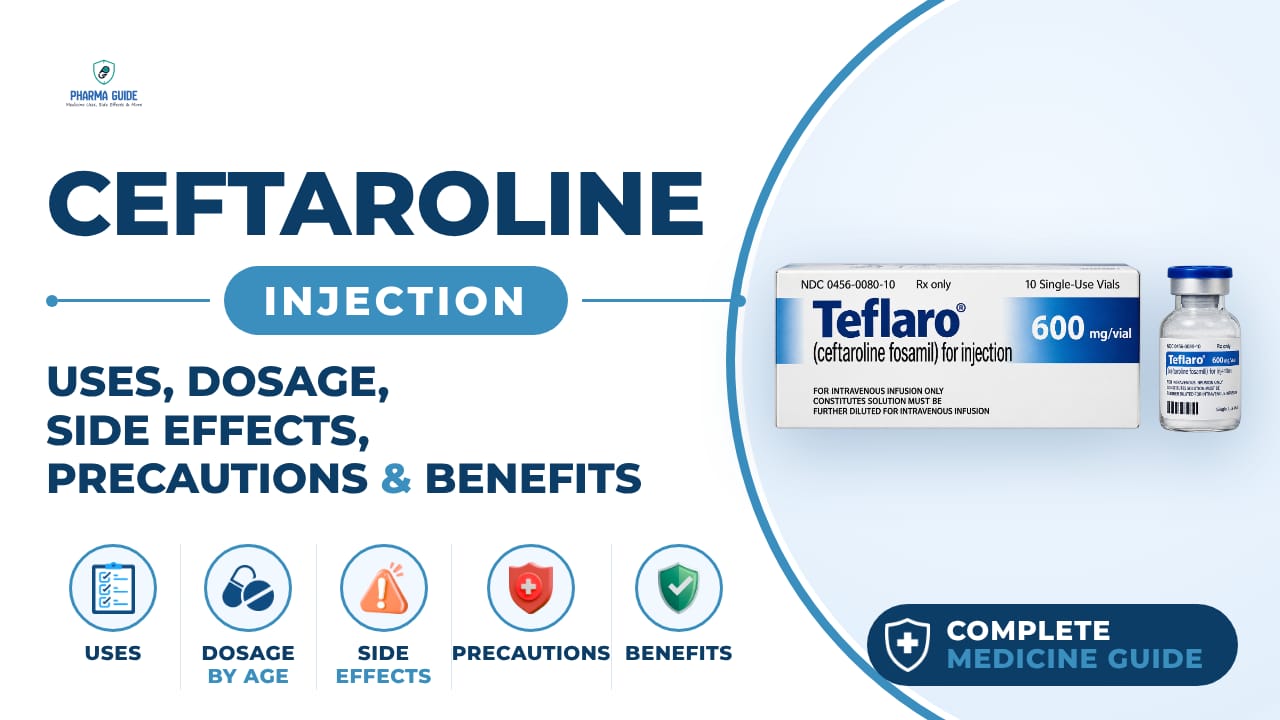
| Generic name | ceftaroline fosamil |
|---|---|
| Drug class | Cephalosporin antibiotic (next generation cephalosporin) |
| Forms | Injection |
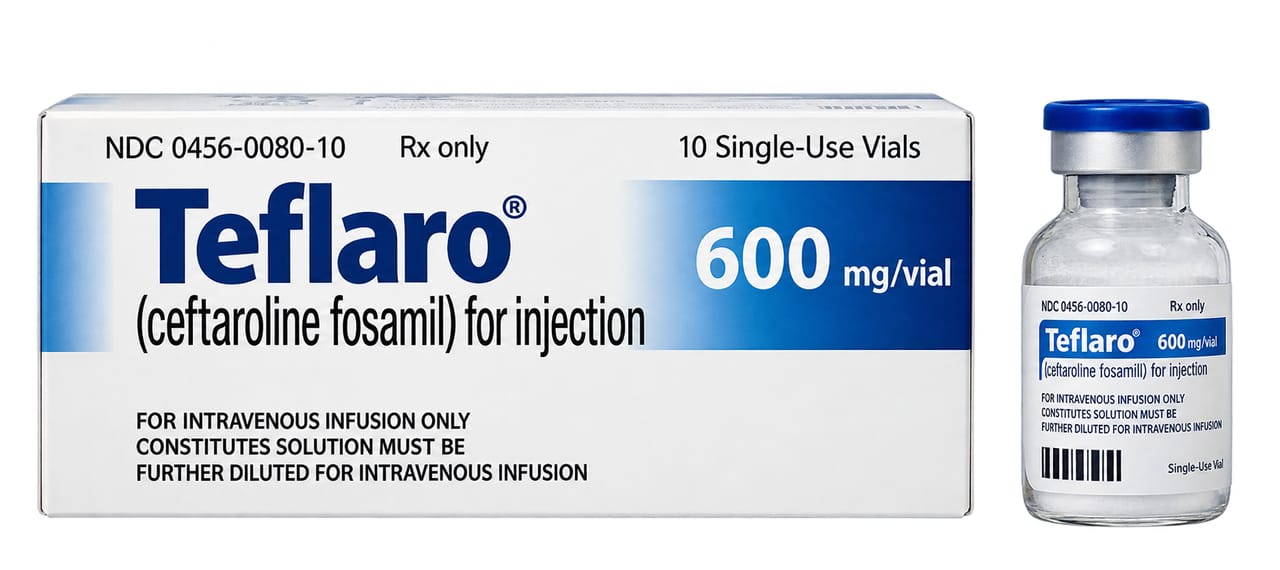
Quick overview
Ceftaroline injection (ceftaroline fosamil) is a next-generation cephalosporin antibiotic given into a vein to treat acute bacterial skin and skin structure infections and community-acquired bacterial pneumonia. It is used in adults and, for certain infections, in children including infants. It works by stopping susceptible bacteria from building their cell walls, which kills the bacteria.
What is Ceftaroline Injection
Ceftaroline injection is an antibiotic medicine given into a vein. It belongs to a group of medicines called cephalosporin antibiotics and is used to treat certain bacterial infections.
Ceftaroline Injection uses
- Acute bacterial skin and skin structure infections (ABSSSI) in adults and children (at least 34 weeks gestational age and 12 days postnatal age)
- Community-acquired bacterial pneumonia (CABP) in adults and children 2 months of age and older
Benefits of Ceftaroline Injection
- Kills susceptible bacteria causing serious skin and lung infections
- Can be used in both adult and pediatric patients, including infants
How Ceftaroline Injection works
Ceftaroline kills certain bacteria that cause infections by attaching to proteins the bacteria need to build their cell walls, which stops the bacteria from surviving.
Ceftaroline Injection dosage
Ceftaroline injection is given into a vein (intravenously) through a needle or catheter, usually over 5 to 60 minutes, though some infusions for infants and lower doses may run 30 to 60 minutes. It is usually given every 8 or 12 hours, depending on age, weight, and the type of infection. It may be given in a hospital or at home if your healthcare provider has taught you how to use it correctly.
Length of treatment depends on the type of infection and how your body responds, generally 5 to 14 days for skin infections and 5 to 7 days for pneumonia. Finish the complete course even if you start feeling better, so the infection is fully treated and bacteria do not become resistant.
If a dose is missed, use it as soon as you remember unless it is almost time for the next dose; do not double up doses. This antibiotic will not work for colds, flu, or other viral infections.
| Age group | Dose |
|---|---|
| Under 18 years | Not recommended |
| 18–64 years | 600 mg, twice/day |
| 65+ years | 600 mg, twice/day |
Available forms and strengths
- Injection
Side effects of Ceftaroline Injection
Common
- Diarrhea
- Nausea
- Rash
- Constipation
- Vomiting
- Increased liver enzymes
- Low potassium levels
- Pain and irritation of the veins
- Headache
- Feeling dizzy
- Itching, skin rash
- Stomach pain
- Fever
- Redness, pain, or swelling where the injection was given
Serious
- Severe skin reactions such as Stevens-Johnson syndrome or toxic epidermal necrolysis
- Signs of a severe allergic reaction (anaphylaxis) such as swelling of lips, face, throat, or tongue, severe rash, or trouble breathing or swallowing
- Watery or bloody stools, stomach cramps, or fever during or after treatment, which could signal a serious intestinal infection (C. difficile-associated diarrhea)
- Signs of anemia such as extreme tiredness, pale skin, fast or irregular heartbeat, dizziness, or shortness of breath (possible drug-induced hemolytic anemia)
- Confusion, reduced consciousness, abnormal movements, or seizures (neurological reactions), especially in people with kidney problems given too high a dose
- Low white blood cell counts leading to fever, flu-like symptoms, or sore throat (agranulocytosis)
- Chest pain, which may signal a serious allergic reaction called Kounis syndrome
Warnings and precautions
- Serious, sometimes fatal, allergic reactions have occurred with this type of antibiotic. Tell your doctor about any past reactions to cephalosporins, penicillins, or carbapenems before starting treatment.
- Diarrhea linked to antibiotic use, including a serious intestinal infection called C. difficile-associated diarrhea, can occur during treatment or even months afterward.
- Nervous system problems such as confusion, seizures, or decreased alertness have occurred, especially in people with kidney problems who did not get an adjusted dose.
- This medicine can cause a positive result on a blood test (Coombs' test) that may indicate red blood cell destruction. If anemia develops, your doctor may need to check for this.
- Using antibiotics when they are not needed, or not finishing the full course, can make bacteria resistant to treatment in the future.
- There is not enough information from studies in pregnant women to know if this medicine is safe during pregnancy. Tell your doctor if you are pregnant or planning to become pregnant before using it.
- It is not known whether this medicine passes into breast milk or affects breastfed babies. Talk to your doctor before using it while breastfeeding.
- People with kidney problems may need a lower dose, since this medicine is removed from the body by the kidneys. Tell your doctor if you have or have had kidney disease.
- This medicine may cause dizziness, which could affect your ability to drive or use machines.
Storage
- Store your medication only as your healthcare provider directs
- Keep all medication out of sight and reach of children
- Dispose of unneeded medication through a medicine take-back program rather than flushing it down the toilet
- Unopened vials should be stored at controlled room temperature, with brief excursions to cooler or warmer temperatures allowed
- Store in a dry, well-ventilated place protected from light, and each vial is for single use only
When to see a doctor
- Get medical help right away if you have watery or bloody stools, stomach cramps, or fever, even if it happens months after you stop the medicine.
- Seek immediate care for signs of a severe allergic reaction, such as swelling of the lips, face, throat, or tongue, severe rash, or difficulty breathing or swallowing.
- Call your doctor right away if you notice extreme tiredness, pale skin, fast or irregular heartbeat, chest pain, cold hands and feet, or dizziness, which could be signs of a blood problem.
- Seek medical attention immediately if you develop confusion, drowsiness, slow thinking, or a seizure.
- Seek medical attention immediately if you notice symptoms of serious skin reactions, such as blistering, peeling skin, or sores in the mouth, throat, nose, genitals, or eyes.
Alternatives
- Vancomycin
- Ceftriaxone
- Telavancin
Watch the video
FAQs
What is ceftaroline injection used for?
It is used to treat acute bacterial skin and skin structure infections in adults and children, and community-acquired bacterial pneumonia in adults and children 2 months of age and older.
How is ceftaroline injection given?
It is given into a vein through a needle or catheter, usually over 5 to 60 minutes, every 8 or 12 hours depending on age, weight, and infection type. It can be given in a hospital or at home if taught by a healthcare provider.
How long is ceftaroline treatment?
Treatment length depends on the infection, generally 5 to 14 days for skin infections and 5 to 7 days for pneumonia. The full course should be finished even if you feel better.
What are the serious side effects of ceftaroline injection?
Serious side effects include severe allergic reactions, severe skin reactions like Stevens-Johnson syndrome, C. difficile-associated diarrhea, hemolytic anemia, neurological reactions such as confusion or seizures, agranulocytosis, and Kounis syndrome causing chest pain.
Can ceftaroline injection be used in children?
Yes, it can be used in children for skin infections (at least 34 weeks gestational age and 12 days postnatal age) and for pneumonia in children 2 months of age and older.
General information, not medical advice
Your prescriber and the leaflet in your pack know your situation. This page does not.
- Follow your prescriber and the leaflet
- Don't start, stop, or change a dose on your own
- Doses and warnings differ by country and product
Sources
Video
Related medicines

Injectafer Injection: Uses, Dosage, Side Effects, Precautions and Alternates
Iron products
Injectafer (ferric carboxymaltose) treats iron deficiency anemia and heart failure-related iron deficiency via IV. Learn uses, dosage, side effects, and

Gliclazide Tablet: Uses, Dosage, Side Effects, Precautions and Alternates
Sulfonylurea (hypoglycemic/antidiabetic agent)
Gliclazide Tablet is a sulfonylurea for type 2 diabetes that boosts insulin release. Learn about dosage, side effects, warnings, and precautions.