
Safety
General information, not medical advice
Your prescriber and the leaflet in your pack know your situation. This page does not.
- Follow your prescriber and the leaflet
- Don't start, stop, or change a dose on your own
- Doses and warnings differ by country and product
Ceftibuten Capsule: Uses, Dosage, Side Effects, Precautions and Alternates
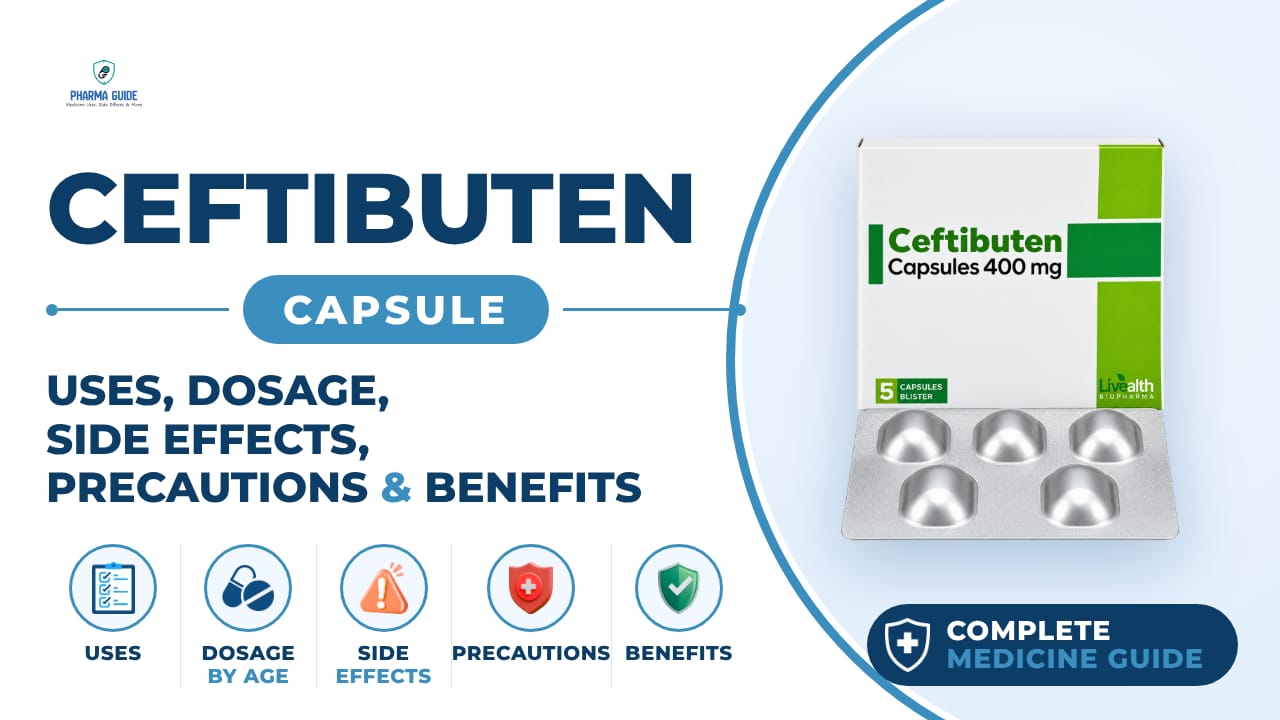
| Generic name | Ceftibuten |
|---|---|
| Drug class | Cephalosporins, 3rd Generation |
| Forms | Capsule, Oral suspension (liquid) |
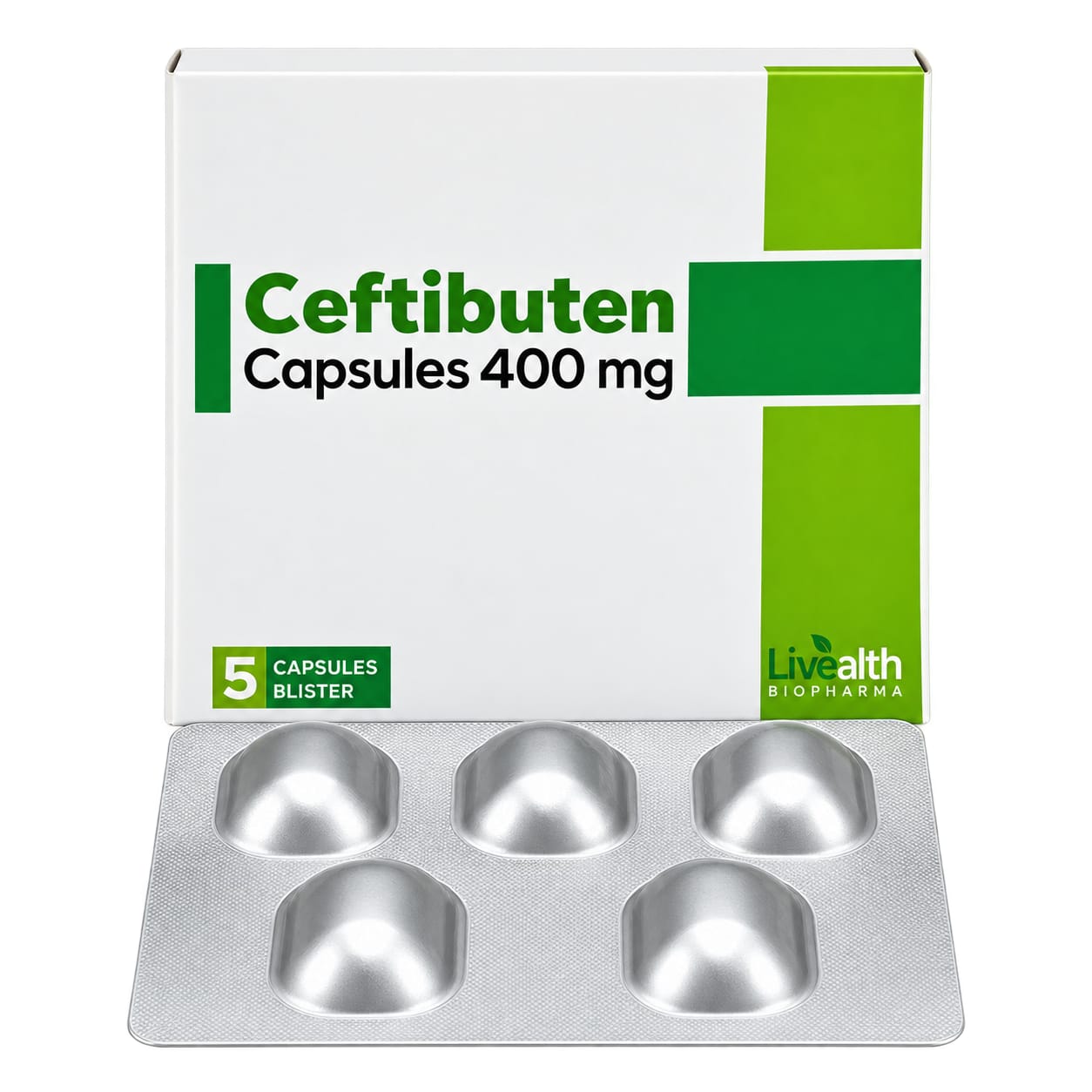
Quick overview
Ceftibuten Capsule contains ceftibuten, a third-generation cephalosporin antibiotic. It is a broad-spectrum antibiotic used to treat certain bacterial infections, but it does not work against colds, flu, or other virus infections. It is used for infections such as bronchitis, ear infections, throat infections, sinusitis, and urinary tract infections, and it works by stopping bacteria from building their cell wall properly.
What is Ceftibuten Capsule
Ceftibuten is a semisynthetic oral cephalosporin antibiotic. It is a broad-spectrum antibiotic used to treat certain bacterial infections but does not work against colds, flu, or other virus infections.
Ceftibuten Capsule uses
- Acute bacterial exacerbations of chronic bronchitis
- Acute bacterial otitis media (middle ear infection)
- Pharyngitis and tonsillitis caused by Streptococcus pyogenes
- Acute sinusitis
- Scarlet fever
- Acute bronchitis and acute pneumonia (in patients suitable for oral therapy)
- Urinary tract infections, both complicated and uncomplicated
- Enteritis and gastroenteritis caused by Salmonella, Shigella, or E. coli
Benefits of Ceftibuten Capsule
- Kills bacteria or stops their growth to clear up susceptible bacterial infections
- Effective against many strains of Haemophilus influenzae, Moraxella catarrhalis, Streptococcus pneumoniae (penicillin-susceptible), and Streptococcus pyogenes
- Treats susceptible bacterial infections
- Used for certain respiratory tract infections
- Treats selected ear and throat infections
- Provides convenient once-daily dosing
- Covers several susceptible Gram-positive and Gram-negative bacteria
How Ceftibuten Capsule works
Ceftibuten kills bacteria by attaching to important proteins in the bacterial cell wall, which stops the bacteria from building their cell wall properly.
Ceftibuten Capsule dosage
Ceftibuten is for oral use only. Capsules may be taken without regard to meal time. The oral liquid (suspension) should be taken at least 2 hours before or 1 hour after a meal, since food reduces how well the medicine is absorbed. Shake the oral liquid well before each use and measure the dose with a marked measuring spoon, oral syringe, or medicine cup rather than a regular household teaspoon.
Keep taking the medicine for the full length of treatment prescribed, even if you feel better after a few doses, so the infection clears up completely. If a dose is missed, take it as soon as possible, but if it is almost time for the next dose, skip the missed one and do not double up. Diabetic patients should know the oral suspension contains sugar (sucrose).
| Age group | Dose |
|---|---|
| 6 months–11 years | 9 mg/kg once daily, maximum 400 mg/day; usually an age-appropriate formulation is used |
| 12–17 years | 400 mg once daily |
| 18–64 years | 400 mg once daily |
Available forms and strengths
- Capsule
- Oral suspension (liquid)
Side effects of Ceftibuten Capsule
Common
- Nausea
- Vomiting
- Diarrhea
- Headache
- Stomach upset/indigestion
- Dizziness
- Abdominal pain
- Dry mouth
- Acid or sour stomach
- Loose stools
Serious
- Hives
- Difficulty breathing
- Swelling of the face, lips, tongue, or throat
- Dark urine
- Persistent nausea or vomiting
- Yellowing of the eyes or skin (jaundice)
- Black or tarry stools
- Change in the amount of urine
- Joint pain
- Fever
- Persistent sore throat
- Easy bleeding or unusual bruising
- Severe or watery diarrhea, possibly with blood
- Abdominal pain or cramping
- Blood or mucus in the stool
- White patches or sores in the mouth
- Change in vaginal discharge
- Severe dizziness
- Seizures
- Mood changes or confusion
- Fast or pounding heartbeat
- Severe skin reactions with blistering or peeling (Stevens-Johnson syndrome, toxic epidermal necrolysis)
Warnings and precautions
- Before starting this medicine, tell your doctor if you have ever had an allergic reaction to ceftibuten, other cephalosporins, penicillins, or other drugs. People allergic to penicillin have a higher chance of also reacting to this medicine. Stop the medicine right away if an allergic reaction happens, since severe reactions can need emergency treatment.
- This medicine, like nearly all antibiotics, can cause a serious bowel condition called pseudomembranous colitis, which can range from mild to life-threatening.
- Tell your doctor right away if you get diarrhea during or after treatment. Using this medicine for a long time may let resistant bacteria grow out of control, causing a new infection; your doctor will watch for signs of this.
- This medicine should be used carefully in people with a history of bowel disease, especially colitis. Do not take medicine to treat diarrhea without checking with your doctor first, since this can make the diarrhea worse or last longer.
- There are no adequate, well-controlled studies of this medicine in pregnant women. It should only be used during pregnancy if clearly needed, after discussing the risks and benefits with your doctor.
- It is not known if this medicine passes into human breast milk. Caution should be used if it is given to a nursing mother, and breastfeeding may need to be stopped if necessary.
- People with reduced kidney function may need a lower dose, especially if their creatinine clearance is below 50 mL/min or if they are on dialysis. Dialysis patients should be monitored carefully and should take the medicine right after their dialysis session.
- No standard routine dose adjustment is generally required solely for liver impairment.
- It is not known how this medicine interacts with alcohol. Check with your doctor before drinking alcohol while taking this medicine.
- Usually does not affect driving, but avoid driving if dizziness occurs.
Storage
- Store the capsules in a closed container at room temperature, away from heat, moisture, and direct light. Keep from freezing.
- Store the oral liquid in the refrigerator and throw away any unused medicine after 14 days.
- Prior to reconstitution, the powder must be stored between 2° and 25°C (36° and 77°F).
- Keep tightly closed and shake well before each use.
- Keep out of the reach of children.
- Ask your healthcare professional how to dispose of any unused medicine.
When to see a doctor
- Get medical help right away if you notice signs of a serious allergic reaction, such as hives, trouble breathing, or swelling of the face, lips, tongue, or throat.
- Seek medical care right away if you have severe headache, confusion, slurred speech, arm or leg weakness, trouble walking, loss of coordination, feeling unsteady, very stiff muscles, high fever, heavy sweating, or tremors.
- Get help immediately for serious eye symptoms, such as sudden vision loss, blurred vision, tunnel vision, eye pain or swelling, or seeing halos around lights.
- Seek urgent care for serious heart symptoms like a fast, irregular, or pounding heartbeat, fluttering in the chest, shortness of breath, sudden dizziness, lightheadedness, or passing out.
- Contact your doctor immediately if you develop severe or watery diarrhea, which may be bloody, as this could be a sign of a serious bowel condition.
- Seek medical attention if you have seizures while taking this medicine; your doctor may need to stop the drug and may give anticonvulsant treatment.
Alternatives
- Cefpodoxime
- Cefixime
- Cefdinir
Watch the video
FAQs
What is Ceftibuten Capsule used for?
It is used to treat bacterial infections such as acute bronchitis exacerbations, middle ear infections, pharyngitis and tonsillitis, sinusitis, scarlet fever, pneumonia, urinary tract infections, and certain gastroenteritis caused by Salmonella, Shigella, or E. coli.
How should I take Ceftibuten Capsule?
Capsules can be taken without regard to meals, while the oral liquid should be taken at least 2 hours before or 1 hour after a meal since food reduces absorption. Complete the full course even if you feel better.
What is the dosage of Ceftibuten Capsule for adults?
Adults aged 18-64 years typically take 400 mg once daily, the same dose used for adolescents aged 12-17 years.
What are the common side effects of Ceftibuten Capsule?
Common side effects include nausea, vomiting, diarrhea, headache, stomach upset, dizziness, abdominal pain, dry mouth, acid stomach, and loose stools.
Can Ceftibuten Capsule be taken during pregnancy?
There are no adequate, well-controlled studies in pregnant women, so it should only be used during pregnancy if clearly needed, after discussing risks and benefits with your doctor.
General information, not medical advice
Your prescriber and the leaflet in your pack know your situation. This page does not.
- Follow your prescriber and the leaflet
- Don't start, stop, or change a dose on your own
- Doses and warnings differ by country and product
Sources
Video
Related medicines
Cedax Capsule: Uses, Dosage, Side Effects, Precautions and Alternates
Cephalosporins, 3rd Generation
Cedax Capsule (ceftibuten) treats bronchitis flare-ups, ear infections, and strep throat/tonsillitis by stopping bacterial cell wall formation. Learn dosage

Injectafer Injection: Uses, Dosage, Side Effects, Precautions and Alternates
Iron products
Injectafer (ferric carboxymaltose) treats iron deficiency anemia and heart failure-related iron deficiency via IV. Learn uses, dosage, side effects, and