
Safety
General information, not medical advice
Your prescriber and the leaflet in your pack know your situation. This page does not.
- Follow your prescriber and the leaflet
- Don't start, stop, or change a dose on your own
- Doses and warnings differ by country and product
Cefuroxime Injection: Uses, Dosage, Side Effects, Precautions and Alternates
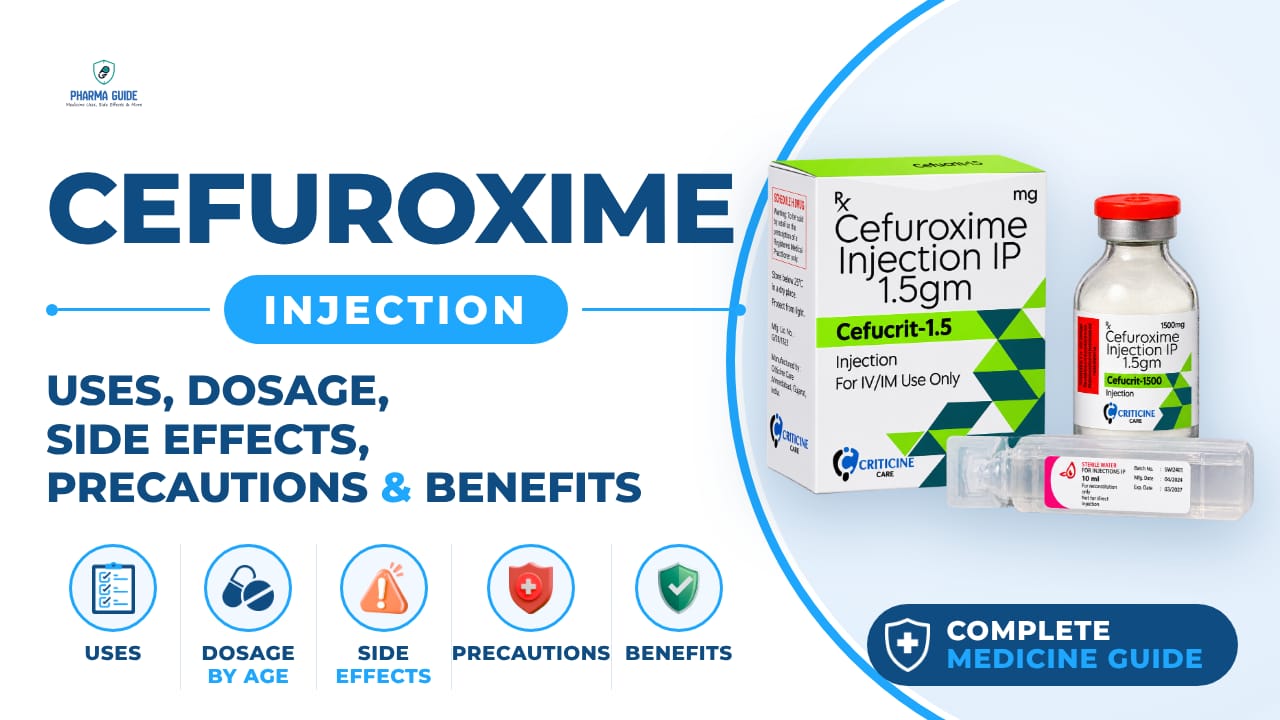
| Generic name | Cefuroxime sodium |
|---|---|
| Drug class | Cephalosporin antibiotic |
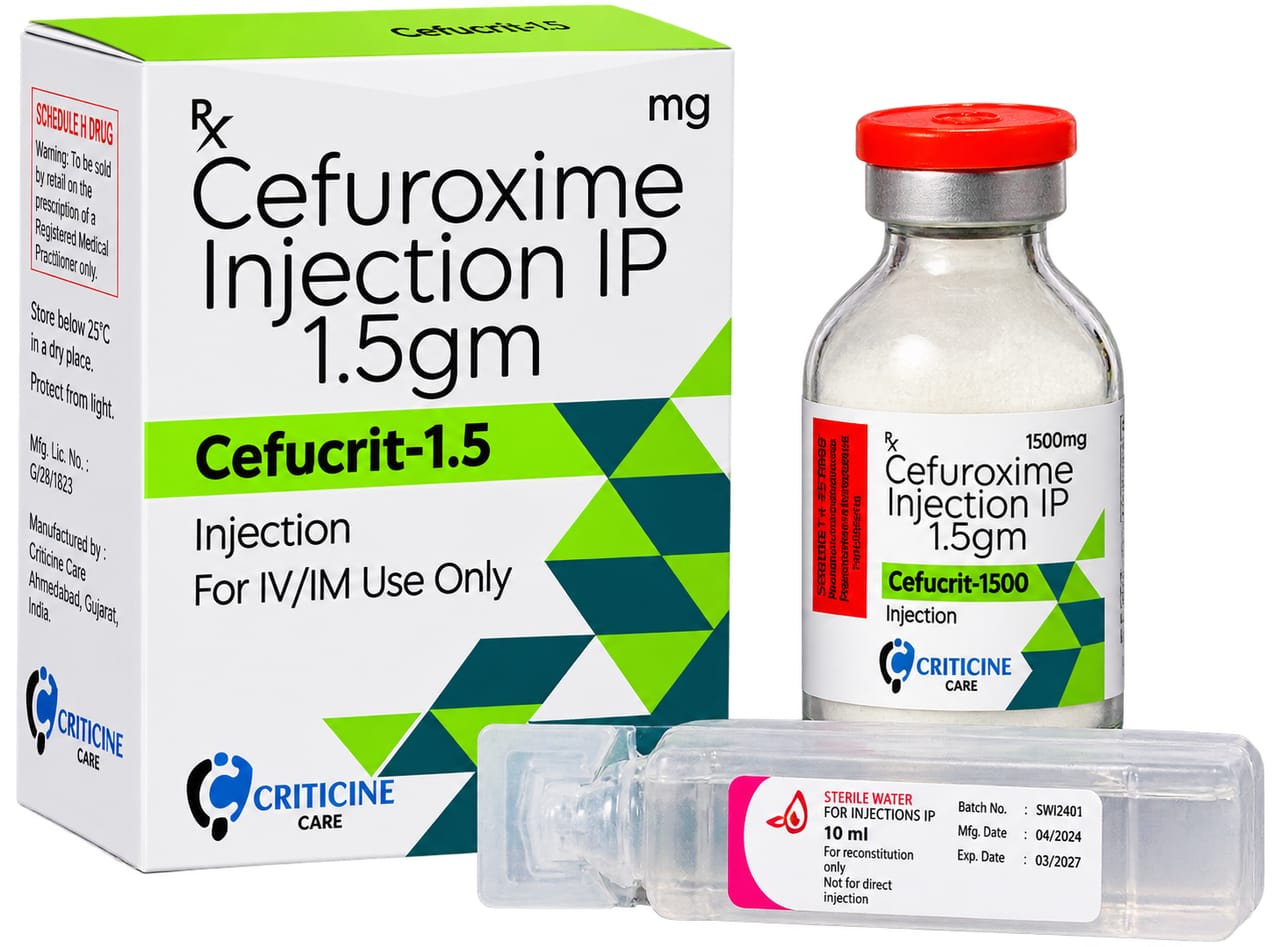
| Forms | Sterile powder for injection (750 mg/15 mL vial, 1.5 g/50 mL vial, 7.5 g/100 mL pharmacy bulk vial) |
Quick overview
Cefuroxime Injection (cefuroxime sodium) is a cephalosporin antibiotic used to treat a range of bacterial infections, including respiratory, urinary tract, skin, bone and joint, and bloodstream infections, as well as gonorrhea and meningitis. It is also used to help prevent infection before, during, or after surgery. It works by killing the bacteria causing the infection and will not work against viral illnesses like colds or flu.
What is Cefuroxime Injection
Cefuroxime injection is an antibiotic used to treat infections caused by bacteria. It belongs to a group of medications called cephalosporin antibiotics and will not work against colds, flu, or other viral infections.
Cefuroxime Injection uses
- Gonorrhea (a sexually transmitted disease)
- Infections of the respiratory tract
- Urinary tract infections
- Skin and soft tissue infections
- Bone and joint infections
- Bloodstream infections
- Meningitis (infection of the lining of the brain and spinal cord)
- Used before, during, or after surgery to help prevent infection
Benefits of Cefuroxime Injection
- Kills the bacteria causing the infection
- Can help prevent infection during and after certain surgeries
How Cefuroxime Injection works
Cefuroxime works by killing the bacteria that cause infections in the body.
Cefuroxime Injection dosage
This medicine is given by injection into a vein or into a muscle. You may receive this medicine in a hospital, or a healthcare provider may teach you how to give it to yourself at home. Use it exactly as directed at the same time each day and keep using it unless your care team tells you to stop.
Keep using the medicine until you finish the full course, even if you start to feel better, unless your doctor tells you otherwise. If you give yourself this medicine at home and miss a dose, take it as soon as you remember, but skip it if it is almost time for your next dose. Do not take a double dose.
If you receive this medicine at a hospital or clinic, do not miss your appointment; call your care team if you cannot make it. Put used needles and syringes in a proper sharps container, not in the regular trash. Continue your normal diet unless your doctor tells you otherwise.
| Age group | Dose |
|---|---|
| Under 3 months | Requires specialist/pediatric dosing; do not use a fixed age-based dose |
| 3 months–11 years | 50–100 mg/kg/day, divided every 6–8 hours; severe infections may require up to 100 mg/kg/day |
| 12–17 years | Usually 50–100 mg/kg/day, divided every 6–8 hours; maximum should not exceed the adult dose |
| 18+ years | 750 mg–1.5 g every 8 hours; severe/complicated infections commonly use 1.5 g every 8 hours |
Available forms and strengths
- Sterile powder for injection (750 mg/15 mL vial, 1.5 g/50 mL vial, 7.5 g/100 mL pharmacy bulk vial)
Side effects of Cefuroxime Injection
Common
- Vaginal itching
- Diarrhea/loose stools
- Pain, redness, swelling, or bleeding near the injection site
- Nausea
- Drowsiness, feeling faint
- Sweating
Serious
- Watery or bloody stools, stomach cramps, or fever during or after treatment
- Seizures
- Rash, hives; swelling of the face, throat, tongue, lips, and eyes; difficulty swallowing or breathing; hoarseness
- Decreased urination
- Swelling in legs and feet
- Peeling, blistering, or shedding skin
- Return of fever, sore throat, chills, or other signs of infection
- Hearing loss, if being treated for meningitis
- Severe diarrhea with fever
- Unusual vaginal discharge, itching, or odor
- Heart palpitations (fast, slow, or irregular heartbeat)
- Kidney problems: decreased urination, nausea, vomiting, swelling of extremities, fatigue
- Liver problems: yellowing of the skin or eyes, dark urine, abdominal pain, nausea, vomiting, loss of appetite
- Anemia: fatigue, loss of energy, weakness, shortness of breath
- Low levels of white blood cells: infection, fatigue, fever, aches, pain, flu-like symptoms
- Phlebitis: swelling of a vein near the injection site, with pain, tenderness, redness
Warnings and precautions
- Tell your doctor if you are pregnant or planning to become pregnant. The safety of this medicine in pregnancy has not been established, and it should only be used if the potential benefit outweighs the possible risk.
- This medicine passes into breast milk in small amounts. Talk with your doctor about whether you should breastfeed while receiving this medicine.
- Tell your doctor if you have kidney disease. People with significant kidney problems need a lower dose because the drug can build up in the body.
- Tell your doctor if you have liver disease before using this medicine.
- This medicine can cause dizziness. Do not drive or operate machinery if you feel dizzy.
- Tell your doctor about any allergies to cefuroxime, other cephalosporins, penicillins, or other substances before starting treatment, since allergic reactions can occur.
- This medicine can cause severe diarrhea or colitis linked to antibiotic use, which needs to be considered if diarrhea develops during or after treatment.
- Using antibiotics when they are not needed can lead to infections that resist treatment in the future.
- This medicine may decrease the effectiveness of hormonal birth control. Use another method of contraception while taking this medicine.
- Hearing loss has been reported in a small number of children treated with this medicine for meningitis.
Storage
- Your healthcare provider will tell you how to store your medication; store it only as directed.
- Protect from light.
- Get rid of any unused medication after the expiration date.
- Dispose of unneeded medications through a medicine take-back program; do not flush this medication down the toilet.
- Keep out of the reach and sight of children and pets.
When to see a doctor
- Stop using this medicine and get emergency medical help right away if you have watery or bloody stools, stomach cramps, or fever during or after treatment.
- Get emergency help immediately if you have seizures.
- Get emergency help right away for signs of an allergic reaction such as rash, hives, swelling of the face, throat, tongue, lips, or eyes, or trouble swallowing or breathing.
- Seek medical help if you notice decreased urination or swelling in your legs and feet, which may be signs of kidney problems.
- Seek medical help immediately if your skin starts peeling, blistering, or shedding.
- Contact your doctor if fever, sore throat, chills, or other signs of infection return.
- Tell your doctor if you notice hearing loss, especially if you are being treated for meningitis.
- If you think you have received too much of this medicine, contact your healthcare professional, hospital emergency department, or regional poison control center right away, even if you have no symptoms.
Alternatives
- Kefurox
- Zinacef
- Zinacef Powder
Watch the video
FAQs
What is Cefuroxime Injection used for?
It treats bacterial infections such as respiratory tract infections, urinary tract infections, skin and soft tissue infections, bone and joint infections, bloodstream infections, gonorrhea, and meningitis. It is also used to help prevent infection before, during, or after surgery.
How does Cefuroxime Injection work?
It works by killing the bacteria that cause infections in the body. It will not work against viral illnesses like colds or flu.
How is Cefuroxime Injection given?
It is given by injection into a vein or into a muscle, either in a hospital or at home after being taught by a healthcare provider. It should be used exactly as directed until the full course is finished, even if you start feeling better.
What are the serious side effects of Cefuroxime Injection?
Serious side effects include allergic reactions, seizures, severe diarrhea with fever, decreased urination, swelling in legs and feet, peeling or blistering skin, hearing loss in meningitis treatment, kidney or liver problems, anemia, and low white blood cell counts.
Can Cefuroxime Injection affect birth control?
Yes, this medicine may decrease the effectiveness of hormonal birth control, so another method of contraception should be used while taking it.
General information, not medical advice
Your prescriber and the leaflet in your pack know your situation. This page does not.
- Follow your prescriber and the leaflet
- Don't start, stop, or change a dose on your own
- Doses and warnings differ by country and product
Sources
Video
Related medicines
Duricef Capsule: Uses, Dosage, Side Effects, Precautions and Alternates
Cephalosporin antibiotic
Duricef Capsule (cefadroxil) treats UTIs, skin infections, and strep throat. Learn uses, dosage, side effects, warnings, and precautions before taking it.

Ancef Injection: Uses, Dosage, Side Effects, Precautions and Alternates
cephalosporin antibiotic
Ancef Injection (cefazolin) is a cephalosporin antibiotic used to treat infections and prevent surgical infections. Learn uses, dosage, and side effects.